
A new strategic direction for a long-established club
Napier Sailing Club in New Zealand is developing a new strategy intended to guide its activities over the next five years and beyond, with help from Yachting New Zealand's regional development team. The federation described the process in an 8 October 2026 regional report, explaining that a member survey received more than 150 responses and a workshop brought 35 members together. The result at the time of the report was a draft strategy, not a fully implemented programme with measured outcomes. The work is relevant to smaller leisure boats because the club serves both sailors and powerboat owners, and the questions it is asking—how to welcome members, use facilities and sustain participation—are familiar to many local boating associations. The case offers a practical example of consulting members before committing to a longer-term plan.
More than 150 survey responses provide input
The club began by convening a strategy working group and examining key issues and opportunities. A member survey then attracted more than 150 responses, according to the federation. That is a meaningful volume of feedback for internal planning, although it is not necessarily a statistically representative sample of every person with an interest in Napier's waterfront. The result depends on who chose to respond and how the questions were designed. Good governance requires interpreting responses carefully, including attention to people whose voices may not be heard through the first survey. A survey can provide evidence of priorities and experiences, but it cannot on its own determine whether the eventual plan will succeed. The important development is the club's willingness to gather information before writing its strategy.
A workshop brought 35 members into discussion
Following the survey, a workshop involving 35 members helped refine a draft strategic direction. The General Committee also participated in a separate session. Group discussions can uncover issues that do not appear clearly in questionnaire results and help participants explore tradeoffs between different activities. Yet attendance should not be confused with a formal vote of the entire membership, and the federation's article does not say every proposal was unanimously endorsed. The process is more accurately described as consultation leading to a draft. Local boating clubs often face competing demands for training areas, boat storage and volunteer time, making dialogue an important part of planning. The Napier approach demonstrates an organised sequence of review, feedback and discussion rather than an isolated management decision.
Sailing remains at the centre
Napier Commodore Gavin Earle explained that the club wanted to understand what members value and what success should look like over the years ahead. The emerging direction is summarised by the phrase “Sailing at the heart. More ways to enjoy the water.” That phrase matters because the club does not intend to abandon its sailing heritage while recognising other activities. It also has a significant powerboat membership. A balanced strategy needs to acknowledge the different reasons people join and remain involved. This does not mean all activities will receive identical resources or that the club has already agreed on a final programme for every segment. The source makes clear that the draft still needs to be shared and considered by wider stakeholders before the next phase.
Powerboat members are part of the community
An association with both sail and powerboats can face different practical demands from a club focused solely on dinghy racing. Sailors may prioritise courses, race management and coaching, while motorboat owners may be concerned with launching access, facilities and shared waterfront activities. These are examples of possible needs rather than a documented list of complaints raised by Napier members. The club's decision to recognise its diverse membership is the verified development. A strategy that acknowledges several forms of water recreation can create opportunities for members to meet and collaborate. That may be valuable when the same volunteers or facilities serve different groups. However, the actual allocation of space, costs and activities must be established through the club's decision-making process rather than assumed from an early summary.
Yachting New Zealand supplied specialist support
The federation identifies Ingrid Harder, its Regional Development, Governance and Advocacy Manager, as a key contributor. She helped design and deliver the survey and facilitated the member and committee workshops. Specialist assistance may be useful to a club whose leaders are experienced in boating but have limited time or background in organisational planning. A well-designed survey can ask questions in a consistent way, and a facilitator can encourage discussion among people with different priorities. The report does not identify a consulting fee, a grant value or a particular commercial contract for this support. Its confirmed significance is that the national sailing organisation is helping a member club develop a structured planning process. That work can complement the everyday activity of running racing and recreation programmes.
The strategy is intended for five years and beyond
The published description uses a planning horizon of at least five years. Such a period encourages leaders to consider more than the next regatta season or immediate equipment replacement. A club may need to think about membership development, the condition of facilities and the ability of volunteers to sustain programmes. The federation's report does not contain a completed capital budget or final timetable for specific projects, so those should not be invented. A strategy is only a guide until the organisation makes decisions, allocates resources and implements work. The practical value of setting a longer horizon is that members can evaluate proposals against a shared direction, rather than responding to every new idea without considering how it fits the club's larger purpose.
Previously less-engaged members offered ideas
Napier's process reportedly prompted members who had been less involved in club affairs to come forward with suggestions and ask how they could contribute. This observation is important because a club's most active committee members may not understand the priorities of people who attend less frequently. Different circumstances can affect participation, including work schedules, family commitments and whether someone prefers racing or casual recreation. A good consultation process can broaden the discussion, but one successful engagement exercise does not establish that long-term retention has improved. Those outcomes require later evidence. The official report describes an encouraging immediate response, and that should be presented as such rather than extended into an unsupported claim about future membership growth.
The General Committee must consider priorities
A workshop and survey can identify possibilities, but a club's authorised governance bodies must decide which ideas to adopt. The federation describes a further session with the General Committee, suggesting that the process included those responsible for oversight and direction. This is not proof that every proposal has already been approved or that a published strategic plan is in force. Any later decisions may depend on finances, facilities and the club's constitution. For other small-boat organisations, the sequence is a useful model: collect information, enable discussion and bring the resulting options into a formal governance process. It allows members' views to inform decisions while preserving the roles required for accountability. The details of Napier's eventual approvals remain a matter for the club's official communications.
External stakeholders will also be consulted
Yachting New Zealand says the draft strategy is intended to be shared with wider members and external stakeholders, including Napier City Council. Boating activities take place within a wider community, and local authorities may have interests in public waterfront access, facilities or planning. The precise relationship between the club and council should not be guessed from a brief report. It would be misleading to state that the council has funded a project, approved a redevelopment or granted a particular licence without supporting evidence. The documented intention is to engage relevant people beyond the internal workshop. That can help a club understand opportunities and limitations before finalising major proposals. It also makes clear why a draft plan must not be represented as a completed decision.
Club operations need practical leadership
Club Operations Manager Andrew Kearney said the process has reinforced the sailing heritage while highlighting the different ways members connect with the water. Operational leaders often have to translate strategic goals into manageable programmes, communications and facility arrangements. A plan that sounds attractive but exceeds the available volunteer capacity can be difficult to sustain. Conversely, a modest improvement may make a meaningful difference to existing members if it addresses a real need. These are general management observations rather than claims that a particular problem has already been solved in Napier. The federation's report establishes the organisation's thinking at a specific stage. Follow-up coverage should examine what the club ultimately implements instead of assuming every consultation outcome will translate directly into a new activity.
What dinghy clubs can take from the process
A small dinghy club might have far fewer members and resources than Napier, but it can still ask structured questions about participation. People may have different priorities concerning racing, introductory classes, equipment maintenance and social events. Inviting those perspectives does not require a complex business consultancy, although specialist help can be valuable where available. The Napier report shows a way to combine survey data with group discussion and committee input. It does not provide a ready-made template suitable for every organisation. Clubs should adapt any process to their own governance, time and membership. The broader lesson is that a strategy should respond to what people actually value rather than assume that the loudest voices represent all participants.
The powerboat and sailing relationship
The federation specifically notes Napier's substantial powerboat membership. For a leisure-boat publication, that detail is notable because sailing and motorboating are sometimes reported as separate worlds even when their communities share infrastructure and practical interests. Both groups can care about safe access, maintenance and the waterfront environment. However, their equipment and activities differ, and a one-size-fits-all programme may not serve them well. A good club strategy needs to understand what is genuinely shared and where specialist provision remains necessary. The emerging Napier phrase about more ways to enjoy the water captures that inclusive ambition without promising that all proposed activities will be delivered. The verified development is a conversation about priorities rather than a final list of investments.
The significance of a member-led approach
National sailing bodies often focus media coverage on competitive results, but the health of boating also depends on whether local organisations are well managed. The Napier initiative provides a concrete example of work carried out behind the scenes. More than 150 survey responses, a 35-person workshop and a committee discussion are identifiable steps that can be followed up. Their success will ultimately be judged by the decisions that result and whether members find the club useful and welcoming over time. No independent evaluation of that long-term impact is provided in the source. It is nonetheless appropriate to recognise the deliberate effort to ground planning in member experience. The approach acknowledges that governance and consultation are part of sustaining recreational boating.
A draft strategy, with implementation still ahead
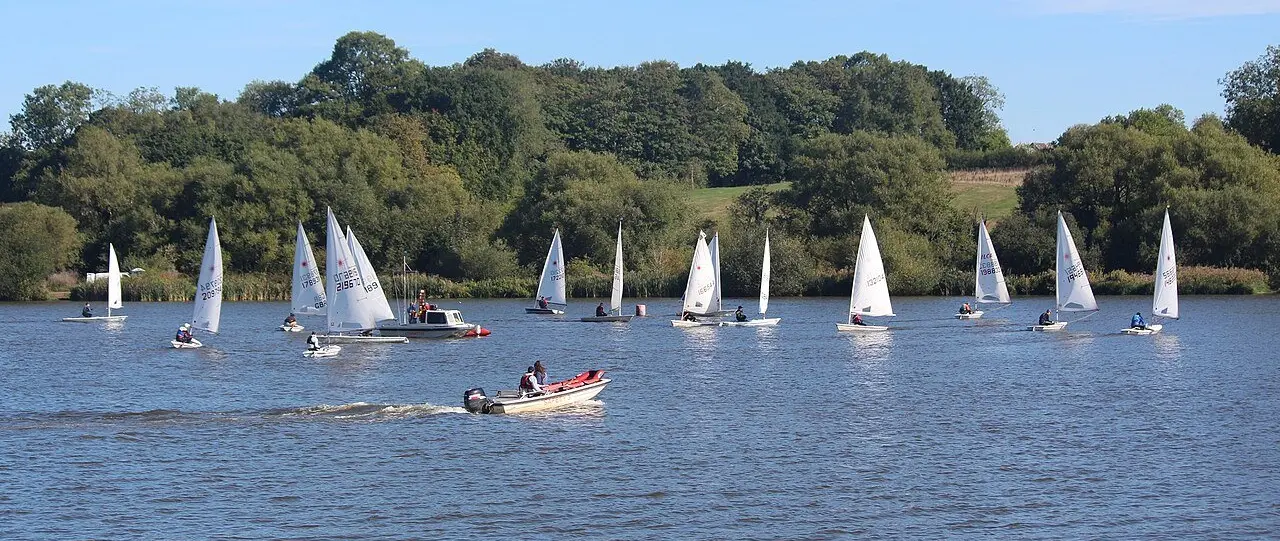
The verified October 2026 report describes Napier Sailing Club's developing five-year strategy, assistance from Yachting New Zealand's Ingrid Harder, the member survey and workshops, and plans to consult the wider membership and Napier City Council. It does not announce a completed redevelopment, published budget or measured change in participation. A licensed historical photograph of a sailing-club dinghy race may illustrate boating communities in general, but it must not be presented as Napier's strategy meeting or a specific local vessel. The central story is an established club seeking a clearer future direction that keeps sailing at its heart while recognising the wider interests of people who use the water.
Original industry sources and image credits
Reporting based on Yachting New Zealand official regional report.
Lead image: Historical Laser class event at a sailing club in 2022; NOT Napier Sailing Club or its 2026 strategy workshops. Historical contextual photograph by Fin Monks, File:Laser Open at WFSC 2022.jpg, via Wikimedia Commons. License: CC BY-SA 4.0 (https://creativecommons.org/licenses/by-sa/4.0/). Image resized for editorial display. Historical Laser class event at a sailing club in 2022; NOT Napier Sailing Club or its 2026 strategy workshops. Original file: https://commons.wikimedia.org/wiki/File:Laser_Open_at_WFSC_2022.jpg.. Licensed original image, author and terms.
