
A home-club victory after a closely matched contest
Louis Tilly and his Royal Prince Alfred Yacht Club team won the 2026 HARKEN International Youth Match Racing Championship on Pittwater, defeating Ethan Fong of Royal New Zealand Yacht Squadron in the final. Australian Sailing's report of 16 November identifies Tilly's crew as Heidi Bates, William Troop, Oliver Ross and William Hough. It also confirms that the victory brought the Rockin' Robin Perpetual Trophy back to the host club. The championship involved ten teams representing five yacht clubs across Australia and New Zealand in a fleet of Elliott 7 keelboats. This was a competition in compact, supplied racing boats, not a contest between superyachts or high-powered offshore cruising craft. The result is confirmed, and the wider significance lies in how a team developed through match-racing competition and turned an even qualifying record into a final victory.
Two leading teams arrived with identical records
The official account states that Tilly and Fong each won 15 of their 18 matches across the two round-robin stages, an 83 per cent success rate. Both recorded eight wins from nine matches in the second round robin, showing their form was closely matched. Fong had also defeated Tilly in both of their earlier meetings, which made the final more interesting than a simple repetition of qualifying results. Match racing is decided by direct encounters, so a previous win against an opponent is useful experience but does not add points automatically to a later final. Tilly had to produce the performance that mattered when the trophy was at stake. That is an important distinction for readers familiar with fleet-racing points tables, where the arithmetic of an entire series often shapes the final outcome.
Semifinals separated the leading contenders
Tilly earned his place in the championship final with a 2–0 semifinal win against RPAYC skipper Robbie Wooldridge. In the other semifinal, Fong faced James Hayhoe of Royal Sydney Yacht Squadron. Fong won the first match, Hayhoe answered in the second and the New Zealand skipper progressed after the deciding encounter. Those results established the final pairing between the two dominant qualifiers. They also show how a match-racing knockout creates repeated opportunities for a team to lose and recover within the permitted format, rather than relying solely on season-long consistency. It would be inaccurate to invent the individual tactical events of each semifinal when only a summary is reported. The official account provides enough evidence to say who advanced and how, without attributing particular decisions or penalties that have not been independently documented.
The Elliott 7 places teamwork at the centre
The host club used Elliott 7 keelboats, a small one-design platform that helps shift attention towards the abilities of the crew. When teams compete in identical or closely matched craft, sail handling, steering, tactical calls and communication become highly visible parts of a result. An Elliott 7 is approximately seven metres long and comfortably fits the under-twelve-metre leisure-boat remit. The class is not an offshore superyacht and should not be confused with the much larger yachts commonly associated with professional match-racing campaigns. A small boat can nevertheless create complex problems when two crews are manoeuvring close together. Every team member must know when to move, how to trim and what the skipper is attempting tactically. That quality of teamwork is relevant to recreational sailors who operate far less specialised small boats.
What sets a match race apart from fleet racing
In an ordinary fleet race, competitors balance their position against a larger group of boats. In a match race, the immediate task is to defeat one opponent within the racing rules. The start and pre-start can therefore become particularly important, with crews trying to establish a favourable relationship before the course begins. Tactical situations may change quickly as boats circle, accelerate or seek an advantageous position. These general features explain why a tight final can be demanding even when the craft are small. They are not claims that Tilly used a specific manoeuvre to win the final. Those details would require race footage or a verified account from the participants. The championship result highlights the skill, discipline and coordination that the format demands from sailors still developing towards senior competition.
A series with ninety round-robin matches
The ten teams completed ninety matches over the two round-robin stages before moving into the knockout and placing contests. Running that volume of competition requires significant race management, boat preparation and communication between sailors and officials. A round robin also gives participants more than a brief single opportunity; crews can measure themselves against multiple opponents, learn from earlier encounters and refine their approach as a series develops. The number ninety refers to the matches across the two round robins reported by Australian Sailing, not to an assumed number of individual boat starts in the whole event. Each match involves two teams, and the competition schedule has to accommodate the turnover between them. This organisational work is part of what makes youth match racing an established development pathway rather than an informal weekend duel.
Tilly's form grew across the weekend
Australian Sailing says Tilly won all five of his matches on Saturday while the fleet completed the double round robin. That unbeaten run included a downwind pass against clubmate Daniel Kemp and a later win over Hayhoe. The official report does not supply a complete point-by-point reconstruction of every race, but those examples show how Tilly entered the final stages with momentum. A team able to remain effective through multiple encounters must manage more than boat speed. It has to preserve concentration and respond quickly when an opponent gains or loses an advantage. The stakes become more immediate in the semifinals and final, where a narrow result can determine progression. Saturday's record helps explain why Tilly was among the strongest contenders without suggesting he was guaranteed to win.
A second major title in recent weeks
The victory followed Tilly's win in the Australian Youth Match Racing Championship in Geelong the previous month. Australian Sailing records the HARKEN championship as another achievement for the RPAYC team, rather than his first experience of a major final. Tilly had also been a member of Daniel Kemp's winning crew in 2024, when RPAYC beat Fong in a five-race final. Winning now as skipper gave him a different responsibility and another perspective on the same event. That continuity is noteworthy because it connects crewing experience with future leadership. It does not prove that every former crew member will become a successful helm, but it illustrates how team-based sailing can support progression. Younger sailors can learn the demands of racing while contributing to a crew before taking responsibility for broader decisions.
Ethan Fong's repeated finals deserve recognition
The New Zealand skipper had reached the HARKEN final in each of the previous three years, finishing runner-up to Daniel Kemp in 2024, Zach Fong in 2025 and Tilly in 2026. It would be wrong to describe that sequence as a lack of competitive quality. Repeatedly reaching the final against strong international youth crews is itself evidence of consistency. Fong's 15 wins across 18 qualifying matches in 2026 and his earlier victories over Tilly underline the point. The final result, however, remains a loss in the championship contest, and sporting reporting should not blur that fact. A balanced account can acknowledge both the title winner and the runner-up's record. For young competitors, the broader lesson is that consistent performance creates opportunities, while the individual final must still be sailed and won.
Race management also faced challenges
Ted Anderson, the RPAYC race officer, described the regatta as one of the more challenging events he had officiated recently, while welcoming the completion of the full competition programme. The report does not establish that every difficulty was caused by a particular gust, tide or incident, so the correct approach is to acknowledge the organiser's assessment without inventing a weather explanation. Small-boat racing can be demanding for officials because starting sequences, course changes and fair boat allocation need to be managed consistently across many separate matches. Spectators tend to focus on the final winners, but an event with multiple teams depends heavily on people who set courses, supervise starts and keep proceedings moving. Their work is part of the sporting result's reliability.
A pathway for developing helms and crews
The entry list included returning RPAYC contenders and newer participants such as Ash Napper and Sophie Hart. Hart and Heidi Ferguson of the Cruising Yacht Club of Australia were identified as the event's female helms. The official preview also names Massimo Henderson of RSYS and Angus Cameron of Royal Freshwater Bay Yacht Club within the ten-skipper field. This mix of established youth racers and newcomers can help strengthen a domestic match-racing pathway by creating opportunities to compete against unfamiliar teams. Participation alone does not establish a future Olympic or professional career. The value is more immediate: sailors learn close-quarters handling, communication and the discipline of organised racing. Clubs that maintain suitable small keelboats and coaching structures can give developing crews repeated chances to build those skills.
Why small-boat readers should care
Many leisure-boat owners will never take part in a match-racing championship, yet the underlying skills are recognisable. Clear helm instructions, deliberate crew positioning and an understanding of another boat's likely movements are useful in crowded harbours and local races. In competitive sailing, those habits are tested at a much higher intensity. The supplied Elliott 7 format also demonstrates that access to a well-run boat fleet can matter as much as personal vessel ownership for young sailors entering the sport. This is not a claim that an ordinary cruising outing should resemble a tactical race. It is a reminder that small craft can be effective learning platforms. Skills developed under demanding conditions can help participants make more thoughtful decisions in a wider range of on-water situations.
The confirmed result and the next opportunity
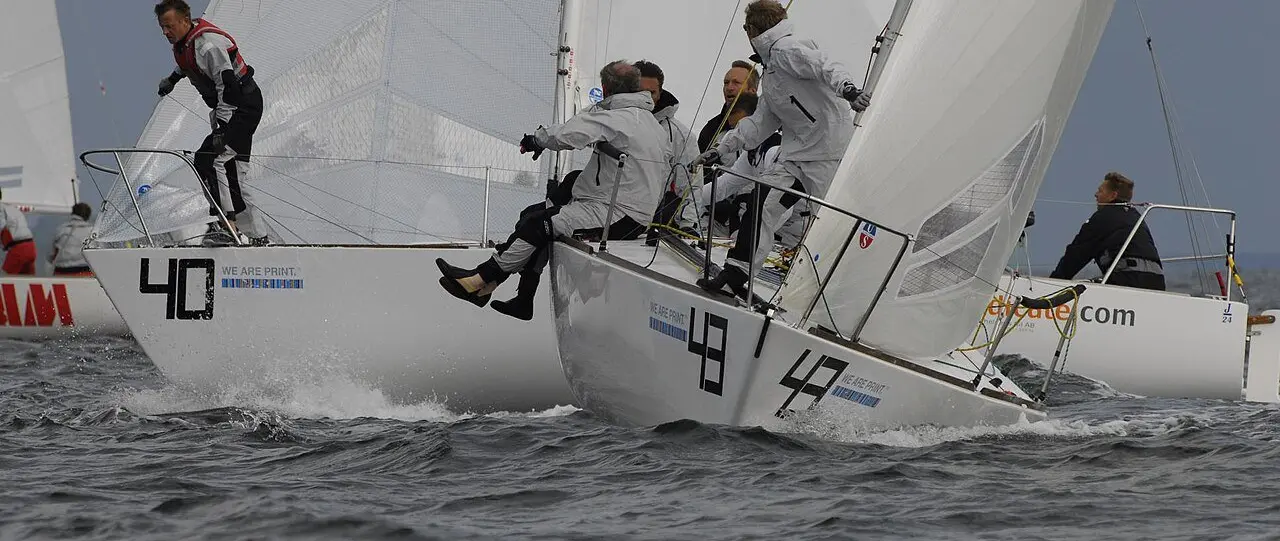
Tilly and the Royal Prince Alfred Yacht Club crew won the 2026 title on Pittwater, with Ethan Fong and Royal New Zealand Yacht Squadron finishing second after the final. The report documents the round-robin records, the semifinal pairings and the host club's use of Elliott 7 boats. It does not justify claims about additional prizes, unreported penalties or the future careers of the sailors. A historical match-racing photograph may illustrate the sailing discipline but must not be passed off as a picture of Tilly's final unless it comes from the event itself and carries appropriate rights. The enduring story is the development of a young skipper who returned to a familiar championship, carried forward previous crewing experience and won through teamwork when the decisive racing began.
Original industry sources and image credits
Reporting based on Australian Sailing official report.
Lead image: Historical J/24 class keelboat race in Europe; NOT the 2026 HARKEN match racing final or an Elliott 7. Historical contextual photograph by Jmulrich, File:J-24 keelboats racing in the Europameisterschaft 2007 TKO4378.jpg, via Wikimedia Commons. License: CC BY-SA 3.0 (https://creativecommons.org/licenses/by-sa/3.0/). Image resized for editorial display. Historical J/24 class keelboat race in Europe; NOT the 2026 HARKEN match racing final or an Elliott 7. Original file: https://commons.wikimedia.org/wiki/File:J-24_keelboats_racing_in_the_Europameisterschaft_2007_TKO4378.jpg.. Licensed original image, author and terms.
