
An invitation to share real-world experience afloat
The Royal Yachting Association has urged boat owners and other users of inland and coastal waters to take part in an independent survey about lithium-ion batteries. In its announcement dated 26 November 2026, the RYA says the Boat Safety Scheme commissioned the anonymous nationwide questionnaire to understand how lithium-powered devices and onboard systems are used. The survey is expected to take around 15 minutes, and its findings are intended to inform future safety guidance and reduce battery-related incidents. The invitation extends beyond inland craft to people using boats in maritime settings. It is a safety consultation, not a new legal requirement or an announcement that any named battery product has been withdrawn. For recreational owners, the immediate opportunity is to share practical experience before a future round of guidance is developed.
Why batteries are becoming a bigger boating question
Rechargeable lithium-ion cells are already common in phones, handheld marine electronics, portable power banks and other devices that people bring aboard. Larger battery systems can support domestic electrical loads or electric propulsion, and those installations create different operational considerations from a single portable gadget. The RYA's announcement specifically distinguishes everyday electronics from complete onboard power systems. That breadth matters because an owner may not think of themselves as operating a lithium-powered boat while regularly carrying several lithium-containing products on board. Equally, the presence of a mobile phone cannot justify treating an entire electrical system as hazardous by default. The relevant questions are how a device is constructed, used, charged and monitored, and what happens if it is damaged or develops a fault. The survey seeks information about real patterns of use rather than assuming one typical installation.
The unique environment of a small boat
Small craft place electrical equipment within spaces that may be enclosed, damp, exposed to vibration or difficult to inspect. There may be limited room to separate storage, charging and sleeping areas, especially in compact cabin cruisers. Electrical systems can also have to operate during conditions when people are distracted by navigation or weather. These are reasons for careful design and use, not proof that a particular model of boat or battery is unsafe. The RYA stresses that charging devices containing lithium-ion batteries deserves care and that being aboard introduces extra factors. Owners should consider ventilation requirements, access to isolation points, the manufacturer's installation instructions and the overall electrical arrangement appropriate to their vessel. Correct practices vary by battery chemistry and equipment type, so broad statements about every lithium product should be avoided.
Survey responses can reveal the everyday issues
A consultation can identify how sailors and motorboat users are actually charging devices, storing spare batteries, maintaining systems and responding to concerns. It may also distinguish owners using fixed propulsion installations from occasional hirers carrying personal electronics. The Boat Safety Scheme says it wants the experiences of people who hire boats occasionally, use their own boats at weekends or live aboard full-time. That approach should produce a more varied picture than a study of newly built electric craft alone. Participation does not guarantee an immediate change in standards, and survey respondents should not be told that a particular rule will follow. The useful prospect is a stronger evidence base for education. Questions that repeatedly confuse owners may be candidates for clearer explanations, while uncommon use patterns might warrant more specialised guidance.
What the Boat Safety Scheme already provides
The BSS is a public-safety initiative intended to protect people, property and the environment on UK inland waterways. It already publishes information about lithium-ion battery safety, and the RYA points boaters to its own guidance as well. The new survey complements rather than replaces those resources. Inland operating contexts do not map precisely onto every sea-going craft, but a number of issues—safe charging, installation quality, damage, protection and responding to a fault—can be relevant across settings. Owners should use the guidance appropriate to their particular vessel and location. The survey itself should not be confused with an inspection or a compliance certificate. It is a request for information that may help the responsible organisations understand where current messages are effective and where additional clarity is needed.
Separating a portable device from a fixed power bank
A portable device may have its own integrated charger, casing and protection systems, whereas a fixed domestic battery installation involves cables, protection devices and interaction with other onboard equipment. These systems require different types of assessment. For example, a portable charger should be used in accordance with its maker's specifications, while a fixed battery bank may require professional consideration of voltage, cable sizing, fusing, isolation, thermal conditions and compatibility with charging sources. The RYA announcement does not provide a universal wiring diagram, and independent reporting should not invent one. Nor is it appropriate to assume that a generic replacement cell is suitable for a particular marine system. The practical principle is to understand exactly which product is fitted, how its manufacturer expects it to be installed and which competent specialist should be consulted when changes are proposed.
Charging is often the point at which concerns arise
Charging can involve shore power, engine alternators, dedicated chargers, solar equipment or portable charging accessories. Each arrangement may have different control and protection features. Battery management functions, temperature limits and product instructions must be considered together rather than as optional extras. The presence of a lithium label does not by itself tell a boat owner whether a charger is compatible. This is why the RYA asks for awareness of risks associated with unsafe installation, charging and use. Owners should avoid improvising connections or making alterations they do not understand. If an installation behaves abnormally, a qualified professional and the maker's safety guidance are more appropriate sources of advice than speculation about the cause. The survey may help reveal where guidance about routine charging decisions would be most useful.
Why chemistry and product quality should not be conflated
The phrase lithium-ion covers a family of rechargeable technologies rather than a single battery design. Products also differ substantially in manufacture, protective electronics, casing and intended environment. A certified, properly installed marine component should not be judged solely by a story about a damaged consumer battery, and the reverse is equally true. The RYA does not identify a particular chemistry or manufacturer as the sole purpose of the new consultation. The broad question is how lithium-containing devices and onboard systems are being managed in the boating community. Owners benefit from keeping product manuals and installation records, especially if the boat changes hands. Reliable documentation can help a technician understand how equipment should operate and avoid connecting incompatible devices through trial and error.
The relevance of survey anonymity
The BSS describes the questionnaire as independent and anonymous. That can encourage people to share honest information about routine practices, including uncertainties or mistakes, without assuming their answers will be attached to an identified boat. Anonymity should still be understood according to the actual survey's privacy notice; the article does not establish details that are not included in the official announcement. For an industry study, the quality and representativeness of responses matter. Someone with only one small portable lithium device has a different perspective from a long-term owner managing a substantial battery bank. Both may have useful information if the survey is designed to capture their context. Readers should describe their experiences accurately instead of guessing what responses organisers want to hear.
Safe boating has to encompass new technology
Electrical equipment is changing faster than the average ownership cycle of a leisure boat. Owners may add charging accessories or replace a power source during a vessel's working life, sometimes without major changes elsewhere. These decisions can create questions about compatibility with existing alternators, wiring and shore-power arrangements. The survey indicates that the safety bodies want to understand those developments as they occur. It does not imply that every owner must upgrade a battery or that a new generation of products is universally safer. Sound practice begins with identifying what is already installed and maintaining it properly. The wider marine industry also has a role in communicating clearly through product manuals, service information and competent installation, while avoiding promises about performance that are not supported by the exact equipment specification.
How a small-boat owner can respond constructively
The RYA announcement provides a link to the BSS questionnaire and also offers a shorter route for people who prefer to provide their thoughts directly to the RYA. Readers should use the current official links rather than an unverified copy of the form. A useful response might distinguish which devices are carried, how often they are used aboard, whether they form part of a permanent installation and what difficulties the owner has encountered in finding guidance. The information should reflect direct knowledge, not anecdotes borrowed from another vessel. A person who has never experienced a battery problem can still contribute by describing normal habits and what they understand about safe use. The organisers are trying to learn about the whole community, not only about the most dramatic cases.
There is no reason to invent a new rule today
The announcement is a call for experiences that may guide future education. It does not say the RYA has banned lithium batteries, that the BSS has published a fresh national inspection requirement or that a named marina has changed its policies. Such claims would require separate authoritative evidence. Nor does a survey guarantee that all existing safety advice will be rewritten. This distinction is important in a sector where owners can incur substantial costs if they react to an inaccurate regulatory headline. The appropriate immediate action is to follow applicable manufacturer and safety guidance and consider contributing to the consultation. Any later rule or technical recommendation should be reported with its actual text, effective date, jurisdiction and responsible issuing body.
The practical value of listening before changing guidance
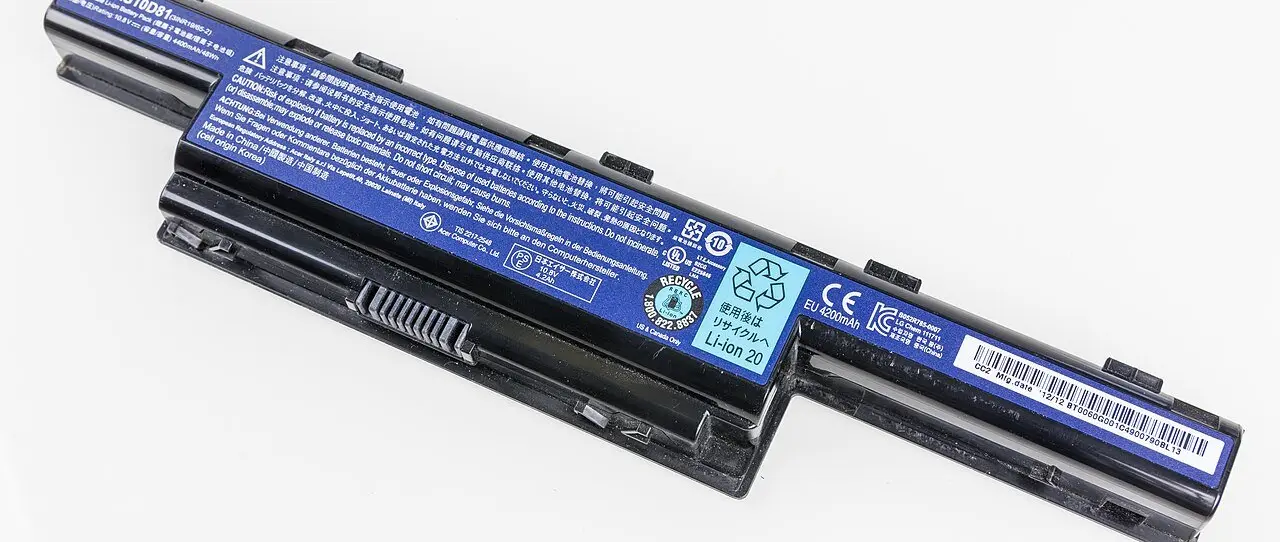
Battery safety is relevant to dinghies using portable equipment, small motorboats with electric systems and cruising yachts with fixed domestic power, but the needs of each group differ. A survey that includes occasional users, weekend owners and liveaboards can help safety organisations avoid writing advice aimed at only one kind of boater. That does not remove the need for specialist engineering knowledge or robust incident analysis. It provides another perspective from people living with the technology. The RYA's verified message on 26 November is that participation is open and the existing BSS and RYA guidance remains available. A separately licensed photo of a consumer battery used in this article is illustrative of the technology, not an image of a marine installation or a battery implicated in an incident. The responsible story is about improving information through evidence, rather than spreading unnecessary alarm.
Original industry sources and image credits
Reporting based on RYA official safety announcement.
Lead image: Photograph of a laptop lithium-ion battery pack; NOT a certified marine battery, installed boat system or recorded incident. Historical contextual photograph by Raimond Spekking, File:Acer TravelMate P253-M-32344G50Maks - battery AS10D81-0028.jpg, via Wikimedia Commons. License: CC BY-SA 4.0 (https://creativecommons.org/licenses/by-sa/4.0/). Image resized for editorial display. Photograph of a laptop lithium-ion battery pack; NOT a certified marine battery, installed boat system or recorded incident. Original file: https://commons.wikimedia.org/wiki/File:Acer_TravelMate_P253-M-32344G50Maks_-_battery_AS10D81-0028.jpg.. Licensed original image, author and terms.
