
A fresh reminder for everyone involved in the sport
Australian Sailing has highlighted online sport-integrity education available to athletes, parents, coaches and club office bearers, in an official notice published on 25 November 2026. The national body says it is working with Sport Integrity Australia to identify and manage threats to safe, fair and inclusive participation. Its announcement points to learning modules and a publicly available Education Plan intended to help sailing clubs and classes understand their responsibilities under the relevant integrity framework. This is not a product launch or a claim that every recreational sailor must immediately sit an identical course. The new emphasis is on making existing education more visible and helping different groups identify which training is mandatory, recommended or relevant to their role. For small-boat clubs, the issue reaches well beyond elite competition because much of a club's daily activity involves volunteers, juniors and local coaching.
Integrity begins at a modest clubhouse
A sailing club may have a fleet of dinghies, a small rescue boat, a handful of volunteers and a weekend training programme. It may nevertheless deal with the same kinds of questions about child safeguarding, disputes, fair competition and respectful behaviour that arise in larger sporting organisations. The scale is different, but the need for clear procedures does not vanish because the boats are small or the staff are unpaid. Australian Sailing's announcement explicitly addresses parents, coaches, class officials and office bearers, rather than treating sport integrity as a concern only for national teams. This broader audience matters. If club members understand where to find reliable guidance, they can respond more consistently when an issue arises. An online module is not a substitute for appropriate professional or official reporting, but it can help people understand the frameworks they are expected to follow.
Why education and written policy are different
A policy can establish obligations and explain how an organisation intends to handle a problem. Education helps participants recognise when a policy is relevant and how to act within it. A volunteer may be able to find a lengthy safeguarding document online but still be uncertain about a practical situation involving a junior sailor or a complaint. Training can give context without inventing new rules. Australian Sailing says the Education Plan links learning to the National Integrity Framework policies, its Anti-Doping Policy and the World Anti-Doping Code's International Standard for Education. That connection should not be reported as proof that every aspect of elite anti-doping practice applies in the same way to a family dinghy session. The specific requirements depend on an individual's role and the governing body's current policy documents. The wider aim is to make the relationship between rules and responsibilities understandable.
The safeguard for children and young people
The official notice identifies the Safeguarding Children and Young People in Sport course as an example of education required for coaches at all levels. This is particularly important to junior dinghy sailing, where instructors may work with children who are learning unfamiliar equipment and developing confidence around water. Safeguarding concerns the welfare of young people, not simply the technical safety of the boat. A sailing centre can operate a sound launching procedure and still need strong arrangements for supervision, boundaries, communication and reporting concerns. Readers should not confuse an online course with a complete organisational safeguarding system. Requirements can also vary by jurisdiction and by role. The appropriate action for a coach or club official is to consult the current national federation guidance and comply with the applicable checks, training and policies.
Parents are part of the learning environment
Australian Sailing specifically recommends a Parents' Guide to Clean Sport course as an example of education that may be useful even when it is not universally required. Parents influence young sailors' understanding of competition, respectful behaviour and how to respond to pressure. That influence need not be limited to athletes aiming for national championships. A child entering a first local race may already encounter rules, results, selection questions and disappointment. Clear and supportive communication helps keep the experience constructive. The recommendation should not be misreported as a mandatory licensing condition for every parent who visits a yacht club. Its point is to make information available to a wider group than coaches alone. If more participants understand how fairness and welfare fit together, local sailing communities may be better equipped to deal with problems before they become entrenched.
Complaints handling can be difficult for volunteers
The announcement recommends training under the heading PBTR – Handling Complaints in Community Sport for club and class office bearers and staff. Volunteers may be experienced sailors without having formal backgrounds in mediation, safeguarding or administrative procedure. A dispute about conduct, selection or treatment can therefore leave them uncertain about what should happen next. Training may help them understand appropriate routes, recognise conflicts of interest and avoid making promises beyond their authority. It does not mean a club can resolve every matter informally or ignore mandatory reporting arrangements. The relevant framework may require referral to a specific authority. A clear process protects participants and volunteers alike by reducing the pressure to improvise a response based solely on personal relationships within a small club.
High-performance obligations should not be overstated
Australian Sailing notes that integrity education is well established among high-performance athletes and coaches, for whom much of it is mandatory. That experience can create an impression that the same course list is required automatically for every recreational sailor, which is not what the announcement says. Some courses are compulsory for particular roles; many others are highly recommended. The Education Plan is intended to make those distinctions easier to review and share. Accuracy matters because a club might otherwise burden volunteers with requirements that do not apply or, conversely, overlook training that is required for its instructors. The right response is to check the current official framework and identify obligations by position, not assume there is a single universal rule for all members of a boating organisation.
Fair racing starts before the first signal
Competitive integrity includes how sailors, coaches and officials understand rules and respond to conduct concerns. It would be wrong to imagine that integrity is relevant only when prize money or major sponsorship is involved. Small dinghy fleets can face questions about sportsmanship, honest reporting of incidents, eligibility or handling disagreement. Organised sailing relies on participants accepting the rules and officials applying procedures fairly. The sport-integrity framework is broader than the racing rules themselves, however, and the two should not be conflated. Australian Sailing's notice addresses education about ethical decision-making and participant welfare, while class and event rules govern many sporting questions. A well-informed club should know which framework applies to a particular issue, then use the correct channel rather than guessing.
A national resource for individual clubs
The Australian Sailing Learning Centre is described as the main hub for relevant education and training. That provides a central reference point for a fragmented community of yacht clubs, dinghy classes, volunteer committees and training centres. A common source can help prevent an outdated document or unofficial social-media summary from becoming the club's accidental rulebook. The announcement also says the Education Plan is publicly available, allowing organisations to identify learning initiatives linked to the framework. That visibility is helpful, but the existence of a resource does not guarantee that every member knows how to use it. Clubs still have to communicate what is expected, support people undertaking the training and keep track of changes. For small organisations, straightforward links and named responsibilities may be more useful than a complicated internal policy archive.
Why this matters to people who hire boats or volunteer
A recreational sailor might associate sporting integrity with Olympic campaigns and feel the subject has little connection with weekend cruising. Yet local boating organisations often manage shared facilities, training, youth sessions and events where participants depend on one another. A person who volunteers at a club, helps with training or joins a committee may therefore have responsibilities beyond ordinary membership. The Australian Sailing notice is directed at those specific activities. It does not establish that someone renting a motorboat for a day must complete all of the organisation's modules. The responsible question is what role the person performs and which governing rules apply. When that is clear, education can be selected for the actual task rather than promoted as a vague obligation affecting everyone equally.
The link to updated framework documents
Australian Sailing separately announced revised National Integrity Framework policies on 25 November, covering competition manipulation and sports betting; complaints, disputes and discipline; improper use of drugs and medicine; participant protection; and safeguarding children and young people. Those documents were developed through consultation with sporting bodies, subject specialists and sector partners, according to the federation. The education notice points readers towards the same wider framework. This article's primary focus remains the available learning, and it should not falsely claim that all policy revisions are newly effective on a single unverified date. Organisations must examine the documents themselves for application and transition details. The useful connection is that training can help officials understand the policies they need to operate, rather than leaving them as files that few people consult.
Education requires follow-through in daily practice
Completion of an online course is a starting point, not proof that a club will handle every future challenge correctly. Policies must be accessible; reporting routes need to be understood; and volunteers need realistic support when issues arise. An organisation might have excellent course completion figures yet still struggle if nobody knows who takes responsibility for an actual complaint. Conversely, a small club with clear communication and a willingness to seek expert help may turn education into useful practice. These are analytical observations, not official findings about the quality of any named Australian sailing club. The announcement does not identify clubs as failing their duties or publish a table of incidents. It invites the community to use existing learning resources more effectively as part of maintaining a safe and fair sporting environment.
Small-boat participation benefits from trust
Newcomers often decide whether to return to a sailing club based on more than the quality of the boats or the weather. They notice how people are treated, how questions are answered and whether the organisation appears responsible. Junior participants and families may be particularly sensitive to the confidence they have in coaches and volunteers. An integrity education programme can support that trust when its lessons are applied thoughtfully. It cannot replace good seamanship or physical safety equipment, and the relevant water-safety procedures remain essential. The two dimensions complement each other: participants need both a safe environment afloat and fair, respectful treatment ashore. Clubs seeking to attract more recreational members should not regard these standards as separate from the everyday experience they offer.
What officials and members should do next
Australian Sailing's verified 25 November message is that online education exists for a range of roles and that the Education Plan and Learning Centre provide the relevant starting points. Coaches should check requirements that apply to their work, while parents and office bearers can identify recommended learning appropriate to their involvement. The announcement does not give a universal deadline for all members or support invented enforcement claims. Detailed requirements and the latest documents should be obtained from the federation and Sport Integrity Australia. A historical photograph of small-boat sailing accompanying this report must be credited under its own licence and not represented as a record of a safeguarding incident or a newly held course. The significance is practical: small sailing organisations have an opportunity to make ethical decision-making and participant welfare part of normal club competence, rather than an afterthought.
Original industry sources and image credits
Reporting based on Australian Sailing official report.
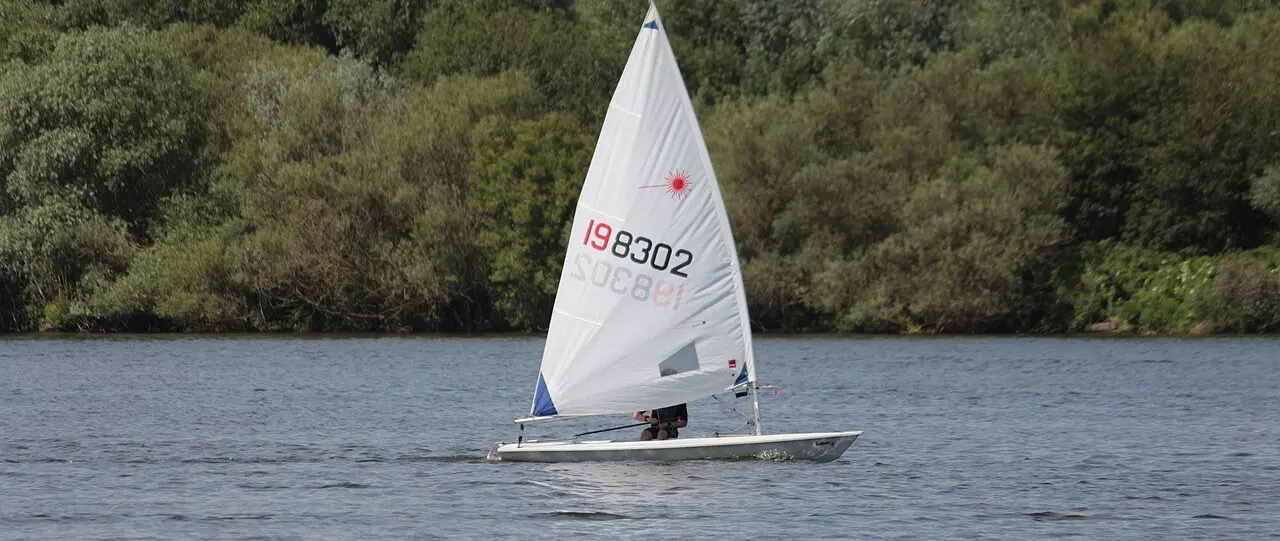
Lead image: Historical ILCA-style dinghy sailing photograph; NOT an Australian Sailing integrity course or safeguarding incident. Historical contextual photograph by Fin.Seaman, File:Laser Radial 198302.jpg, via Wikimedia Commons. License: CC0 (https://creativecommons.org/publicdomain/zero/1.0/). Image resized for editorial display. Historical ILCA-style dinghy sailing photograph; NOT an Australian Sailing integrity course or safeguarding incident. Original file: https://commons.wikimedia.org/wiki/File:Laser_Radial_198302.jpg.. Licensed original image, author and terms.
