
A new format for weeknight small-keelboat racing
Three Auckland clubs have joined forces to create the City of Sails Sprints, a short-course sailing series bringing five one-design keelboat classes together on the Waitematā Harbour. Yachting New Zealand announced the collaboration on 16 September 2026, with the season scheduled to begin on 29 September and continue, subject to a summer break, until 1 April 2027. Northcote Birkenhead Yacht Club, Ponsonby Cruising Club and the Royal New Zealand Yacht Squadron are the partners behind the initiative. The series is intended to make regular racing easier for crews with limited time while improving the use of club volunteers and race-management resources. At the time of this report, the series is already within its advertised operating season; this is not a claim that the inaugural starting gun is still weeks away.
Five classes sharing the programme
The advertised fleets are Young 88, Stewart 34, MRX, Etchells and Elliott 7. These are all small or modestly sized keelboat classes, making the series directly relevant to club sailors rather than a showcase of very large racing yachts. Each boat has distinct performance and crew requirements, so a combined programme does not mean the five classes compete under one identical scoring table. Fleet organisers and participants need to check the Notice of Race for the actual allocation of starts and results. A sailor who knows one type of keelboat may recognise familiar techniques in another, but the details of sail trim, steering and manoeuvring can differ considerably. Bringing the fleets together is an organisational decision designed to encourage regular sailing while respecting their different identities.
The attraction of a short evening programme
Racing is planned for Tuesday evenings, with starts at 6 pm around the waters east and west of the Auckland Harbour Bridge. The format allows up to three windward-leeward races per evening, each intended to take approximately twenty minutes. A compact race can concentrate the action into starts, mark roundings and immediate tactical decisions rather than requiring a crew to commit to a long offshore course. The published timings are targets, not guarantees. Wind, traffic, safety considerations or other operational factors may change the number and duration of races actually completed. For sailors who have work or other responsibilities the next morning, a predictable evening window can make participation more realistic. That can be important in keeping a club racing fleet active across an entire season.
Fortnightly racing alongside Wednesday traditions
The clubs have arranged for sprint events to alternate with more traditional Wednesday Harbour racing, reducing clashes in a calendar already serving multiple keelboat communities. Rather than asking skippers to choose repeatedly between overlapping events, the partners intend to give different forms of racing space in the week. Such planning may sound administrative, but competitors notice the effect when crew members cannot be in two places at once. A sensible timetable can help owners recruit dependable teams and avoid unnecessary pressure on volunteers who support more than one event. The federation's source describes the intended structure; it does not provide a complete attendance record for each Tuesday since the start. The long-term success of the arrangement will depend on how closely it matches the habits of the sailors it aims to serve.
Why three clubs chose to collaborate
Northcote Birkenhead, Ponsonby and Royal New Zealand Yacht Squadron have pooled volunteer race-management teams, mark boats and safety resources. That cooperation is intended to address the practical challenge of maintaining separate small fleets with overlapping calendars. When each class independently requires a start boat, officials and course equipment, the same limited volunteers may be asked to serve several small events. Combining operational support may reduce duplication, though the announcement does not publish audited savings or a fixed budget. The value is a clearer use of shared resources and a more coordinated sailing programme. A club considering a similar scheme would need to assess its own geography, insurance and volunteer capacity rather than assume that Auckland's structure can be copied without adaptation.
A familiar course with intense decisions
Windward-leeward racing is straightforward to describe: boats work upwind towards a weather mark and then sail downwind, repeating as required by the course. Within that basic layout, the choices can be demanding. Starts, shifts in the breeze, clear air, close mark roundings and the quality of crew communication can decide placings in a short time. A twenty-minute target leaves fewer opportunities to recover from a poor beginning than a very long race, although the actual impact depends on fleet size and conditions. These are general features of the format, not a record of specific incidents during the 2026 sprints. The organisers designed the racing to be quick and tactical, and the concept should be judged against that stated purpose rather than imaginary results.
On-water coaching is a notable element
The series introduces specific rule modifications allowing on-water coaching during racing. Yachting New Zealand presents that as an opportunity for crews to develop their skills while competing. The arrangement is significant because normal racing rules and event instructions may restrict some forms of outside assistance. A modification applying in this series should not be treated as universal permission to receive coaching during every other regatta. Competitors need to read the exact conditions adopted by the organisers, including who may coach and how. Used responsibly, a coached format can help crews recognise a tactical or handling problem while it is fresh. That immediate feedback may be especially valuable to newer club teams who would otherwise have to reconstruct the same moment much later ashore.
The benefits to developing crews
A regular series with short races can give new crew members repeated exposure to starts, tacks, gybes and mark roundings without requiring a full day away from work. That creates possibilities for practical learning alongside more experienced sailors. The value is not guaranteed: a crew must still be appropriately trained and operate within the event's safety requirements. Small keelboats can be demanding when traffic is close and manoeuvres happen quickly. The on-water coaching element may provide additional structure, while the shared schedule can make it easier for skippers to invite developing sailors. Clubs seeking to improve retention often face a similar challenge: someone may enjoy an introductory lesson but find no convenient way to build experience through normal racing. Frequent short sessions are one possible response.
Better use of harbour space and race-management assets
A busy urban harbour is not an unlimited resource. Racing organisers must consider other users, safe course positioning and the practical impact of moving multiple fleets through a confined area. The City of Sails Sprints programme specifies waters immediately east and west of the Harbour Bridge, but it does not mean every race will use exactly the same coordinates. Race officers may need to adjust the course for wind and other circumstances. Sharing assets between clubs can also reduce the number of separate support operations required. Such efficiencies are an intention of the project rather than a proven environmental or financial result. A good assessment would eventually compare actual participation, volunteer use and costs with the arrangements that existed before the series.
One-design racing still demands preparation
Boats within a particular class may be designed to the same rule, yet success still depends on maintenance, rig settings and a coordinated crew. A skipper who arrives without checking equipment may waste the short competition window solving problems that could have been found earlier. For a race beginning at 6 pm, the practical work of gathering the team and getting the boat ready must happen before the official start. Time pressure does not remove the need for safety briefings or sound seamanship. The series is structured to be convenient, not casual about preparation. Owners should confirm crew roles and equipment requirements and avoid assuming that a twenty-minute race has negligible risk. The same principles apply to a weekend regatta, simply within a different schedule.
A place for existing racing traditions
The programme has been planned alongside Wednesday Harbour racing rather than presented as a replacement for every established event. This matters because a healthy sailing community can offer different experiences to different participants. Some crews enjoy longer courses, while others prefer intense short starts and the chance to practise several times in an evening. Keeping the two formats in the calendar may allow sailors to choose what suits their current goals. It can also encourage interaction between clubs that ordinarily run separate series. The federation's announcement does not claim that all five fleets have abandoned their other racing commitments. Its practical contribution is an additional coordinated option. Whether the arrangement produces sustained growth remains a question for subsequent participation figures.
Shore-side conversation is part of the concept
The planners intend that each evening will finish early enough for crews to return ashore, discuss the racing and compare notes. That social and reflective element can make a programme more valuable than a series of scores. A newer sailor might gain insight from another boat's approach to a wind shift or hear a different explanation of a difficult start. These opportunities depend on a supportive club culture and willingness to share experience. A debrief is not a substitute for the official protest process when a rules dispute arises, but it can be an appropriate place for learning. In many clubs, the relationships developed after racing help people find future crew positions and keep participating even when they do not own a boat.
What skippers should check before joining
The federation's September announcement directed sailors to the official Notice of Race, entry information and crew opportunities. The original entry closing period was late September, so a November article should not imply that new registrations are automatically available. Anyone interested in joining during the season needs to check with the organisers for current rules, opportunities and any relevant late-entry process. The announced series runs through 1 April 2027 with a short summer break, but individual dates and sailing conditions may change. Owners should confirm eligibility for their class, relevant safety arrangements and the instructions governing coaching. Those details matter more than an unsourced prediction about the number of boats expected on the next Tuesday.
An experiment worth following through the season
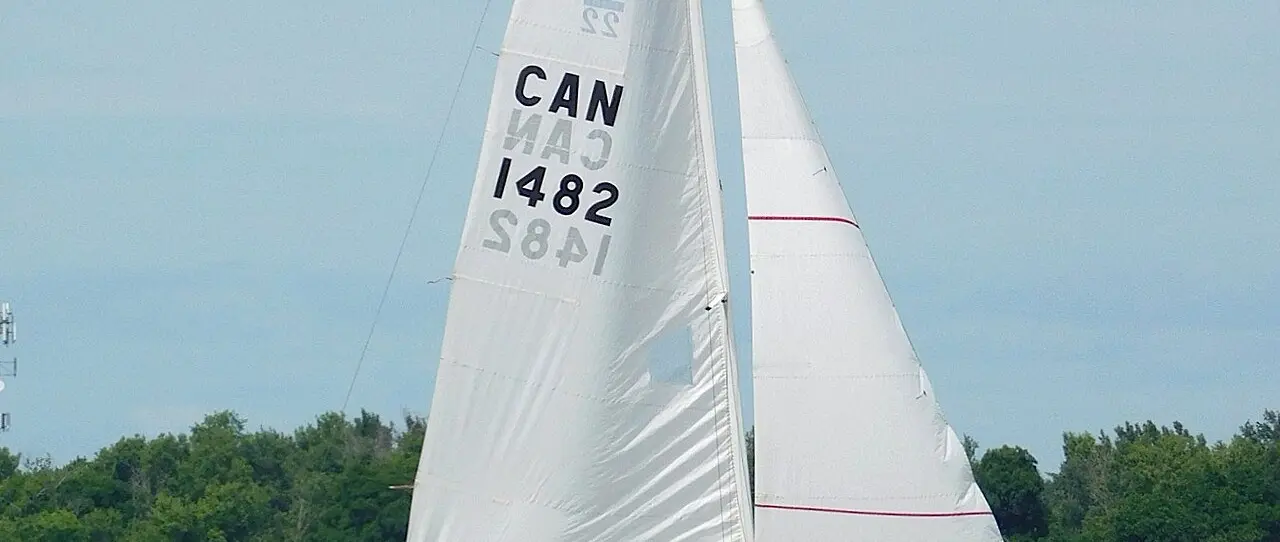
The documented achievement is the creation of a coordinated, five-class small-keelboat sprint series involving three Auckland clubs, a shared operational structure and a format built around short Tuesday-evening races. Its start date was 29 September, and its advertised conclusion is 1 April 2027. The announcement does not publish a full sequence of results to 26 November, so this report makes no claims about a series leader or championship outcome. A separately licensed historical photograph of a J/22, a different small keelboat class, can illustrate keelboat scale only with a caption clearly stating that it is not one of the listed Auckland racing classes or a picture from the series. The larger story is a practical attempt to make club racing more regular, efficient and open to learning.
Original industry sources and image credits
Reporting based on Yachting New Zealand official report.
Lead image: Historical J/22 class keelboat photograph for general keelboat context; NOT any of the five City of Sails Sprints classes or a 2026 Auckland race. Historical contextual photograph by Ahunt, File:J22 sailboat Cheque Mate 1985.jpg, via Wikimedia Commons. License: CC0 (https://creativecommons.org/publicdomain/zero/1.0/). Image resized for editorial display. Historical J/22 class keelboat photograph for general keelboat context; NOT any of the five City of Sails Sprints classes or a 2026 Auckland race. Original file: https://commons.wikimedia.org/wiki/File:J22_sailboat_Cheque_Mate_1985.jpg.. Licensed original image, author and terms.
