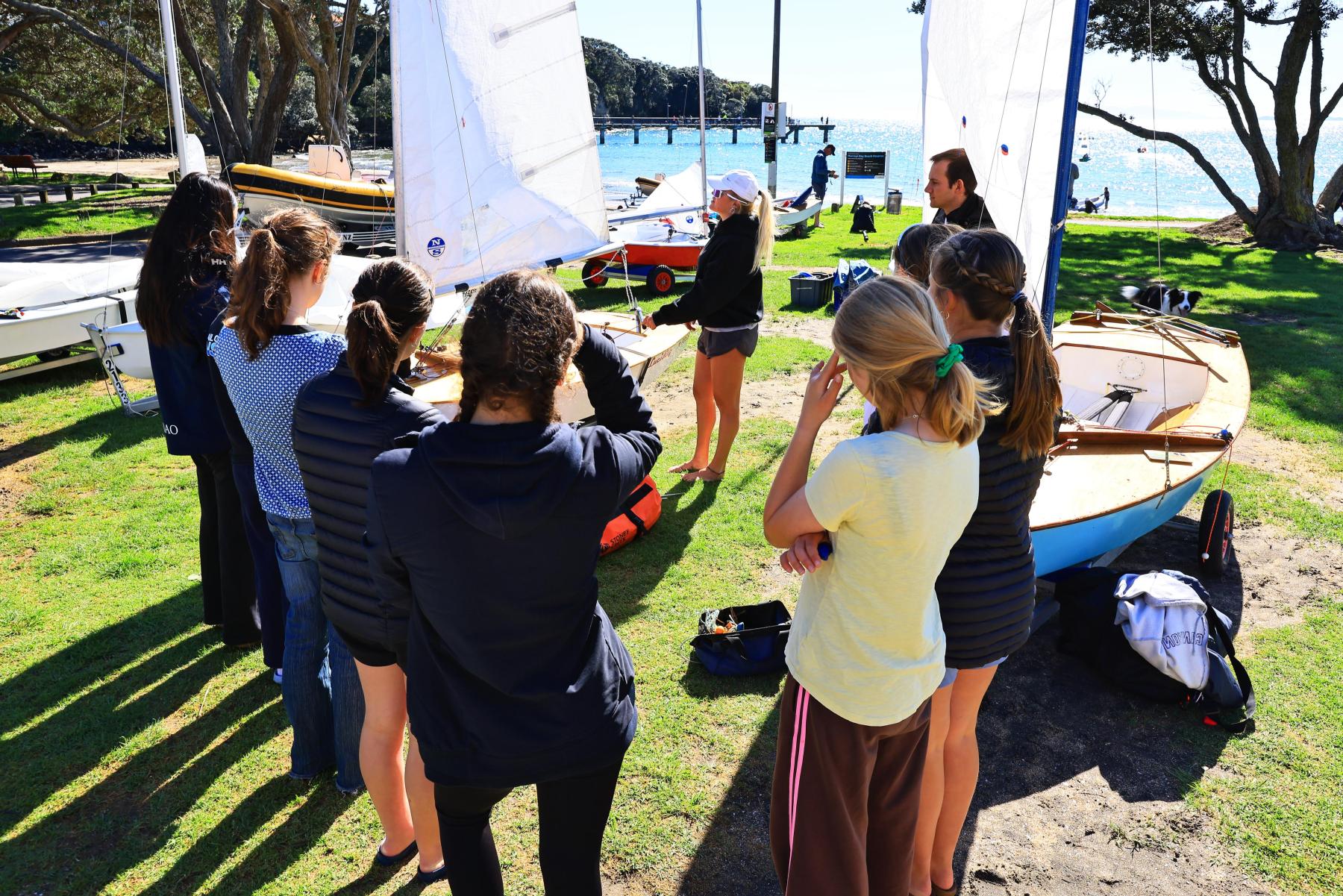
Yachting New Zealand has reported a series of high-performance coaching sessions involving young sailors in the 49erFX, Starling and ILCA 6 classes, providing practical development opportunities ahead of the 2027 racing season. Its official account, published on 21 October 2026, describes a 49erFX try-out day at Torbay Sailing Club attended by twelve girls, a Starling Girls Accelerator clinic for fourteen sailors at Murrays Bay Sailing Club, and a three-day ILCA 6 clinic at Picton for more than a dozen regional participants. The programmes bring athletes and experienced coaches together in smaller classes where technique and decision-making can make a decisive difference. They are completed October training sessions, not events due to take place at the end of November. Their continuing relevance is the preparation of young sailors for future competition and the potential for clubs to learn from structured development methods.
The original October report
The national sailing body published its account on 21 October, identifying three strands of coaching across different venues. The announcement confirms participant numbers for two of the clinics and the general objectives of each programme. It does not claim that these sailors have already won championships because of their training, nor does it supply measured performance improvements that could be used as an independent assessment. The main achievement described is the opportunity to gain practical experience with guidance from accomplished sailors and coaches. Readers should understand the date of the source. This is a retrospective review of recent coaching activity, written for the wider leisure-boat community as the Australian and New Zealand summer sailing season develops.
Twelve sailors try the 49erFX
Yachting New Zealand says twelve girls attended the 49erFX try-out at Torbay Sailing Club. The 49erFX is a high-performance two-person skiff designed for experienced sailing rather than as a basic beginner's boat. Sailors moving into that class must manage crew weight, manoeuvres, rigging and communication at a pace that can be substantially different from their previous dinghies. A supervised try-out lets participants judge whether the class suits their interests and future development. It also gives coaches a chance to explain the commitment required for safe and effective skiff handling. The number twelve is confirmed by the association, but a participant attending a trial should not be counted as having permanently joined a 49erFX campaign without a separate follow-up.
Experienced athletes support the introduction
The official account names Nicola and Rebecca Hume, Olympic silver medallist Molly Meech, Yachting New Zealand Athlete Development Manager Geoff Woolley, 2004 Olympian Andrew Brown and former 49er sailor Sam Bacon among the people sharing knowledge during the try-out. Their involvement brings experienced perspectives to the learning environment. However, the source does not say every participant received a fixed amount of individual tuition from every named sailor. A productive session can combine demonstrations, safety briefings, observations and discussion about what a class demands. For young sailors, meeting experienced athletes may help make a high-performance pathway feel more understandable. The practical benefit will depend on how they apply the lessons after the session, rather than on the number of accomplished names associated with the event.
The challenge of a two-person skiff
A 49erFX requires coordinated decisions from helm and crew, particularly during rapid changes of direction and speed. Each sailor has to anticipate how the other will move and how the boat's response changes with wind strength. That is a demanding but rewarding transition for someone coming from a smaller or more stable training boat. High-performance classes also need appropriate safety cover and carefully selected conditions. A programme that introduces new sailors to such a boat should be designed around their competence rather than the desire to complete a particular manoeuvre. It can be sensible to begin by understanding rigging, body position and communication before attempting more complex activities. The official try-out appears intended to support that informed progression, rather than declare newcomers race-ready after one day.
Fourteen in the Starling Girls Accelerator
A second strand brought fourteen sailors together at Murrays Bay Sailing Club for a Starling Girls Accelerator clinic. Yachting New Zealand identifies a preparation goal: the 2027 Starling National Championships, due to be held at the same venue in April. The group attended a presentation from Vicki Hudson of High Performance Sport New Zealand before the sailing programme. Coaches Naiomi Ferrissey, Matthew Rist and Caleb Armit then worked with the participants afloat. This combination of discussion and practical training can help young sailors think about their preparation more systematically. The Starling is a small single-handed dinghy class, so the decision-making responsibilities lie with the individual helm. Coaching can help each sailor recognise how trim, balance and tactics interact with the conditions.
Preparing at a future championship venue
Training at the club that is due to host a major event has specific value. Sailors can become more familiar with the launching area, the local water and the ways the venue operates. That knowledge may reduce logistical uncertainty when they return for competition. It does not guarantee that April 2027 weather conditions will resemble those experienced during the October clinic. Wind, tide and other factors can change, and good sailors need to adapt rather than rely on one remembered pattern. Participants should make notes about practical details while keeping the emphasis on transferable skills such as recognising shifts, maintaining boat speed and preparing equipment. Venue familiarity is useful when combined with flexible judgement, not when it becomes an assumption that every future race will follow the same pattern.
Picton brings regional ILCA 6 sailors together
The Yachting New Zealand report also describes a three-day ILCA 6 clinic at Picton involving more than a dozen sailors from Christchurch, Picton, Nelson and Wellington. Participants ranged from people new to the class to those with approximately two years' experience in it. Coaches Matthew Rist and George Pilkington led work on starting techniques, positioning, boat speed and boat handling, according to the association. The programme also included strategy sessions and club racing. A group spanning different levels can be effective when exercises are designed so that each sailor has a suitable objective. More experienced participants can sharpen a specific technical skill while those still adapting to the class develop confidence in its controls and response.
Why starts deserve focused practice
An ILCA race start combines boat handling, timing and awareness of other competitors. A sailor must know where the line is, how the boat is moving and which options remain available when other boats change course. Starting exercises can isolate those decisions from the broader challenge of completing an entire race. Participants might practise maintaining a suitable distance from competitors, accelerating consistently and recognising whether an initially attractive position is becoming crowded. Each exercise needs clear rules and safe separation. Good coaching should explain the reason behind a decision and help a sailor identify what could be improved. A start is not automatically successful because the boat crossed a line quickly; the sailor also needs a useful position and a safe, legal approach to the first leg.
Positioning and boat speed are connected
The association identifies positioning and boat speed among the areas covered at Picton. A sailor may lose ground because of inefficient trim, but also because the chosen part of a course exposes the boat to weaker wind or an unfavourable direction. Coaching needs to distinguish those effects. In a single-handed dinghy, the helm must watch conditions and other competitors while continuing to manage the sail and boat balance. Clear feedback helps a participant learn which adjustment had the greatest impact. There are no universal settings that produce maximum performance in every breeze or on every waterway. The aim is to build the sailor's ability to observe, test and refine a decision under realistic conditions.
Club racing completes the learning cycle
The Picton clinic included some club racing, giving participants an opportunity to apply skills in a competitive setting after drills and discussion. This is useful because a manoeuvre that feels straightforward when practised alone can become more difficult when other boats are nearby and a race result is at stake. An effective coaching programme should help sailors reflect on what they experienced rather than concentrate exclusively on finishing positions. Participants might discover they need to improve their starts, reduce unnecessary steering movement or communicate better with a coach about what they are finding difficult. The national association does not provide an event ranking for the clinic, and it would be misleading to invent one. The reported purpose was skills development.
The importance of regional access
Not every young sailor lives near a major high-performance training centre. Bringing coaching to different clubs can make development more accessible to people whose home waters are geographically separated. The Picton programme included participants from several regional communities, allowing them to learn alongside others who may normally race in different fleets. That experience can create contacts and encourage future club participation. Travel and equipment costs may still limit access, and the October report does not establish that all participants received identical financial support. A realistic development system needs to consider those barriers as well as technical coaching. Regional clinics can help, but they depend on local facilities, competent personnel and the continued availability of opportunities afterward.
Girls' pathways need continuity
Two of the reported activities were designed specifically to expand opportunities for girls: the 49erFX trial and the Starling Girls Accelerator. These initiatives can help participants see a credible progression from junior sailing into more demanding classes. Their success should not be judged solely by how many people attended one session. Continued involvement depends on accessible training, suitable boats, supportive clubs and a culture in which sailors feel comfortable asking for help. Coaches and organisers should also pay attention to safeguarding, clear feedback and realistic expectations about time commitment. A young sailor might discover a new ambition or decide that another class better suits her interests. Both outcomes can be valuable when the programme gives her informed choices rather than pressure.
Appropriate safety and equipment
Coaching sessions in 49erFX, Starling or ILCA 6 boats need different practical arrangements because the craft vary in rig, handling and demand on the sailor. Instructors should confirm equipment condition, buoyancy requirements, weather limits and the competence of those taking part. A high-performance skiff trial is not a suitable place to dispense with careful supervision merely because an athlete has sailed a different class before. Participants also need time to understand launching and recovery arrangements, particularly if they are visiting an unfamiliar club. Technical progression should be matched to the person's readiness. Safety-boat crews and shore staff have important roles in making specialised coaching possible. The national report does not describe incidents, so none should be invented.
What the October clinics establish
Yachting New Zealand's verified account confirms twelve participants in the Torbay 49erFX try-out, fourteen in the Murrays Bay Starling Girls Accelerator and more than a dozen at the Picton ILCA 6 clinic. It identifies coaches and experienced sailors involved, as well as practical areas of focus and the approach to next year's Starling championships. Those facts support a useful picture of ongoing grassroots and development work. The wider significance lies in showing that opportunities for progression are built through direct time on the water, not simply through new racing calendars or boat launches. The October activities are complete; future competitive results will need their own verified reports. For the under-twelve-metre sailing sector, the development pathway remains one of the most important investments a club or national association can make.
Original industry sources and image credits
Reporting based on Official primary-source nz 2026/2027 club, sailing association or fishing event notice, with verified facts and dates.
Lead image: Original Yachting New Zealand photograph published with the completed October 2026 youth dinghy coaching programme. © Yachting New Zealand and original club training photographer.. Original supplier image.