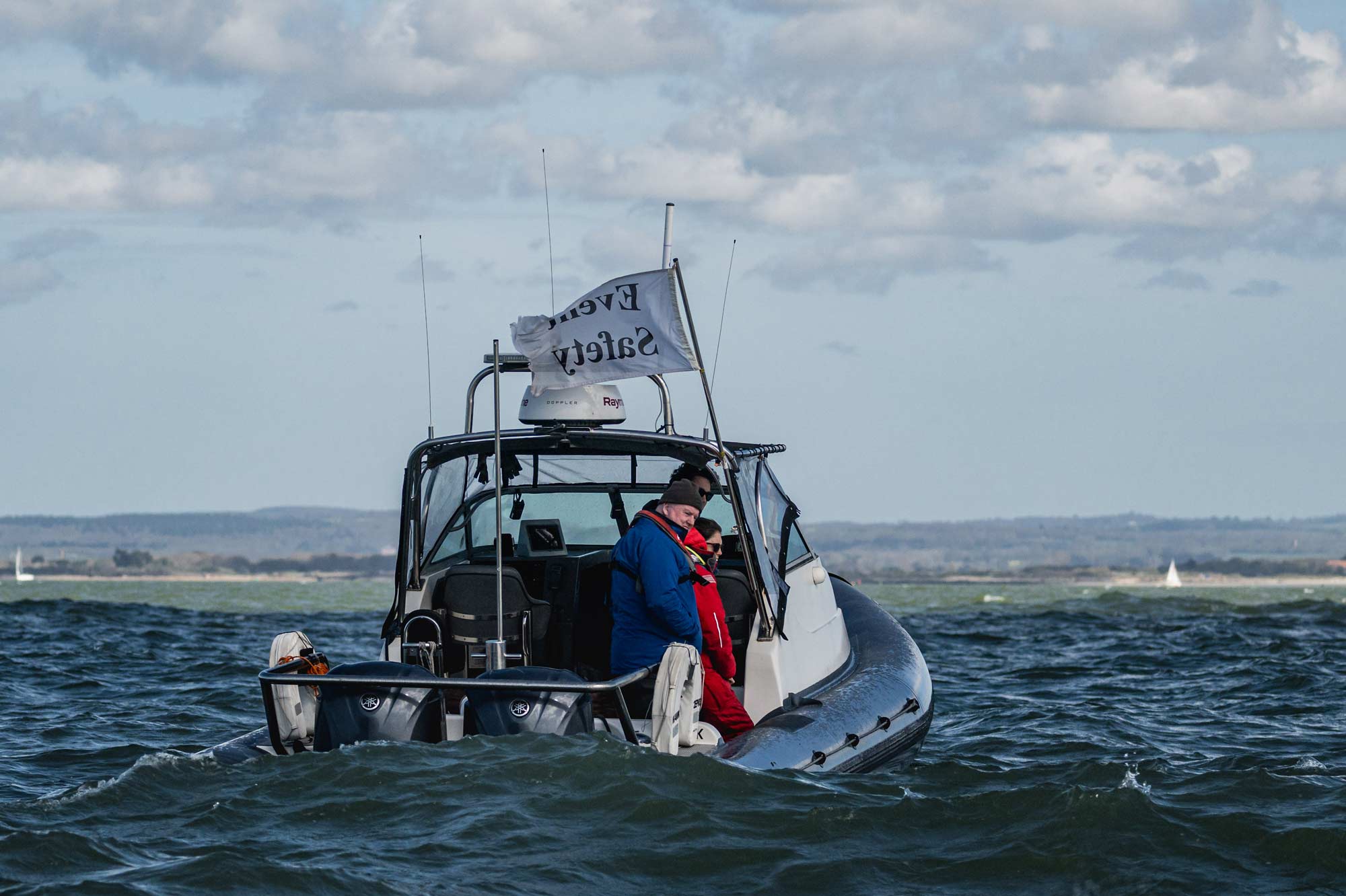
The Royal Yachting Association has scheduled an Event Safety Management Course for Saturday 28 November 2026 at its Hamble headquarters, giving race organisers and volunteers an opportunity to review practical approaches to planning safer on-water competitions. The original RYA event listing names RYA House, Ensign Way, Hamble, Southampton as the venue and specifies a 09:30–17:00 programme with a published fee of £40. The advertised subjects include the responsibilities of an organising authority, event risk assessment, safety management plans, contingency planning and tactical positioning of a safety fleet. Although the organisers describe the course as addressing management beyond the actual sailing manoeuvres, its intended audience includes people responsible for on-water safety in racing events. This is a confirmed forthcoming training session, not an announcement that a new rule has already come into force or that any named club has failed its duties.
The published Hamble course arrangements
According to the RYA, the event is due to take place on 28 November at RYA House in Hamble, with registration available through the official events page. The advertised cost is £40, but the listing does not say that accommodation or transport are included. Applicants should confirm that places remain available and check whether any pre-course materials are required. The programme runs for a single day, so it should be understood as structured training rather than a substitute for all the experience, qualifications and local knowledge needed to manage every type of regatta. A course can help organisers identify good principles and common problems. Applying those principles to a particular river, lake or coastal venue still demands a venue-specific risk assessment, appropriate permissions and the judgement of competent officials.
The role of an organising authority
A central topic is the responsibility of the authority running a race or regatta. This may be a sailing club, an association or another properly constituted organisation, depending on the event. It needs to identify who can make decisions, how information is communicated and what resources are available when things do not go as planned. Simply naming a race officer is not enough if the wider management arrangements are unclear. Good governance includes written responsibilities, appropriate insurance and a way to consider complaints or incidents. The RYA's listed syllabus points toward that broader structure. Each organisation should refer to current racing rules and the requirements of the local authorities rather than assume that attending a training session confers every necessary legal permission.
Risk assessment should describe real hazards
An event risk assessment begins by identifying what might actually harm sailors, volunteers or other water users. On a small inland reservoir, hazards may include cold water, a steep launching area, sudden wind changes or congestion near a narrow entrance. On the coast, tide, current and commercial traffic may require different controls. The assessment should consider participant experience, boat characteristics and how the event will be supervised. A generic form copied from a previous year can overlook changes to the venue or the fleet. Organisers should decide which controls are realistic and how they will be checked. The document is useful only when the team understands it and has the resources to act on the identified risks.
Controls have to work during racing
Having a written control measure is one step; ensuring that it can be applied under pressure is another. For example, a plan may require an additional safety boat when a junior group sails in stronger wind. That condition is meaningless unless the organisers know who provides the boat, whether its crew is qualified and where it will be positioned. Similarly, an instruction to stop racing must identify who has the authority to make that call and how competitors will be informed. A sensible plan uses controls that are clear, proportionate and achievable with the available resources. The RYA's advertised course includes implementing control measures, which is an important acknowledgement that paperwork alone does not make an event safe.
Safety fleet positioning is a technical skill
The Hamble course includes tactical positioning of safety boats. A support craft that follows the fleet without a plan may be poorly placed when a capsize or equipment failure occurs. Operators need to consider wind direction, the course layout, likely problem areas and the presence of other vessels. The best position may change as the weather or the racing programme changes. Safety-boat crews also need a shared communication method and an understanding of how responsibility is divided between different craft. Organisers must not assume that having a certain number of boats automatically provides adequate coverage. Boat capability, crew competence and the actual conditions matter. The RYA event page does not specify a universal ratio of safety boats to competitors, so an unsupported number should not be invented.
Cold-water conditions are relevant in November
Small-boat competitions held during late autumn can expose participants to cold water and reduced daylight. A sailor who capsizes may become cold and fatigued quickly, especially if clothing is inadequate or the boat takes time to right. Safety plans should address the process for bringing someone ashore, helping them warm up and obtaining appropriate medical assistance. Crews should understand the signs of a participant who is no longer able to continue safely. Racing organisers also need to consider how long a team may spend on the water while waiting for a start or after a postponement. These decisions should be made in light of the conditions and the participants, not simply because an event was scheduled to finish a particular number of races.
Contingency planning starts before departure
The RYA identifies contingency planning as part of the course. A regatta organiser should ask what will happen if a safety boat becomes unavailable, the wind changes suddenly, a major piece of equipment fails or the course cannot be used. Plans might include shortening the programme, moving a start area or returning competitors to shore. The procedures must suit the venue and be understood by the race team. A useful contingency plan establishes who will make decisions and how those decisions will reach sailors, spectators and shore personnel. It should also identify how to contact appropriate emergency services. The purpose is not to predict every conceivable incident, but to avoid leaving obvious decisions until everyone is already under pressure.
Communication across the race team
Race officers, mark-laying boats, safety crews and shore teams all need consistent information about changing conditions and the status of competitors. Radio procedures should be agreed in advance, with suitable backup arrangements where necessary. A clear message about a course alteration or an incident can prevent confusion that would otherwise consume valuable time. The communication plan should distinguish routine updates from urgent requests for help. Some clubs also need a method for keeping parents or spectators informed without interrupting the working safety channel. Organisers should be careful about broadcasting personal medical details or unverified information. Good communications combine speed, accuracy and respect for the people involved.
The launch and recovery period deserves attention
It is easy to concentrate safety planning on the racing itself, yet incidents can also happen during launching, queuing at a slipway or returning to shore in deteriorating weather. A small sailing dinghy can become difficult to control near a crowded pontoon if wind or current pushes it toward other craft. Organisers may need marshals, designated areas for different groups and a clear way of checking that all competitors have returned. The availability of trolleys, trailers and suitably placed helpers can matter when sailors are tired. A safety plan should include these movements rather than assume that the danger ends when the finishing line is crossed. A calm and well-organised recovery can be particularly important for young sailors.
Participation and safeguarding considerations
Some racing events involve children, inexperienced competitors or participants requiring adjustments to access arrangements. Organisers need to provide appropriate supervision and safeguarding procedures, as well as consider whether the boats and facilities are suitable. These requirements should be addressed during planning instead of improvising after a participant arrives. A person may be fully capable of sailing but need a different boarding arrangement or clear information about accessible facilities. Officials also need to know who is responsible for dealing with a safeguarding concern. Training in event safety management can support a more inclusive environment, but any specific procedures must follow the applicable authority's current guidance and legal obligations.
Records help future organisers improve
After a race weekend, the event team can review incidents, near misses and operational difficulties. Information about weather, boat availability and communication failures may be valuable for planning the next event. Such records need to be accurate and handled in accordance with data protection and safeguarding requirements. An organisation should not assume that a day without a reported accident proves its arrangements were perfect. A delayed safety-boat response or confusion over competitor counts may reveal a problem even when nobody was harmed. A constructive review focuses on making practical improvements rather than finding someone to blame. This is one reason a safety management plan should be a living document that can be updated as the fleet and venue change.
What trainees can ask at the session
People attending the course can make better use of the day by bringing questions from their own racing programmes. Is the club uncertain about how many volunteers are needed? Are risk controls written clearly enough for a new race officer to understand? Does the contingency plan cover a loss of communications? Could the safety fleet be positioned more intelligently for certain course layouts? Participants should also ask how the RYA's general advice interacts with the rules of their own organising authority and local waterway. A practical training event is valuable when it helps people identify decisions they can implement and areas where they need further specialist advice.
The significance of the November event
The RYA has confirmed an Event Safety Management Course at Hamble on 28 November, with an advertised programme covering organisational responsibility, risk assessment, controls, planning and safety-boat positioning. No course outcomes or attendance figures can be claimed in advance. Its importance to the under-twelve-metre leisure-boat community lies in the support it offers to the people who make dinghy competitions, club racing and other organised activities possible. Safe events depend not just on a skilled helm or a fast rescue boat, but on planning, communication and decisions made at the right time. The forthcoming session offers organisers a chance to examine those responsibilities systematically before the next busy period of club sailing.
Original industry sources and image credits
Reporting based on Original first-party safety dated product or event announcement with direct verifiable facts.
Lead image: RYA original youth sailing racing image featured with the 2026 event safety course. © Royal Yachting Association and original sailing photographer.. Original supplier image.