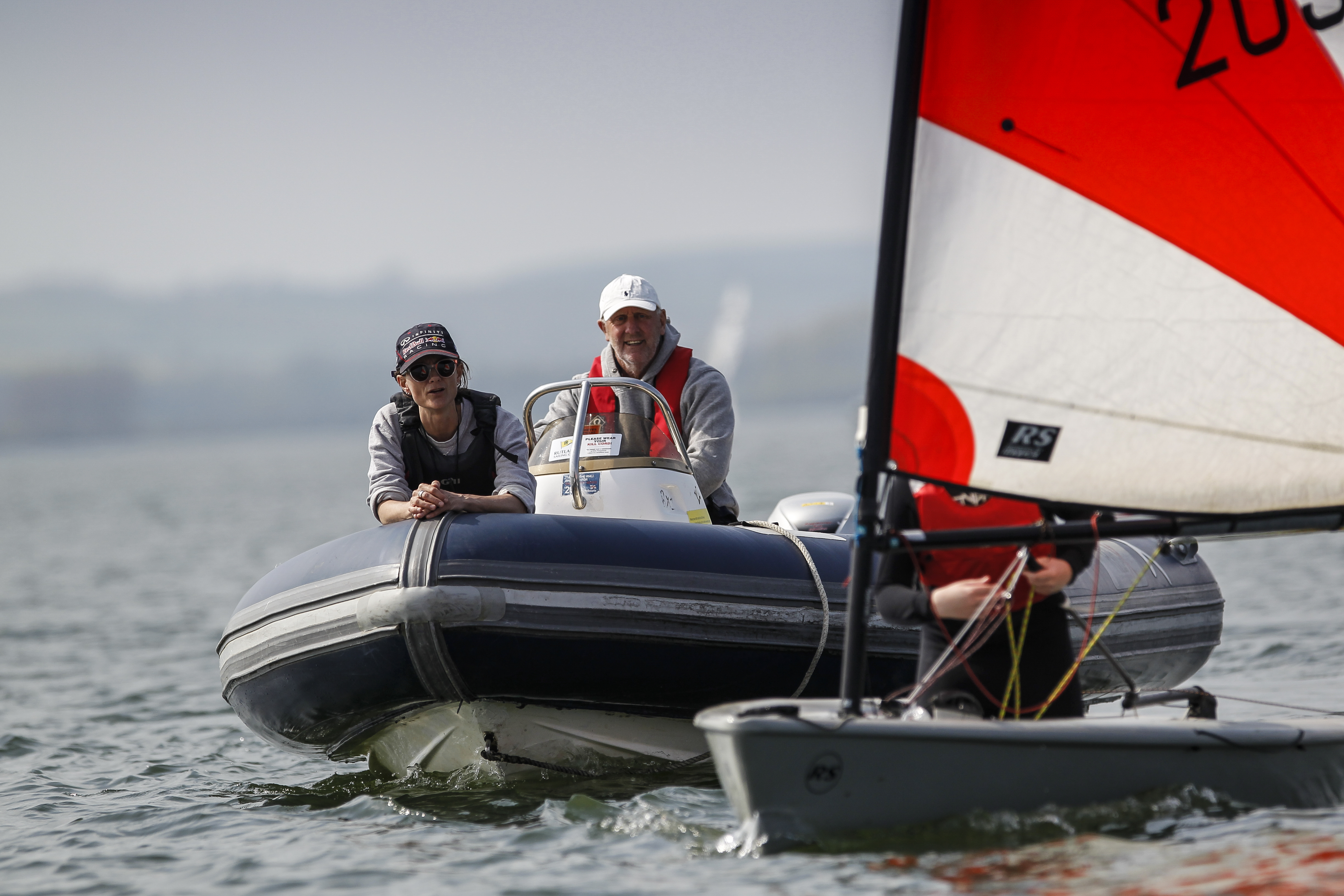
The Royal Yachting Association has confirmed a Race Coach Level 2 course at Dalgety Bay Sailing Club in Scotland on 28 and 29 November 2026. Its original event notice describes a two-day programme from 09:00 to 17:00, with an advertised cost of £200, intended to help competent club racers develop the skills needed to coach youth and adult sailors. Candidates are expected to plan and deliver complete sessions, including a briefing, on-water exercises and a review. This is a practical development opportunity within small-boat sailing rather than a new championship or a completed training result. The qualifications and experience of instructors influence whether clubs can support sailors beyond introductory lessons, and a structured coaching course can help volunteers improve the clarity, safety and usefulness of their sessions.
What the RYA has confirmed
The RYA's first-party listing places the course at Dalgety Bay Sailing Club near Dunfermline, postcode KY11 9SJ, on Saturday 28 and Sunday 29 November. The programme is advertised for 09:00 to 17:00 on each day, with registration through the organisation's event system. The price is £200, although the page does not establish whether all travel and personal costs are included. Attendees should confirm a place and the organiser's final instructions before making a journey. The course is described as an intensive practical programme rather than an online lecture. Weather may affect what can be delivered afloat, and the provider remains responsible for adapting the activity safely. The event is forthcoming, so it would be inaccurate to identify successful candidates or report assessment outcomes before the weekend takes place.
Eligibility goes beyond enthusiasm
The public event page identifies several conditions for a person working toward Race Coach Level 2. Applicants must be RYA members, competent club racers and at least sixteen years old, and they need suitable first aid and RYA Powerboat Level 2 certification. The RYA explains that there is a six-month grace period for certain outstanding requirements, but this should not be interpreted as a blanket waiver of eligibility or a guarantee of appointment. Coaches who are under eighteen require appropriate supervision. Prospective participants should ask the training provider which documents are required at registration and which may be completed later. Experience of racing is an important foundation, but it does not automatically translate into an ability to teach. The course is designed to develop that separate set of skills.
Good coaches create a useful environment
An accomplished sailor may understand wind shifts and boat trim but struggle to explain them to someone who learns differently. A coach needs to establish a positive environment in which participants can ask questions, try a technique and receive helpful feedback. This is especially important for younger sailors who may be developing confidence as well as physical skills. An effective briefing sets out the objective of an exercise and the signals used to start or stop it. A review then helps participants understand what worked and what to change. The RYA describes the course as being concerned with inspiring sailors and applying coaching techniques, not merely demonstrating how quickly an instructor can finish a race.
Planning the session is part of the skill
The event listing states that every candidate is expected to run complete sessions. That requires choosing an achievable objective, explaining it clearly, selecting appropriate water space and considering the safety resources available. A group of novice racers might practise starting without being asked to perform complex tactical exchanges immediately. A more experienced team could work on positioning at a mark or handling changes in wind direction. The coach needs to match the exercise to the actual competence of the sailors, rather than rely on an identical plan for every group. A well-structured session should also include ways to adapt when the weather changes or a boat becomes unavailable. Good planning makes learning more productive while reducing the chances of unnecessary confusion on the water.
The role of a safety plan during coaching
Practical race coaching involves people concentrating on manoeuvres and competitive objectives, so it must be supported by appropriate safety arrangements. The coach should know the operating area, forecast, rescue resources and procedures for returning to shore. If a powerboat is used, its driver needs the competence and local permissions required for the task. The RYA Powerboat Level 2 prerequisite is relevant to this environment, but it does not remove the need for careful decisions about speed, separation from dinghies and propeller hazards. A coach should maintain an effective lookout and choose observation positions that do not interfere with other sailors. The training provider sets its own arrangements for the weekend, and candidates should understand them before beginning an exercise.
Briefings need to be short and clear
A briefing that takes too long can leave sailors distracted or cold, especially during late-November conditions. The most useful introduction identifies what the group will practise, where it will take place and how success can be recognised. Participants should know the limits of the training area, the signals they may hear and what action to take if a problem occurs. A coach can use a simple diagram or demonstration, but should check understanding before sending the group away. In a mixed-ability fleet, different sailors may need slightly different goals. Communication is a technical skill in its own right. The ability to give concise instructions and confirm that participants have understood them is often more valuable than an elaborate speech filled with racing terminology.
On-water exercises should build progressively
A sailing exercise needs enough repetition for participants to improve, but not so much complexity that they become confused or fatigued. A coach may begin with a straightforward boat-handling task and introduce tactical decisions only once the group is comfortable. Changing course length, start procedures or mark positions can keep the drill relevant to the learning objective. Participants should receive clear signals when the task changes. The coach must also recognise the effect of wind and water conditions on how difficult a manoeuvre becomes. An exercise that is suitable in moderate conditions might not be appropriate when gusts increase. A good coach is prepared to simplify, reposition or stop an activity when necessary.
Feedback should be evidence-based
The review element of the RYA's course encourages candidates to consider how they help sailors learn from an exercise. Feedback is most useful when it describes something the coach actually observed and links it to a practical improvement. Telling a sailor to 'be faster' is less constructive than discussing a specific helm movement, trim adjustment or starting decision. Coaches should also give participants an opportunity to explain what they were trying to do and how the boat felt. Different learning styles and experience levels may require different language. When an exercise goes badly, the goal is to understand the cause and choose an improvement rather than embarrass a participant. Such an approach supports both performance and retention.
Youth and adult groups are not identical
The official programme is intended for coaching both youth and adult sailors. A coach working with younger participants must consider safeguarding, appropriate supervision and the way confidence develops. Adult sailors may arrive with extensive experience in one class but need help adapting to another. A useful course should encourage candidates to think about how their teaching style changes between groups. Everyone benefits from clear objectives and respectful feedback, but the pace, physical demands and communications may need adjustment. Sailors should not be pushed into conditions beyond their competence simply because the group has a fixed training plan. Understanding those differences is part of learning to coach responsibly.
Supporting local club racing
A club with several capable race coaches can offer more consistent development than one relying entirely on occasional informal advice. Regular sessions can help sailors understand race starts, rules, course strategy and the way boat handling changes under pressure. Coaching can also make competition feel more accessible to people who are uncertain about joining their first regatta. However, clubs should not assume that obtaining one additional qualification automatically solves every training problem. They also need boats in good condition, appropriate safety support, access to instructors at suitable times and an environment where sailors feel welcome. A qualification is most useful when the club has a realistic plan for applying it.
What the Dalgety Bay environment adds
The venue is a sailing club on the Firth of Forth, so participants should consider weather, temperature and the operational characteristics of the local water. Exact course arrangements and permitted areas will be set by the organiser. A November training weekend can be physically demanding, and a candidate should arrive with suitable clothing and personal safety equipment. Cold conditions can make demonstrations and lengthy explanations uncomfortable, increasing the value of thoughtful planning. The coach may also need to understand how current or waves affect the sailing exercise. A participant familiar only with a sheltered inland lake should not assume the same manoeuvre will feel identical in a more exposed setting.
A course is not a guarantee of certification
Attendance and successful assessment are different matters. The RYA listing explains the aim of the course and the requirements for progression, but it does not promise that every registered person will receive the Race Coach Level 2 qualification automatically. Candidates should expect to demonstrate practical competence and a satisfactory approach to coaching within the provider's procedures. They may need to complete outstanding prerequisites within the specified period. A sailing organisation should always verify a coach's current status and suitability for a particular role. The presence of a certificate can support confidence, but ongoing experience, judgement and the club's own safety procedures remain important.
Preparing for the weekend
Prospective candidates can make the training more valuable by reviewing their racing experience and identifying the areas in which they would most like to improve. It can help to plan a simple session outline before arrival, including an objective, a short briefing, an on-water task and a review. Bring any required qualification documents and suitable clothing, and check whether the provider expects personal equipment. Candidates should arrive ready to receive feedback and to support others rather than compete for attention. A useful learning environment is collaborative. The aim is not to prove that one sailor has all the answers, but to develop methods that help a wider group make progress safely.
The relevance to small-boat sailing
The RYA has confirmed a Race Coach Level 2 course at Dalgety Bay on 28–29 November, including the hours, price, eligibility conditions and practical session structure. Its wider importance lies in developing the volunteers and instructors who help people enjoy racing dinghies safely and effectively. Good coaching can improve boat handling, confidence and participation across both youth and adult fleets. The course has not yet taken place, and no outcome or attendance number should be inferred in advance. What is verifiable is that the regional training opportunity is scheduled and targeted at competent racers ready to learn a more demanding instructional role. The quality of club sailing depends on such people as well as on the boats themselves.
Original industry sources and image credits
Reporting based on Original first-party coach dated product or event announcement with direct verifiable facts.
Lead image: Original RYA sailing coaching photo displayed with Dalgety Bay's November 2026 course notice. © Royal Yachting Association and original sailing photographer.. Original supplier image.