The Royal Yachting Association has confirmed an Advanced Dinghy Instructor Endorsement course at Barnt Green Sailing Club in England on 28 and 29 November 2026. The organisation's original event page gives a 09:30–18:00 programme across the two days, a listed fee of £175 and specific prerequisites for applicants. The training is intended for existing dinghy instructors who want to teach more demanding small-boat handling skills, including spinnaker use and performance sailing. The announcement matters to the recreational small-craft sector because competent instructors help sailors progress safely from initial training to more advanced sessions. It is an upcoming training event, not a claim that anyone has completed the course or earned a qualification before the weekend begins.
The confirmed event arrangements
The RYA names Barnt Green Sailing Club, postcode B45 8BH, as the location and Saturday 28 through Sunday 29 November as the dates. Its published programme runs from 09:30 to 18:00, subject to the organiser's final instructions. Candidates are directed to register through the official event listing. The advertised price is £175; the event page does not state that this fee includes every possible travel, accommodation or personal equipment cost. A person wishing to attend should verify availability and any required documentation before travelling. Weather conditions can affect the ability to conduct practical sailing assessments, and the organiser is responsible for decisions about changes to its timetable. The current news is the scheduled course and the skills it intends to cover, not a report of future outcomes.
This is a progression for existing instructors
The RYA is clear that applicants must already hold a Dinghy Instructor certificate, a valid first aid certificate and an RYA Powerboat Level 2 certificate, and must be at least sixteen years old. These are minimum conditions listed for the course, not suggestions that can be replaced by informal boating experience alone. People who do not meet the prerequisites should not assume they will be accepted. An instructor who already teaches beginners will normally have experience with basic boat handling, rigging and safety arrangements. The advanced endorsement is intended to help them develop and demonstrate additional teaching techniques. It does not create unlimited authority to run every kind of sailing course or operate powerboats beyond the training and legal permissions that apply to the individual.
Performance sailing requires a different approach
The course covers the teaching of advanced boat handling and the five essentials of sailing. Those principles include fundamental relationships among sail setting, trim, balance, course and the choice of sailing technique, but the objective at this level is to coach sailors who already understand the basics. An instructor must be able to identify which adjustment will improve control or efficiency under the conditions of the day. This requires more than demonstrating how quickly one skilled person can sail a boat. The ability to explain a decision clearly, create safe exercises and recognise when a participant needs to return to a simpler drill is essential. Advanced sailing can be enjoyable and challenging, but the instruction should build capability progressively rather than encourage unnecessary risk.
Spinnaker instruction is part of the programme
The official event description specifically includes teaching the use of spinnakers. These sails can add performance on suitable points of sailing, but they introduce lines, poles or other equipment and more complex crew coordination. A small error during hoisting, gybing or recovery can become difficult when the wind increases. Instructors need clear methods for briefing, demonstrating and supervising each manoeuvre. They should be prepared to reduce the exercise's difficulty or stop if the crew becomes overloaded. A useful advanced course will consider what students already know and how to adapt explanations for different boats or skill levels. The published event page does not specify exactly which dinghy classes will be used, so candidates should ask the organiser rather than assume the course will take place in their usual model.
The five essentials need to be understood in context
The RYA mentions coaching the five essentials at an advanced level, reflecting the importance of consistent sailing fundamentals even when a sailor is learning more demanding techniques. A coach must recognise when steering, sail trim, boat balance, centreboard choice or the course being sailed is contributing to poor control. The correct adjustment can vary between conditions and boat types. Teaching should therefore encourage observation and explanation rather than repeating rules mechanically. An instructor who understands why a manoeuvre works can adapt the demonstration when the wind shifts or a student uses a different dinghy. The aim is a sailor who can make good decisions independently, not one who follows a fixed sequence without understanding the boat's response.
Powerboat use in an advanced coaching environment
The event page also includes the use of powerboats when coaching advanced sailing. A coach boat allows instructors to observe sailing technique and provide assistance, but it must be handled by a competent operator who can maintain safe separation from dinghies and other water users. A fast-moving training group can be difficult to supervise if the powerboat driver becomes too focused on one participant. Effective coaching requires planning, communications and an understanding of how the safety-boat role differs from instruction. The RYA Powerboat Level 2 prerequisite is part of the eligibility framework, but it does not remove the need to operate within the powerboat's limits and the venue's procedures. The course should reinforce that safety responsibilities continue even when training is focused on performance.
Continuous assessment rather than one final demonstration
The RYA describes assessment on a continuous basis afloat, with the possibility of a theory test. That means participants should be prepared to demonstrate teaching ability and decision-making throughout the programme rather than expect a single routine at the end. A successful instructor must combine technical competence with clear communication and the ability to manage other people on the water. The organiser may look at how an applicant briefs a group, delivers feedback and handles changing conditions. The public notice does not provide a detailed scoring rubric, and prospective candidates should request current assessment guidance from the provider. It would be wrong to assume that payment of the course fee automatically leads to an endorsement. Qualification remains dependent on meeting the required standard.
Why clubs need advanced instructors
A sailing club often has plenty of people willing to help beginners, but it may have fewer instructors confident in teaching the skills required for performance sailing or spinnaker handling. Without that pathway, young sailors can reach a stage at which their development depends on travelling to another organisation. A suitably qualified instructor can help a club offer structured progression while retaining familiar facilities and a community of experienced volunteers. The benefit is not simply more advanced racing results. Sailors who develop better control may also become more capable recreational users of small craft. A club should still make sure it has suitable boats, equipment, safety support and operating conditions before adding new courses to its programme.
Qualifications and insurance require clarity
Any club arranging an advanced programme needs to confirm that instructors hold qualifications appropriate to the specific activity and that insurance and safeguarding arrangements are correct. An endorsement may allow teaching of particular syllabus elements, but its exact scope should be checked against current RYA documentation. Clubs should also understand how instructors maintain competence and whether refresher training is advisable after time away from teaching. There may be legal differences between operating a powerboat at an inland training venue and working in tidal coastal water. Competence should be treated as an ongoing responsibility rather than a one-time document. Clear records help organisers assign instructors and safety crews to roles they are actually trained to perform.
Suitable boats and equipment matter
Advanced teaching may involve sails and rigging that are not fitted to every club training dinghy. The venue must be able to provide or accept boats suitable for the planned exercises, and their equipment should be inspected before use. Spinnaker sheets, blocks and attachment points need to work properly, while buoyancy arrangements and emergency gear must meet the boat's requirements. The course description does not promise any particular boat model, so candidates should confirm whether they need to bring equipment and what clothing is appropriate. A common challenge for a small club is ensuring that advanced instruction is possible without purchasing expensive boats that are then used infrequently. Shared training facilities and careful course planning can help reduce that burden.
Changing weather can alter a training day
Late November in England can bring cold conditions, short daylight hours and winds that vary substantially over the course of a session. A practical instructor assessment must take those circumstances seriously. Suitable thermal protection, buoyancy aids and clear emergency procedures are essential. The group should know where to shelter and how to return ashore if conditions become unsuitable. Instructors have a responsibility to demonstrate sound judgment, including the decision not to attempt an advanced manoeuvre when the risk is excessive. Completing a syllabus should never override the safe operating limits of the boats or the competence of the people on board. The training provider must decide which activities can be delivered safely and how any postponed components will be handled.
Preparing before the weekend
Candidates can make the course more useful by reviewing their existing teaching methods, checking qualification documents and identifying areas where they want feedback. An instructor who normally teaches beginners may benefit from practising how to explain spinnaker handling in smaller stages. Another may want to improve the quality of on-water observation and feedback from the coach boat. Personal preparation should include suitable clothing, safety equipment and awareness of the venue's instructions. If a participant requires any adjustments or has questions about access, contacting the organiser in advance is more practical than leaving those issues until the first morning. Good preparation allows the limited time to focus on teaching and learning rather than administrative problems.
The significance for small-boat participation
Courses such as the RYA Advanced Dinghy Instructor Endorsement are less visible than new hull launches, but they support the people who help owners enjoy small craft responsibly. Many sailors depend on clubs for their first experiences with spinnakers, racing techniques or higher-performance boat handling. A knowledgeable instructor can help them develop confidence without overlooking the importance of safe behaviour. The confirmed November dates, venue, price and prerequisites provide specific information for eligible applicants and club officers planning training. What remains unknown is how many candidates will take part or pass the assessment. The public event announcement does not give a basis for inventing those figures.
What has been established
On 25 November, the RYA is advertising an advanced instructor course at Barnt Green Sailing Club for 28–29 November. It identifies the skills to be covered, eligibility conditions, fee and continuous-assessment approach. Successful participants may qualify to teach Performance Sailing and Sailing with Spinnakers under the RYA National Sailing Scheme, subject to meeting the organisation's requirements. The course has not yet taken place, and its results must await official confirmation. For clubs and instructors working with small boats, the timely news is an opportunity to strengthen the quality of coaching and expand safe progression beyond introductory sailing. The lasting value of the course will be demonstrated when qualified instructors apply those skills to real sailing sessions with clear expectations, proper equipment and competent supervision.
Original industry sources and image credits
Reporting based on First-party original official dated rya launch, event, leadership or coaching programme statement.
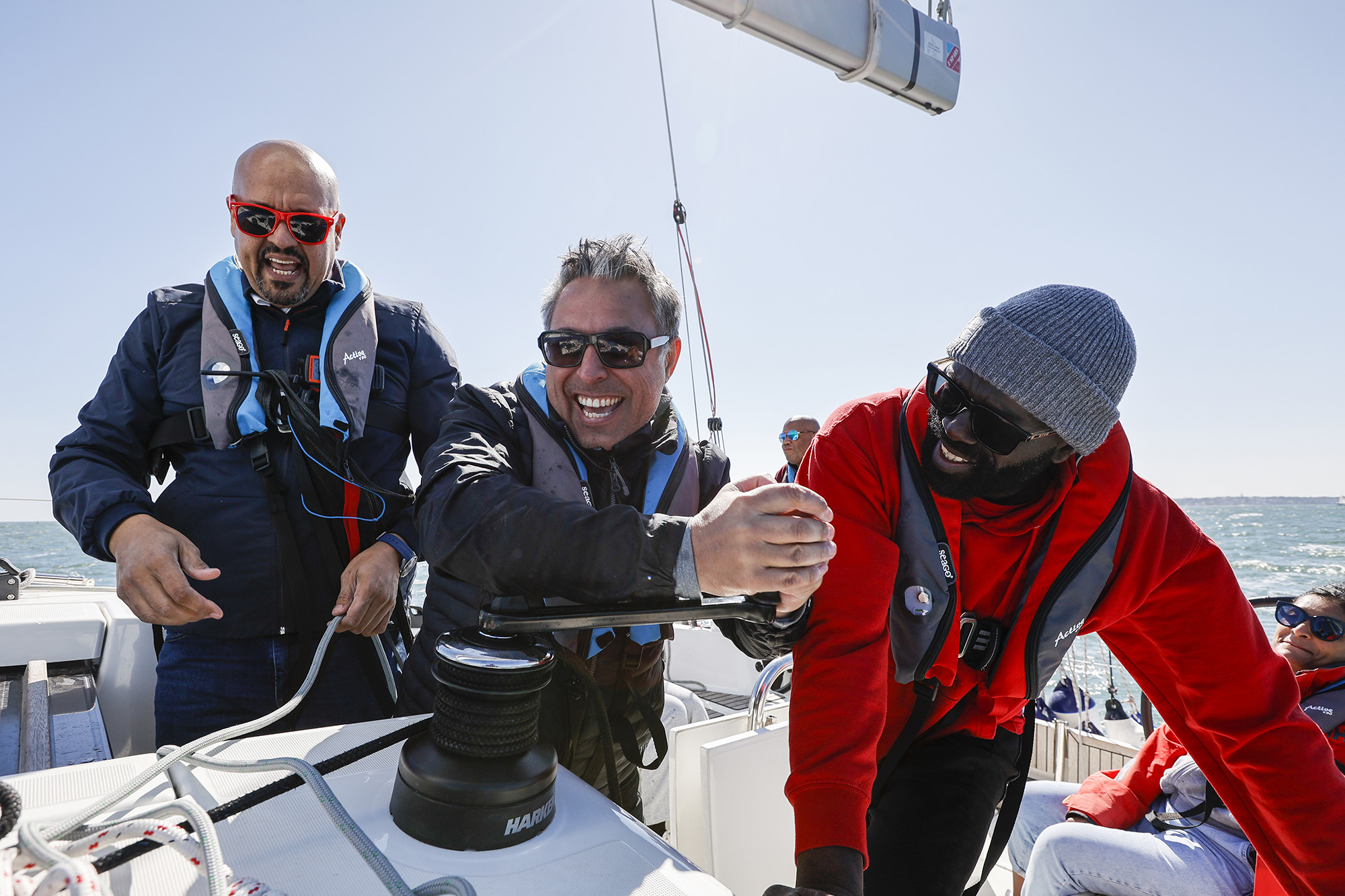
Lead image: Original RYA photograph of a group sailing under instruction, contextual to teaching; not a future course photograph. © Royal Yachting Association and original instructional photographer. Original supplier image.