
Royal Cork Yacht Club's 2026 420 Class Winter Development Programme is entering its final two scheduled sessions, with training advertised for Sunday 29 November and Saturday 5 December. The club's original programme notice confirms six coaching days, beginning on 31 October, and invites sailors from across Ireland rather than restricting participation to Royal Cork members. It describes the series as preparation for the following racing season. This is an important small-boat development because the two-person International 420 dinghy demands a combination of helm skills, crew coordination and tactical decisions that are difficult to master through occasional competition alone. The sessions remaining on the calendar are future activities, not results that have already taken place, and the exact plan for either day will depend on the club's instructions and suitable conditions.
Six training days with a defined endpoint
The official Royal Cork announcement lists 31 October, 7 November, 14 November, 21 November, 29 November and 5 December as the six scheduled dates. The programme therefore provides repeated opportunities over several weekends, rather than being presented as a one-off demonstration. On 25 November, four of the advertised coaching dates have passed and two remain. The club's public notice links to registration and payment information for each session. Sailors should check the available places and any instructions from the organiser before travelling; the announcement does not guarantee that unregistered arrivals can immediately join a boat. It also lists related Frostbite racing dates, but those should not be confused with the separate coaching registration. This article is specifically about the winter development programme and its remaining sessions.
What makes the 420 a useful training class
The International 420 is a two-person dinghy that provides a progression for sailors ready to learn more advanced teamwork and racing technique. Helm and crew must coordinate decisions about sail trim, boat balance and manoeuvres, while keeping an effective lookout and following racing rules. As conditions change, both sailors need to understand how their actions affect the boat. The class is widely used in youth sailing and is small enough to be launched and recovered from suitable club facilities, but its responsive handling can still be challenging. A structured coaching programme can help participants practise skills systematically instead of relying exclusively on the pressure of a regatta. That development requires appropriate supervision, correctly maintained boats and exercises suited to the experience of the people involved.
Why the crew role matters
In a two-person dinghy, the crew is not simply a passenger following the helm's instructions. Sail management, weight placement, observation and tactical communication all influence how effectively the boat performs. A crew who understands the purpose of a manoeuvre can anticipate what needs to happen next, rather than react after the boat has already started turning. Coaching can help sailors agree on clear signals and develop consistent routines. Miscommunication is particularly costly when manoeuvres happen quickly near a mark or another boat. A training session can slow the problem down, isolate a skill and allow participants to repeat it until their decisions become more confident. The goal is an effective partnership in which both people contribute actively to safe and enjoyable sailing.
Building confidence before a racing season
The Royal Cork notice explicitly describes the winter programme as an opportunity to refine skills for the next season. This is sensible because racing frequently exposes weaknesses that are difficult to correct when a team is focused entirely on its finishing position. A sailor might struggle with a crowded start, changes in wind or the timing of a tack. Coaches can identify the particular source of the problem and create a shorter exercise to address it. Repetition can also help teams develop a shared understanding of where they should be positioned on the boat at different moments. The benefit is not limited to sailors seeking top championship results. More reliable control and communication are useful to any pair of sailors who want to enjoy a responsive small craft.
Training across different conditions
Winter coaching can expose sailors to cooler air and changing weather, and those conditions must shape the day. An exercise that is appropriate in a moderate breeze may become unnecessarily demanding when gusts increase or visibility deteriorates. The organising team should judge whether to continue, simplify or stop an activity, taking account of the participants and available safety support. Sailors also need appropriate clothing, buoyancy equipment and the ability to warm up between sessions. It would be wrong to claim that the club will conduct every advertised exercise in all conditions. Good training teaches participants when to adapt their approach and when the correct seamanship decision is not to launch. A well-run programme makes safety part of performance development rather than a separate afterthought.
A national invitation rather than a members-only activity
Royal Cork says the open winter development programme welcomes sailors from across the country. That makes it potentially useful for people who do not have regular access to specialist 420 coaching at their home club. Travelling to another venue can introduce sailors to different approaches and give them an opportunity to practise alongside new peers. However, the public announcement does not establish travel subsidies, accommodation support or guaranteed equipment loans. Participants should contact the organiser about eligibility, whether boats are provided, the skill level expected and the precise registration arrangements. The difference between an open invitation and an unrestricted drop-in session is significant. Safe participation still depends on available instructors, suitable boats and clear procedures for each day.
Lessons from the club's wider youth racing
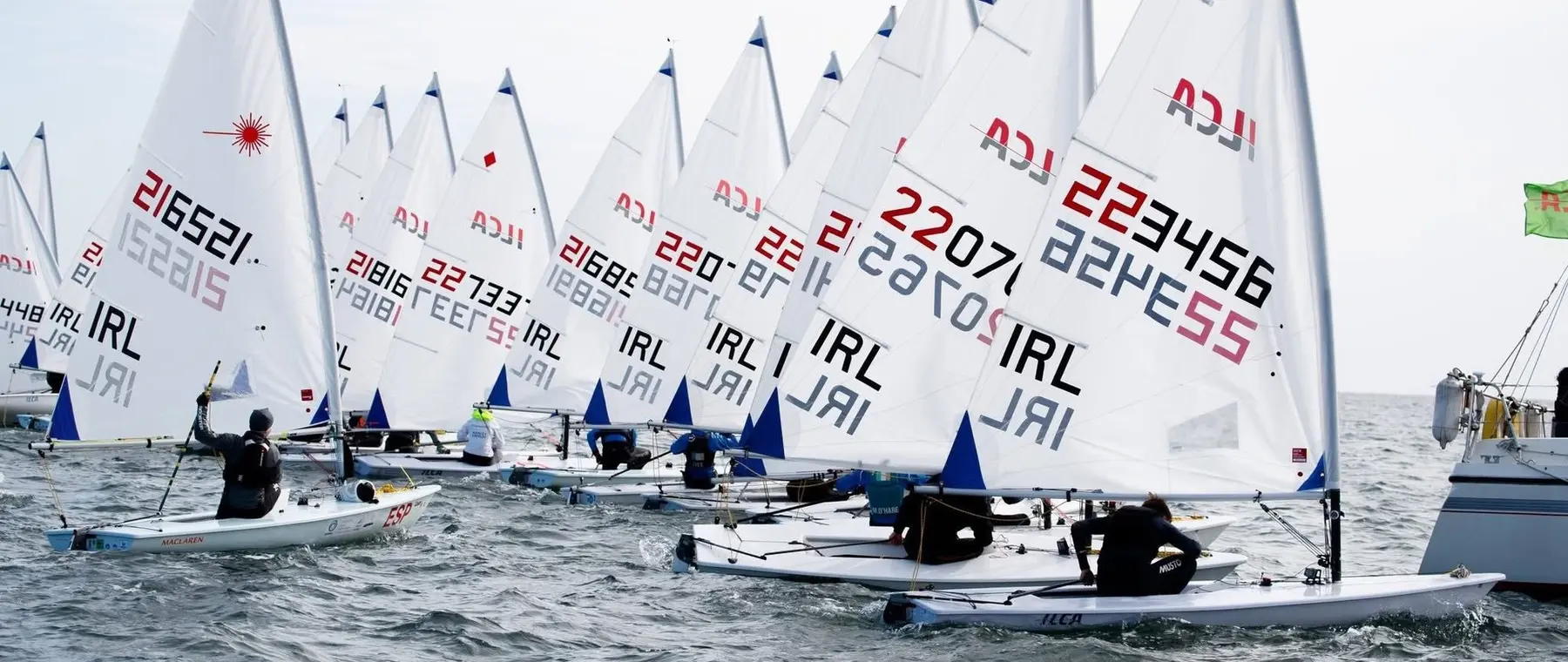
The official club website also records Royal Cork youth sailors competing at earlier regattas in 2026, including a report from the youth nationals at Ballyholme. That earlier event is separate from the winter coaching programme but illustrates the wider development context in which young sailors gain practical experience. The newsroom's accompanying Royal Cork image comes from that April 2026 sailing report and is identified as an archive photograph, not as documentation of the forthcoming November and December sessions. Results from earlier competitions should not be attributed to the winter programme. The relevant connection is a club environment in which racing experience and coaching opportunities can support one another. A sailor can use lessons from an event to identify useful objectives for the next training day.
Starts and mark roundings are useful coaching topics
The club's short public announcement does not publish a detailed syllabus for each date. It would therefore be misleading to claim that a particular drill has been promised for Sunday 29 November. Nevertheless, teams preparing for competition often benefit from practising starts, approaches to marks and boat handling under pressure. A good coach can choose an exercise suited to the fleet's ability and explain which part of the manoeuvre needs attention. Working in a smaller group may make it easier to repeat an action and understand the difference between a successful decision and an inefficient one. Sailors should ask the organiser what equipment or preparation is expected and listen to the day's briefing rather than assume a fixed syllabus.
Understanding rigging and equipment
A 420 dinghy has sails, control lines, fittings and safety equipment that require regular inspection. Training is an opportunity to discuss the condition and setup of the boat, although equipment maintenance remains the responsibility of the people and organisation providing it. A jammed fitting or worn rope can turn a straightforward manoeuvre into a stressful situation. Teams should check that sail controls move correctly, buoyancy arrangements are sound and the crew knows how to respond to a capsize. A boat need not be new to be suitable for coaching, but it must be maintained according to its intended use. Participants should report any damage promptly and avoid makeshift changes without appropriate guidance. Equipment reliability supports the learning process because it allows sailors to concentrate on skills rather than avoidable mechanical problems.
The importance of reviewing each session
A useful development day should end with some form of reflection. Sailors can discuss what improved, what remained difficult and which skills they want to practise again at their home clubs. Feedback is most helpful when it is based on observable events rather than broad labels such as 'good' or 'poor' performance. A coach might identify the timing of a tack or the team's communication during a crowded approach, while the sailors can explain how the boat felt. This exchange helps turn a series of practical exercises into lasting understanding. It also allows different crews to learn from one another. The public Royal Cork notice does not specify how individual assessments will be conducted, so no unsupported performance outcomes should be presented.
How participating clubs can help
A sailor's progress often depends on what happens between specialist coaching weekends. A local club can provide opportunities to reinforce skills, arrange a suitable practice partner or help a team inspect and prepare its boat. Parents and volunteers may support transport, equipment storage and safe launching arrangements. Those tasks can be significant when training spans several weekends. Clubs should coordinate expectations clearly and avoid treating one visiting session as a substitute for consistent practice. The International 420 can offer an enjoyable progression, but the commitment of time and resources should match the sailors' interests and circumstances. A well-planned pathway combines good technical coaching with realistic opportunities to get afloat regularly.
Registration and practical arrangements
Royal Cork's announcement directs interested sailors to date-specific registration and payment forms and provides Kieran O'Connell as the contact for further information. The remaining advertised dates are Sunday 29 November and Saturday 5 December. Participants should verify the meeting time, launching location, conditions and required equipment directly with the club, since the public summary does not provide every operational detail. Travellers should also allow for weather changes and check whether the day's programme will proceed before setting off. The club may require particular consent or safeguarding arrangements for younger participants. These matters should be resolved in advance rather than left to the first morning. Clear preparation allows instructors and sailors to make the best use of available time.
Keeping the programme distinct from racing results
The club's notice also mentions the Frostbite series, an adjacent competition within the winter sailing calendar. The scheduled development sessions should not be reported as race victories or championship awards. A coaching day is designed primarily to improve technique, while an organised race produces results according to its own instructions. Both can be useful, but they serve different purposes and may have separate registration requirements. On 25 November, this newsroom report can confirm the programme and its planned future dates, not what will happen during those dates. Any later changes or achievements need to be sourced to an appropriate subsequent official report. Maintaining that distinction helps readers understand what they can actually register for.
The confirmed next step for 420 sailors
Royal Cork Yacht Club has announced a six-session 420 winter development programme that remains active until 5 December, with advertised dates still to come on 29 November and 5 December. The scheme is open to sailors nationally, subject to the club's arrangements, and aims to improve skills ahead of the following competition season. No figures for attendance, coaching outcomes or future race results are available from the notice, and none are inferred here. Its significance for the under-twelve-metre sailing community is practical: sailors in a demanding two-person dinghy can access another opportunity to build technique and teamwork with club support. The value of those sessions will depend on careful preparation, suitable conditions and the continuing work that sailors do between organised coaching days.
Original industry sources and image credits
Reporting based on Official primary-source royal 2026/2027 club, sailing association or fishing event notice, with verified facts and dates.
Lead image: Royal Cork original 2026 youth dinghy sailing photo, showing ILCA-class boats at an earlier regatta, contextual archive for 420 coaching coverage. © Royal Cork Yacht Club and original youth-regatta photographer.. Original supplier image.
