Paris Nautic Show has published a detailed official preview of the inflatable and rigid-inflatable boats that visitors can expect to see at its 25–29 November 2026 exhibition at Paris–Le Bourget. The organiser's 22 November feature identifies displays from BRIG, BWA, Bombard, Breva, Capelli, Fanale Marine, Grand Boats, Highfield, Joker Boat, Lomac, Nuova Jolly, PY Yacht and Zodiac. For the under-twelve-metre leisure-boat market, this is significant because it provides a rare opportunity to compare designs with different hull materials, inflatable tube arrangements and intended uses without travelling between separate dealers. The organiser identifies specific examples including the BRIG Eagle 8, Highfield ADV7 and ADV9, Zodiac Medline 7.5 and Open 5.5, and the Lomac Turismo 8.5. These are advertised exhibition participants, not necessarily new world launches or boats with independently verified performance figures.
Why RIBs remain popular
Rigid-inflatable boats combine a rigid hull with buoyant inflatable tubes, producing an arrangement that can be practical for coastal cruising, watersports and tender use. Their appeal often lies in usable deck space, relatively low weight in some configurations, straightforward access to the water and a reassuring tube arrangement around the perimeter. But these boats vary dramatically in quality and purpose. A compact utility RIB may be designed for fishing and transporting equipment, while a premium model might be optimised for seating, shade and entertaining. The Paris organiser's preview illustrates that breadth of uses. Buyers should avoid treating RIB as a single category in which every boat behaves similarly, because hull forms, tube diameters, machinery and deck layouts alter the on-water experience.
What BRIG is bringing to Paris
According to the official exhibition feature, BRIG will be represented in France by Hica Boats with three confirmed RIB models: Navigator 22, Eagle 6.7 and Eagle 8. That combination allows prospective owners to compare a more utilitarian approach with the recreational comfort of the Eagle series. The organiser's confirmation is about their presence at the exhibition, not their first release or delivery status. A useful inspection should examine how easily a skipper can move between the helm, bow and stern and whether there is adequate protection for passengers when the boat is used in a short coastal chop. Buyers should also compare the arrangements for a swim ladder, storage, fuel filling and safe boarding. The correct choice depends on how the boat will actually be used.
Highfield offers a different construction conversation
Highfield is listed with the ADV9 and ADV7, along with a special series associated with the Route du Rhum–Destination Guadeloupe event. The brand has become associated with aluminium-hulled RIBs, a material choice that can offer useful impact resistance and weight characteristics when properly engineered. Aluminium is not automatically superior for every programme, and prospective buyers should compare corrosion protection, welding quality, repair methods and maintenance access with composite-hulled competitors. Those questions are especially relevant for owners who frequently beach a boat, launch from a trailer or use a small craft in working environments. The show offers a way to inspect fit and finish and ask questions about approved loading, propulsion and aftercare before assuming that one material solves all ownership problems.
Zodiac's varied selection
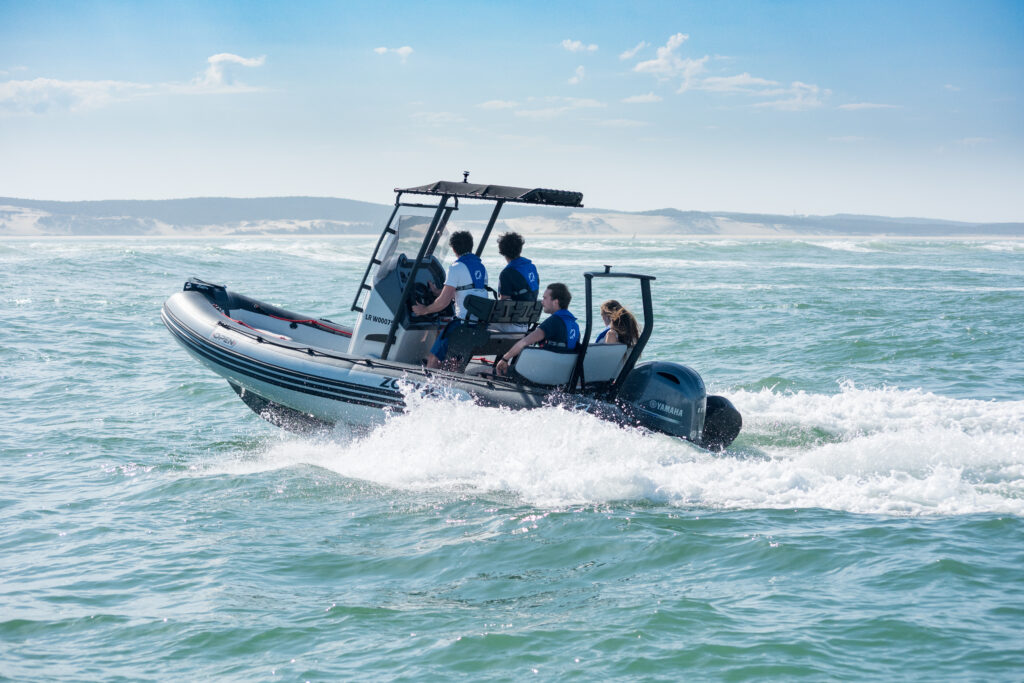
The organiser identifies three Zodiac boats on display: X9CC, Medline 7.5 and Open 5.5. This is a useful spread because each model is intended for a different level of size, equipment and activity. A smaller Open 5.5 may appeal to people looking for flexible days afloat, while the Medline 7.5 places greater emphasis on leisure use and social seating. The larger X9CC should be judged in the context of how its size and deck arrangements affect handling and berthing. The official Paris report includes Zodiac-branded event photography, which provides a relevant visual reference but is not evidence of a new worldwide launch. Owners should obtain the current technical data for the exact model and engine installation rather than extrapolate one Zodiac's characteristics to the entire range.
BWA, Bombard and established European designs
BWA is described as presenting its GTO range with several RIBs between approximately five and eight metres. Bombard, another familiar European name, is represented by folding inflatable and rigid-inflatable ranges including Commando, Explorer and Sunrider. These groups show how broad the term inflatable boat has become. A folding boat that can be stowed compactly serves a different purpose from a premium RIB built around a substantial console and multiple seating areas. Buyers should first decide whether storage and easy launching matter more than speed, range or onboard comfort. At the exhibition, examine how tubes are attached, what maintenance they require and whether the boat's deck is easy to clean and drain after a day on the water.
Italian RIB builders feature prominently
The Paris organiser also names Breva, Capelli, Joker Boat, Lomac and Nuova Jolly. Among the specific boats identified are the Breva 630 and 800, Capelli Tempest 700, 800 and 1000 WA, Lomac Turismo 8.5 and Nuova Jolly Prince 27 Exclusive and Prince 30 Exclusive. These models represent a mix of leisure, performance and extended coastal use. When comparing them, a visitor should pay particular attention to beam, deck height, tube diameter and how occupants sit or brace themselves underway. The same nominal overall length can hide large differences in usable internal space. A boat with an elaborate seating layout may be excellent for summer entertaining but less practical for fishing or carrying bulky watersports equipment.
A RIB's hull matters more than its badge
Inflatable tubes provide additional buoyancy and can influence spray protection, but the rigid hull plays a central role in ride quality, handling and the ability to carry a load. The angle of the deadrise, distribution of weight, shape of the bow and quality of construction all influence behaviour at speed. A prospective buyer should ask how the hull performs when encountering short waves and whether the chosen propulsion installation is appropriate for normal cruising with passengers aboard. Pay attention to steering effort, trim sensitivity and visibility at the helm. A sea trial should include an ordinary operating load and realistic weather, not only a short high-speed demonstration in calm water. A robust-looking boat can still behave poorly if its engine installation or weight distribution is unsuitable.
Tube material, maintenance and storage
One of the most important questions at any RIB display concerns the inflatable tubes themselves. Common tube materials can have different performance in ultraviolet light, heat, abrasion and repeated folding. Ask the manufacturer which fabric and construction method is used, what warranty applies and how local technicians carry out repairs. Tube pressure can change with temperature, making proper inflation and routine inspection essential. Owners storing a boat outdoors should investigate covers and shade, while people planning frequent beach landings should consider abrasion protection and repairability. Tube replacement can be a significant long-term cost. It should be understood before purchase rather than treated as a remote possibility after years of use.
Choosing the correct engine and fuel arrangements
RIBs in the organiser's announced range vary substantially in length and intended use. Their propulsion installations can therefore differ from modest outboards to much more powerful engines intended for larger, fully equipped boats. A buyer should confirm the manufacturer-approved horsepower range for the particular hull and request measured fuel consumption at realistic cruising speeds. More power can be useful for heavily loaded boats but may also increase purchase, insurance and operating costs. Tank capacity is only one part of the range calculation; a prudent skipper needs reserves and knowledge of available refuelling points. Boats used away from the home coast should also have reliable communications and an understanding of local safety requirements.
Working space and safe passenger movement
The open nature of many RIBs can make them feel spacious, but passengers still need suitable seating, secure handholds and safe walking routes. A high bow seating area might be pleasant at anchor yet unsuitable for use underway in rough seas. The helm should provide adequate visibility to the sides and aft, particularly when the skipper is docking alone. Storage lockers must close securely and not obstruct access to lines, emergency equipment or engines. Families should consider how children board and move around the boat, including when someone is swimming. The show is an opportunity to test each design while stationary and to ask the manufacturer what configurations are permitted during navigation.
Trailer or marina berth?
Many RIB owners choose a trailer to reduce fixed costs and reach a wider range of launch sites. That can work well for smaller models, but the complete towing weight, including engine, trailer, fuel and equipment, needs to be established. Larger RIBs may require specialist vehicles, more substantial launching facilities or a full-time marina berth. The practical difference can determine whether a particular boat is used every weekend or only a few times each season. Buyers should consider storage security, winter protection, engine servicing and regular checks of trailer brakes and tyres. Owners leaving the boat afloat must budget for antifouling where necessary, cleaning and the exposure of tubes to sunlight. The most convenient option is not always the one with the lowest initial price.
The exhibition as a comparison exercise
A visitor to Paris Nautic should build a shortlist around intended activities before being distracted by styling. A family wanting swimming outings might prioritise easy boarding, comfortable seating and shade. An angler may want clear decks, rod storage and wash-down arrangements. A person needing a yacht tender may consider lifting points, overall weight, safe towing and whether the boat fits the available storage space. Inspect each candidate for its actual equipment and request specifications that include hull dimensions and approved loading. Then arrange sea trials under comparable conditions and obtain a realistic annual budget. Manufacturers can explain their designs, but the owner must connect those features to the intended programme.
What the November show announcement establishes
The 22 November official preview confirms that Paris Nautic will bring together a substantial group of RIB and inflatable brands during the 25–29 November exhibition. It provides actual model names from BRIG, Highfield, Zodiac and several other manufacturers, giving visitors a factual basis for planning their comparisons. It does not certify that every participating boat is a premiere or that one brand's hull is objectively superior. The value of the show is the ability to evaluate different approaches to small-boat cruising, ownership and safety in one location. For buyers below twelve metres, this is exactly the sort of practical industry news that can help turn a broad market into a manageable, evidence-based shortlist.
Original industry sources and image credits
Reporting based on Original primary-source event report and source photo.
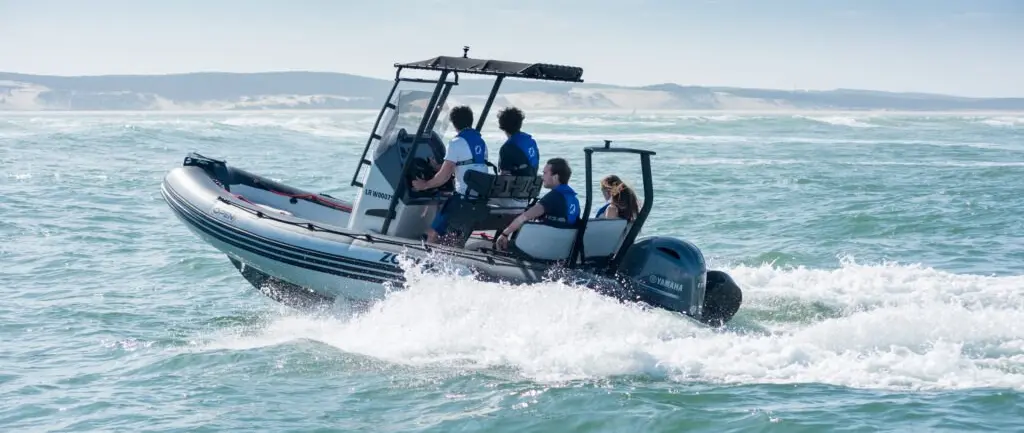
Lead image: Zodiac and Yamaha rigid-inflatable craft — genuine original photograph accompanying the Paris Nautic Show official RIB feature. © Paris Nautic Show, Zodiac/Yamaha and original photographer. Original supplier image.