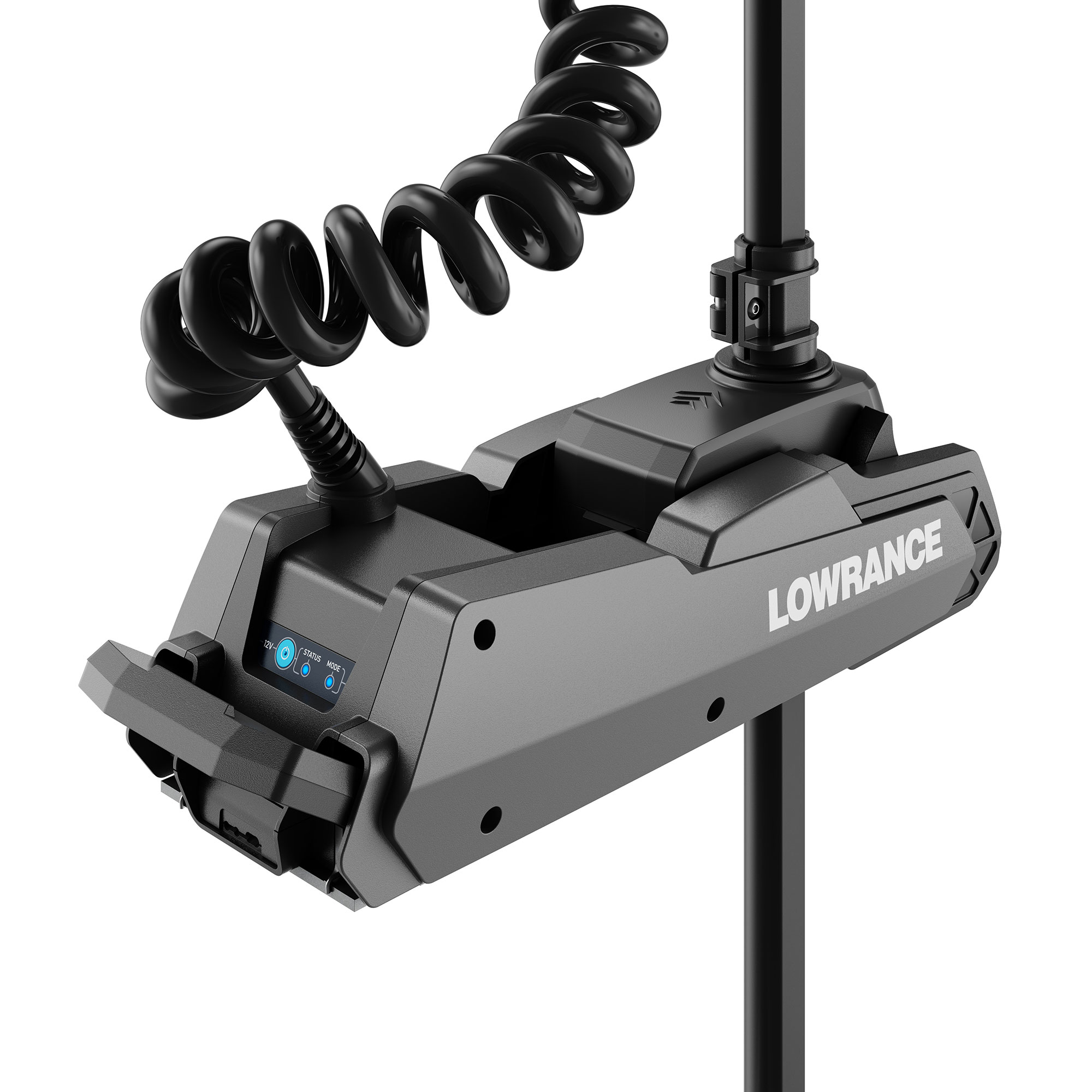
Lowrance has introduced its new Scout trolling-motor range, offering electric steering, GPS position holding and controls aimed at recreational anglers who operate small fishing boats, kayaks and inshore craft. Brunswick Corporation published the manufacturer's announcement on 17 November 2026, confirming both freshwater and saltwater versions, 12- and 24-volt configurations, and shaft lengths extending from 36 to 72 inches. The range is intended to provide many features familiar from more expensive systems in a more accessible package, with a stated US starting price of $1,899.99. For owners of boats under twelve metres, an electric trolling motor can help maintain a fishing position or manoeuvre quietly at low speed while leaving the main propulsion system available for longer passages. The new product must still be matched carefully to the size, loading and electrical installation of a specific craft.
What Lowrance has actually announced
The original press release identifies Scout as a new trolling-motor family rather than a minor software update to an older product. It describes precise GPS positioning, electric steering, near-silent operation, wireless controls and integration with the manufacturer's existing marine-electronics ecosystem. The product is available now according to the 17 November statement, with both fresh- and saltwater versions and a two-year motor warranty. The starting price is in US dollars; it does not establish a delivered or fitted price in Britain, Europe or other markets. Some functions vary between versions. A buyer should check the exact motor's voltage, shaft length, transducer configuration and remote controls before assuming that every advertised feature comes with the least expensive installation.
How a trolling motor changes an ordinary fishing trip
A trolling motor usually provides low-speed propulsion and precise control when a boat is being used for angling rather than normal point-to-point cruising. It can reduce the need to operate a more powerful petrol engine each time the crew wants to move a short distance or hold a particular position. For an angler working a lake bank, an estuary or an inshore fishing ground, this can improve the experience by leaving hands and attention available for fishing. However, a bow-mounted electric motor is not automatically an emergency substitute for the main engine, especially in strong tidal flow, offshore winds or deteriorating sea conditions. The owner should treat it as a specialised part of the boat's control system and continue to plan trips around the vessel's certified capabilities.
GPS position holding is the central feature
Lowrance describes Scout's GPS function as able to maintain position accurately even under challenging conditions. Such positioning can help when fish are concentrated around a feature or when a skipper is managing gear without wanting to anchor. The operator still needs to understand the limits of the system. Wind, tide, GPS reception, battery state and the motor's ability to provide adequate thrust influence what it can achieve. A boat should not be left unattended because electronic holding is active, and the system should never be relied on to prevent contact with another vessel, shallow ground or an obstacle. Users must also understand local rules on anchoring, fishing and navigation. Precision is valuable when it supports an attentive skipper, not when it encourages the skipper to stop watching the boat.
Different remote controls for different voltages
The 12-volt Scout models include a compact wearable wireless remote according to the manufacturer's release. The 24-volt configurations are described with the FreeSteer joystick remote, which includes a colour display and a more advanced control layout. This distinction is important because a customer reading general product publicity could otherwise assume that a particular controller is standard on all versions. The ability to control the motor from different positions on a small boat can improve convenience when casting or supervising other passengers. Yet the remote must be secured against loss, kept in a usable condition and operated in a way that avoids accidental movement. Buyers should ask about spare remote availability, charging or batteries, wireless range and the procedure if communication is interrupted.
Foot pedals remain part of the choice
Lowrance also offers optional wireless foot-pedal arrangements, including a more advanced version and a compact alternative. For some anglers, a foot pedal is more natural than a handheld controller because it allows them to maintain control while holding a fishing rod. Others may prefer a remote when moving around a larger cockpit or working with several people aboard. A buyer should consider how the specific fishing activity affects balance and access to the deck. Pedals and cables should not become trip hazards, and a remote should never be placed where it is likely to be knocked into operation. The correct control arrangement depends on the deck, the angler's preferences and the availability of safe standing or seated positions.
Integration with chartplotters and sonar
The release states that Scout supports NMEA 2000 connectivity to compatible Lowrance displays. Selected models also incorporate an HDI nosecone transducer, allowing information from the motor-mounted sonar to reach suitable electronics. This could simplify the installation on boats already fitted with compatible displays, but it is not a promise that every older chartplotter will connect without adapters, updates or additional wiring. Ask the manufacturer or authorised installer for a compatibility list covering the exact display model and software revision. Owners should also establish whether the installation requires additional network power, fuses or termination. Good integration makes equipment easier to use; poor integration can create intermittent faults that are hard to resolve after the boat is launched.
The noise claim needs to be interpreted carefully
Lowrance positions Scout as a quiet brushed-motor solution and states that it is substantially quieter than competing brushed motors. That is a manufacturer's comparative claim, not a guarantee that the motor will be inaudible in every boat or at every speed. The sound perceived by anglers depends on mounting arrangements, hull resonance, propeller loading and water conditions. A buyer should listen to a genuine working installation if quiet operation is the main attraction. Noise levels can also change when a motor ages, its propeller is damaged or its mounting hardware loosens. Proper maintenance and careful installation may matter as much as the technology specified in the brochure. An electric motor can feel notably quieter than a petrol outboard, but the details are worth testing.
Shaft length is a practical selection decision
The range of 36 to 72 inches means the Scout line covers boats with very different freeboards and mounting positions. A motor that is too short may lift its propeller near the surface when the boat moves through chop, while one that is unnecessarily long may be harder to store or more vulnerable to impact. The manufacturer should provide a method for selecting the correct length based on the mounting location and distance to the water. A kayak, a small aluminium fishing boat and a higher-sided coastal craft should not automatically receive the same configuration. Measure the actual installation and consider the boat's movement when passengers and fuel are aboard. An appropriate fit will improve control and help the motor operate within its intended design envelope.
Freshwater and saltwater equipment are not identical
The availability of separate freshwater and saltwater models matters for owners who fish on inland lakes during one part of the season and in estuaries or coastal waters at other times. Salt exposure places demands on metals, electrical connections and surface treatments. A freshwater motor should not be presumed suitable for prolonged saltwater use unless the manufacturer explicitly permits it. Ask what corrosion protection is included and how the warranty applies to the intended area. An owner should also follow cleaning and inspection instructions after use rather than assume that a saltwater designation eliminates maintenance. Remote controls, contacts, mounting bolts and charging cables may all need attention. Choosing the right version from the beginning is often simpler than addressing preventable corrosion later.
The electrical installation determines reliability
A trolling motor may be an attractive accessory, but the boat needs an electrical system capable of running it safely. A 24-volt installation requires an appropriate battery arrangement, charging plan and protective equipment. The owner should confirm the motor's actual power demand during typical fishing and the intended duration of use, allowing capacity for unexpected delays. Loose or undersized electrical connections can cause voltage drops, heat or failures. A marine electrician or competent installer should specify cable sizes, fuses, switches and battery mounting according to current standards and the manufacturer's instructions. Battery chemistry may also affect charging requirements and storage safety. A reliable electrical system is essential if the owner wants confidence in the GPS and steering features.
Costs beyond the advertised starting price
The manufacturer's announcement gives a US starting price of $1,899.99. The real cost to an individual owner can include additional batteries, a compatible charger, installation, network components, a different remote or sonar package and possibly modifications to the bow. These items can be material, particularly on a smaller boat whose original electrical system was designed for only basic accessories. Ask for an itemised estimate and clarify the distinction between standard features and optional components. Owners who tow their boats should examine how the motor locks for road travel and whether the mounting system is secure. The long-term budget should include battery replacement, inspection and the possibility of repairing damaged cables or propellers.
Why the launch matters to smaller boats
The November Scout announcement is relevant because it offers a contemporary alternative for anglers who want precise electric control without stepping immediately into the most advanced product tier. Lowrance has given enough detail to distinguish voltage choices, remote options, sonar integration and intended freshwater or saltwater use. But prospective owners still need to verify the motor's suitability for the hull and the available battery capacity. They should not treat manufacturer rankings or noise claims as independent test results. The most useful comparison is an on-water demonstration, with the boat and its normal fishing load, followed by an installation quotation. For a small fishing craft, a well-matched trolling motor can change how conveniently its crew works a favourite fishing ground, but only when the complete system is specified and maintained properly.
Original industry sources and image credits
Reporting based on Verified original primary-source announcement by the identified maker, authorised dealer, club or show organiser; date and facts independently checked.
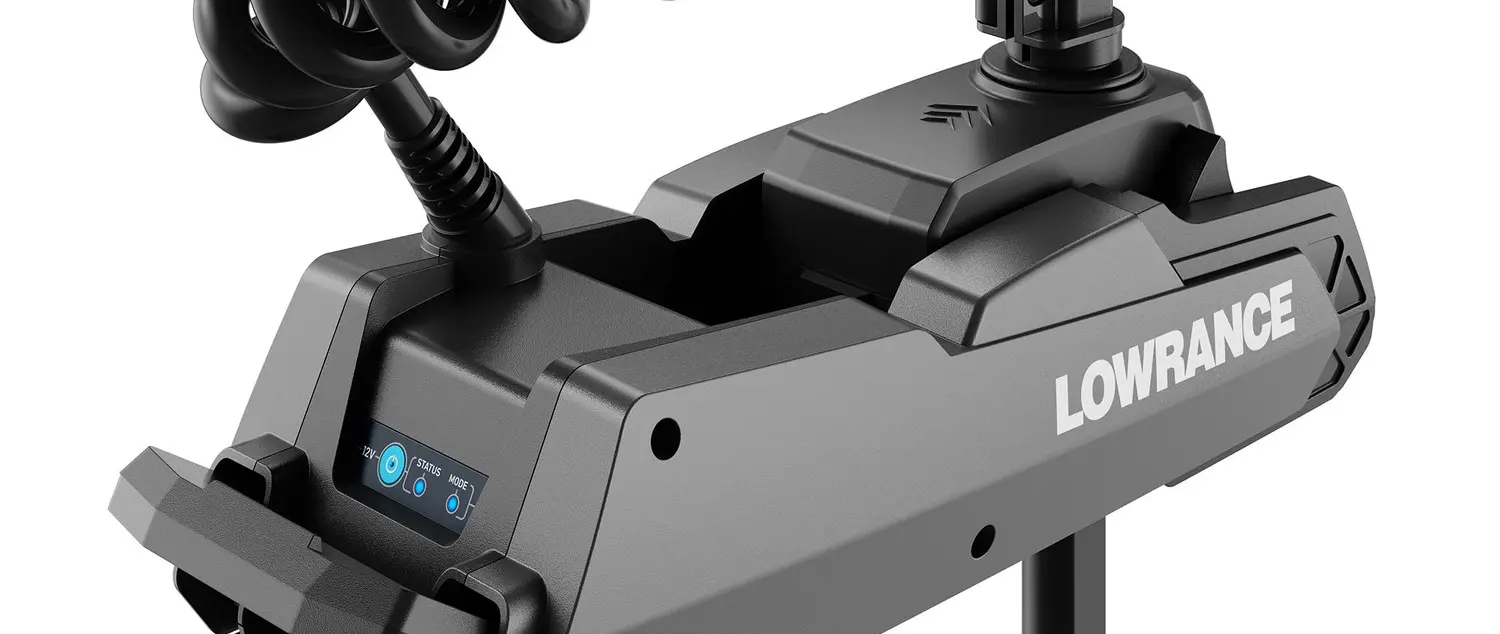
Lead image: Genuine Lowrance Scout motor publicity photo supplied by manufacturer and credited Courtesy Lowrance at Boating Magazine. © Lowrance / Navico Group and photographer; manufacturer photograph Courtesy Lowrance.. Original supplier image.