
The organisers of the Islamorada Women's Sailfish Tournament have published the entry programme for 5–7 February 2027 in the Florida Keys, offering women anglers the opportunity to compete in a two-day sailfish event supported by opening and awards gatherings. The first-party Ladies, Let's Go Fishing website confirms a Friday evening kickoff at Islamorada Moose Lodge, fishing sessions on Saturday and Sunday, and a Sunday awards presentation at Safe Harbor Angler House. It also sets out individual registration prices and options for entrants who need to share a professionally operated charter boat. For recreational boaters, the announcement is significant because it creates a structured route into competitive offshore fishing for participants who may not own a suitable vessel. This is advance notice of the 2027 competition; winners and releases from that future event cannot yet be reported.
The confirmed three-day timetable
The official tournament page gives Friday 5 February 2027 as the start of the programme, with a kickoff gathering advertised for 18:00 at Islamorada Moose Lodge. Fishing is scheduled for Saturday 6 February from 08:00 to 16:00 and Sunday 7 February from 08:00 to 15:00, followed by awards from 18:00 to 20:00 at Safe Harbor Angler House. Those are published plans rather than guarantees of uninterrupted fishing in all conditions. An offshore tournament must account for weather, safety and the availability of suitable boats, and organisers may need to change a schedule. Participants should consult official rules and later notices before travelling. The source also directs anglers to registration and agenda information that should take precedence over a general news summary.
Who the event is intended to welcome
Ladies, Let's Go Fishing describes the tournament as an opportunity for women to take part in competitive sailfish angling, including those who have not previously released a sailfish. The organisation says instruction can be arranged for entrants who request it, using a Zoom session ahead of the event. This is relevant because the skills involved in offshore fishing may be unfamiliar to someone whose previous experience is mainly inshore or freshwater. The availability of introductory advice should not be mistaken for a guarantee of personal coaching during every minute at sea. Participants need to discuss their experience with the captain and crew of the boat on which they will fish. The aim is to create an accessible competition while maintaining the operating standards appropriate to offshore conditions.
A separate registration price for additional anglers
The organiser advertises advance registration of $295 for the first angler on a boat and $250 for each additional angler registered on that same vessel. The on-site kickoff prices are higher: $325 for the first angler and $275 for additional anglers. These are the published United States dollar figures for tournament registration, not total costs for every participant. Anglers may still need to budget for charter fees, travel, accommodation and crew gratuities. The event page also explains how teams can add participants after an initial registration. Buyers should use the organiser's current booking forms and check the refund terms rather than rely solely on promotional summaries. Prices and conditions can change before an event, so the latest official registration page remains the controlling reference.
Shared charter arrangements
The tournament offers a shared charter option for women who do not have their own boat or a full team already organised. The published guide lists $1,195 per person for both fishing days when a charter has four participating anglers, with a maximum of four in that shared arrangement. The organiser notes that a 20% tip is additional and that any fuel-related surcharge would be communicated. If a boat is not full, the organiser will contact prospective participants about whether they wish to cover the remaining places. These conditions make the charter option more complicated than a single fixed-price ticket, and entrants should understand the total financial commitment before paying. A shared boat can offer access to experienced operators, but it also requires agreement about expectations and individual participation.
Why sailfish fishing requires preparation
Sailfish are fast and powerful fish, and offshore targeting involves equipment and techniques that differ from ordinary recreational casting. A participant must be able to follow the captain's instructions, manage moving tackle safely and understand how lines, hooks and other gear should be handled. Safety briefings should explain where to stand, how to communicate and how to move around the deck during an active fight. Crews need to coordinate carefully when several people are aboard. Participants should not assume that the thrill of seeing a fish removes the need to watch their footing and remain aware of the vessel's movement. A reputable professional captain will also explain weather decisions, fishing procedures and the rules under which the tournament operates.
Catch and release is central to the competition
The organiser's published information uses sailfish releases as an important element of the event and recounts the release totals from an earlier edition. Catch-and-release fishing needs careful handling and adherence to the official scoring and recording rules. An angler should ask how a release is verified and what photographs, videos or other observations may be required. The specific procedures for 2027 must be taken from the tournament's current rule document rather than assumed from previous events. The welfare of fish also matters: tackle selection, fight duration and handling can affect outcomes. The skipper and crew should follow accepted responsible-fishing practices and any applicable legal restrictions. Competitive ambition should not override safe vessel operation or conservation obligations.
The earlier year's results are historical context
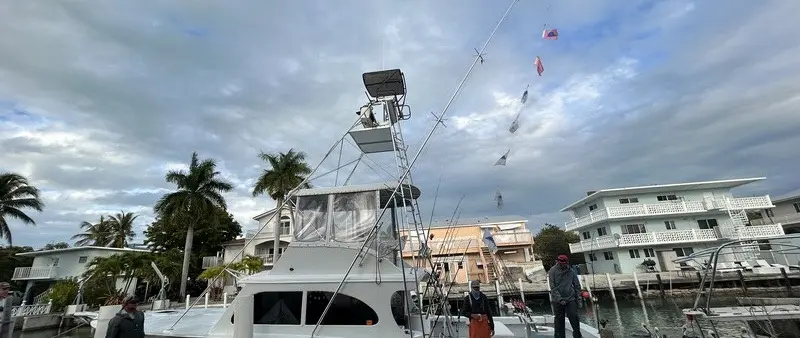
The official event page recounts that the 2026 tournament was shortened to one fishing day because of weather and reports 30 sailfish releases. In that completed event, the Caribsea team placed first with seven releases, followed by Kalex with six and Playbaby with four. These are historical results, included only to illustrate the sort of competition the organisers have run before. They do not predict the 2027 standings. The photograph accompanying this article is also from the organisers' 2026 gallery, showing a genuine past tournament boat and its flags, not a future 2027 scene. The earlier weather interruption is an important reminder that offshore fishing calendars are conditional. An entrant should plan for the possibility of changes rather than assume that every advertised hour will be spent at sea.
Boat safety begins with an appropriate skipper
The condition and capability of the vessel are fundamental to an offshore fishing tournament. Owners and charter customers should confirm that the boat is appropriately equipped, maintained and operated for the intended waters and that safety procedures are clear. Communications, life jackets, navigation equipment and weather monitoring need to be suitable for the area and the people aboard. Participants sharing a charter should ask about the departure point, expected travelling time, available facilities and any personal equipment requirements. It is also sensible to discuss seasickness, accessibility and whether there are physical demands associated with the programme. No tournament fee should be interpreted as a substitute for an individual skipper's judgment about safe conditions.
An event that also supports charitable work
Ladies, Let's Go Fishing says that proceeds from the tournament support Islamorada Moose charities, including teen scholarships, breast-cancer-related support and the Humane Society, alongside the Ladies Let's Go Fishing Foundation's aim of helping more women enter angling. These are the organiser's stated beneficiaries and objectives; the public page does not provide a verified forecast of how much money the 2027 edition will raise. Supporters can ask how contributions are collected and how awards or side activities relate to fundraising. Linking a sporting event with charitable causes can encourage wider community participation, but the results should be measured by actual reporting after the programme. The confirmed news today is the planned charitable connection, not an already completed donation total.
Awards and other species
The published award structure includes first, second and third place team recognition and references additional prizes involving mahi, tuna and kingfish. Participants should consult the official rules for the exact eligibility and measurement or recording methods used in those categories. The site also discusses awards for the top angler, captain and mate associated with the leading team. These categories can add interest, but they should not encourage people to ignore safety or fisheries rules in pursuit of a trophy. Competitive offshore angling depends on honest reporting and the responsible conduct of everyone aboard. The organiser will determine which entries qualify and how results are verified. No one has yet earned an award in the future 2027 competition.
The social programme is part of the experience
The event begins with a Friday gathering and concludes with Sunday awards, creating an opportunity for participants to meet anglers and crews from other boats. Such social activities can help newcomers form relationships and learn about practical fishing techniques from more experienced people. The organisers also sell some separate social tickets for guests, captains and mates. Participants should check which admissions are included in their registration and which require payment. The source makes a distinction between the first angler's registration, additional entries and the cost of charter fishing. Visitors should also confirm the locations and transport needed to move between accommodation, departure docks and the scheduled gatherings. Good logistical planning is especially important when fishing begins early the following morning.
The realities of travel to the Florida Keys
Islamorada is an established offshore fishing location, but prospective entrants may be arriving from elsewhere in the United States or overseas. Travel planning should account for accommodation costs, seasonal demand and any need to transport personal tackle. A booking should not be made on the assumption that an individual boat will be available at a particular dock without confirmation. Check the organiser's host-hotel information, transportation requirements and the captain's instructions. If severe weather affects the event, travel arrangements may not be fully refundable. Participants should understand the cancellation and payment terms of the tournament, charter operator and accommodation provider separately. Preparing for those possibilities is part of making a sporting trip manageable rather than an afterthought.
What newcomers should ask before registering
A first-time tournament participant can benefit from a short conversation with the organiser about skill requirements, team composition and how the shared charter option works. Ask whether tackle is supplied, what clothing is suitable, how release verification takes place and whether any fishing licences or personal documentation are required. New entrants should also understand how the captain's responsibilities differ from those of an individual angler. A women's fishing tournament can offer valuable access to experience, but each participant must remain ready to follow safety instructions and learn the practical procedures. The organiser's optional advance instruction may help with confidence. It cannot remove the need for competence and care during the actual offshore activity.
What has been established for 2027
The first-party Ladies, Let's Go Fishing website confirms that the Islamorada Women's Sailfish Tournament is scheduled for 5–7 February 2027 and publishes registration categories, charter options, the basic fishing timetable and the awards venues. The organisers also identify opportunities for women with limited sailfish experience and state the intended charitable beneficiaries. Weather decisions, final team entries and results remain in the future. This is a relevant development for the small-boat and recreational-fishing community because it combines organised competition with a potential route for new anglers to participate aboard suitable boats. Anyone planning to enter should use the current official rules, complete the relevant registration and discuss the practical details with the organiser and skipper before committing to the trip.
Original industry sources and image credits
Reporting based on Official primary-source islam 2026/2027 club, sailing association or fishing event notice, with verified facts and dates.
Lead image: Ladies Let's Go Fishing genuine 2026 Islamorada women's tournament photograph of Kalex fishing boat, not the future 2027 event. © Ladies, Let's Go Fishing and original 2026 tournament photographer.. Original supplier image.
