Paris Nautic Show has confirmed that the Dragonfly 25 Sport trimaran and an assortment of RS Sailing dinghies and small keelboats are among the sailing designs being promoted to visitors at Paris–Le Bourget from 25 to 29 November 2026. In its official 24 November sailing preview, the organiser identifies Dragonfly's folding trimaran through French and Spanish importer Hellomulti and lists RS Aero, RS Feva, RS Quest and RS21 among the RS Sailing models that enthusiasts can discover through RS Sailing France. For buyers of boats under twelve metres, those names present an unusually broad range of uses: high-performance, trailerable coastal sailing on the one hand and accessible club, family and sport sailing on the other. The announcement confirms a show programme, not a world premiere or any independently measured speed advantage.
A new comparison opportunity at Le Bourget
The show organiser's dated 24 November feature gives the public a clearer indication of small sailing boats to investigate than a general hall directory. The Dragonfly 25 Sport is specified at 7.65 metres, which places it within the leisure-boat segment. The RS Sailing line-up covers several distinct small-craft categories, including singlehanded and training-oriented dinghies and a compact keelboat. They are not interchangeable products, but seeing their design approaches in the same exhibition environment can help sailors decide what they intend to do with their time on the water. Visitors should confirm with exhibitors which exact variants and rigs are present and whether there are opportunities to inspect deck gear or see demonstrations. A static show exhibit cannot replace an on-water test.
The Dragonfly 25's foldable beam
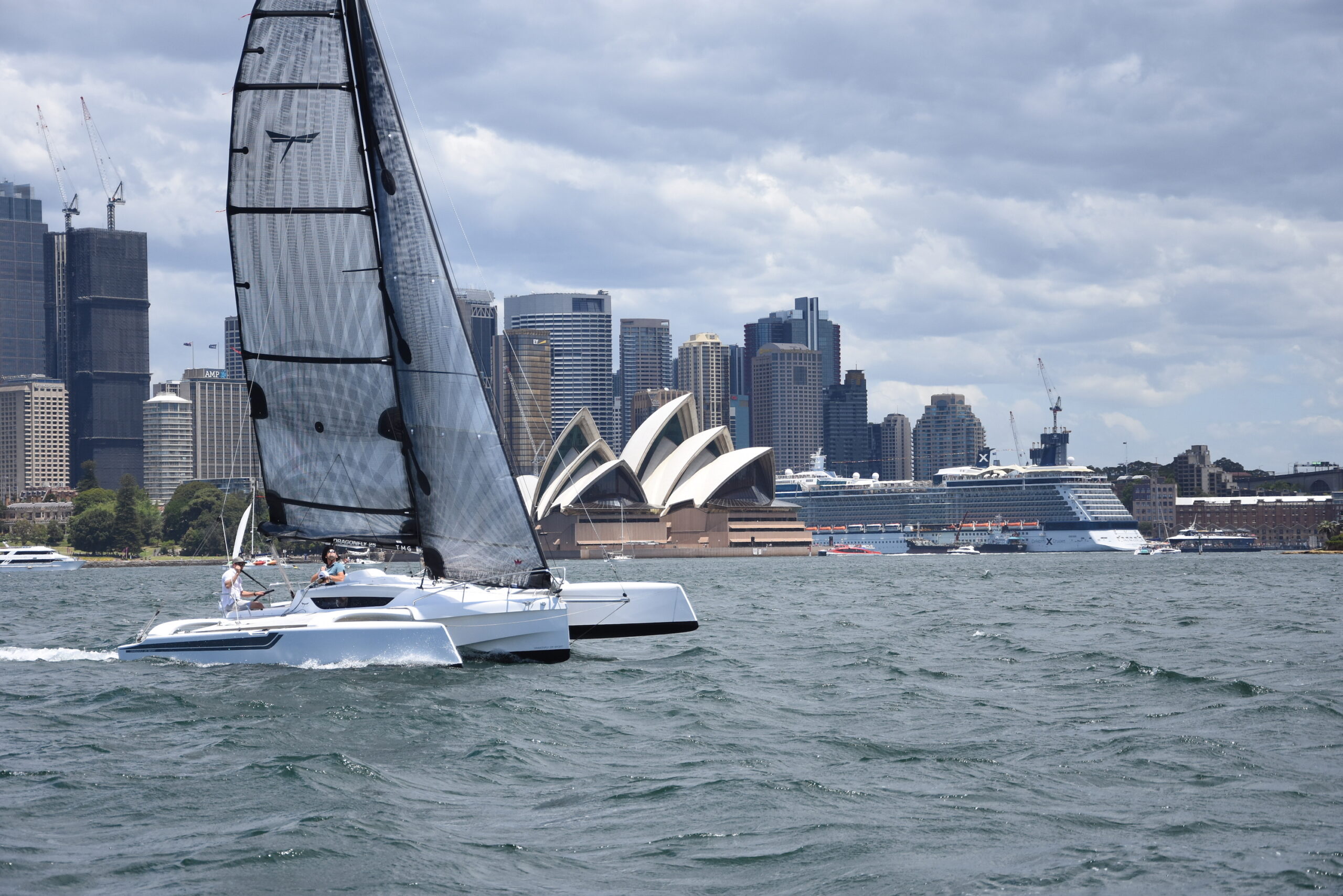
The manufacturer describes the Dragonfly 25 as a light, trailerable trimaran with an overall length of 7.65 metres and a folded beam of 2.30 metres. Its outriggers provide the wide sailing platform while deployed, but the system is designed to fold inward for transport and storage. That difference is fundamental to ownership: a fast multihull with a broad sailing stance may still fit routes and facilities that would be difficult for a fixed-beam catamaran. Buyers should nevertheless verify the complete dimensions of the folded boat on the actual trailer, including road-legal fittings and any protrusions. They should also ask for the precise deployment procedure, inspection schedule and approved maintenance of the folding mechanisms. A clever folding system only saves trouble if it remains dependable and straightforward to operate over many seasons.
Trailer weight and launching procedures
Dragonfly's official product description gives approximate figures of 1,150 kilograms ready for sailing and 1,800 kilograms including its trailer. Those are manufacturer reference figures, not a guarantee that every equipped example will weigh exactly the same. Added sails, outboard equipment, batteries, safety gear, provisions and modifications can increase a transport package's mass. Any prospective owner should check vehicle towing limits, trailer braking, road rules and the local requirements for moving a boat through different jurisdictions. Dragonfly also highlights a mast-raising system intended to allow a person to rig the boat without a crane. The actual time and crew requirements should be demonstrated rather than assumed. Trailerability is a valuable advantage when it truly reduces the cost and difficulty of reaching new waters.
What a Sport trimaran offers underway
The 25 Sport's appeal is a sailing experience that can feel very different from that of a conventional monohull. A trimaran's floats provide stability through their distance from the central hull, and the builder discusses its wave-piercing outrigger shape and substantial buoyancy volume as part of its sailing philosophy. The manufacturer quotes a design potential above 21 knots, but such an upper-end figure must not be read as a normal cruising speed or as a result a novice can expect. Speed depends heavily on wind, sail choice, handling, wave conditions and the experience of the crew. People drawn to the design should arrange appropriate training and a realistic demonstration before committing. High-performance small multihulls can be exhilarating, but they also demand sound judgment about weather and sail reduction.
The interior is for weekends, not permanent living
The manufacturer presents the Dragonfly 25 as capable of short coastal weekends, with its central saloon adapting to create a double berth and a forward compartment offering additional sleeping space. A portable toilet is an available option. Those are useful conveniences for a 7.65-metre boat, especially if the owner wants to combine racing and simple cruising. However, compact accommodation should be inspected with real overnight requirements in mind. Check ventilation, stowage, access to the berths, wet clothing storage and the ability to prepare food safely. A buyer who wants to spend many nights in marinas may have different needs from one who sleeps aboard occasionally during regattas. The yacht should be selected for the intended mix of activities rather than on the promise of maximum sleeping capacity alone.
RS Sailing covers a different set of ambitions
The organiser's RS Sailing selection includes the RS Aero, RS Feva, RS Quest and RS21, highlighting the importance of small boats in training, club participation and accessible racing. The RS Aero is associated with light, singlehanded sailing, while boats such as the RS Feva are widely used for youth and junior crews. The RS Quest is aimed at adaptable recreational and training use, and the RS21 is a small keelboat with a more team-oriented programme. These are broad descriptions of established design purposes rather than claims of one specific Paris debut. Visitors should inspect rigging systems, handhold positions, foot straps and the ability to recover or right a dinghy after a capsize. Equipment selection should always account for the competence and physical ability of the intended sailors.
Learning to sail is also a boat-selection problem
Many new sailors concentrate on choosing a hull they find attractive, yet training suitability matters more during the first season. A boat that gives clear feedback at the helm, can be rigged without unnecessary effort and supports controlled capsize recovery may help a beginner develop skills faster than a more demanding alternative. Clubs also need equipment that can withstand regular use, be repaired locally and accommodate instructors or varied participant sizes. The RS options at Paris invite questions about fleet consistency, replacement parts, storage and the cost of maintenance after a season of frequent training. A performance-focused trimaran will appeal to a different audience, but both categories benefit from a realistic understanding of who will operate the boat and where.
Conditions and sailing area shape the decision
A boat used on an inland lake faces different demands from one used on an exposed coast. Wind shifts, launching facilities, tidal range and the availability of rescue support can influence the suitability of a model as much as its published length. A Dragonfly 25 may be attractive for planned coastal adventures, but a buyer must examine its certified design category and decide whether the intended passages are within the boat's operating limits. Dinghy sailors should understand local safety-boat arrangements and the need for personal flotation devices. A club training boat should be easy to return to shore when weather changes abruptly. At the exhibition, ask exhibitors about recommended conditions, safe rig configurations and how users are trained to reduce sail or recover from mistakes.
The economics of a smaller sailing boat
Trailer storage, sailing-club facilities and relatively modest machinery can help some small boats remain affordable to use, but ownership costs vary. A folding trimaran adds a specialist system requiring inspection, while a dinghy used for racing may require periodic sail replacement and careful rig maintenance. An RS fleet at a club may benefit from shared expertise and parts, whereas an individually owned high-performance multihull will depend more heavily on the manufacturer's support network. Buyers should budget for insurance, covers, trailer upkeep, launching fees, annual rig checks and safety equipment. They should also consider resale demand in their local sailing community. The least expensive purchase is not necessarily the most practical ownership choice.
Practical checks at the exhibition
The most useful Paris appointment is a structured inspection. For the Dragonfly, ask to see how the floats fold, where the mast-raising equipment is stored and what parts require regular lubrication or replacement. Confirm the boat's measured dimensions on the intended trailer. For the RS models, ask about rigging time, accessibility of controls, capsize recovery and the availability of sails for learners of different weights. Compare the space required for storing the hulls and any restrictions imposed by local clubs or marinas. If a model is not physically available, obtain the exhibitor's current technical sheet and arrange an opportunity to see a real boat later. Promotional photography is not an adequate substitute for understanding the moving parts and working arrangements.
A show feature, not an invented first launch
Paris Nautic's official announcement identifies the Dragonfly and RS Sailing selections as part of the 2026 exhibition. It is not evidence that those models have never been exhibited before or that a novel design has just been certified. What is timely is the opportunity for owners and sailing schools to examine different small-craft sailing approaches together before the next season. Dragonfly's 7.65-metre Sport demonstrates how a compact cruising platform can be trailered and folded for storage, while RS Sailing's range covers the practical needs of training and racing in different crew configurations. Prospective buyers should use the event to match the boat to their programme and then confirm those expectations afloat, under conditions appropriate to their experience.
Original industry sources and image credits
Reporting based on Responsible organiser or manufacturer original official event or safety announcement, date and subject independently verified.
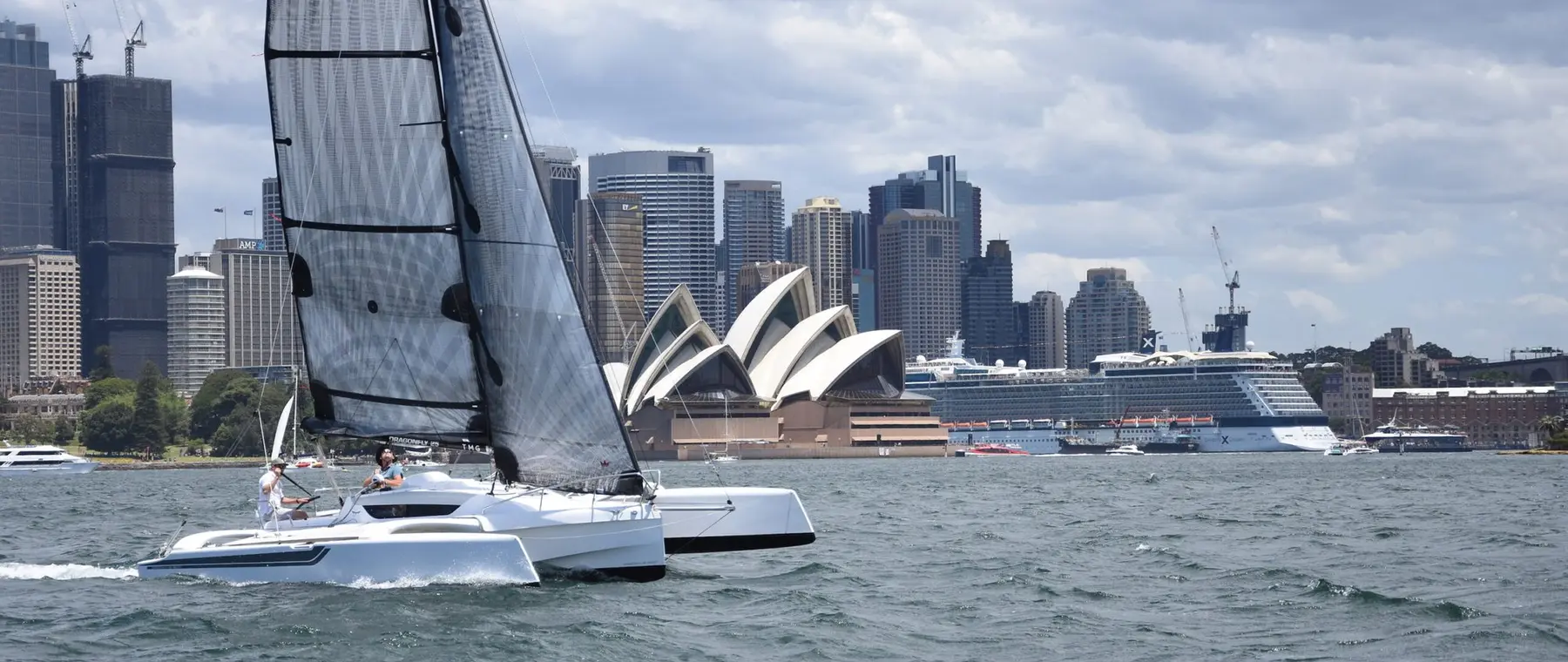
Lead image: Dragonfly 25 Sport original manufacturer archive photograph from Sydney Harbour, not a Paris show image. © Dragonfly Trimarans / Quorning Boats and original photographer; rights retained. Original supplier image.