Zparq offers a compact propulsion core to boatbuilders
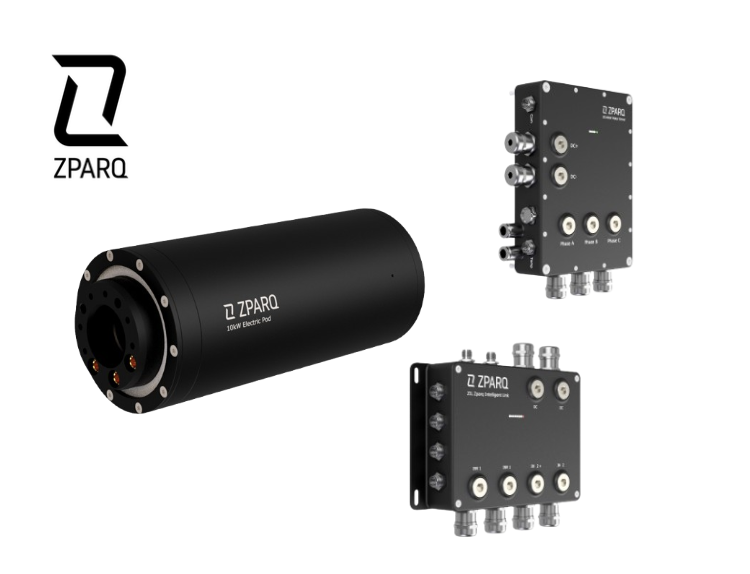
Swedish marine technology company Zparq is presenting the ZM10 OEM propulsion kit in its 2026 METSTRADE supplier catalogue, describing a ten-kilowatt electric drive package built around a notably compact pod motor. The manufacturer says the motor itself weighs approximately four kilograms, has an 82-millimetre cross-section and can deliver 32 newton-metres of torque from zero revolutions through a direct drive. The package is described as including the motor, driver, a Zparq Intelligent Link and cables. Those are manufacturer-stated characteristics rather than independently verified performance aboard every type of boat. For leisure craft below twelve metres, the interest is less about an owner buying a bare motor tomorrow and more about how such a compact propulsion core could influence future small-boat layouts and carefully engineered conversions.
OEM equipment is different from a finished outboard
An original-equipment-manufacturer kit is intended for integration by a builder or specialist rather than presented as a fully self-contained removable outboard. A product photograph may show a neat motor assembly, but a functioning propulsion system needs power storage, controls, mounting, a propeller arrangement and protective electrical equipment. Zparq's description identifies several key components of its OEM package while leaving the vessel-level installation to the integrator. An owner should not treat the listed motor weight as the weight of a complete propulsion solution. Battery mass, cabling and supporting structure can be substantial, and their placement affects handling, serviceability and sometimes stability.
Four kilograms matters when space is limited
The claimed mass of the ZM10 pod motor is striking because marine propulsion machinery frequently occupies a large portion of a small boat's usable volume. Reducing the size of the motor could give designers more options for the stern structure, storage and access to other equipment. But the motor does not operate in isolation, and reducing its weight does not remove the need for durable supports and a protected energy supply. A responsible boatbuilder should compare the total installed system against alternative drives, not simply the mass of the smallest visible component. Space savings are useful only if the resulting layout remains safe and maintainable.
Cooling is central to the design claim
Zparq highlights its patented Hyperflow Cooling technology. The first-party product description says water passes through the motor between the rotor and stator, cooling four surfaces at once and reducing the need for a separate cooling circuit or conventional enclosure. That is the manufacturer's stated engineering approach, not a complete service diagram or guarantee that any type of untreated water can be circulated without consequences. Cooling systems need to cope with temperature, contamination, corrosion and flow interruptions. A builder considering the ZM10 should request the precise water-quality limits, intake requirements and protection arrangements. A compact motor's output can only be sustained when heat is removed within its specified conditions.
Water pathways bring maintenance questions
Marine cooling circuits can collect sediment, biological fouling and other debris. If a system relies on a direct water path through critical machinery, an integrator needs to understand how that path is protected and inspected. The catalogue describes the advantages of reducing seals and separate cooling equipment, but it does not establish that the propulsion system requires no maintenance. Owners should ask how the motor is flushed, how a blockage is detected and what happens if cooling flow falls below a safe level. A design that eliminates some components may also make the remaining ones more important. Reliability depends on the complete solution, not the simplicity of a headline description.
Direct drive can remove some mechanical parts
Zparq identifies direct drive as part of the ZM10 concept. A direct-drive arrangement can avoid certain transmission components present in other propulsion systems, potentially reducing mechanical complexity. Yet it also means the motor and propeller must be matched carefully to deliver suitable thrust at the expected operating speeds. The correct geometry depends on the hull, displacement and cruising use. A ten-kilowatt electrical rating should not be converted casually into a promise that the system will push every boat to the same speed. The builder should carry out propulsion calculations and, where possible, trials on a comparable hull with a realistic load.
Torque at zero revolutions is not vessel performance
The manufacturer lists 32 newton-metres from zero rpm as a characteristic of the drive. This may interest designers seeking responsive low-speed control, but torque alone does not describe propeller thrust or acceleration. The propeller's dimensions, efficiency and operating conditions determine how motor torque is converted into movement through water. A planing hull, a heavy displacement tender and a narrow sailing boat can behave very differently with the same electrical motor. Owners should ask for application-specific performance estimates rather than infer capability from an impressive torque figure. A product's use on a particular hull has to be engineered rather than guessed from its specification sheet.
The electrical driver is part of the package
An electric motor requires suitable control of the power delivered from its energy source. Zparq's OEM kit includes a driver, which should be understood as a key system component rather than an optional accessory. The driver's supported voltage, current and communication functions need to match the boat's battery and control arrangement. Its physical location and cooling requirements also matter. A marine electrician should specify isolation, overcurrent protection and cabling according to the manufacturer's guidance. A compact motor installation can still involve substantial electrical engineering, particularly when peak power is significant relative to the battery capacity of a small recreational boat.
Intelligent Link suggests a coordinated system
The official listing names Zparq Intelligent Link among the supplied components. That indicates that the OEM kit is intended to operate as a coordinated propulsion system, but the short catalogue does not provide a complete account of every communications function. Buyers should request the current installation manual and data-interface specification. It would be misleading to promise compatibility with every chartplotter, throttle or boat-management application without that evidence. An integrator should verify fault reporting, control-response behaviour and the ability to diagnose the system with approved tools. Modern software can make equipment more useful, but it can also increase dependence on correct configuration and supported updates.
Batteries remain the biggest energy decision
A ten-kilowatt motor can draw a meaningful amount of electrical power. How long a boat can use it depends on battery capacity, usable energy, efficiency and the speed selected. A small battery may be suitable for short harbour manoeuvres, while longer passages require a very different energy budget. An owner cannot determine range from the motor's compact dimensions. The battery system also needs suitable thermal management, charging arrangements, protection and structural support. A builder should calculate the intended voyage profile and include conservative reserves for adverse weather and current. The motor may be small, but the energy required to move a boat remains governed by physical realities.
Installation geometry is not optional
A pod drive must be mounted in a position that allows the propeller to work effectively and keeps vulnerable parts clear of avoidable hazards. The boat's hull shape, draft, steering arrangement and access for service all influence the design. Some installations may require new openings or structural reinforcement. The OEM kit's small cross-section could make packaging easier in certain boats, but the permitted mounting details need to come from Zparq's engineering documentation. An owner should avoid drilling into a hull on the assumption that a compact motor will fit wherever it appears convenient. Safe propulsion installations are major modifications, even when the motor is light.
Protection against underwater damage matters
Any propulsion hardware extending beneath a hull may encounter debris, a grounding or accidental contact during launching. The mounting system should account for those risks and allow inspection after an incident. A water-cooled motor may also require particular checks if its flow path or external casing has been damaged. The manufacturer does not claim that the ZM10 is indestructible, and no electric drive should be considered immune to mechanical impact. An appropriate installation can reduce exposure, but operation still requires careful depth awareness and sensible boat handling. Owners should be able to recognise damage and know when the system must be isolated before further use.
A small boatbuilder may value modular supply
For a manufacturer producing several related hulls, an OEM package that includes the main drive components can simplify some parts of procurement and integration. Standardised hardware may also make later service easier if the builder maintains consistent mounting and diagnostics. The ability to tailor a compact motor system to the hull can be more appealing than adding a complete transom-hung outboard where that would interfere with layout. However, the builder remains responsible for demonstrating the boat's performance and compliance as a complete product. Zparq's catalogue does not certify every vessel incorporating its motor. Integration quality can be just as important as the component's engineering.
Retrofitting an existing boat is a different calculation
Replacing a small petrol engine or conventional electric outboard with a pod system could involve hull work, new electrical distribution, battery mounting and revised controls. That is unlikely to be a simple weekend substitution. Owners should obtain a full design and cost assessment from a qualified installer and check whether the hull is suitable for the proposed arrangement. A compact motor may be attractive, but an older boat could require more labour and structural changes than the component savings justify. In some circumstances a conventional portable electric outboard may remain the more practical choice. A good retrofit begins with the boat's needs rather than the availability of an interesting motor.
Service support determines practical ownership
A sophisticated electric drive can be reliable, but failures may require diagnostic tools or parts that are not stocked in every marina. Builders and owners should ask where Zparq provides support, how quickly spare components can be obtained and whether the system can be examined without removing large sections of the boat. Software updates and warranty procedures should also be clear. A small boat that operates in remote coastal waters needs equipment that can be maintained with reasonable effort. A high power-to-size ratio is appealing, but it is only part of the assessment of long-term value.
What the 2026 manufacturer listing establishes
Zparq's first-party METSTRADE entry identifies the ZM10 OEM propulsion kit, its stated ten-kilowatt capability, four-kilogram motor mass, 82-millimetre cross-section and 32 newton-metres of torque from standstill. It also describes Hyperflow Cooling and the included driver, Intelligent Link and cables. The public listing does not independently establish an installed price, a universal boat-speed range or the full specification of every battery or propeller arrangement. Nor does it prove that this OEM kit has just entered commercial service on a particular model of small boat. Those claims would need separate current evidence.
A compact motor does not remove engineering responsibilities
The ZM10 OEM package is a useful example of how alternative propulsion suppliers are trying to reduce the physical size and complexity of the motor itself. That can open design possibilities for smaller recreational craft, especially where interior space is precious. Yet safe integration still involves cooling, mounting, electrical protection, battery energy and service access. Owners considering a boat equipped with this technology should ask for measured performance and documentation for the complete vessel. The product deserves attention for its engineering approach, but its real success will be determined by the builder's installation and the boat's everyday reliability rather than by the remarkably small dimensions of one component.
Original industry sources and image credits
Reporting based on Official METSTRADE 2026 manufacturer product catalogue, Zparq AB.
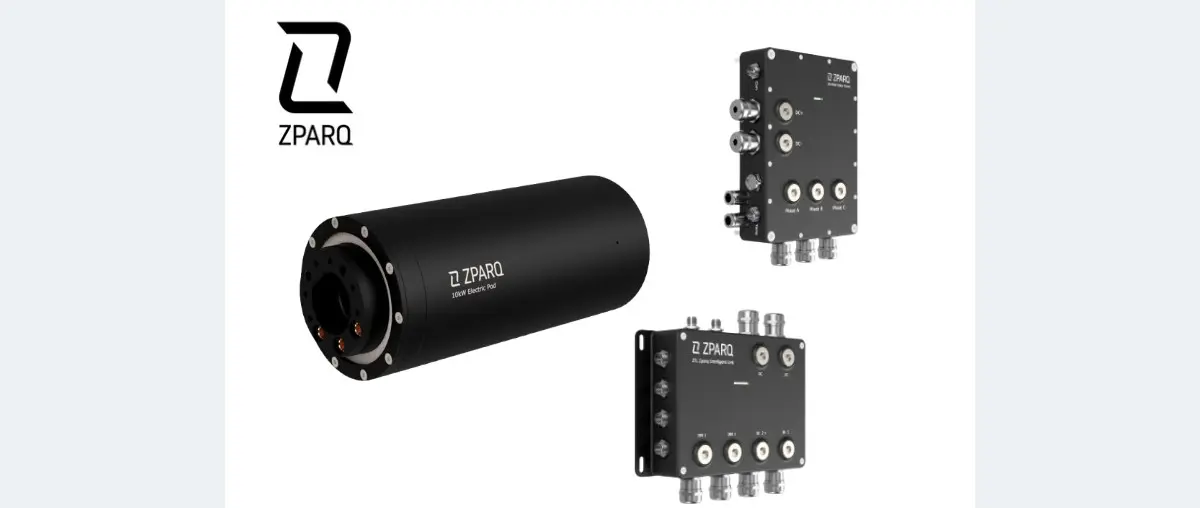
Lead image: Zparq ZM10 OEM Kit Packages a Four-Kilo Marine Pod Motor — official manufacturer supplied product photograph. © Zparq AB. Original supplier image.