A new approach to lowering mainsail friction
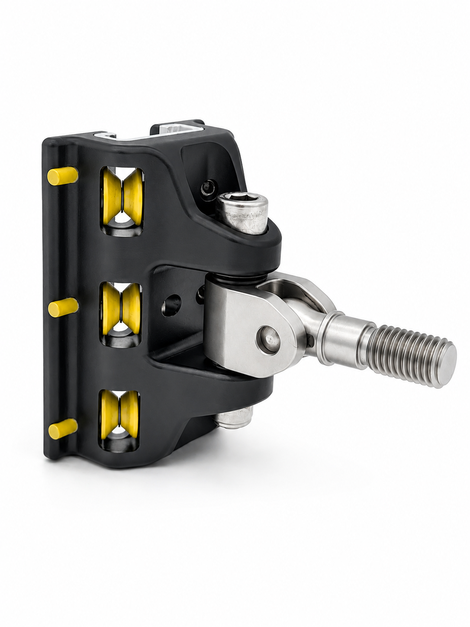
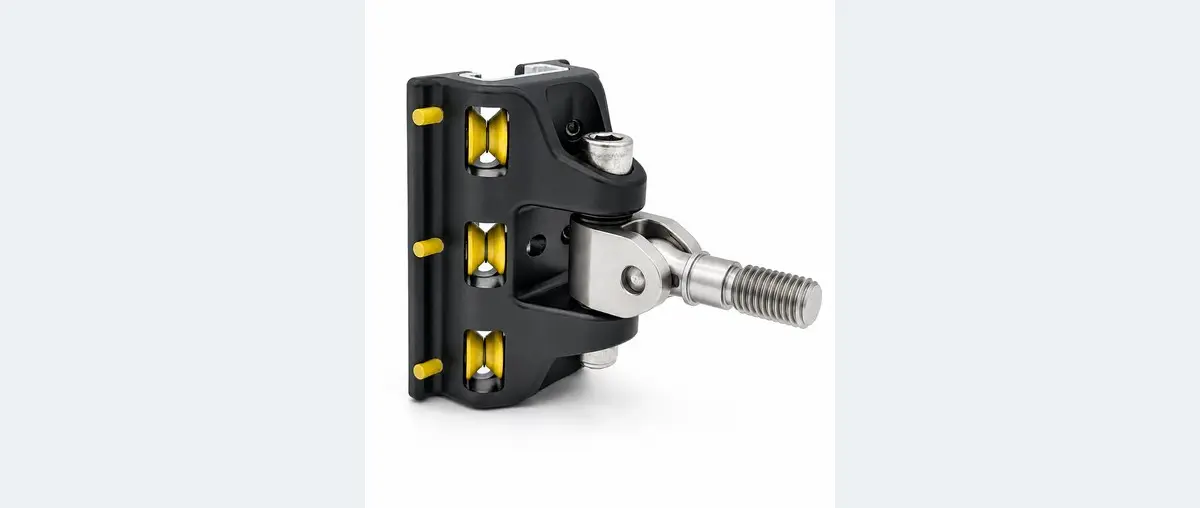
Rigging Projects' X Batten Car has received a Special Mention in the Deck Equipment category at the 2026 DAME Design Awards, announced by METSTRADE on 17 November. The manufacturer describes a patented split-roller bearing arrangement intended to reduce friction by up to 50 percent compared with conventional slider-type batten cars. Its product listing dates from May 2026, so the award is the new development being reported rather than an invented November launch. This is a specialised part of the mainsail-handling system, but it addresses a problem familiar to owners of smaller sailing boats: a mainsail can become unexpectedly difficult to hoist, lower or control if its slides or cars do not move freely in the mast track.
What a batten car does
A fully battened mainsail can exert pressure on its mast-track fittings as the sail is hoisted, trimmed or dropped. A batten car connects the sail, often at a reinforced batten end, to the track or a compatible guide system. The fitting has to support the sail while moving in a controlled way along the mast. Where friction is high, a person may need more force on the halyard, and the sail may fail to fall promptly when released. A car is only one component of this arrangement: mast alignment, halyard routing, sail cut and track condition also influence performance. Owners should not assume that changing one fitting will correct every difficulty.
Why rollers can behave differently from sliders
A conventional slider depends on surfaces passing over one another, while a rolling system seeks to replace some of that motion with rotation. In principle, rolling contact can reduce resistance, particularly when a batten applies side load against the track. Rigging Projects describes using split-roller bearings as the defining element of its X Batten Car. The company's stated reduction of up to 50 percent is a comparative design claim, not a result independently measured aboard every type of vessel. Actual friction depends on the matching track, loading, cleanliness and condition of the installation. A skipper should evaluate whether the proposed car is designed for the specific mast section and sailing rig.
The split-roller design is the central innovation
The brief manufacturer entry identifies patented split-roller bearings. This suggests a deliberate approach to the rolling elements and their relationship with the surrounding assembly, rather than a generic plastic slider. However, the public listing does not provide a complete engineering drawing or detailed service procedure. It would therefore be inappropriate to invent the precise internal geometry or to claim that the unit is permanently maintenance-free. The legitimate news is that the DAME jury has recognised an equipment design focused on reducing load-related friction. Sailors considering the product should request the current technical drawings, specified track compatibility and recommended inspection intervals directly from Rigging Projects.
Easier hoisting can improve a small crew's routine
A boat under twelve metres may be sailed by one or two people, who must divide attention between the helm, sail controls and the surrounding traffic. If the mainsail is difficult to hoist, one crew member may be forced to spend longer pulling on a halyard or using a winch. Reduced friction could make the task more manageable, but it does not eliminate the need to head into the wind where appropriate and follow a safe hoisting procedure. A sail that jams should be investigated rather than hauled through with ever greater force. Good deck hardware supports sound seamanship; it does not replace it.
Lowering the sail deserves equal attention
The ability to lower a mainsail promptly can matter when approaching a harbour, preparing to reef or responding to deteriorating weather. A car that runs smoothly may help the sail descend more readily, but gravity, sail weight, wind direction and friction elsewhere in the system all affect what happens. A low-friction arrangement can also mean the sail drops faster than expected, making controlled handling important. Crew should keep clear of moving lines and falling sailcloth. Owners should test the system in manageable conditions before relying on it in a difficult situation. A design improvement should produce predictability, not encourage the assumption that the sail will always behave identically.
Reefing introduces another set of loads
Reefing changes the shape and distribution of forces across a mainsail. Batten cars and slides may carry different loads as the sail is partly lowered and secured. A system that functions smoothly at full hoist still needs to operate properly during reefing, including when the sail has not fully unloaded. The compatibility of the X Batten Car with a particular sail plan should be checked with the sailmaker and rigger. Owners should not infer from the DAME mention that it is suitable for every mast track, batten arrangement or reefing system. The practical benefit will depend on careful specification and the way the crew uses the equipment.
Track dimensions are not interchangeable
Mast manufacturers use different track profiles and tolerances. Even within a particular brand, the fittings on older boats may not match current systems. A batten car that looks similar to an existing component may not engage the track safely or run correctly under load. Before ordering, a rigger should identify the precise mast and track, measure where necessary and confirm the fittings required at all batten positions. Replacing one component can sometimes expose incompatibilities with adjacent slides or attachment hardware. A correct installation is more important than the apparent simplicity of the car in a product photograph.
The sailmaker has an important role
A fully battened mainsail is a structure with carefully managed load paths. The batten end, reinforcing patches and attachment hardware have to work together. Changing the mast car without considering the sail may alter how forces are transferred into the fabric. A qualified sailmaker can determine whether existing fittings can be retained or need modification. The manufacturer listing does not establish that the X Batten Car is a drop-in replacement for all previous car systems. An owner should obtain a complete quotation covering the new hardware, any sail alterations and testing, rather than treat the cost of a single car as the whole project.
Less force is not the same as no load
Friction and load are different quantities. A bearing arrangement may reduce the resistance to movement while the system continues to carry considerable forces from the sail. The halyard, mast track and attachment fasteners still need appropriate strength and maintenance. Crew should never place hands close to loaded fittings to test whether a car is moving freely. Winches and tackle can generate high forces even on a modest sailing boat. A specialised component should always be used within the limits stated by its supplier, and any concern about a deformed fitting or damaged track warrants an inspection by a competent marine professional.
Cleanliness can affect performance
Dirt, dried salt and wear particles can increase resistance in mast-track systems. A high-quality rolling component will not perform as intended if the track is damaged or heavily contaminated. Owners should ask which cleaning products and lubricants, if any, are appropriate for the X Batten Car and its track. Applying a familiar lubricant without checking the instructions can attract debris or affect seals and materials. A regular visual inspection is useful, particularly after heavy-weather sailing or a period of storage. The product's publicity does not claim that maintenance may be abandoned simply because the bearing arrangement is designed to roll efficiently.
Inspection before the sailing season
A useful pre-season check includes looking for damaged cars, loose fasteners, worn batten pockets and any restriction along the mast track. With the sail appropriately supported and the system unloaded, a rigger may be able to assess how smoothly each component moves. Owners should also review the condition of halyard sheaves and turning blocks, since resistance at those points can be mistaken for a car problem. If one fitting has been damaged by an earlier jam, replacing only the most visible part may leave the cause unresolved. A complete examination can prevent the same difficulty from returning when the boat is underway.
Mast maintenance and access constraints
On a small yacht, many track components are high above the deck. Owners should not climb a mast without suitable training, equipment and assistance. A professional rigger can assess compatibility and carry out necessary work with appropriate safety arrangements. It is also worth asking whether the chosen fitting can be inspected or replaced from deck level, depending on the mast and track design. The exhibition listing does not give a universal maintenance procedure, so assumptions about easy access would be unreliable. A product that reduces friction during use should also be evaluated for how readily it can be kept in service.
What the DAME award actually says
The 2026 METSTRADE results identify the Rigging Projects X Batten Car as a Special Mention in Deck Equipment. That is different from winning the category, which was awarded to Facnor Tackfurl, and different again from the three joint overall DAME winners. The distinction deserves accurate wording. The jury's recognition draws attention to an engineering approach that may have broad interest among sailmakers and riggers, but it is not a certification of compatibility with every recreational boat. The manufacturer's May 2026 product entry provides the split-roller description and friction claim; the organiser's November announcement independently establishes the award placement.
Does a smaller cruising boat need this upgrade?
That depends on its rig and symptoms. A small boat with conventional short battens and a mainsail that already hoists easily may have little reason to change hardware. A yacht with a large, fully battened mainsail and frequent friction problems may be a more plausible candidate. Owners should begin by identifying the source of resistance, checking existing track condition and asking whether a less extensive repair would solve the problem. It is also sensible to evaluate the crew's ability to handle the sail after any change. Good equipment selection addresses a defined need rather than treating every new award-winning item as essential.
What to ask before committing
A useful quotation should identify the exact mast track, compatible sail and batten fittings, permitted working loads, service requirements and any limitations on installation. Buyers can request an explanation of the manufacturer's 50-percent friction-reduction comparison and the conditions under which it was measured. They should also ask about spares and support in their usual cruising region. A DAME award does not determine price or stock availability, and the official product photo is not sufficient evidence of a fit on any individual mast. The most reliable decision is one made by the owner, sailmaker and rigger together with a clear understanding of the current rig.
A design detail with operational consequences
The X Batten Car shows why seemingly small pieces of deck equipment can attract serious design attention. A mainsail that moves reliably is easier to manage, particularly for a short-handed crew, and improved fittings may contribute to that experience. But performance depends on the complete rig, correct installation and sensible sailing procedures. The DAME Special Mention should be understood as recognition of a distinct engineering approach, not an invitation to ignore the surrounding system. For owners of sailing craft under twelve metres, the useful question is whether the design can solve a measurable problem aboard their own vessel. That practical scrutiny is the right response to a promising equipment award.
Original industry sources and image credits
Reporting based on Rigging Projects official first-party product information, checked November 2026.
Independent award result verification: METSTRADE's verified 17 November 2026 DAME Special Mention results.
Lead image: Rigging Projects X Batten Car Receives DAME Design Mention — official manufacturer product photo. © Rigging Projects Ltd. Original supplier image.