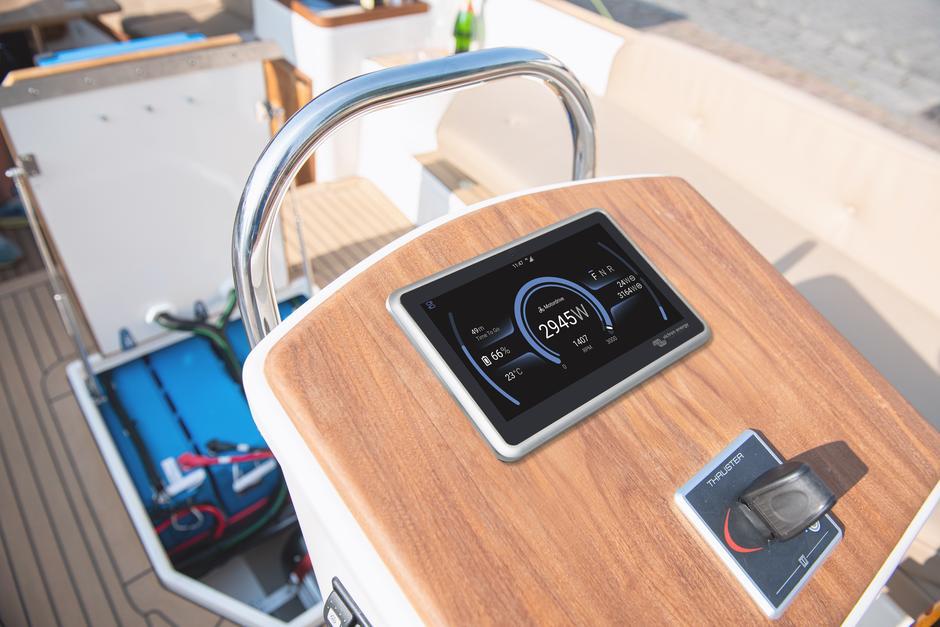
Victron brings electric-boat data onto one screen
Victron Energy is presenting GX Boat Page through its 2026 METSTRADE product catalogue as a software feature for compatible GX monitoring devices. The company says the screen brings together propulsion, battery and GPS information in an adaptive layout for electric and hybrid vessels. It is built into Venus OS, rather than described as a new physical instrument, and can draw on connected components including SmartShunt, NMEA 2000 and GPS data where available. This makes it relevant to owners of smaller electric cruisers and launches, whose helms may already be crowded with separate battery, motor and navigation information. The product's actual usefulness depends on compatibility, commissioning and the quality of the underlying measurements.
Electric propulsion changes what a skipper needs to know
A conventional small powerboat operator may concentrate on fuel level, engine temperature and revolutions. An electric boat adds questions about battery state, available power, charging conditions and the likely effect of throttle settings on remaining endurance. These readings are often distributed across different applications or instrument panels. A clear overview can reduce the need to switch between screens, particularly when approaching a marina or adjusting cruising speed. Victron's GX Boat Page seeks to make that information easier to interpret. It should still be understood as a display of available data, not a guarantee that the boat can complete every trip indicated by an optimistic estimate.
The software adapts to connected sources
The manufacturer describes an interface that changes according to the measurements the system receives. A boat with a SmartShunt and compatible propulsion equipment may show one set of information, while a vessel with additional NMEA 2000 and GPS connections may present more. This can be useful because not every small craft has the same electrical architecture. However, it also means that a promotional screenshot should not be interpreted as the default display on every installation. An owner should ask exactly which sensors and network messages are required for the desired functions, rather than assuming all information appears once the software is updated.
SmartShunt provides part of the picture
Victron identifies SmartShunt as a source for battery and motor-drive information in the GX Boat Page arrangement. A battery monitor can measure current and help estimate state of charge based on a configured battery model. Those estimates depend on correct installation, capacity settings and periodic synchronisation. If a shunt is bypassed by part of the electrical system, its readings may not represent all current flow. Owners should have the sensor installed in the appropriate circuit and understand its limitations. A beautifully presented battery percentage cannot be more accurate than the underlying measurements on which it is based.
NMEA 2000 can supply propulsion context
The first-party description says NMEA 2000 can provide information such as engine revolutions and direction, subject to what the connected devices support. NMEA 2000 is a widely used marine data network, but compatibility is not universal merely because equipment has an NMEA connection. Devices can support different message groups and manufacturers may use different software versions. A qualified installer should verify exactly which measurements are available from the motor, controller and network gateways. Owners should avoid relying on a generic wiring diagram without confirming the correct network backbone, termination, power supply and interface configuration.
GPS speed adds a different perspective
The product listing identifies GPS boat speed as another available input. This information can be useful when evaluating how much energy the boat consumes for a given rate of progress over the ground. However, speed over the ground differs from speed through the water when current is present. A boat travelling against a strong current may use substantial electrical power while making modest progress over the chart. The display may help the operator observe that situation, but interpreting the figures still requires seamanship. A single speed number should not replace awareness of tide, wind, sea state and the vessel's actual position.
Range estimates need careful assumptions
Electric-boat owners often want to know how far they can travel before recharging. That cannot be answered by battery percentage alone. The actual distance depends on speed, current, hull condition, load, weather and the portion of the battery capacity that may safely be used. Any display combining propulsion and battery data can support better decisions, but it cannot promise a fixed range without considering these variables. A skipper should plan with a conservative reserve and observe consumption under real conditions. If the system provides a range estimate, the owner should understand how it is calculated and whether it responds adequately to changing demand.
A consolidated screen can reduce clutter
A compact helm may contain a motor display, battery monitor, chartplotter and mobile device. Having the main propulsion and energy figures together could make operation less distracting. Yet good layout matters as much as consolidation. Important warnings should remain easy to recognise, and the skipper should be able to distinguish a normal change in load from a developing fault. Victron's catalogue describes an intuitive, adaptive interface, but the practical experience will depend on the particular GX display and installation. Owners should seek a demonstration of the exact data they expect to use rather than judge the software solely from static publicity images.
Built into Venus OS has a specific benefit
Victron says GX Boat Page is part of Venus OS and requires no additional hardware beyond a suitable existing setup. That could make the feature attractive to owners who already use compatible GX equipment, since it may avoid buying a separate dedicated display. The statement does not mean that every boat can use the software without sensors, wiring or upgrades. A boat lacking the required measurements may still need a SmartShunt, gateways or other equipment. Users should check supported GX models and software versions before assuming they can enable the feature immediately. The value of a software enhancement depends on the installed system.
Remote monitoring through VRM
The product entry refers to monitoring through Victron's VRM portal. Remote access can help an owner check selected information when away from the vessel or allow a technician to investigate an issue without visiting the marina. Yet remote monitoring depends on communications, proper permissions and the availability of the relevant data. A boat without internet access may still need a locally useful display, and a cloud outage should not prevent safe operation. Owners should verify account security and decide who may access the system. Remote information is a convenience and maintenance aid, not an independent alarm service unless that function is separately specified.
Connectivity introduces privacy and security questions
A connected monitoring platform can hold information about boat movements, power usage and operating patterns. Owners should understand which measurements remain aboard, which are sent to remote services and who controls access. Strong account security and current software are sensible precautions. Guest devices and nonessential entertainment networks should not be permitted to interfere with critical propulsion controls. The first-party GX Boat Page description confirms a remote portal connection, but does not provide a complete privacy policy within the exhibition summary. That information should be obtained from Victron's current service documentation and considered before enabling unnecessary remote features.
Energy data do not automatically reduce consumption
A well-designed display may reveal where electricity is going, but it does not generate extra energy or make a motor more efficient by itself. Owners must use the information to change behaviour, refine power settings or identify loads that can be reduced. On a small electric cruiser, a modest change in speed can sometimes have a meaningful effect on energy use, although the relationship depends on the hull. A useful routine is to observe consumption at several steady speeds in safe conditions and compare how the boat performs with different loads. The GX Boat Page can help present the information, while the skipper remains responsible for interpreting it.
Hybrid boats may have different priorities
A hybrid propulsion arrangement might combine a combustion engine, electric drive, batteries and several charging sources. The operator may need to understand which source is supplying power and what is happening to the storage system. An adaptive monitoring page can be valuable if it displays the required measurements clearly, but different hybrids may require specialised integration. The current Victron product listing does not establish that every hybrid motor or charging controller is supported. Owners should ask whether the system can show the distinctions relevant to their particular installation and what happens when part of the data network becomes unavailable.
Data integrity should be checked during commissioning
The most important test of a monitoring system is whether its displayed values match the equipment's actual behaviour. Commissioning should verify that battery current has the correct direction, state-of-charge estimates are configured properly and propulsion information updates in response to throttle commands. Where possible, a qualified installer can compare readings with independent measurements or manufacturer diagnostics. An apparently reasonable figure may still be wrong if a shunt was installed incorrectly or a network message was misinterpreted. Users should receive a simple explanation of each critical reading before the boat is returned to service. Attractive software is no substitute for validated measurements.
Alarm handling requires a separate plan
A battery can reach a low state of charge, an inverter can fault and an electric motor can encounter thermal limits. Owners need to know which system is responsible for protective actions and how an alarm is reported. GX Boat Page is described as an overview interface, not as a guarantee that all safety functions have been transferred to one display. Existing motor-controller protections and emergency isolation arrangements should remain correctly designed. A skipper should be able to identify the safest response when a displayed value becomes abnormal. That response may involve reducing load, returning to harbour or seeking professional advice rather than continuing because a screen still appears functional.
A software upgrade can be valuable on smaller boats
An owner with compatible Victron GX equipment may gain useful visibility without allocating additional physical space at the helm. That is particularly appealing on a small craft where a new gauge might require a cut-out or a major panel redesign. A software-based feature also reduces the need for a separate display if the existing equipment can present the required information. However, the owner should still check the user interface, update procedure and service support. A boat with a simple battery meter and no GX installation may not benefit enough to justify building an entirely new monitoring architecture solely for this page.
What the 2026 catalogue establishes
Victron's first-party METSTRADE listing confirms that GX Boat Page is a software feature built into Venus OS for electric and hybrid boats, designed to combine propulsion, battery and GPS data in an adaptive display. It identifies SmartShunt measurements, NMEA 2000 engine information, GPS speed and the VRM portal as elements of the wider arrangement. The listing does not establish universal compatibility, fixed retail pricing or any guarantee of voyage range. Those details must be checked against current Victron documentation and the boat's installed equipment. This is an equipment-software story, not an announcement of a new vessel or a claim of autonomous operation.
Better information should support better decisions
GX Boat Page illustrates a useful direction for recreational electric boating: bringing operational energy information closer to the place where the skipper makes decisions. That may make day-to-day operation less fragmented and help owners understand the relationship between throttle use, battery reserves and distance travelled. Its value will depend on correct sensors, network compatibility and sensible interpretation of the readings. For a boat below twelve metres, the right approach is to list the information the skipper actually needs, then confirm that the available Victron hardware and software can present it reliably. A clearer display can be worthwhile, provided it strengthens conservative voyage planning rather than encouraging overconfidence in a single number.
Original industry sources and image credits
Reporting based on Victron Energy official 2026 METSTRADE GX Boat Page product catalogue and specification.
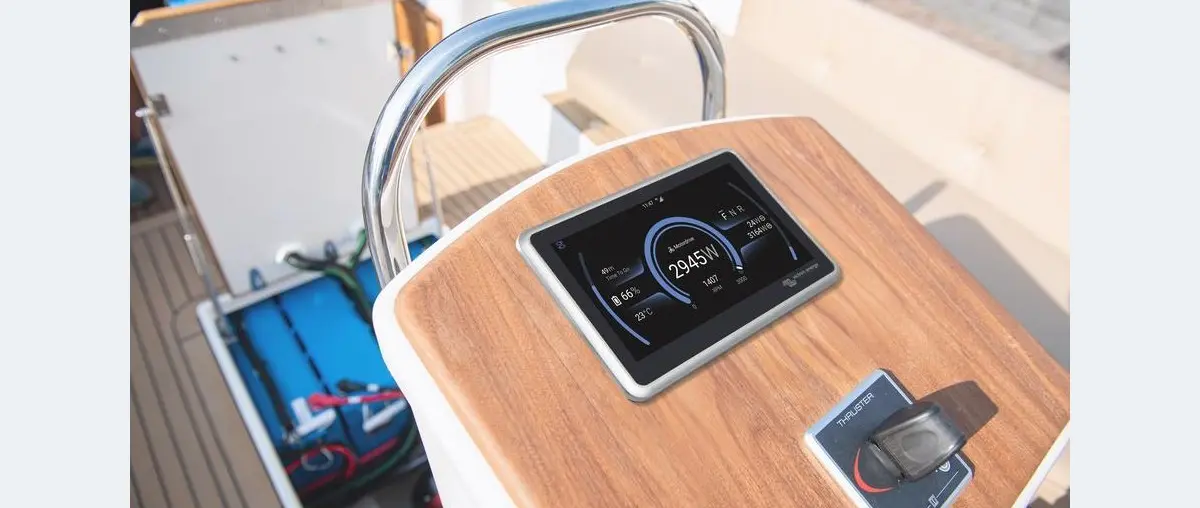
Lead image: Victron GX Boat Page Gives Electric Cruisers an Integrated Helm View — original Victron supplied GX Boat Page screenshot. © Victron Energy B.V.. Original supplier image.