High-load sailboat blocks gain a textile-fixing option
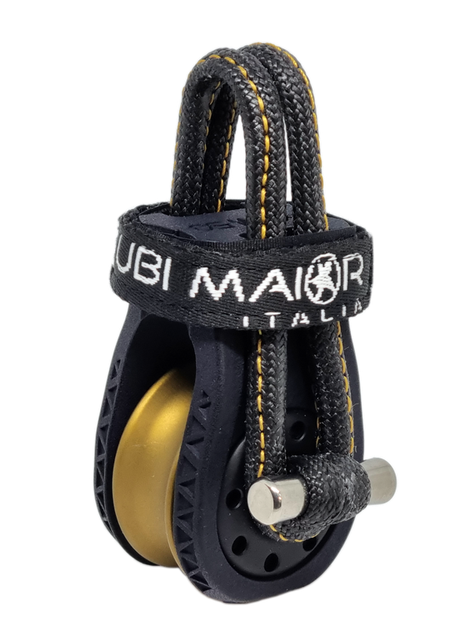
UBIMAIOR ITALIA is presenting its X3M Flight range through the 2026 METSTRADE product catalogue, highlighting blocks designed to support substantial loads while occupying relatively little space and weight. The Italian manufacturer's description identifies a defining feature: the fittings are intended to be installed exclusively with the supplied textile fixings. That distinguishes the range from conventional blocks mounted on metal shackles or other familiar attachments. The presentation does not provide a universal safe working load for every model, so it would be misleading to promise a particular lifting capability without the correct technical sheet. For leisure sailboats under twelve metres, the development raises useful questions about load paths, textile attachments, inspection and the trade-offs involved in replacing traditional metal deck hardware.
Why blocks matter even on modest yachts
Sailing boats rely on blocks to guide and multiply the mechanical advantage of lines used for sheets, halyards and other controls. A block with a well-supported sheave may reduce handling effort, whereas a poorly aligned fitting can create friction, wear and unpredictable movement. On a smaller yacht the individual components may look compact, but the forces generated by wind in the sails can still be considerable. Hardware therefore needs to be selected according to loads and intended functions rather than only appearance or vessel length. The X3M Flight proposal is relevant because it combines a high-load design objective with a different approach to attaching the block.
A textile fixing changes the attachment point
Conventional blocks are frequently connected by a metal shackle, swivel or pin. Textile attachments can offer flexibility in orientation and avoid some hard metal-on-metal contact, but they require compatible geometry and careful control of abrasion. UBIMAIOR says textile fixings are supplied as part of the X3M Flight concept and should be used exclusively with the product. Owners should not assume that an old metal shackle can simply be substituted or that an arbitrary piece of spare rope will serve as a safe connection. The precise attachment method, fibre specification, length and routing should follow the manufacturer's instructions. That is particularly important where the fitting is carrying a heavily loaded sheet.
Load ratings need to be checked by model
A product family may contain several sizes with different allowable loads. Marketing references to high capacity do not identify the safe working limit of an individual unit. A rigger should establish the expected maximum loads on the control line, select an appropriate safety margin and check the separate ratings of the block and its textile fixing. Conditions such as shock loading, repeated cycling and poor alignment can affect those choices. The exhibition listing describes a favourable load-to-size-to-weight relationship but does not provide the data needed to specify every installation. Owners should request the current engineering drawings and certification or test information rather than extrapolate from a product photograph.
Sheave and rope compatibility are essential
A block's effectiveness depends on the relationship between the sheave, its bearings and the rope running through it. A very small sheave may place excessive bending stress on a line, particularly under high load. Different rope constructions also respond differently to pressure and repeated movement. Before fitting an X3M Flight block, an owner should identify the recommended line diameters and materials, then confirm that the existing line is appropriate. A block that carries a high published load is not necessarily a good fit for every rope. Changing the hardware without considering the line may merely move the wear to another part of the system.
Reduced weight can matter, but its value varies
Weight-saving equipment is attractive on racing yachts, especially when hardware is installed high above deck or at the ends of moving systems. A lighter component can also be easier to handle and may reduce unnecessary mass in a compact installation. Yet the benefit should be evaluated against the actual boat. A cruising yacht may value easy maintenance and a readily available replacement part more than a modest reduction in component weight. UBIMAIOR's product positioning emphasises the load, dimension and weight relationship, but the amount saved in a given installation depends on what the new system replaces. A fair comparison requires the complete assembly, including the textile connection.
Articulation can reduce unwanted loading
Blocks are often subjected to force from lines that do not stay perfectly aligned. A connection that permits the fitting to orient itself with the load may help avoid bending forces in places not designed to carry them. A textile attachment can sometimes provide flexibility, but only when properly arranged and permitted by the manufacturer. A fitting mounted too close to a sharp edge or restricted by adjacent hardware may still be forced into an unfavourable angle. Installation drawings should show the permissible orientation, movement and clearances. Owners should not treat the word textile as a guarantee that the block will self-align under every loading condition.
Salt, sunlight and friction affect textile systems
Synthetic fibres used in marine rigging can deliver impressive strength, but their durability depends on material, protective covering and exposure. Ultraviolet light, grit and contact with hard surfaces may reduce service life. Textile fixings also need inspection after heavy weather, accidental overload or changes in alignment. A worn fibre attachment may not look as obviously damaged as a distorted metal shackle, particularly if the affected area is hidden beneath other components. The manufacturer should define what damage warrants replacement and whether protective sleeves or specific inspection methods are required. Owners should include the fixing itself in every hardware check, not focus only on the block body.
Failure modes need to be understood
If a block or its attachment fails under significant load, a line or fitting can move suddenly with enough force to injure people or damage a sail. That risk exists in conventional systems too, but alternative attachments may change what crews should inspect. A competent rigger can help identify where the highest forces occur and how a fitting could fail. Owners should keep hands clear of loaded hardware and avoid using a winch to force an apparently jammed system. A high-load product requires greater discipline, not less. A reliable fitting is one whose limitations and condition remain understood by the people using it.
Small boats may use high-load components selectively
Not every control on a dayboat requires sophisticated hardware. A lightly loaded line used for a cover or simple adjustment may be handled perfectly well by an inexpensive traditional block. More demanding positions, such as selected mainsheet or headsail systems, can justify greater attention to friction, alignment and strength. A small racing boat may have highly loaded rigging even though its length is modest. Owners should prepare an inventory of intended applications and ask the supplier which positions are suitable for the X3M Flight range. Buying the most advanced-looking fitting is not a substitute for selecting the right component for the actual load.
Installation by a professional is often worthwhile
A metal shackle is familiar to many sailors, while a textile attachment may involve a specified loop, splice or connection technique. The details determine whether the fixing develops its intended strength. An installation that appears neat but is incorrectly routed can be unsafe. A professional rigger should inspect the surrounding fittings, mounting points and line angles before the system is loaded. The cost of rigging work should be included in the quotation, not regarded as an optional afterthought. The manufacturer's mention of included textile fixings is useful, but it does not establish that every owner can safely install the assembly without specialist knowledge.
Spares and replacement procedures deserve attention
A cruising sailor may need to service equipment away from a specialist supplier. Before converting to a textile-fixing system, owners should understand whether approved spare attachments are available, how they are identified and what tools or skills are needed for replacement. If a line or loop becomes damaged during a voyage, improvising an unfamiliar attachment under pressure could introduce further risk. A sensible spares kit may include the correct manufacturer-approved textile fixing and clear instructions. The ability to maintain the fitting at a remote anchorage is part of its real value, especially on boats used for longer coastal passages.
Compare the entire hardware system
An X3M Flight block should not be evaluated in isolation. It forms part of a control system that includes rope, turning points, deck attachment, clutches, winches and the sail or device being moved. Replacing one block may change line angles or place unexpected loads on other components. The effect on friction and handling should be assessed after installation in safe conditions. Owners can compare the effort needed to operate the system before and after the work, but such experience remains boat-specific and should not be confused with an independently verified performance percentage. The objective is predictable, safe control rather than a dramatic claim about speed.
The original manufacturer description is intentionally limited
The UBIMAIOR METSTRADE 2026 entry describes X3M Flight as a high-load block family with a strong load-to-dimension-to-weight ratio and fittings intended exclusively for supplied textile attachments. It does not provide every working-load rating, bearing specification or price in the short exhibition description. There is also no basis in that listing for claiming that a specific racing team has adopted the range or that every model has just been launched this November. Those details would need separate current manufacturer confirmation. Reporting the documented claims accurately is more useful than attaching unsupported specifications to an unfamiliar piece of technical hardware.
An award is not being claimed
The presence of X3M Flight at METSTRADE should not be mistaken for a 2026 DAME award unless the product is specifically named in the organiser's results. This report concerns the manufacturer's equipment presentation and its implications for sailors, not an award announcement. Trade exhibitions routinely include new, recently updated and established products, so appearance at a show alone does not establish a release date. Owners considering the hardware should look for exact model information and the most recent technical instructions. The relevant news is the opportunity to compare an alternative fixing concept with traditional marine blocks and understand what that difference means operationally.
A useful question for the small-boat owner
The X3M Flight approach offers a reminder that the connection between hardware and boat can be as important as the component itself. A compact, high-load block with a properly engineered textile attachment may suit certain modern rigging arrangements, while a familiar metal-connected block may remain preferable elsewhere. The decision depends on loading, available space, maintenance access, crew experience and manufacturer support. For yachts below twelve metres, the sensible next step is a technical discussion with a sailmaker or rigger about the particular control that needs improvement. A well-selected fitting can make sailing more dependable, but only when the complete arrangement is understood and installed correctly.
Original industry sources and image credits
Reporting based on Official METSTRADE 2026 manufacturer product catalogue, UBIMAIOR ITALIA.
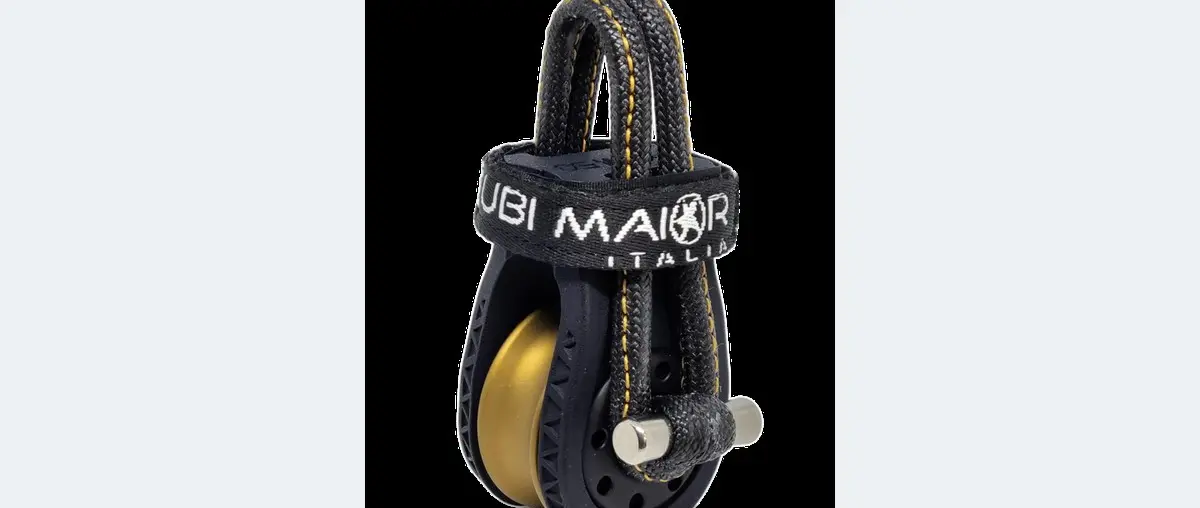
Lead image: Ubimaior X3M Flight Blocks Put Textile Fixings in Focus — official manufacturer supplied product photograph. © UBIMAIOR ITALIA. Original supplier image.