
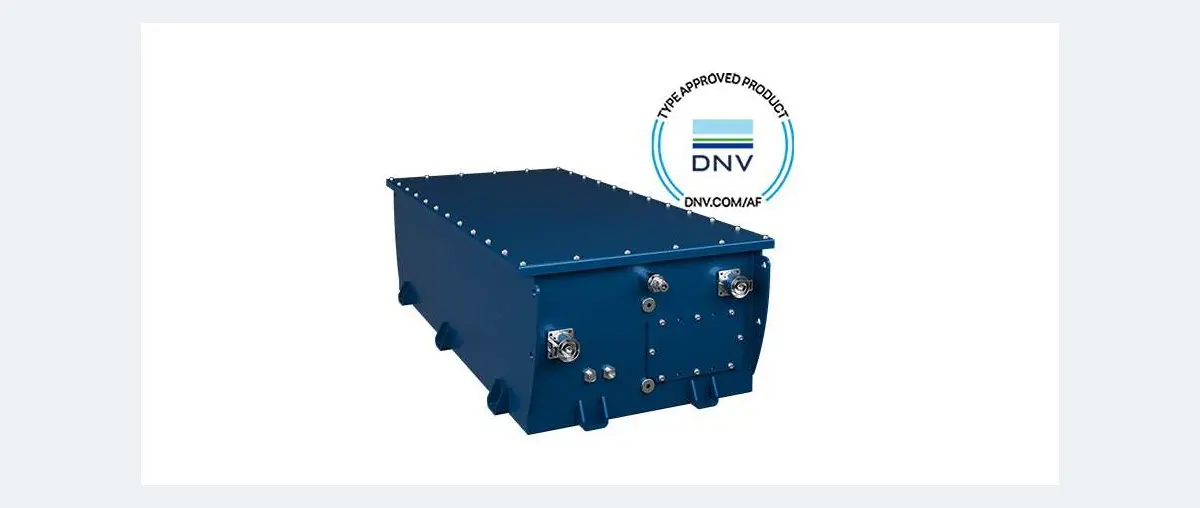
Svenner II brings battery safety into the DAME discussion
EPTechnologies' Solid State Technology Battery – Svenner II has received a Special Mention in the Electronic and Electrical Systems category of the 2026 DAME Design Awards. The result was published by METSTRADE on 17 November, following a product listing that describes a marine battery system with modular scalability, battery management, remote monitoring and what the supplier calls a no-propagation design. The manufacturer also refers to DNV approval and a claimed cycle capability exceeding 10,000. These are substantial technical statements, but a design-award recognition is not a guarantee of safe installation aboard any particular boat. Owners of smaller leisure craft need to understand whether such industrially oriented energy storage is relevant, proportionate and supported before considering it for a refit.
Battery systems have become more consequential
Modern cruising boats depend on stored electricity for navigation, communications, lights, pumps and increasingly demanding domestic appliances. A larger battery bank can increase the time equipment runs without shore power or a generator, but it also concentrates energy in a limited space. The safety implications extend beyond the battery modules to wiring, switching, mechanical protection and the ability to isolate faults. For an owner considering a major electrical upgrade, the useful question is not simply which battery promises the greatest capacity. It is whether the complete installation can operate safely in its environment and remain serviceable during the vessel's lifetime. Svenner II's recognition invites that broader discussion.
The term solid-state needs careful interpretation
The supplier describes the product as solid-state technology, a phrase commonly associated with battery systems that differ from conventional liquid-electrolyte designs. It should not be treated as an exact specification of cell chemistry, construction or temperature behaviour without the manufacturer's detailed documentation. Different products marketed under related terms can have different performance and safety characteristics. A prospective customer should ask what the cells contain, which standards have been applied and how the complete pack responds to overcharging, mechanical damage and thermal stress. It would be misleading to assume that any battery described as solid-state cannot fail or does not require protective systems. The actual engineering evidence matters more than the label.
What no-propagation is intended to address
EPTechnologies highlights a no-propagation design, referring to the aim of preventing a failure in one part of a battery assembly from spreading uncontrollably to neighbouring cells or modules. This is relevant because a fault that escalates across an energy-storage system can be much more difficult to manage than one contained locally. Yet the exact tests, conditions and acceptance criteria used to support the claim should be examined. A battery can be designed for containment while still posing hazards from electrical faults, heat, smoke or damaged connections. The phrase is a design characteristic claimed by the manufacturer, not independent proof of zero risk in every marine environment.
DNV approval is not unlimited certification
The company's exhibition entry says Svenner technology is DNV-approved. DNV is a recognised organisation providing classification and assurance services across maritime and other industries, but the practical meaning of an approval depends on its certificate, scope, standards and validity. An owner should request the precise document and confirm which battery configuration it covers. Approval of a product does not automatically approve the complete electrical system once it has been installed on a boat. Cable design, ventilation, fire detection, mounting and integration with other equipment may require separate assessment. A responsible report should recognise the supplier's approval claim while avoiding an assertion that every possible use is covered.
The battery management system is essential
A battery management system monitors relevant operating conditions and can restrict charging or discharging to help protect the cells. The manufacturer identifies advanced BMS protection as part of Svenner II. The details matter, however: what information is measured, how faults are communicated and what happens when a limit is exceeded. A BMS should not be confused with the boat's entire electrical safety architecture. Fuses, contactors, switching arrangements and protection against short circuits still need to be properly specified. Owners should know how to respond to a system shutdown, particularly if essential navigation or communications equipment depends on the same battery supply.
Modular scalability introduces choices and constraints
A modular battery architecture may allow designers to increase capacity by combining appropriate units. That can be attractive for commercial or larger recreational vessels, but it is not necessarily beneficial on a small sailing cruiser. Modules have physical dimensions, mass, cooling needs and electrical constraints that cannot be ignored. Adding capacity also changes the potential fault energy and the requirements placed on cabling and switching. The boat's structure and stability should be considered when locating heavy equipment. A photograph of a battery module does not establish that the product fits beneath a cabin berth or in an existing locker. Installation is an engineering task, not simply a matter of finding a spare shelf.
The claimed 10,000-cycle capability requires conditions
The supplier lists more than 10,000 cycles as a characteristic of the Svenner system. Such figures can sound decisive when compared with ordinary leisure batteries, but cycle-life tests depend on depth of discharge, temperature, current, operating windows and the definition of end of life. A battery may achieve a high count under controlled conditions while having a different useful life in a demanding marine installation. Owners should request the testing standard and warranty terms, including any limits on throughput or operating conditions. A large cycle number is not equivalent to a guaranteed number of years of service, particularly on a boat that is only used intermittently.
Remote monitoring can improve oversight
A connected battery system may provide data about state of charge, temperature, alarms and operating history. EPTechnologies describes remote monitoring among its features. This could be useful for technicians investigating a fault or for owners managing a vessel kept away from home. However, remote information depends on connectivity, correctly configured access and a clear understanding of what is being displayed. A communication failure should not be mistaken for evidence that the battery is healthy. Owners should ask who can view the data, how software is updated and what functionality remains available without internet access. Information is valuable only if people understand how to act on it.
Marine environments add stresses
A battery installed on a boat encounters motion, humidity, vibration and potentially salt contamination. Some vessels also experience long inactive periods and substantial changes in ambient temperature. Equipment designed for marine use should be assessed for appropriate environmental protection and reliable mounting. A small boat can place hardware close to fuel systems, bilges or storage areas, increasing the importance of thoughtful placement. The manufacturer listing does not show how every possible locker should be equipped. An experienced marine electrical installer should determine whether the proposed location is suitable and whether auxiliary ventilation, cooling or fire provisions are required.
Charging equipment must match the cells
An existing charger or alternator may not be suitable for a new type of battery without changes to its control settings. Inappropriate charging can produce faults or shorten service life, while a high-current battery may place unexpected demands on wiring and switching. The correct design identifies all charging sources, including shore power, engine-driven alternators, solar panels and any generator. It also determines what happens when the BMS limits charge acceptance. The Svenner II product recognition does not establish that an older boat's charging system is automatically compatible. A safe retrofit requires calculations and the appropriate protective and control hardware before energising the bank.
Essential loads deserve a separate plan
A vessel may depend on electrical power for navigation, bilge pumping, radios and engine starting. An integrated battery upgrade should consider how these functions remain available if the main bank is isolated or suffers a fault. The solution may involve appropriate separation, redundancy and protected circuits depending on the boat and its equipment. A manufacturer-approved battery module does not determine that architecture by itself. Owners should review the consequences of a single point of failure with a competent designer. This is especially important for boats used offshore, where assistance may not be immediately available. The ability to recover from an electrical problem can be more important than headline battery capacity.
Fire response cannot be improvised
A battery system should be integrated into the vessel's emergency plan. Crew need to know how to isolate power, identify warning signs and respond according to current manufacturer and emergency-service guidance. Different battery chemistries and installations may require different approaches. The manufacturer's no-propagation claim does not remove the need for appropriate detection, protection and training. Owners should never improvise intervention on a damaged high-energy battery pack. Qualified professionals should handle suspected internal faults and any necessary removal. A responsible supplier should provide clear emergency documentation alongside the operating manual, not rely on the reassuring sound of an advanced technology label.
A small boat has limited space for complexity
Leisure Boat Guide focuses on craft under twelve metres, many of which have modest electrical demand. A sophisticated modular battery system may be physically or financially inappropriate for those vessels. Its DAME recognition remains relevant as a sign of wider technical development, but owners should distinguish technologies worth observing from equipment suitable for immediate purchase. A simple, properly installed battery bank can be more practical than a complex solution that consumes valuable space or requires inaccessible specialist support. The right choice depends on the boat's load schedule, charging sources, cruising pattern and maintenance capability, not merely on how advanced the battery sounds.
How the DAME result fits the wider picture
METSTRADE lists Svenner II among the Electronic and Electrical Systems Special Mentions. The award is distinct from the category winner, MOTA Cooling System's H2 Marine One, and from the three joint overall DAME winners. The exhibition listing supplies the manufacturer's statements about modularity, DNV approval, BMS features and cycle life. Those statements should not be silently converted into independently verified performance guarantees. The DAME jury's recognition indicates that the design merits attention, while the technical claims still need consideration through specifications, certificates and installation requirements. This distinction is particularly important in a safety-related field where promotional language can influence costly decisions.
What owners should request from a supplier
Before specifying Svenner II, a prospective buyer should obtain the exact cell and module data, approval certificate, capacity, voltage, mass, cooling requirements, protection strategy and service arrangements. They should understand which charger and inverter products are supported and what happens if a module requires replacement. Written warranty conditions should explain how the advertised cycle capability is defined. The quotation should include engineering, installation, commissioning and future service rather than just the price of a battery module. If the proposed system cannot be justified for a particular small boat, a trustworthy supplier should be prepared to recommend a simpler alternative.
Technology is useful when it solves a real problem
Svenner II's DAME Special Mention reflects the marine industry's search for energy storage that can combine substantial capability with strong protection and long service life. The development is worth monitoring as electrical loads expand across recreational and commercial boating. Yet innovation is not a licence to overlook the fundamentals of safe design. For owners of boats under twelve metres, the most relevant lesson may be to ask more demanding questions about any battery installation: its protection, compatibility, maintenance and emergency behaviour. The company provides the product claims; the METSTRADE result confirms recognition on 17 November 2026. Actual suitability must be established by professional assessment of the boat, not by the award alone.
Original industry sources and image credits
Reporting based on EPTechnologies official first-party product information, checked November 2026.
Independent award result verification: METSTRADE's verified 17 November 2026 DAME Special Mention results.
Lead image: EPTechnologies Svenner battery-family archive photograph, 2025 press-kit image illustrating the company’s marine battery systems. © EPTechnologies, 2025 manufacturer press-kit image. Original supplier image.
