Sol-Go's semi-flexible panels revisit deck-top solar power
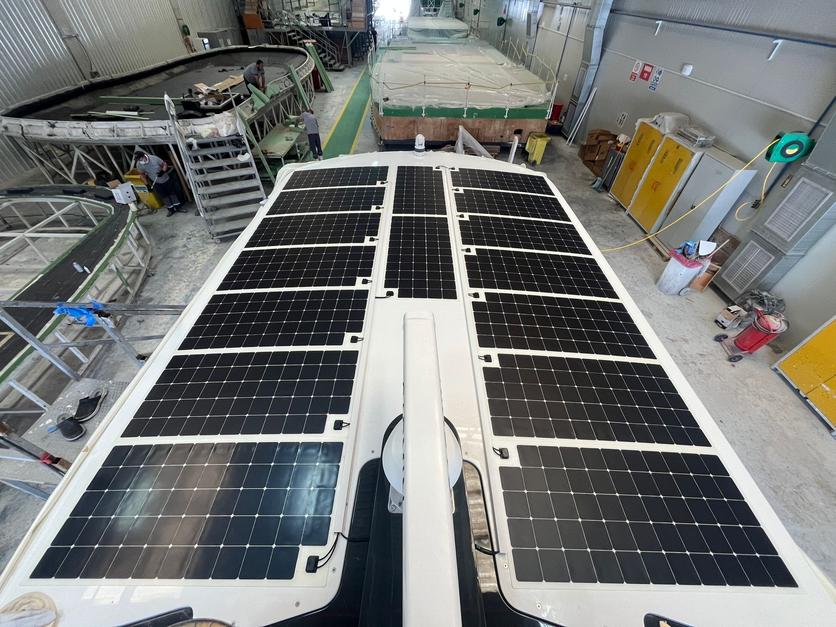
Sol-Go is presenting its semi-flexible marine solar panel range through its 2026 METSTRADE exhibitor catalogue, drawing attention to lightweight panels and custom sizes for curved surfaces. The company's listing describes standard products with rated outputs from 100 to 284 watts and says it can manufacture bespoke shapes for boats, recreational vehicles and other off-grid applications. It also promotes a higher-voltage 284-watt option and warranty coverage of up to ten years on certain panels. These are manufacturer specifications rather than independent test results, and the catalogue does not establish that the whole range was first introduced this November. For the owner of a small cruising boat, the attraction is the possibility of adding charging capacity without installing a large rigid frame.
Limited deck area creates a different solar challenge
A yacht under twelve metres may have a narrow coachroof, a curved cabin top or a small bimini rather than a broad, flat deck. Fitting conventional rigid panels can be difficult without creating obstructions or adding supporting structures. Semi-flexible panels can follow certain surface contours, potentially making use of space that would otherwise remain uncovered. But flexible does not mean a panel can be bent or twisted without limit. Manufacturers specify minimum bend radii and mounting requirements to protect cells and wiring. Before ordering, an owner should make a scale drawing of the proposed location, including hatches, lines, handholds and the path normally used by crew.
Output ratings are measured in defined conditions
A panel described as 100, 200 or 284 watts is generally identified by a rated output under specified test conditions, not an assurance of delivering that number continuously aboard. Actual energy production varies with sunlight, temperature, shading, angle and the performance of the charging system. On a small boat, a boom, mast or antenna may cast a moving shadow over the panel for much of the day. A brochure number is a useful starting point for calculations, but practical daily energy is better estimated from local conditions and the panel's actual position. Owners should keep this difference in mind before choosing a panel based solely on its highest published wattage.
Custom shapes may reduce wasted space
Sol-Go advertises the ability to make panels to unusual dimensions and outlines. For a boat with irregular surfaces, this could be valuable because a standard rectangle may leave too much unused area or interfere with fittings. A bespoke panel still needs suitable electrical design, sealing and mechanical support. A narrow or oddly shaped layout may have different cell arrangements from a conventional product, affecting how it behaves under partial shading. Owners should ask the supplier to confirm the exact rated output and electrical characteristics of the proposed custom panel. The fact that an outline can be manufactured does not mean it will be efficient, durable or safe on every possible surface.
A curved coachroof is not a free mounting surface
An exposed deck can flex under load, vibrate underway and experience heavy foot traffic. Even a thin solar module requires an appropriate support surface to avoid fatigue or damage. Some semi-flexible products are suitable for limited curvature but not for repeated structural bending. Installers should follow the panel maker's instructions for adhesives, mechanical fasteners and any air gap required for cooling. An incorrect bond can trap moisture or make later removal difficult. A yacht owner should also consider what happens when the underlying deck needs inspection or repair. Mounting decisions affect the boat as well as the panel, so the solution should be planned as part of the vessel's construction.
Heat influences performance and service life
Solar cells become warm in sunshine, and higher temperatures can reduce their electrical output. A panel bonded directly to a deck may dissipate heat differently from one mounted above a surface with ventilation. This can affect energy production and potentially long-term durability. Sol-Go markets its panels for demanding mobile environments, but the exact installation method still matters. Owners should obtain the permitted operating temperature, recommended mounting arrangement and any restrictions on dark or highly insulated surfaces. It would be misleading to promise a fixed performance advantage without comparing the actual conditions. A well-fitted smaller panel may serve better than a larger one installed where heat and shading limit its output.
The 284-watt option brings a voltage question
The company's listing says its flagship 284-watt design is intended for 48-volt systems, which may differ significantly from the twelve-volt arrangements common on smaller recreational boats. A higher-voltage panel or string cannot simply be connected to an existing battery without an appropriate charge controller and compatible system design. Owners should verify open-circuit voltage, maximum current, connector type and the specifications of the proposed controller. Conversion to a lower-voltage battery system is possible in some configurations, but equipment must be selected and installed correctly. A product that looks ideal by physical size may be electrically unsuitable without additional components, making early system planning essential.
Small-boat charging systems need coherent design
A practical solar installation includes the panel, cabling, fuses or other protection, a charge controller and a battery that can safely accept the available energy. The controller must match the panel's electrical characteristics and the battery chemistry. Cable length and conductor size also affect voltage drop and heat. On a small boat, solar wiring may travel through narrow lockers and damp areas, so weatherproof entry points and strain relief are important. The panel is only one part of the package. A professional installer should evaluate the complete system before the owner cuts deck penetrations or connects new wiring to the existing electrical distribution.
Energy needs should be calculated first
An owner planning solar charging should begin with a realistic daily load schedule. Navigation equipment, cabin lights, phones, refrigeration and pumps all use electricity at different rates. The total demand depends on operating time as well as power draw. A modest dayboat may only need occasional topping up, while a cruiser with a refrigerator can have a much larger overnight load. The correct number and size of panels follow from these calculations and the available sunlight. Adding solar capacity without considering consumption can lead to disappointment, particularly in northern climates or during long spells of cloud. The aim should be a reliable contribution to the energy budget, not an unsupported promise of complete independence.
Partial shading deserves a specific discussion
Boats have moving sources of shade. Sails, booms, radar arches and people walking across the deck can interrupt sunlight even when the sky is clear. Depending on the panel's internal wiring, a shadow over a relatively small area may reduce output more than the shaded proportion suggests. A custom-shaped panel might offer better surface coverage, but that does not automatically solve electrical shading losses. The supplier should explain the cell layout and any bypass arrangements. Owners can also observe the proposed location across several hours before purchasing. A good installation balances the available area with an understanding of how the boat is normally used.
Waterproofing and deck penetrations matter
A solar panel installed outdoors has to tolerate rain, spray, salt and repeated temperature changes. Connectors, junctions and cable entries need appropriate environmental protection. A small leak around a deck gland can damage interior joinery even when the solar module itself works perfectly. Adhesive mounting may reduce the need for multiple fasteners, but the cable still needs a safe route into the boat. The installation should allow inspection and fault tracing without unnecessary dismantling. Sol-Go's exhibitor catalogue describes product capabilities; it does not provide an independently verified waterproofing outcome for every finished boat installation. Proper workmanship remains the foundation of reliability.
A warranty must be read in full
Sol-Go promotes warranty coverage of up to ten years for selected semi-flexible products. That is noteworthy in a category where durability has been an important concern for buyers, but the phrase up to should not be treated as a blanket promise for every model or type of damage. Warranty documents may distinguish manufacturing defects from performance retention, installation damage and ordinary wear. Owners should request the exact written terms for the specific panel supplied and check whether unusual mounting conditions affect coverage. Service support matters as much as the number of years printed in advertising. A guarantee that is difficult to enforce far from the supplier may have limited practical value.
Foot traffic presents a real use case and risk
A panel located on a coachroof or deck may be exposed to people stepping on it while reefing or moving forward. Some panels are described as walkable under defined conditions, but that should never be inferred from the word flexible. Shoes, grit and point loads can damage the surface or cells. Owners should verify any permitted loading and consider whether the proposed mounting location creates a slipping or trip hazard. If crew frequently cross the area, leaving a safe clear route may be more important than covering every available centimetre with solar cells. Deck safety must come before maximising advertised output.
Maintenance is modest but not optional
Marine solar panels accumulate salt, dust and grime that may affect output. They also experience vibration and movement of connections over time. Routine checks can include cleaning according to the supplier's instructions, inspecting cables and ensuring that no fastener or adhesive edge is lifting. Abrasive cleaning products may damage protective surfaces, so owners should avoid assuming that every common deck-cleaning method is suitable. A fall in energy production may reflect shading, battery conditions or a controller problem rather than a failed panel. Keeping a simple record of normal charging behaviour can help identify changes before a longer trip.
A panel's appearance changes the boat
Low-profile solar equipment may be less visually intrusive than a rigid frame, but it still affects the boat's appearance and the use of its surfaces. Owners can compare colour, texture, edge finishing and how cables are hidden. On a classic sailing yacht, a large dark panel on a pale coachroof may be visually prominent even when physically thin. A custom outline may fit more discreetly, while a simpler standard panel may be easier to replace later. The decision is partly aesthetic and partly practical. A good supplier should provide dimensions and real installation photographs so an owner can judge the likely result.
When this product range deserves consideration
Owners with limited flat space, modest charging needs and an appropriate mounting surface may find semi-flexible solar worth investigating. The solution is less compelling if the only available location is heavily shaded, walked on frequently or too hot for the manufacturer's intended installation. Boats already equipped with adequate solar may gain little by replacing functioning panels without a clear benefit. The Sol-Go catalogue establishes the advertised range, output span and custom-production offering but does not guarantee a single price, exact regional stock or universal fit. A detailed quotation should include the charge controller, wiring, installation and any necessary changes to the battery system.
A thoughtful route to more onboard energy
Sol-Go's current METSTRADE product presentation draws attention to the everyday challenge of harvesting solar power from limited, curved boat surfaces. Its combination of standard and bespoke panel options may help solve that challenge when the electrical design and mounting conditions are suitable. But rated watts, warranty length and lightweight construction are only pieces of the decision. The actual benefit comes from matching energy production to a vessel's needs, maintaining safe deck access and installing reliable connections. For owners of leisure boats under twelve metres, the best approach is to start with measured consumption and realistic mounting options, then ask whether the Sol-Go range offers an appropriate solution.
Original industry sources and image credits
Reporting based on Sol-Go official first-party product information, checked November 2026.
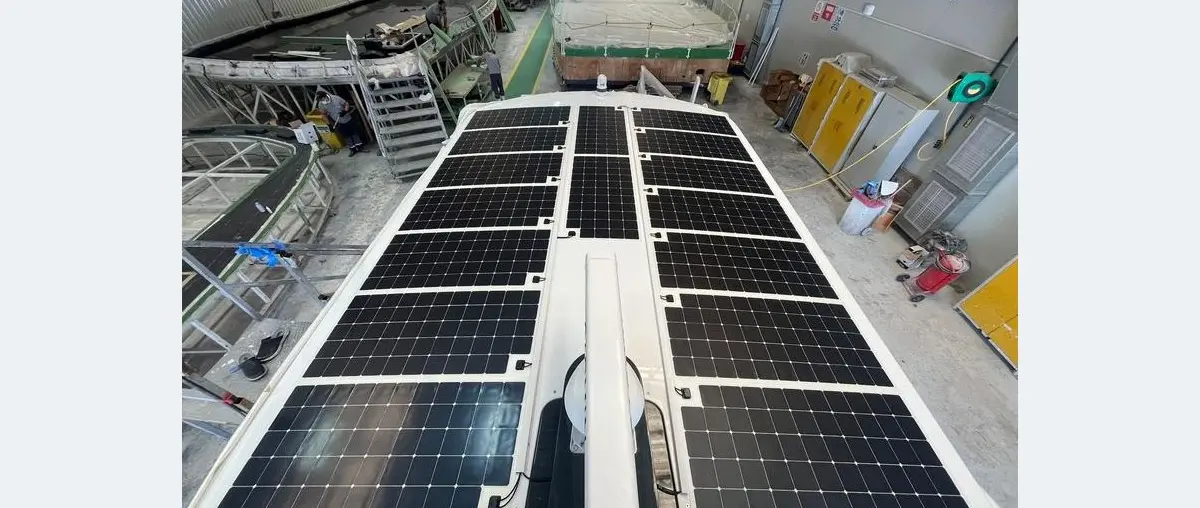
Lead image: Sol-Go Semi-Flexible Panels Bring Custom Solar Fits to Small Boats — official manufacturer product photo. © Sol-Go Inc.. Original supplier image.