A DAME category award for an unusual freshwater system
Sensiblue’s S4 has received the Manufacturing and Support Products and Materials category award at the 2026 DAME Design Awards, according to the results announced at METSTRADE on 17 November. The Dutch company presents the S4 as a water-disinfection product that uses salt electrolysis and the movement of water through the unit rather than a conventional external electrical connection. The company’s product entry was published in January 2026, making the November result an equipment-design award rather than a newly invented product launch. For owners of small cruisers, the story raises a practical question: how can a compact vessel manage water hygiene without introducing a system that is difficult to inspect, maintain or use correctly?
Freshwater aboard is a system, not just a tank
A boat’s water supply may include a filler, storage tank, pump, filters, hoses, taps and shower outlets. Contamination or stagnant water can affect several parts of that route, not merely the liquid visible in a glass. Small-boat owners may leave their vessels unused between weekends, which can create different maintenance problems from those faced by a permanently occupied home. A treatment device must therefore be evaluated in the context of the whole installation. The S4’s claimed role in disinfecting water and limiting biofilm is relevant, but an owner should not assume that one additional component removes every risk arising from an inadequately maintained tank or poorly routed pipework.
Salt electrolysis is the central idea
The manufacturer describes a process that uses salt and electrolysis to create disinfecting action as water flows. This differs from simply passing water through a mechanical sediment filter. Its operation involves chemistry even though the marketing stresses the absence of externally added chemical treatments. The distinction matters because active disinfecting species can have both benefits and constraints. Users need to understand required salt levels, the conditions in which the unit works and any relevant limits on disinfection by-products or residuals. The company’s short catalogue description cannot replace certified installation guidance or testing under the exact water conditions found aboard a particular vessel.
A flow-powered concept is interesting for small craft
Electrical power can be limited on a trailerable boat or a small cabin cruiser that spends many nights away from shore power. A water-treatment unit advertised as operating from water flow without a separate electrical connection is therefore attractive in principle. However, the water pump still requires its own energy source on many vessels, and the system’s hydraulic resistance can affect overall performance. Owners should ask for the pressure and flow specifications, as well as confirmation that the equipment will work at the pressures produced by their existing pump. The absence of a separate power cable does not mean the complete water system operates without electricity.
The published flow claim needs context
Sensiblue’s METSTRADE listing states a capacity of approximately 1,000 litres per hour and refers to simultaneous shower use. Those figures help illustrate the manufacturer’s intended application, but they do not guarantee adequate performance in every installation. Actual output depends on pump capability, pipe diameter, pressure, temperature and how many outlets are used together. A small boat with a modest pump and long narrow hose runs may behave differently from a well-designed fixed installation. Before spending money on a water-treatment upgrade, owners should measure or verify existing flow rates and consider whether the system introduces any unacceptable pressure drop at the taps.
Biofilm is more complicated than visible dirt
Microorganisms can form communities attached to the internal surfaces of tanks and pipes, often described as biofilm. Such material may persist even when the water looks clear. The company claims that the S4 helps tackle biofilm, but the precise effectiveness of any disinfection method depends on contact conditions and the state of the plumbing. A boat with a neglected freshwater tank may still need physical cleaning, inspection and an appropriate sanitising procedure. An equipment upgrade is not an excuse to leave debris or organic deposits in inaccessible parts of the system. Good water hygiene usually requires a maintenance routine covering multiple components.
Claims about pathogens deserve careful interpretation
The manufacturer refers to organisms including bacteria, viruses and Legionella in its promotional material. These are important water-safety concerns, but an assertion in a product listing is not equivalent to an independent laboratory result for every installation and species. Owners should request the relevant certifications, test conditions and recommendations for verifying potable-water quality. A treatment that works under controlled conditions may require particular pressure, salinity, temperature or contact time. People who are medically vulnerable should not rely on general advertising claims when making decisions about drinking or showering water. If safety is uncertain, appropriate water testing and professional advice remain essential.
Disinfection and filtration do different jobs
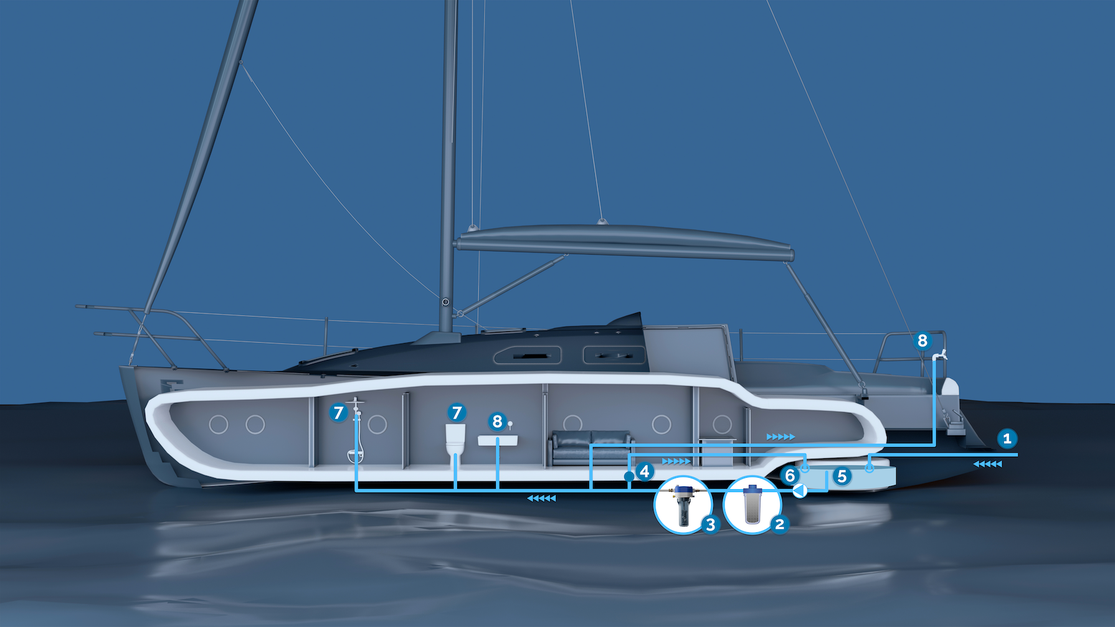
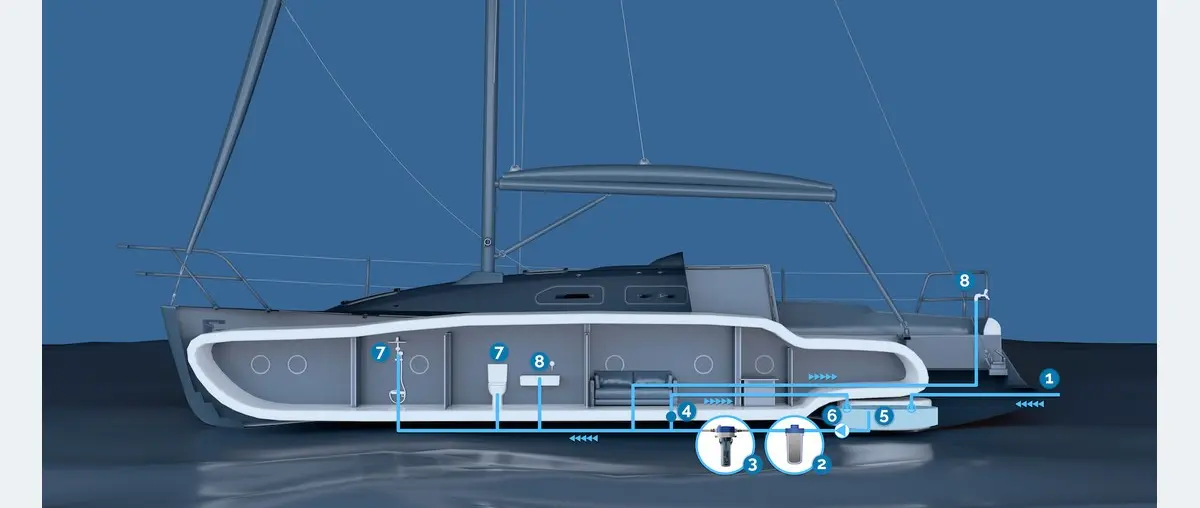
A carbon filter can improve some aspects of taste and odour, while a sediment filter captures particles above a particular size. Disinfection seeks to reduce microbial risk, but these approaches are not interchangeable. The company’s wider system descriptions refer to combining treatment stages, making it important to understand which elements are supplied with a particular S4 configuration. A buyer should ask whether the equipment includes filtration, whether additional cartridges are needed and what happens when those parts are exhausted. A useful installation diagram should identify each stage and any bypass lines. The presence of one well-marketed unit does not prove that the entire water system meets a chosen standard for drinking water.
The salt refill is a real maintenance task
The catalogue mentions a medium configuration in which salt is replenished after a substantial volume of use, giving an approximate interval of 55,000 litres. That figure is a product-specific claim and should not be treated as a universal schedule for every operating condition. Flow, installation and manufacturer instructions can affect service intervals. A conscientious owner should keep a record of maintenance and learn how the unit indicates when intervention is needed. The product should not be described as literally maintenance-free if salt has to be replenished and the surrounding water system still requires cleaning and inspection. A simple service routine can be an advantage, but only when it is understood.
Marine installation needs clear hydraulic separation
Retrofitting equipment into a small boat may require changes to hoses, mounts or tank connections. The location must be accessible for inspection and salt replenishment while remaining protected from leaks, vibration and freezing where relevant. A filter or treatment unit should not be installed where an unnoticed drip could damage electrical wiring, battery terminals or interior joinery. The manufacturer’s presentation describes the concept, not a guarantee that it can be attached to every boat without modification. Owners should obtain a current installation drawing and confirm that pressure ratings, fittings and potable-water contact materials are appropriate for the vessel.
Winter lay-up changes the maintenance picture
Many boats below twelve metres spend part of the year on trailers, in yards or afloat but unused. Water may remain in parts of the system during lay-up, creating risks from stagnation or freezing. An owner must follow correct draining and winterisation procedures rather than assume the S4 will protect an idle tank indefinitely. Any treatment component may have specific instructions concerning residual water, cold temperatures and recommissioning. A careful spring start-up should include checks for leaks, filters, odour and water quality. A water-disinfection product may support ongoing hygiene, but it should form part of the boat’s overall seasonal maintenance plan.
What a DAME win means in this category
METSTRADE named Sensiblue S4 as winner of the Manufacturing and Support Products and Materials category. This is an important design recognition, but it is not the 2026 overall DAME title and does not automatically mean the unit has passed every national drinking-water or marine-equipment certification. Awards assess design contributions under their own criteria, while technical compliance and health safety involve other standards and testing methods. The S4’s use of a flow-driven disinfection concept appears to have attracted the jury’s attention. For prospective buyers, that recognition should prompt closer technical examination rather than replace independent evidence of performance.
Environmental claims require whole-system assessment
The manufacturer promotes reduced reliance on bottled water and an arrangement intended to avoid some externally dosed chemicals. That may support a more convenient cruising routine, but the overall environmental effect depends on the materials, consumables, maintenance and actual water use. Producing disinfecting agents through electrolysis is still a chemical process. Refillable salt is also a consumable, and any exhausted filters or components must be disposed of properly. It is more useful to examine the system’s documented inputs and outputs than to assume that the absence of a separate power plug makes it environmentally impact-free. Boaters should expect precise answers rather than broad slogans.
Drinking aboard and showering aboard are different concerns
Water used for cooking or drinking must be suitable for ingestion, while shower water has different exposure routes that also deserve attention. A boat may carry untreated water for some non-potable uses, but the plumbing must make those boundaries clear. A system intended to treat water for both applications should be assessed for each purpose, with appropriate tests and local guidance. Owners should not assume that a product sold as a disinfection device guarantees a safe potable supply regardless of the source. Safe operation starts before treatment, with sound filling procedures, clean tanks and avoidance of cross-connections to seawater or contaminated equipment.
What to verify before specifying the S4
An installer should request the latest product manual, certification documents, required operating pressure, maximum flow, salt specification and service procedures. The buyer should also confirm compatibility with the boat’s materials, tank size and typical storage periods. Written information about how to monitor performance and what to do if the unit stops functioning is particularly important. The DAME result does not provide a universal retail price or availability schedule, and this article does not claim to have independently measured pathogen reduction. A careful owner may choose to have water tested before and after commissioning to establish whether the complete installation achieves the intended quality.
A more informed approach to freshwater equipment
The S4 award illustrates the marine industry’s interest in systems that can reduce complexity in everyday boat ownership. Its unusual use of flow-driven salt electrolysis may be worth investigating by people who want to improve freshwater management aboard smaller craft. Yet the most meaningful outcome is not a promising brochure headline: it is a well-installed, appropriately maintained system whose performance is understood and verified. Sensiblue supplies the product claims in its first-party METSTRADE listing; the organiser’s 17 November results verify the design award. Owners should give both pieces of evidence their proper weight, treating a DAME category victory as a reason to ask better technical questions rather than as a substitute for safe water practices.
Original industry sources and image credits
Reporting based on Sensiblue first-party product / 2026 DAME entry.
Independent award result verification: METSTRADE official DAME Design Awards results, 17 November 2026.
Lead image: Sensiblue S4 Wins DAME Award for Flow-Powered Water Treatment — official supplier product image. © Sensiblue. Original supplier image.