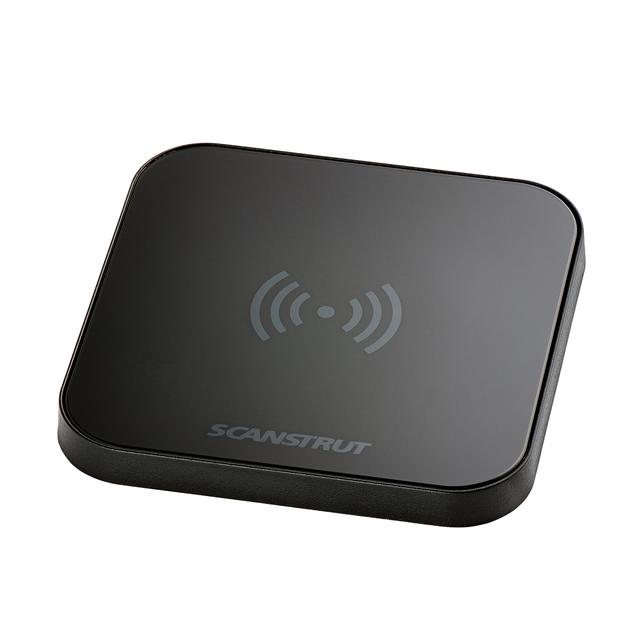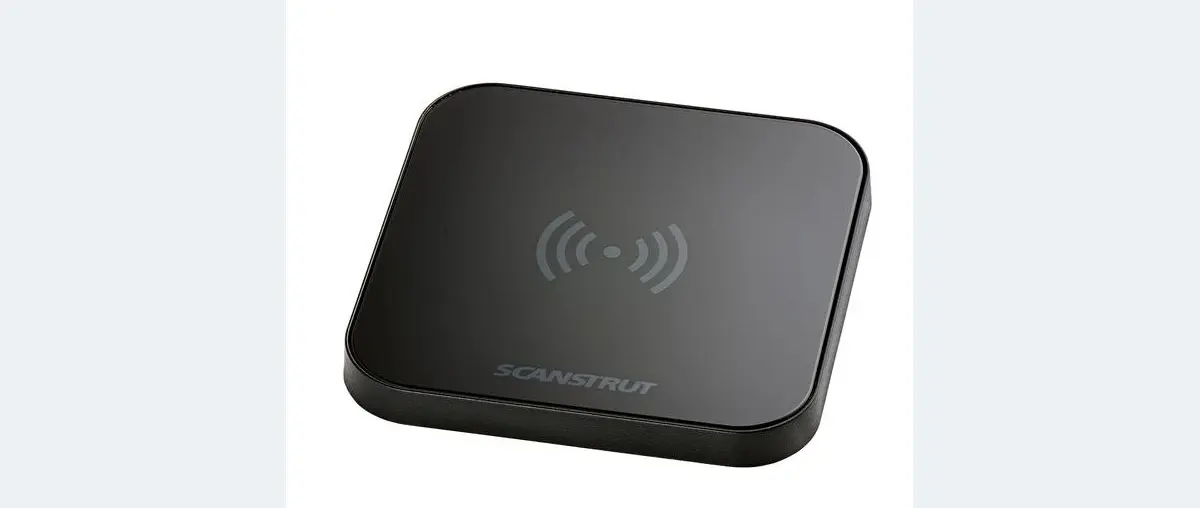
A phone charger designed for an exposed helm
Scanstrut has included its Ultra Qi2 Magnetic Waterproof Wireless Charger in the 2026 METSTRADE equipment catalogue, describing a marine installation that combines wireless power, magnetic phone retention and protection against water jets. The British supplier advertises up to 15 watts of Qi2 charging, compatibility with a 12- or 24-volt boat supply, an IPX6 rating on the front and back, and a toughened-glass surface. The manufacturer calls it a first-of-its-kind marine-grade Qi2 charger, a claim that should be attributed to Scanstrut rather than presented as an independently audited market ranking. For owners of boats below twelve metres, the appeal is straightforward: keeping a phone accessible and charged near the helm without a loose cable becoming another item to manage in rough conditions.
The phone has become part of the small-boat routine
Boaters routinely carry phones for weather information, marina details, communication, navigation references and photographs. A phone can be useful, but its battery may drain more quickly when the screen remains bright, location services are active or connectivity is poor. An exposed cockpit presents additional problems: spray, vibration, glare and limited space for safe storage. A fixed charger may make everyday use more convenient, yet it should not be confused with providing a complete marine navigation or emergency-communications system. Dedicated equipment and suitable backups remain important where the voyage requires them. Scanstrut's new product is best judged as an accessory supporting a wider, well-planned helm arrangement.
Qi2 is more specific than generic wireless charging
Wireless chargers vary in the protocols and alignment systems they support. The Qi2 standard is designed to improve compatibility and magnetic alignment among suitable devices and accessories. Scanstrut advertises the Ultra Qi2 as Qi2-certified, with a stated maximum charging power of 15 watts. That figure describes a capability under the appropriate conditions, not a promise that every phone will accept or maintain that rate. The device must support the relevant protocol, and temperature or battery-management limits may reduce charging power. Buyers should check their particular phone model and any protective case rather than assume that the words wireless charger are sufficient evidence of compatibility.
Magnetic alignment can make charging less fussy
Conventional wireless charging can be interrupted if the phone shifts away from the correct position on the charging coil. The Scanstrut description emphasises magnetic retention intended to guide the phone to an appropriate location and help it remain there during movement. That could be useful on a planing motorboat where vibration and bumps are common. However, a magnetic connection is not automatically a certified restraint for extreme motion. The holding force may depend on phone size, case design and the angle of installation. Owners should test the product in realistic conditions and make sure a device cannot become a dangerous projectile or obstruct a control if it breaks free.
A cockpit mounting position needs thought
A charger may be attractive near a chartplotter, steering wheel or console, but placement affects both visibility and safety. The phone should not conceal an instrument, interfere with throttle movement or require the skipper to look away from the water for long periods. If a charger is mounted too low, passengers or equipment might strike the device; if too high, glare can make the screen difficult to read. Owners should sit at the helm and check normal sightlines before drilling. A tidy installation should also let a user remove the phone quickly without pulling on delicate fittings. The best location is not necessarily the one that looks neatest in a product photograph.
IPX6 protection has a defined meaning
The manufacturer's stated IPX6 rating concerns protection against powerful water jets under a defined test regime. It does not guarantee suitability for prolonged immersion or that every connected or damaged installation remains watertight. Saltwater spray and repeated washdowns can also challenge cable connections and mounting seals beyond the visible charging surface. Scanstrut says the front and back have IPX6 protection, which is relevant for deck use, but an installer should still follow the approved mounting arrangement. The boat's own wiring and any deck penetration must be protected independently. A waterproof product is not a substitute for competent electrical installation.
Toughened glass is a durability feature, not immunity
A glass surface can give a clean appearance and may be easier to wipe, but it can still be scratched or damaged by impact. Scanstrut promotes toughened glass as part of the design. Owners should avoid placing abrasive sand or grit between the phone and charger and should use cleaning products approved by the manufacturer. A small boat may be exposed to fishing equipment, tools and other hard objects moving around the cockpit. Locating the charger away from those hazards will do more for its service life than assuming the glass is indestructible. If the surface cracks or the housing is damaged, the unit should be assessed before further use.
Charging produces heat
Wireless power transfer is not perfectly efficient, and both the phone and the charger may warm up during operation. Strong sunlight can add to that heat, particularly behind a windscreen or on a dark console. Phones may reduce charging speed when they become too hot. Owners should not interpret a lower-than-expected charging rate as proof of a defective installation without considering the operating environment. The supplier's temperature limits, ventilation and installation instructions should be checked. A phone left in direct afternoon sun on a fixed charger may perform differently from one used in a shaded indoor cabin.
The power draw matters to a small battery bank
A charger offering up to 15 watts of wireless output requires electrical energy from the boat, and its input consumption may be higher because of conversion losses. On a larger cruiser that is usually connected to shore power, this may be a minor addition. On a small sailboat with limited battery capacity, several always-on accessories can contribute to overnight discharge. Owners should ask about standby consumption, switching and the product's specified input requirements. It may be sensible to connect the charger to a suitably protected circuit that can be isolated when the boat is unattended. A small item can still deserve inclusion in the vessel's energy budget.
Twelve and twenty-four volts cover different installations
Scanstrut advertises compatibility with 12- and 24-volt DC systems, which can make the charger relevant to a wide range of recreational boats. The owner should still verify acceptable voltage ranges, polarity, protective devices and cable sizes rather than connect it indiscriminately to any convenient wires. An older helm may contain circuits that are already heavily loaded, with connections exposed to moisture or vibration. An installer should make a properly fused connection and provide adequate strain relief. A product's wide input range can simplify selection, but it does not mean the boat's electrical system is automatically suitable without inspection.
Loose cables create avoidable cockpit problems
A phone charging lead can snag on clothing, become trapped beneath a seat or interfere with controls. The cable's plug can also be exposed to water each time the phone is connected. A fixed wireless charger removes the need for a short lead hanging from the phone during normal use, which is one of its practical advantages. Yet the charging unit still needs its own permanent wiring behind the panel. Owners should avoid treating cable-free operation at the surface as proof that no installation work is required. The question is whether a tidy permanent connection is worth the added hardware and cost.
Phone cases can affect alignment and grip
A protective case may change the distance between the phone and charger or affect how reliably magnets align. Qi2-compatible phones and cases can offer better matching, but accessories vary. Owners should test the actual combination they intend to use aboard, especially if the phone is kept inside a waterproof case for other activities. Removing the case every time the boat moves would undermine much of the convenience. The supplier or dealer should explain which combinations are supported and whether metal attachments or other accessories are incompatible. A magnetic mount is only as useful as its grip on the complete phone-and-case assembly.
Using a phone at the helm creates responsibilities
A charged phone can be helpful for route planning and communication, but an illuminated screen can also distract a skipper. The operator should keep attention on lookout, chart information and vessel control, especially while manoeuvring in confined spaces. The charger should not encourage handling messages or social applications underway. Passengers can often manage nonessential phone functions, reducing the burden on the helmsman. Installing the device near the helm is a matter of convenience, not permission to treat a mobile phone as the primary source of safe navigation under every condition. Suitable marine instruments, communications and backups remain important.
Environmental exposure is more than water
Marine equipment experiences salt deposits, ultraviolet light, vibration and large temperature changes. A charger that resists jets of water may still need inspection of seals, mounting screws and electrical connectors over time. Owners should follow Scanstrut's cleaning and maintenance instructions, especially after exposure to saltwater. A sticky or corroded connection behind the panel can create problems even when the front surface looks immaculate. If a phone no longer charges consistently, the cause may be alignment, the device's battery condition, thermal limits or power supply rather than failure of the charging coil. Simple checks can prevent unnecessary replacement.
Compatibility and product support need checking
Qi2 is a recognised charging standard, but future phones and accessories may change their designs and capabilities. A buyer should verify current certification and supported devices, and ask what happens if an accessory or phone operating system changes. The supplier's warranty, authorised service arrangements and availability of replacement parts can affect the long-term value. Because the Ultra Qi2 is intended for permanent installation, a future replacement may involve more work than swapping a portable charger. Owners can ask whether mounting dimensions are likely to be retained within the product family, without assuming a guarantee that all future units will be interchangeable.
The installed cost includes more than the unit
A retail price does not capture the whole cost of a cockpit upgrade. The boat may need a new mounting recess, cabling, fusing and weatherproof connections. Some consoles have very little room behind the surface, and an attractive external position may be difficult to wire without visible cables. A professional installer should check the structural material, accessible depth and permitted drilling pattern. Owners may decide that a portable charger is sufficient if a permanent mount would require extensive modification. The correct choice depends on how frequently the phone is used and how much value is placed on keeping the helm uncluttered.
What the 2026 product listing establishes
The first-party METSTRADE catalogue identifies Scanstrut's Ultra Qi2 Magnetic Waterproof Wireless Charger and states Qi2 certification, up to 15-watt charging, magnetic phone retention, 12/24-volt input, toughened glass and an IPX6 water-protection rating. It does not establish compatibility with every smartphone case, guaranteed charging speed in high heat or universal mounting suitability. Nor should its inclusion in the 2026 catalogue be presented as proof of an exact first release date. The manufacturer's claims are useful specifications to verify against the current technical manual, but their practical value emerges only when the device is installed in a suitable location aboard.
A small upgrade with a clear use case
The Ultra Qi2 is a good illustration of how marine equipment improvements often target ordinary inconveniences. Many boaters already use phones in the cockpit, and a dedicated charger could make that routine tidier while limiting the exposure of charging plugs. Its real strengths are likely to depend on correct device compatibility, secure mounting, safe electrical work and sensible use by the crew. For owners of boats under twelve metres, the right question is whether the arrangement improves the helm without distracting the skipper or consuming scarce space. A product that quietly solves that problem can be useful without needing to change the way the boat is navigated.
Original industry sources and image credits
Reporting based on Official 2026 METSTRADE product and technical description supplied by Scanstrut Ltd..
Lead image: Scanstrut Ultra Qi2 Charger Addresses Wet-Helm Phone Mounting — manufacturer-supplied product publicity image. © Scanstrut Ltd.. Original supplier image.