Rutgerson takes a different approach to leech-line control
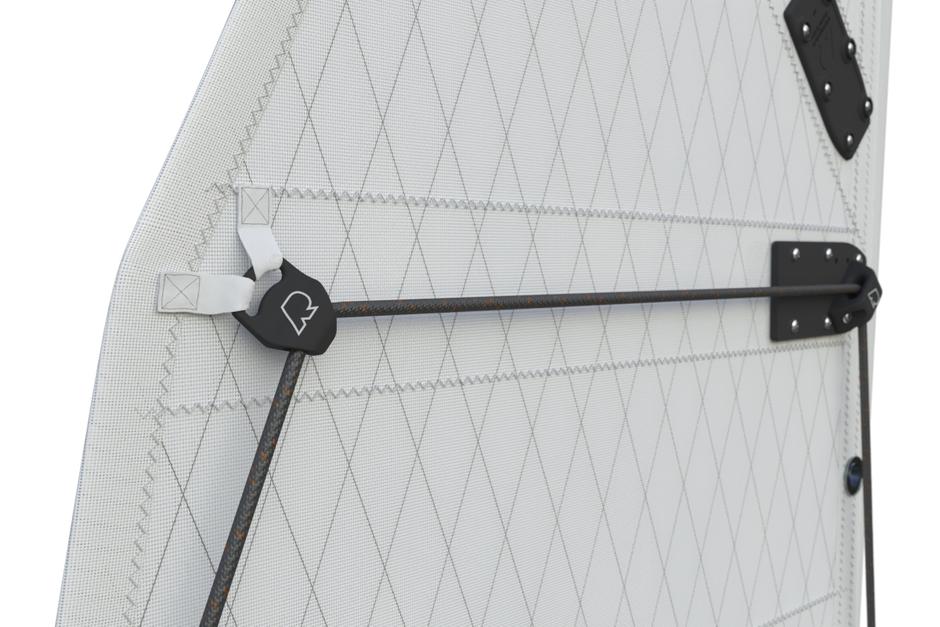
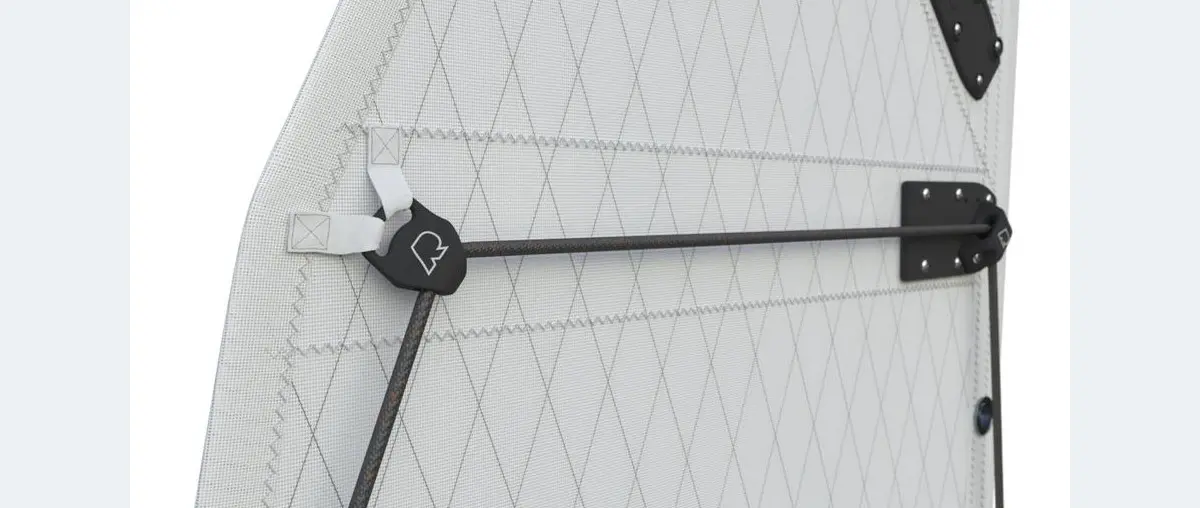
Rutgerson Marin AB has presented the LLS Leech Line Solution in the 2026 METSTRADE product catalogue, dated 17 November. The Swedish equipment supplier describes a system that brings leech-line control towards the mast and combines a webbing-based low-friction fairlead at the leech with a fairlead integrated at the luff. It says the arrangement removes some conventional routing complexity, reduces weight and may simplify sail production and installation. The listing identifies options for 20, 30 and 40 millimetre webbing. For an owner of a small cruising or racing sailboat, this is a relatively specialised announcement, but the underlying issue is familiar: how can the crew correct an unsettled sail edge without making the boat's controls more complicated than necessary?
What a leech line is intended to do
The leech is the trailing edge of a sail. As sailcloth and stitching settle under load, this edge may flutter or behave in a way that is both noisy and potentially damaging over time. An adjustable leech line allows the crew to apply tension and change how the edge behaves. Correct adjustment is a balance. Too little tension can leave undesirable vibration, while excessive tension may hook the sail's trailing edge and change its aerodynamic shape. On a small sailing boat, a poorly set leech line is often noticed through sound before anyone evaluates the precise sail profile. A useful control should allow a deliberate adjustment without forcing the crew to improvise.
A simple adjustment can become difficult at sea
Some leech-line arrangements terminate near the clew or other locations that are awkward to reach when the sail is fully set. Adjusting them may require easing or lowering part of the sail, which can interrupt a passage or a racing manoeuvre. Rutgerson's LLS concept seeks to move the control location towards the mast through a more deliberately routed system. That could make routine adjustments easier for a crew member who can remain in a more predictable part of the deck. Nevertheless, the right arrangement depends on the particular sail, the boat's deck layout and the safe approach to mast work. No fitting should encourage a person to leave a secure position unnecessarily.
Webbing is part of the architecture
The manufacturer's description refers to webbing sizes of 20, 30 and 40 millimetres. These sizes concern the system's intended installation options and should not automatically be interpreted as allowable breaking loads or universal mast compatibility. Webbing can distribute force differently from small cord, while its routing and attachment still need correct design. A sailmaker should choose the appropriate configuration with reference to sail size, materials and expected loads. Buyers should ask which components are included in each version and what additional work is required on the sail. A number printed beside webbing width is not enough to specify a complete leech-control installation.
Low-friction fairleads can reduce handling effort
The official catalogue identifies a low-friction fairlead at the leech and a luff-side fairlead as central features. A fairlead controls the direction in which a rope or other flexible element travels, making routing important to the force and wear experienced. Reducing friction may help an adjustment respond more predictably, but the amount of improvement depends on the entire path, including bends and any additional hardware. Owners should avoid assuming that a product described as low-friction eliminates every source of resistance. Sailcloth, attachment points and the tension already present in the leech all affect the feel of the control. A properly installed system should be evaluated on the boat, not solely on a workbench.
The mast is a convenient but busy location
Many sailboats already bring halyards and other adjustments to the mast, so an additional control there may be intuitive. Yet mast fittings occupy space and are exposed to crew movement, spray and abrasion. On a boat with a narrow side deck, a person standing near the mast must remain aware of sails, boom movement and nearby lines. A useful leech-line arrangement should not create a new snagging point or interfere with reefing hardware. Designers should decide where the control can be reached and secured without compromising other operations. The manufacturer's description establishes the broad concept but does not specify a single universally appropriate deck layout.
Sailmakers may benefit from simpler construction
Rutgerson says the LLS was developed with sailmakers and can simplify sail production and installation. That claim suggests the design has considered not only how a sailor uses it but also how it is incorporated into the fabric and reinforcement. A control that is straightforward to install consistently may help a sailmaker produce predictable results. However, existing sails are not all cut or reinforced in the same way. Adding new fairleads, webbing or attachment points may require careful sewing and changes to load-bearing areas. Owners should consult the sailmaker who knows their sail rather than treating the system as a self-installing accessory.
Existing sails may require modification
A small-boat owner with a serviceable mainsail could be interested in upgrading its controls rather than replacing the whole sail. Whether that is feasible depends on the sail's age, construction, condition and available space for the new hardware. Older fabric may not tolerate extensive reworking at high-load attachment points. A sailmaker should inspect the relevant panels and establish whether the proposed routing can be incorporated without weakening the sail. Installation cost can exceed the retail price of the fittings alone. An owner should request a complete quotation and an explanation of what will be changed, including any effect on future repairs or sail servicing.
Sail shape should remain the priority
The purpose of a leech line is to control a sail edge, not to compensate for an incorrectly trimmed sail or a worn-out design. When a sail twists or flutters, the cause may involve sheet tension, traveller position, vang settings, rig tune or changes to the sailcloth itself. A new adjustment method can make corrections easier, but it does not make all those other factors irrelevant. A knowledgeable sailmaker or instructor can help distinguish a local leech-line issue from a wider sail-shape problem. Owners should learn how much tension is appropriate and avoid pulling harder until the edge becomes visibly hooked. Good control hardware helps fine tuning, not indiscriminate tightening.
The product is not a reefing substitute
A leech-line system changes a relatively narrow aspect of sail shape. It does not reduce sail area, replace a reefing line or make heavy-weather sailing safe without proper preparation. If wind strength increases beyond the comfortable range, the skipper still needs to reef, change sails or take other appropriate action. The presence of a mast-based control might reduce the effort required for a small adjustment, but it should not distract from more fundamental decisions about sail area and boat handling. Crew should be taught the intended function so that the line is not confused with another control during a hurried manoeuvre.
Weight reduction should be assessed in context
Rutgerson mentions lower weight compared with more complex traditional routing. For high-performance sailing, small reductions aloft or in the sail can have value, but the magnitude of the benefit should not be guessed without a complete comparison. A modest cruising yacht may find reliability and ease of maintenance more important than a few grams. The product listing does not independently measure the weight saving for every sail size. Buyers can ask for the mass of the selected components and the equipment they replace. The best design is not automatically the lightest; it is one that delivers the required function with acceptable durability and safe handling.
Friction and wear need long-term attention
Webbing, fairleads and associated attachments can wear through repeated adjustment and exposure to sunlight or salt. A system operating smoothly when new can become less effective if stitching, edges or surfaces deteriorate. Maintenance should follow the manufacturer's technical guidance and the sailmaker's recommendations. A sailor can include the LLS components in routine sail inspections, looking for fraying, distorted fairleads and damaged reinforcement. Any line that becomes difficult to operate should be investigated rather than forced. A mechanical fitting should remain understandable to the owner long after the initial installation, especially when a repair is needed away from the original supplier.
Races and cruises create different priorities
A racing skipper may adjust sail controls more frequently and place greater emphasis on repeatability during changing wind conditions. A cruising owner may prefer fewer adjustments and a system that remains secure with little attention. The LLS concept can be relevant to both programmes, but its value will not be identical. The user should decide whether moving the adjustment towards the mast actually improves the boat's normal routine. On a short-handed boat, a mast-based task can be less convenient than a control led back to the cockpit. That trade-off must be understood before installation. Product features should be judged against the crew's way of sailing rather than treated as an abstract improvement.
Compatibility with the whole sail plan matters
The product entry describes webbing options but does not establish compatibility with every mainsail, mast groove or other sail-control system. A sailmaker should look at the intended sail type, reinforced attachment points, luff arrangement and the route by which the control will reach the mast. If the sail already contains unusual hardware, the designer may need a custom solution. Owners should not assume that purchasing a 20-millimetre version is appropriate merely because their boat is small. The selection should be based on engineering needs, not a simple comparison of vessel length. A properly specified system may cost more initially but reduce the likelihood of unreliable operation.
Training makes a new control useful
A crew can find an unfamiliar control confusing, especially when ropes and adjustments already occupy the mast area. A new LLS installation should be accompanied by a simple explanation of which line it operates, how it is secured and what normal tension looks like. Owners may want the sailmaker to demonstrate adjustments in light wind and then check how they behave when the sail is properly loaded. Crew should know what to do if the line jams and when an adjustment should be deferred until safer conditions. Familiarity can prevent a well-intended hardware improvement from becoming another source of cockpit or deck confusion.
The 2026 product entry is the verified announcement
Rutgerson's first-party METSTRADE listing dated 17 November 2026 identifies the LLS Leech Line Solution and its claimed design features: mast-based control, low-friction fairleads, simpler routing, reduced weight and versions for different webbing widths. It does not independently establish universal retrofit suitability, a fixed retail price or a measured performance improvement under every sailing condition. Those matters should be checked with the supplier and the sailmaker. The news is the manufacturer's current equipment presentation, not a claim that all racing teams have adopted the system or that the fitting has been installed on any specific leisure craft.
Good sail handling starts with a clear purpose
The LLS illustrates a useful principle in marine product design: moving a small adjustment to a more manageable location can matter as much as adding an entirely new function. But an apparently straightforward change should still be evaluated against the sail's structure and the crew's routine. Owners of boats under twelve metres can ask their sailmaker whether the proposed fairlead and webbing arrangement would make the leech easier to control without adding complexity elsewhere. If the answer is yes and the installation is professionally specified, the idea deserves attention. If a conventional system already works well, the award of novelty alone is not a reason to replace it.
Original industry sources and image credits
Reporting based on Official METSTRADE 2026 exhibitor product information supplied by Rutgerson Marin AB.
Lead image: Rutgerson LLS Moves Leech Line Adjustment Toward the Mast — official manufacturer product photograph. © Rutgerson Marin AB. Original supplier image.