A modular power system receives 2026 DAME recognition
HikoTerra’s H4 Hybrid Power System has received a Special Mention in the Electronic and Electrical Systems section of the 2026 DAME Design Awards, according to METSTRADE’s results announced on 17 November. The New Zealand company presents the H4 as a battery-first arrangement combining energy storage, power conversion, charging and control within a modular architecture. The original product was described before this year’s show, so the news is the November awards recognition rather than an invented first launch. For owners of compact cruising boats, the product is interesting because electrical demand has become more complicated even when the vessel itself is small. Any installation under twelve metres would still require a careful assessment of capacity, mass, electrical protection and physical space.
Small cruisers increasingly have large electrical expectations
A modest cabin cruiser might carry refrigeration, lighting, navigation electronics, pumps, charging outlets and perhaps electrically powered cooking or climate equipment. These loads do not all operate at the same time, but they can place considerable demands on the battery bank. A boat designed around traditional lead-acid batteries and a simple alternator may not have the same electrical architecture as one built to supply larger AC loads. HikoTerra is proposing an integrated system rather than a single stand-alone battery, which could simplify some design decisions when a boat is built or refitted. However, the system’s physical scale and power requirements must be checked against the intended craft before it can be considered a practical option.
Battery-first is an operating philosophy
The company describes its H4 platform as battery-first, suggesting that stored energy is central to how onboard electricity is supplied and managed. In practical terms, this can allow certain appliances to run without an engine or generator operating continuously, provided the bank has sufficient stored energy and the inverter can support the load. It does not create energy. Batteries still need charging from shore power, an alternator, solar panels, a generator or another suitable source. A small-boat owner should calculate what is consumed over a normal day and what can realistically be replenished. The best architecture is one that balances demand and charging rather than relying on an impressive headline capacity.
Integration can reduce complexity, but not remove it
A conventional boat power system may combine equipment from several manufacturers: batteries, chargers, inverters, monitoring panels and switching devices. Correct integration is possible, but it requires careful decisions about communication, protection and operating priorities. HikoTerra’s company description says its batteries, power conversion, charging and control were developed as a coordinated ecosystem. That may improve consistency when correctly specified. Nevertheless, an integrated system still contains many components and must be installed and maintained professionally. If one controller fails or a proprietary component becomes unavailable, the owner needs a clear plan for diagnosis and support. Simplicity should be evaluated across the equipment’s full working life.
Modular equipment needs realistic space planning
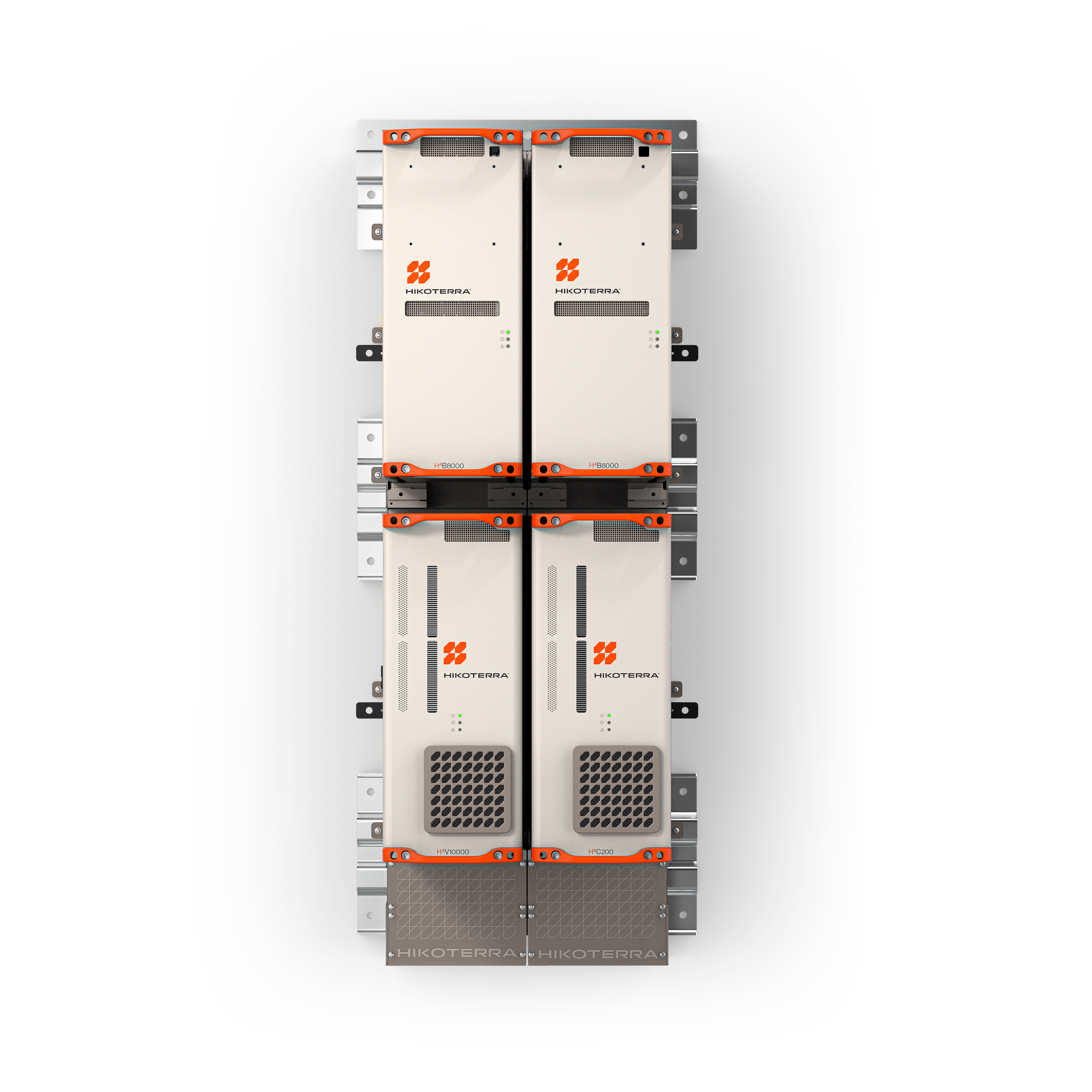
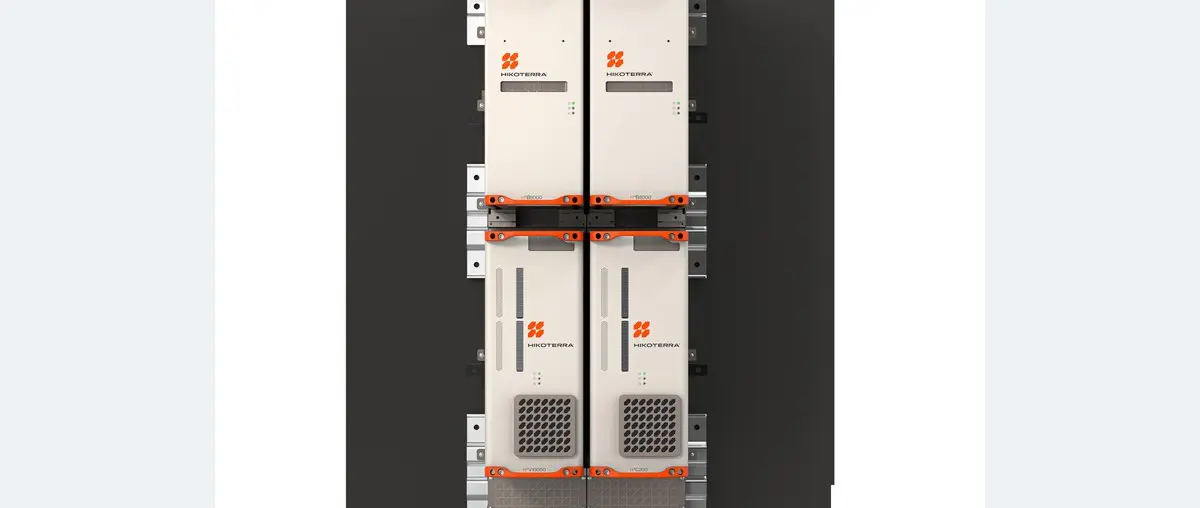
A modular rack arrangement may allow a designer to select the capacity needed rather than accept a single fixed configuration. The manufacturer’s official product imagery depicts a structured stack of battery and conversion modules. Such architecture can be appealing, but boats under twelve metres often have irregular lockers, limited service access and strict weight-distribution constraints. A photograph of a neat rack is not a fitment guarantee. The designer must consider installation dimensions, mounting, ventilation, heat rejection, cable routes and the effects of movement at sea. Even a technically suitable system may be impractical if it occupies storage needed for safety gear or places too much weight in an unsuitable location.
Energy storage is only one part of the calculation
An owner may focus first on battery capacity measured in kilowatt-hours. Yet the ability to run appliances also depends on continuous and peak inverter output, charging rate and the current the battery modules can safely deliver. An electric kettle, induction cooktop or air-conditioning unit may place a very different demand on the system from cabin lights and phones. A proper assessment identifies which loads can operate together and what happens if the total exceeds the equipment’s limits. The manufacturer’s wider documentation offers component choices, but this article does not assume that every module combination supports every appliance. A safe design needs a complete load schedule, not merely a preferred brand.
Lithium batteries require their own safety strategy
The H4 system incorporates modern battery technology, including lithium iron phosphate modules in the manufacturer’s product information. Such systems can offer practical benefits, but batteries still store significant energy and must be protected against faults, abuse and unsuitable operating conditions. The battery management system, fusing, isolation arrangements and cable protection deserve attention. Owners should avoid treating terms such as hybrid, smart or battery-first as substitutes for compliance with relevant marine electrical standards. Installation by a suitably qualified professional is particularly important when high-current or high-voltage connections may be involved. Fire planning and emergency isolation should be established before the first voyage, not improvised after an electrical problem occurs.
The role of the inverter
An inverter converts battery energy into alternating-current electricity for appliances designed to use it. The power quality, output limits and method of switching between sources can affect how those appliances behave. A compact boat may have a small inverter for convenience, while a more ambitious system might supply substantial loads for extended periods. The H4’s integrated approach is intended to coordinate these functions, but owners need the exact electrical specification for their installation. A proposed refit must also account for shore-power connections, earthing and fault protection. The design should be assessed as a complete marine electrical installation rather than simply as a new appliance added to an existing socket circuit.
Charging sources must be matched carefully
A battery bank is useful only when it can be recharged safely and predictably. Shore power, propulsion-engine charging and renewable inputs may each have different characteristics and limitations. A charger must respect the battery specification, while an alternator may require suitable controls to avoid overheating or excessive demand. Solar output varies with season, shade and weather, and roof area is limited on smaller boats. HikoTerra’s description includes integrated charging control, but it does not guarantee compatibility with every alternator or shore-power configuration. Owners should ask exactly which inputs are supported and what additional hardware is needed before calculating likely time between charges.
Quiet operation is not unlimited autonomy
Manufacturers often associate battery-based systems with quieter periods aboard because some electrical loads can operate without a running generator. The potential benefit is real in principle, but it depends on how much energy is stored, how quickly appliances consume it and what other equipment the boat needs. A small craft without a generator may already enjoy silent nights, making a complex power upgrade less compelling. Another boat with a heavy refrigeration or air-conditioning demand may find additional storage useful. It is misleading to promise a fixed number of quiet hours from a system without first specifying the electrical loads and environmental conditions.
Monitoring should be understandable at the helm
An integrated power architecture usually includes information about state of charge, charging sources, equipment status and warnings. Those readings are valuable only when owners can interpret them and respond appropriately. A battery percentage alone may conceal limits on charge acceptance, output current or operating temperature. A well-designed display should distinguish ordinary operating information from a fault requiring intervention. The H4 company materials emphasise intelligent control, but this report does not independently validate every interface or connectivity feature. Buyers should request a demonstration using actual operating scenarios, including source changes, low-battery warnings and a controlled shutdown.
Service support matters after installation
Marine equipment may be used far from the original installer, sometimes in countries where specialist parts are scarce. An integrated system can be convenient while functioning correctly but more difficult to repair if access to proprietary modules or software is limited. Owners should ask who can service the H4 in their normal cruising region and which diagnostic tools are required. Warranty terms, remote support and spare-parts availability may affect the practical value more than a small difference in advertised efficiency. The original manufacturer material describes a developing network of distribution and support; this is not a guarantee that every marina or electrical contractor is already equipped to work on the product.
A refit differs from a new-build installation
Designing a system into a new boat allows the builder to allocate lockers, ventilation and cable routes from the beginning. Retrofitting an existing craft may require removal of old equipment, structural changes and reconsideration of weight distribution. Owners should also decide whether the rest of the electrical system is suitable for the proposed upgrade. Installing a sophisticated battery rack while retaining undersized or poorly protected cabling would be inappropriate. A qualified survey of the current installation is therefore useful before a refit quotation is prepared. HikoTerra’s modular design may offer flexibility, but it does not make every older boat a straightforward conversion.
Is an H4 appropriate for a boat under twelve metres?
That is not established by the DAME award. The product is marketed for marine and mobile applications, but its physical dimensions, voltage architecture and power capabilities need to match a specific vessel. Some smaller boats may have very modest electrical demand and gain little benefit from this kind of integrated solution. Others, especially well-equipped cruising craft, may have a more plausible use case if the installation can be engineered within available space and weight limits. A responsible supplier should be willing to say when a simpler battery and charger combination would be more appropriate. The owner’s actual needs should dictate the technology, not the desire to install the newest system.
Lifecycle costs deserve a complete estimate
Battery systems have costs beyond the purchase price of the modules. Electrical protection, cables, mounting structures, installation labour, monitoring, commissioning and eventual service all contribute. A higher initial investment may be worthwhile for some use patterns, but claims of savings should be based on credible assumptions about fuel, shore electricity, maintenance and battery life. The METSTRADE entry provides a product outline rather than an independently audited financial model. Owners should compare the expected total cost of ownership with their current installation and other realistic alternatives. The aim is not necessarily to minimise every upfront expense, but to purchase a reliable system that can be supported over time.
Environmental claims need measured evidence
Moving some electrical loads from a generator to a battery can reduce local noise and emissions while those loads are being supplied. The broader environmental effect depends on how the batteries are charged, how long the system lasts and the materials used in manufacture. A battery-first arrangement is not automatically emissions-free across its lifecycle. HikoTerra’s promotional language focuses on cleaner and more efficient operation, and those objectives are understandable. But a boat owner should ask for measured figures relevant to the proposed installation rather than assume that every application will achieve the same result. A careful approach recognises benefits and constraints without exaggerating either.
What the November award confirms
METSTRADE’s official 2026 results list HikoTerra H4 among the Special Mentions in Electronic and Electrical Systems. The distinction is not the overall DAME prize, and it does not establish that the H4 has been independently approved for every class of recreational boat. HikoTerra’s first-party documents supply the technical concept and modular arrangement; the award results verify the recognition in Amsterdam on 17 November. No new delivery date or completed installation in a particular under-twelve-metre vessel is asserted here. Product information should be checked against current manufacturer specifications, and owners should seek professional advice before committing to a power-system redesign.
A useful design conversation for smaller boats
The H4 illustrates a broader direction in marine equipment: treating batteries, charging and energy conversion as parts of one managed system rather than a loose collection of individual devices. That approach can be attractive to boat owners seeking predictable operation and better understanding of electricity consumption. The practical value is conditional, however. A successful installation depends on the boat’s space, loads, charging sources and maintenance arrangements, and it must be engineered for safety. For an owner considering a major electrical upgrade, the DAME Special Mention is a reason to examine HikoTerra’s design and ask detailed questions. It is not a substitute for the calculations and professional judgement needed before the equipment goes aboard.
Original industry sources and image credits
Reporting based on HikoTerra first-party product / 2026 DAME entry.
Independent award result verification: METSTRADE official DAME Design Awards results, 17 November 2026.
Lead image: HikoTerra H4 Gains DAME Mention for Integrated Marine Power — official supplier product image. © HikoTerra. Original supplier image.