Assisted navigation reaches the small-boat technology debate
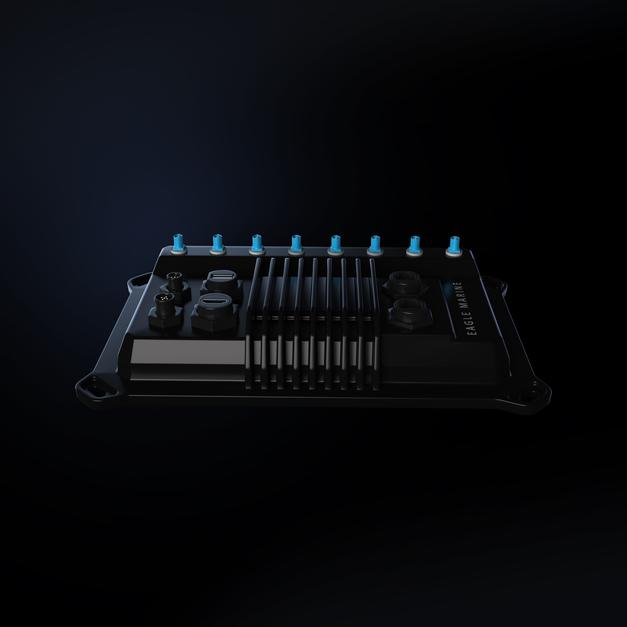
Eagle Marine GmbH has presented its ADAS Platform in the 2026 METSTRADE catalogue, describing an open combination of onboard computing, camera feeds, sensors and software applications intended to support navigation and docking. The product entry, dated 20 November 2026, identifies Surround View as one native application and Lookout as an example of outside software and sensor fusion running on the same foundation. These are assistance functions, not proof that a boat can navigate without a qualified person in control. For owners of leisure craft under twelve metres, the development is interesting because tight marina berths and restricted sightlines can be stressful even on a small vessel. The question is whether a properly engineered aid can make those manoeuvres safer without encouraging overconfidence.
What ADAS means in the boating context
Advanced driver-assistance systems are familiar in road vehicles, where cameras and sensors may help drivers monitor surroundings. Marine applications are different because boats move through water, are influenced by wind and current, and rarely have clearly marked travel lanes. Eagle Marine is using the ADAS description for a platform that can host several types of boating assistance. The phrase does not establish a single standard of automation or a guarantee of collision avoidance. A prospective buyer needs to understand exactly what each application observes, what information it presents and whether it can control equipment. A system designed to assist a helmsman should have clear operating boundaries rather than rely on a broad technology label.
Docking is more complex than a camera image
When approaching a berth, the operator needs to judge distances, movement and the likely effect of wind and current. A close-range camera can provide a useful view of a blind quarter, but judging depth and speed from an image can be difficult. The hull may also continue moving after a throttle change, while a fender or line can behave differently from a fixed object. Surround View may help show the area around the boat, but it cannot replace competent boat handling. A skipper should still prepare lines and fenders, brief the crew and maintain a lookout. The strongest assistance system supports these actions rather than appearing to make them unnecessary.
Sensor placement determines what can be seen
A vessel's mast, windscreen, canopy and passengers can obstruct the view from individual cameras. A stitched or combined image may have blind spots, distortions or areas with reduced detail. Owners should therefore ask where cameras must be mounted and how the system is calibrated to the shape of the boat. The ideal locations may not be available on an older hull without extensive modification. Spray and low sun can further reduce camera performance. Installation drawings should include service access and cable protection. A display that shows an apparently complete picture can be misleading if the user does not understand which parts of the image are less reliable.
Surround View should be tested in realistic conditions
A demonstration in calm weather and perfect light can show the interface at its best but may not reveal how it behaves in rain, glare or darkness. Small boats routinely approach quays near reflective water, dark hulls or uneven lighting. Users should ask what the system can reliably detect under those conditions and how it signals when visibility is insufficient. A camera can also become obscured by salt or condensation without an obvious hardware failure. The operator needs to recognise degraded information rather than continue relying on it. The manufacturer's current catalogue describes capabilities, not an independent test programme covering every environment or marina configuration.
Lookout illustrates software and sensor fusion
The exhibitor description identifies Lookout as an example of an external application using artificial intelligence and data fusion on the Eagle Marine platform. Combining information from different sensors may help software recognise objects or provide warnings, but it is not equivalent to guaranteed understanding of everything around the vessel. Floating debris, small unlit craft and unfamiliar shapes can present challenges. An assistance application should make uncertainty clear and avoid promising that it will detect every hazard. Its role is to support the person keeping watch, not to replace the legal and practical obligation to observe and respond to the surroundings. The relevant specifications should be requested before a user relies on any alert.
Open platforms are attractive but raise new questions
Eagle Marine describes an App Store through which its own and third-party developers can offer applications. Such a model might allow a single hardware platform to support new functions over time, reducing the need to replace entire displays for every innovation. Yet it also raises issues of compatibility, software quality and maintenance. Not every app will necessarily have the same safety case or level of testing. Boat owners should establish who approves applications, how updates are delivered and whether a failed installation can be rolled back. A flexible platform can be useful, but openness alone does not prove that all software will be appropriate for safety-related tasks.
The helm interface must remain understandable
On a small boat, a person may handle steering, throttle and navigation without help. An additional assistance display can be valuable if its information is clear and timely, but a screen crowded with overlays and alarms may become distracting. The operator should be able to distinguish a real hazard from a low-priority advisory and know whether a warning refers to a camera, another sensor or a software interpretation. Training is therefore as important as the hardware. A demonstration should include normal operation, false alarms and deliberate failures, not merely an attractive interface on a sunny day. The safest designs help the user make decisions quickly.
Cameras are not substitutes for charts or depth sounders
A visual assistance system provides information about what its cameras and other sensors can observe. It does not automatically supply reliable water depth, accurate navigational positions or the information contained in current charts and notices. A skipper approaching an unfamiliar harbour must still consider tidal conditions, charted hazards and local regulations. A camera may reveal an object on the surface while missing a submerged obstruction. Equally, a chart may show a structure that cannot be seen until close range. Combining independent sources can improve awareness, but only if the operator understands what each source can and cannot tell them.
Connectivity and power need failure planning
The ADAS Platform relies on onboard electronics, so its function depends on correctly installed cables, power supply and communication with the required sensors. A system should fail in a way that is clear to the user. A frozen image, stale object marker or disconnected camera must not appear to be current information. Owners should ask how faults are displayed and whether the equipment continues to provide any useful function when one sensor becomes unavailable. An assistance system should never be the only means of safe manoeuvring. The boat must remain operable using conventional controls and proper seamanship if the software or network ceases to function.
Retrofitting a small cruiser is not trivial
Modern boat builders can plan camera positions, display locations and wiring channels from the design stage. Installing the same arrangement on an existing six- or nine-metre boat may be more difficult. The camera hardware needs secure mounting and environmental protection, while the helm requires enough space for a readable display. The installer should also consider whether the skipper's natural view is obstructed by the additional equipment. A retrofit might involve deck penetrations and long cable routes through damp compartments. Owners should seek a boat-specific installation plan and understand what will be altered before purchasing a system that looks compact in trade-show photographs.
Docking assistance should help crew coordination
A successful berth approach involves more than the person at the wheel. Crew members need to understand when to handle lines, where to stand and what to do if the approach has to be abandoned. Better visibility may reduce some uncertainty, but it should not encourage the skipper to rush or remove the need for communication. A short pre-arrival briefing remains worthwhile, particularly with inexperienced passengers. The helmsman should retain a clear method of stopping, backing away or attempting the berth again if conditions change. Any assistance display is most useful when it fits an established procedure rather than creating a completely new operating habit.
Privacy becomes part of the installation
Cameras around a recreational boat may capture people on pontoons, neighbouring vessels and private areas of a marina. Owners should understand whether the ADAS applications record, store or transmit footage and who can access it. An App Store and networked computer can introduce additional data-handling questions even where the sensors are intended for local operation. The exhibition listing does not establish a universal privacy configuration. Buyers should request clear information about retention, remote access and updates, and ensure that the system complies with rules relevant to the places where it is used. Responsible deployment includes privacy as well as technical reliability.
Security matters when software is connected
A platform capable of running third-party applications must protect access to its hardware, operating system and updates. The owner should ask how software is signed or verified, whether default passwords are used and what happens when a security update is required. Networked devices can create pathways between equipment that was previously isolated. A failure of security may affect data or availability even when the underlying cameras are working. A marine electronics installer should be able to explain how the system is separated from guest connectivity or nonessential onboard networks. These questions are normal parts of choosing connected equipment, not evidence that a particular product is unsafe.
What artificial intelligence can and cannot promise
Image-recognition software may help identify patterns that a human operator could overlook, but its conclusions depend on training data and the quality of the sensor inputs. The system may encounter unfamiliar boats, people partially obscured by spray or reflections that resemble obstacles. False positives and missed detections are both possible. A reliable supplier should document the intended operating domain and test conditions for safety-related functions. No operator should assume that a product described as AI-enabled has legal authority to take the watch. The correct mental model is an additional source of information that can make mistakes and that needs continuous human supervision.
Different operators will value different features
A family dayboat, a small fishing vessel and a sailboat with a tall coachroof have different sightline and manoeuvring challenges. An owner who can easily see every corner of a light open boat may gain limited value from multiple cameras. A cruiser with restricted aft visibility could find a properly positioned view more useful, especially when approaching a berth with a companion at the bow. Cost and maintenance must be weighed against that potential benefit. An installer should demonstrate the features most relevant to the actual vessel rather than offer every available app by default. More functions are not necessarily more safety.
The November product entry defines the scope of this news
METSTRADE's first-party exhibitor listing dated 20 November 2026 establishes the Eagle-Marine ADAS Platform, its onboard computing architecture, camera and sensor integration, Surround View and the external Lookout example. It does not verify that any particular small-boat model already has the full system installed, nor that all proposed functions are available in every country. Price, regional distribution and independent performance data should be sought separately. The absence of those details is not an invitation to guess. The relevant development is the platform approach and its implications for future marine electronics and owner expectations.
Assistance should reinforce seamanship
The Eagle Marine ADAS Platform represents an attempt to make advanced sensing and software integration more accessible within recreational boating. It may eventually help operators see more clearly around their vessels, particularly during low-speed manoeuvres in confined spaces. Yet its safety value will depend on disciplined installation, honest performance limits and operators who understand when to disregard or question an image. For boats under twelve metres, the proper way to approach such technology is to identify a real visibility problem and test whether the system addresses it without creating distractions. The best assisted navigation is still navigation conducted by an attentive, responsible skipper.
Original industry sources and image credits
Reporting based on Official METSTRADE 2026 exhibitor product information supplied by Eagle Marine GmbH.
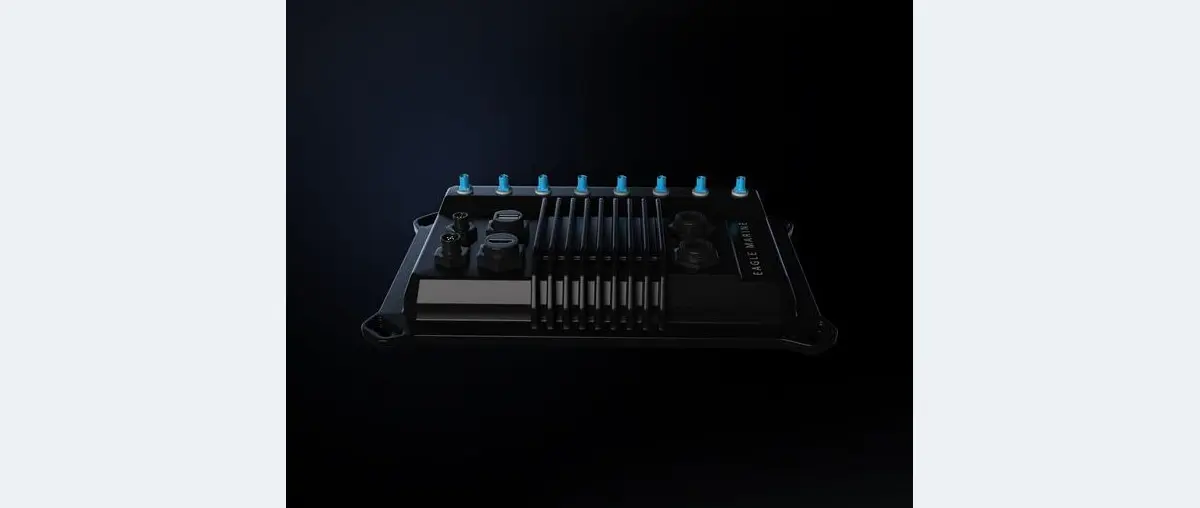
Lead image: Eagle Marine ADAS Platform Brings Assisted Docking Technology to Boating — official manufacturer product photograph. © Eagle Marine GmbH. Original supplier image.