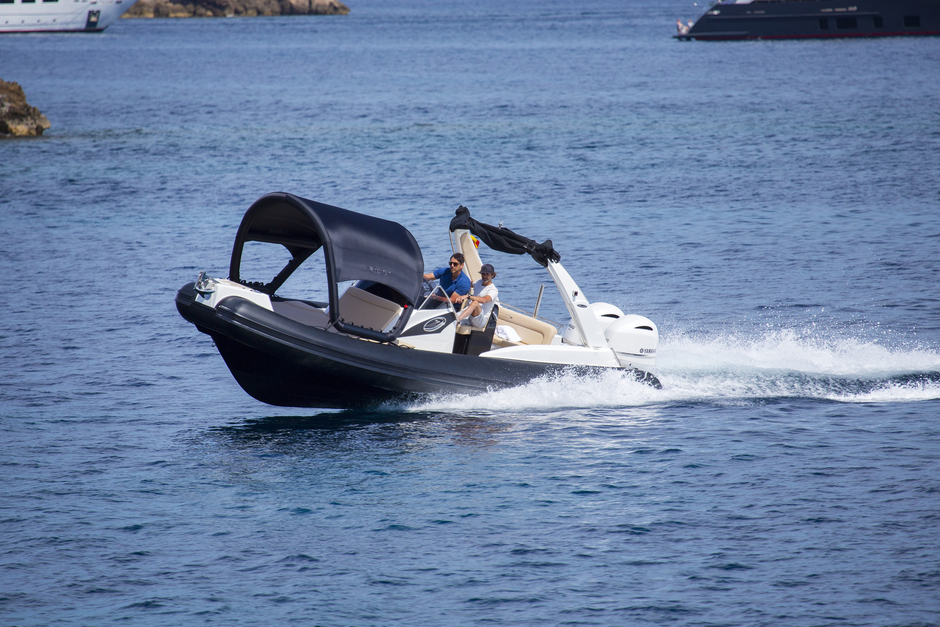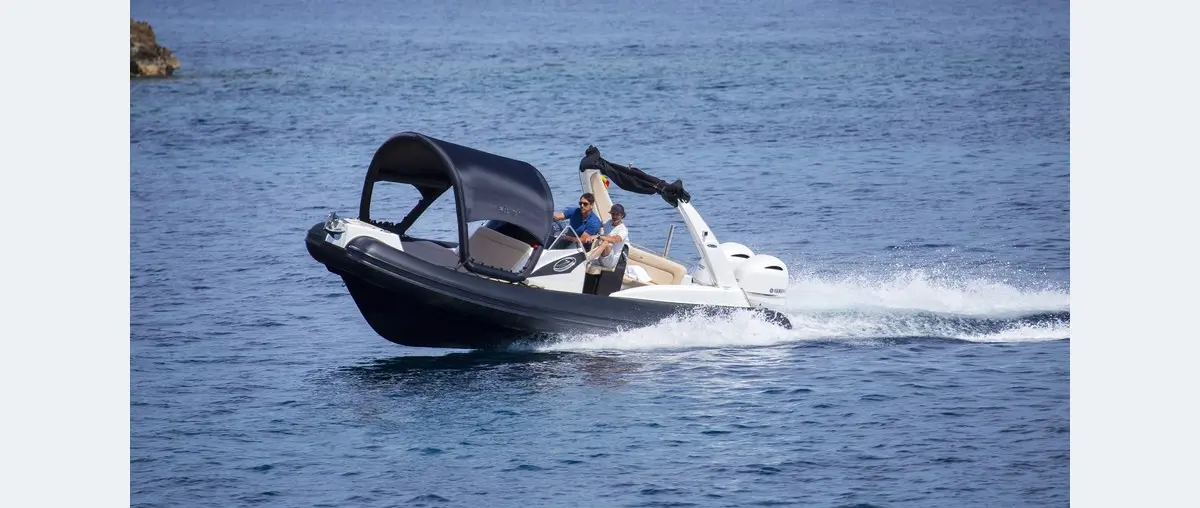
DECKTENT brings inflatable shade to smaller craft
DECKTENT is presenting a compact family of inflatable bimini-style shade products through its 2026 METSTRADE exhibitor catalogue, with the S, XS and XXS variants described as suitable for smaller rigid inflatable boats, motorboats and sailing craft up to eleven metres. The Spanish company's product information emphasises the lack of a conventional rigid frame and the possibility of using the shade in settings beyond the boat itself. Its broader exhibitor description also promotes quick inflation and simple strap attachment, subject to the conditions of the actual model. For an owner of a small open boat, the attraction is shade without a permanent heavy metal structure over the cockpit. The practical decision remains more complicated: secure attachment, wind loading, sightlines and safe storage all determine whether an inflatable arrangement is appropriate.
Sun exposure can make small boats uncomfortable
Open leisure craft offer enjoyable access to the water, but there may be little shelter from prolonged sunlight. Owners of RIBs and compact dayboats often improvise temporary shade with umbrellas or loose covers that are not suited to a moving vessel. A dedicated bimini or canopy can make a day aboard more comfortable by providing protection for occupants while at rest or under appropriate operating conditions. A portable inflatable canopy attempts to reduce the complexity of frames and supporting poles. Yet the area shaded will vary with the sun's position, and a shade is not a guarantee that everyone aboard will avoid excessive exposure. Clothing, sunscreen and sensible breaks remain important.
The small sizes address a defined audience
DECKTENT specifically distinguishes its S, XS and XXS designs from the larger versions intended for other craft. The official product page refers to RIBs, motorboats and sailboats up to eleven metres. That is more precise than claiming one large canopy fits every leisure boat below twelve metres. Owners should check the manufacturer's individual sizing and attachment instructions against the actual beam and deck arrangement of their boat. Length alone is insufficient: a wide open motorboat, a narrow sailing yacht and an inflatable tender may all have different usable mounting points. A model that looks suitable in an image may still obstruct movement aboard a particular hull.
Inflatable construction changes storage requirements
Traditional biminis often have metal tubes, hinges and fabric that must be folded into a designated position. An inflatable shade replaces some rigid elements with a structure that gains its shape from air pressure. When deflated, it may pack differently and could be easier to stow in certain lockers. But its packed dimensions, mass and moisture content remain important. A wet canopy should be dried according to the manufacturer's guidance before long-term storage to reduce the chance of deterioration. Owners should request the actual packed size and weight for the chosen model rather than assume an inflatable item will take up negligible space.
A valve is simple, but pressure must be controlled
The manufacturer's exhibitor description refers to inflation through a single valve and a process lasting a few minutes under suitable conditions. Such simplicity is attractive when a crew wants to set up shade during a stop. The unit still needs to be inflated to the correct pressure and checked for secure fit. Overinflation can place unnecessary stress on seams and fittings, while insufficient pressure may allow the structure to lose its intended shape. Owners should follow the supplied instructions and use only appropriate inflation equipment. A quick setup claim should not be treated as permission to inflate the product while the boat is manoeuvring in unsafe conditions.
Attachment points determine whether a canopy is practical
DECKTENT describes strap-based fixing for different boat types. A strap can be convenient because it may avoid permanent metal supports, but it must be connected to suitable structural points. Thin handrails, loose fittings or delicate upholstery may not be intended to carry the forces generated by a canopy. A qualified installer or experienced dealer can help determine whether the boat has appropriate attachment locations. Straps should be routed away from steering, throttle, boarding areas and moving rigging. A temporary structure can still impose meaningful forces on the boat, particularly when wind catches its fabric.
Wind loading matters more than appearance
A canopy presents an area to moving air, so the force on it can increase substantially as wind speed rises. The fact that a shade uses inflatable supports does not remove wind loading from the attachment points. DECKTENT's general product description refers to operating under certain wind conditions, but owners should follow the precise limits for their own version and the direction of travel. Apparent wind while motoring can differ significantly from the ambient breeze. It would be unsafe to assume that any promotional speed or wind claim applies universally to every installation. Taking the canopy down when conditions demand it is part of responsible use.
Sailing boats introduce rigging conflicts
A small sailboat has a boom, mainsheet, halyards and other lines that may move during normal operation. A canopy fitted near those controls must not interfere with sail handling or prevent the crew from moving safely along the deck. Some inflatable shade products may be primarily intended for use at anchor or in harbour on particular sailboats. Owners should clarify the approved operating conditions and test for clearance before setting sail. A structure that is unobtrusive at the dock can become hazardous when the boom swings or the vessel heels. Compatibility with the rig is as important as compatibility with hull length.
Visibility from the helm must be preserved
A canopy can block the skipper's view of traffic, buoys or people in the water if it is mounted too low or extends into the natural sightline. This risk matters on small craft where the helm is often close to the shaded seating area. The operator should confirm that all necessary directions remain visible when sitting and standing, and that the canopy does not obscure navigation lights. Temporary comfort should never be allowed to compromise safe control of the boat. If visibility is reduced, the arrangement may only be appropriate in a different location or during periods when the vessel is not underway.
Boarding and emergency access need space
RIBs and open motorboats often have narrow walkways or a limited number of places where passengers can board. A canopy attachment should not block grab handles, access to lifejackets, emergency controls or the path to a boarding ladder. Inflatable supports and straps may occupy less rigid space than a metal frame, but they can still create obstacles. Owners should practise moving around the boat with the structure installed and consider how it would be removed quickly if necessary. The correct model will fit the everyday use of the boat, rather than requiring passengers to squeeze around a shade structure whenever they move.
The product is not necessarily weather protection
A sunshade and a weather enclosure serve different purposes. Some canopies may shed light rain, but that does not prove they are designed to withstand heavy rain, strong wind or prolonged rough-water exposure. Water collecting on fabric can alter loading and may cause an inadequately supported structure to deform. Buyers should ask about permitted rainfall, drainage and any need to lower the canopy when unattended. An inflatable design might offer convenient shade in fine weather without being a replacement for a rigid pilothouse, sprayhood or properly engineered all-weather cover. Choosing the wrong role for the product can lead to disappointment or damage.
Material durability deserves attention
A marine shade may experience sunlight, salt spray, wet storage, rubbing against fittings and regular inflation cycles. The manufacturer's broader product description refers to fabric characteristics and pressure-relief provisions, but owners need exact technical information for the model they choose. Stitching, seams, valves and attachment straps may require inspection over time. A small tear or abrasion could affect the shape or strength of an inflated structure. Routine cleaning should follow the supplier's instructions so that protective coatings and materials are not damaged. Portable equipment should not be treated as maintenance-free simply because it is easy to install.
Shade is useful in many stationary situations
The manufacturer suggests uses that extend beyond the boat, such as a waterside gathering or other recreational setting. A portable canopy can be attractive when a crew moves between a mooring, a beach and a picnic area. The relevant questions are whether the product can be secured correctly in each location and whether its design is approved for that use. Straps and attachment arrangements suited to a boat may need different support points on land. Owners should avoid leaving an inflated structure unattended in changing weather. Portability is valuable only when setup and removal remain safe and manageable for the people using it.
A comparison with fixed biminis is worthwhile
A conventional folding bimini has established advantages, including predictable frame geometry and the possibility of leaving it mounted for frequent use. An inflatable canopy may be more convenient for owners who need shade only occasionally or who lack suitable permanent mounting positions. The comparison should cover total cost, packed space, installation time, service life and wind limitations. Neither approach is automatically superior. A permanent support can be awkward on a small RIB, while repeated inflation may be less convenient for a cruising family that wants shade throughout the season. The correct choice follows the boat's routine rather than the novelty of the construction.
Anchoring and mooring create different requirements
A small boat lying quietly at anchor may provide a suitable setting for portable shade, provided the vessel can swing safely with the wind and the canopy remains secured. A crowded marina berth may be less forgiving if the structure extends close to neighbouring vessels or interferes with mooring lines. Owners should ensure there is enough room to deploy and recover the shade without striking other boats or dropping equipment overboard. Local mooring regulations may also affect what can remain erected. The convenience of a few minutes' setup matters less if the structure must constantly be moved out of the way.
What the 2026 exhibitor page actually confirms
DECKTENT's first-party METSTRADE product listing identifies S, XS and XXS inflatable shade models and describes their use on RIBs, motorboats and sailing craft up to eleven metres. Its broader exhibitor presentation promotes a lightweight alternative to rigid shade frames, quick inflation and strap attachment. Those materials do not establish a fixed international retail price, a universal installed fit or approval for every underway wind condition. The company may provide more detailed manuals and fitting guidance that buyers should consult. Reporting the current exhibition range should not be confused with verifying an exact launch date or certification for all possible boats.
A comfort upgrade must respect seamanship
The small DECKTENT range addresses a recognisable need: many dayboats have little shelter without space for a permanent bimini frame. An inflatable design may be practical when shade is used occasionally and storage is limited, especially if the boat has secure attachment points and a crew willing to set it up correctly. But wind, movement, visibility and emergency access remain the conditions that determine safe use. Owners should select a model by actual dimensions and manufacturer instructions, not only by an appealing photograph or a general statement about boat length. Comfort is worth improving when it does not introduce fresh hazards on the water.
Original industry sources and image credits
Reporting based on Official METSTRADE 2026 manufacturer product catalogue, DECKTENT.
Lead image: DECKTENT Adds XS and XXS Inflatable Shade for Smaller Boats — official manufacturer supplied product photograph. © DECKTENT. Original supplier image.