Cyclops brings rig load information to the helm
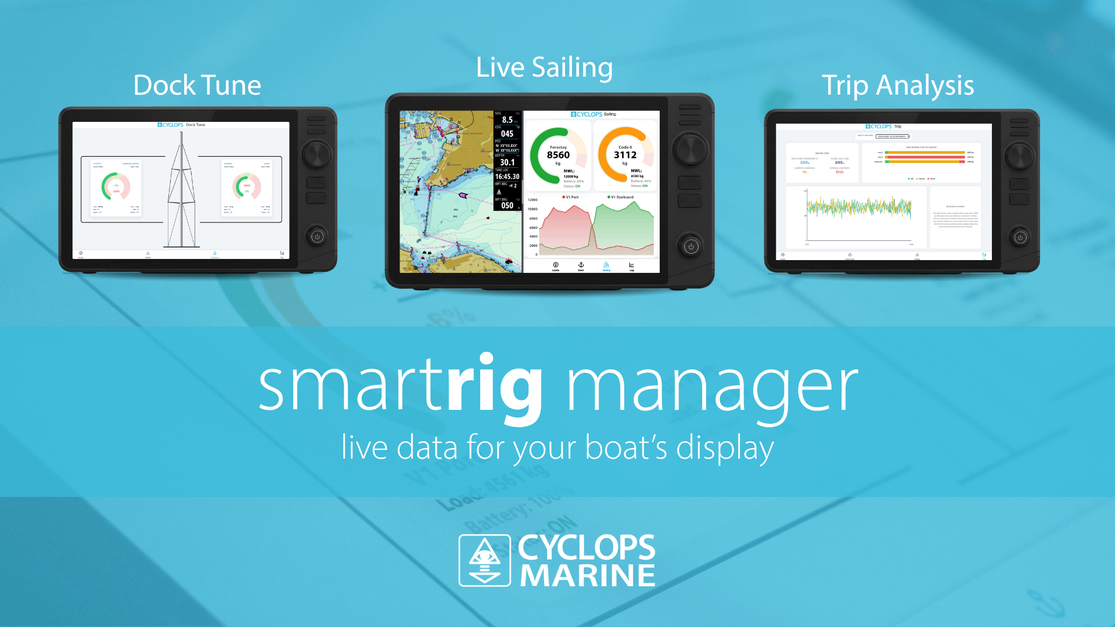
Cyclops Marine's Smart Rig Manager has received a Special Mention in the Manufacturing and Support Products and Materials category at the 2026 DAME Design Awards, as reported by METSTRADE on 17 November. The product draws information from compatible Cyclops rig-load sensors and presents it on an existing multifunction display. The manufacturer promotes three principal uses: setting up the rig at the dock, understanding loads while sailing and reviewing information after a trip. Its catalogue entry was published in April 2026, so this report concerns the subsequent award rather than a fictional new product launch. For owners of smaller sailing boats, it poses a worthwhile question about when more rigging data can improve decisions and when it may merely complicate a straightforward sailing routine.
A rig carries forces that are not always visible
A sailing yacht's standing rigging supports the mast and helps transfer loads generated by wind and sail trim through the structure of the vessel. Many of these forces are difficult to judge by looking at the wire or rod alone. A skipper may recognise that the rig feels heavily loaded, but that does not establish an accurate numerical value. Compatible load sensors can provide measurements in selected positions, helping experienced users understand how conditions and trim affect those points. The Smart Rig Manager proposes turning such readings into clearer helm information. It should not be interpreted as a replacement for structural engineering or a full rig inspection, because a small number of sensors cannot observe every component.
The interface is intended to make numbers usable
Cyclops describes the system as taking raw data from its sensors and presenting it through visual guidance on the boat's multifunction display. A clear gauge may help someone recognise when a value is approaching a defined operating limit, but the interpretation is only as sound as the underlying measurement and the limit chosen. A boat owner needs to understand where the sensor is mounted, what force it measures and what the displayed figure means. Without that context, a colourful indication risks giving false reassurance. The interface should help knowledgeable users make better decisions rather than suggest that one digital dial can determine the condition of the entire rig.
Dockside tuning provides a practical use case
The company highlights an opportunity to adjust rig tension according to specified values before leaving harbour. Rig tuning influences mast shape, sail performance and the distribution of loads. It requires understanding of the rig design, and the correct tension values depend on the mast, boat, standing rigging and sail plan. A sensor-based display may help make some adjustments repeatable, but it cannot establish the right specification independently. A rigger or sailmaker should supply the relevant targets. A boat that has suffered movement in chainplates, deck structures or rigging fittings may need inspection before any tuning begins. Data can support the process but should not conceal underlying mechanical problems.
A numerical target needs an authoritative origin
If a display presents a load as acceptable, the skipper should ask where the limit came from. A manufacturer-specified maximum for one component cannot automatically be applied to a different mast section or stay. Alterations to sails, rigging or hull structure may change what is appropriate. A useful system should allow owners to document the relevant assumptions and preserve those settings reliably. The product listing refers to tuning against rig-manufacturer specifications; that wording is significant because it places authority with the rig designer rather than with the display itself. Any uncertainty about the safe range should be resolved with qualified advice, not by experimenting under sail.
On-water monitoring can support short-handed crews
Small sailing boats are often operated by two people or even one. Crew members must manage navigation, sail trim and traffic without a specialist trimmer continually watching rig forces. A discreet indication at the helm may therefore be attractive. Cyclops suggests that Smart Rig Manager can help users sail within equipment limits, although the statement is a manufacturer claim rather than proof that every installation will prevent an overload. A well-designed display should make essential information visible without drawing attention from the horizon. The skipper remains responsible for reducing sail, avoiding dangerous manoeuvres and following safe procedures when conditions deteriorate.
More information can also create distraction
An additional screen element competes with chart data, depth information, engine readings and visual navigation. The challenge is to show rig-load information only in a form that helps the person making decisions. Frequent alerts or highly detailed graphs may be counterproductive during an already demanding manoeuvre. Owners should review how the system is configured, whether alarm thresholds can be managed appropriately and whether the display remains readable in sunlight. The existence of digital load data does not mean every recreational skipper needs to monitor it constantly. A useful interface helps direct attention at the right time rather than providing a continuous demand for interaction.
Real-world sail trim involves trade-offs
Changing sail shape affects performance and the forces transmitted through the rig. A racing crew may accept relatively high loads during a short period to achieve a particular objective, while a family cruising yacht may favour comfort and equipment longevity. Sensor information can help reveal how a choice influences measured loads, but it cannot decide the correct balance on behalf of the owner. Sea state, crew skill and the condition of sails all matter. The value of monitoring is to inform judgement, not to replace it. A skipper should remain willing to ease sheets or reduce sail even when a display has not produced an alarm.
Trip analysis could help identify patterns
The manufacturer's third stated use is reviewing trip data to support maintenance planning. A record of loading over time may help an experienced rigger investigate repeated stresses or changes in how the boat is operated. But a trend is not a diagnosis. Differences may arise from sensor position, calibration, wind, sea state or the way the rig was set up. An owner should keep service records and note relevant incidents alongside digital measurements. A major impact, suspected grounding damage or unusual sound warrants immediate examination regardless of how the recorded numbers appear. Predictive maintenance is useful only when its assumptions and evidence are understood.
Sensors must be suitable for the installation
A measurement system depends on the quality of its sensors and their physical attachment to the rigging. The Cyclops product family includes load-monitoring hardware, but not every boat will use the same types or locations. Before buying Smart Rig Manager, a customer should establish which sensors are compatible, how they connect and whether any existing hardware must be replaced. A retrofit may involve specialist rigging work, which is not the same as installing a new application on a chartplotter. Equipment that affects loaded structures should be specified and fitted by competent professionals. The brief exhibition entry is not a universal installation manual.
A multifunction display is not automatically compatible
The product's marketing refers to the boat's existing MFD, an attractive idea because it may avoid adding another physical screen. Yet marine displays vary by manufacturer, generation, operating system and network capabilities. Buyers should request a current list of supported devices and software versions. They should also confirm whether a separate interface or network connection is required. A helm that is already crowded may benefit from integration, but a poorly supported configuration could be more troublesome than a dedicated gauge. Compatibility should be verified against the actual equipment installed, not inferred from a generic phrase such as works with your chartplotter.
Connectivity needs a failure plan
Any electronic network can experience interruptions, poor connections or loss of power. A rig-load application should make missing or invalid data apparent rather than continue displaying an outdated figure as if it were current. Owners need to know what happens if a sensor stops transmitting, whether historic data remain accessible and how faults are reported. It is also important to establish whether the system uses wireless or wired links for the particular sensors selected. The manufacturer's short listing does not provide enough detail to guarantee performance in every marine electronics configuration. A responsible commissioning test should simulate interruptions and explain what the skipper will see.
The display is not a structural safety certificate
A reassuring gauge cannot establish that terminals, chainplates, mast fittings or the hull structure are free from defects. Corrosion, fatigue and hidden damage may develop without producing an obvious out-of-range load reading. An owner should continue regular rig inspections according to the sailing programme and component manufacturers' recommendations. Electronic sensors may provide additional information, particularly after unusual loading events, but their presence should not encourage a reduction in physical checks. If a critical fitting is suspected to be damaged, the correct response is to make the boat safe and obtain professional assessment. A monitoring system is an aid to seamanship, not an insurance policy against failure.
Calibration influences the quality of the reading
Every measurement system needs a trustworthy reference. Installation orientation, changes to hardware and sensor drift can affect reported values. Users should understand the manufacturer's calibration requirements and how to detect an implausible reading. A value that seems stable may still be incorrect if a setup procedure was missed. Before using the data to make decisions about tuning or allowable loads, a rigger may need to check the reading against appropriate references. The Smart Rig Manager may make information easier to interpret, but that convenience increases the importance of confirming the underlying data. An attractive display should never substitute for a properly commissioned sensor system.
The relevance to boats under twelve metres
Some small sailing boats have simple rigs and modest sailing programmes, making sophisticated load monitoring difficult to justify. Others carry high-aspect sails, substantial rig tension or are raced regularly, increasing the potential value of quantified information. An owner needs to ask which problem the equipment will solve: repeatable dock tuning, on-water awareness or documentation after challenging passages. The cost of sensors, installation and integration should be included in that decision. A club racer may be especially interested in repeatability, while a cruising family might prefer to prioritise maintenance of existing rigging. There is no universal answer based solely on vessel length.
How the DAME result should be reported
METSTRADE's 2026 list places Cyclops Smart Rig Manager among Special Mentions within Manufacturing and Support Products and Materials. It is not one of the three joint overall DAME winners, and it was not named the winner of that category. The manufacturer's April 2026 product listing supports the description of its three main use cases, while the organiser's 17 November results establish the award. This distinction is worth preserving because design recognition is meaningful without being exaggerated. The award draws attention to a specific approach to presenting load information, not to independent proof that every user will sail faster or avoid rig failure.
Choosing the next step carefully
A prospective customer should begin with the type and condition of their rig, the sensors already installed and the helm electronics available. They should request a demonstration of how the system presents normal loading, alarms and invalid readings, and ask a qualified rigger to define appropriate targets. Costs, service support, software maintenance and data access also deserve attention. A useful digital rig monitor will make certain decisions more informed, but it should leave the skipper with a clear understanding of its limitations. The DAME Special Mention is a good reason to inspect the design and ask those questions. It is not, by itself, a reason to make every small sailboat more complicated.
Original industry sources and image credits
Reporting based on Cyclops Marine official first-party product information, checked November 2026.
Independent award result verification: METSTRADE's verified 17 November 2026 DAME Special Mention results.
Lead image: Cyclops Smart Rig Manager Receives 2026 DAME Recognition — official manufacturer product photo. © Cyclops Marine. Original supplier image.