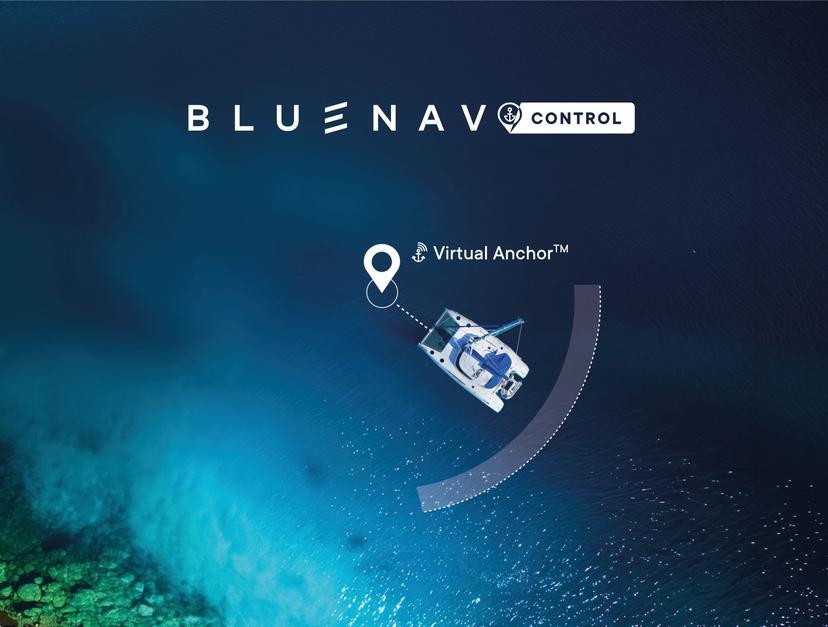
BlueNav extends its digital boating controls beyond its own motors
BlueNav is presenting BlueNav Control through its 2026 METSTRADE product catalogue as a way of bringing the company's Smart Navigation features to compatible third-party electric propulsion systems. The French marine technology supplier describes a dedicated controller, Precision+ GPS and an optional joystick, with software functions grouped under its Smart Navigation Pack. Previously, according to BlueNav's own description, these features were principally integrated with its own electric propulsion equipment. The company's latest offering therefore concerns a change in integration strategy, not necessarily the launch of a new motor. For owners and builders of smaller electric craft, the development raises a practical question: can modern positioning and manoeuvring software add value to equipment that is already installed without making the helm or control system unduly complicated?
A control layer is not a replacement propulsion system
BlueNav Control is described as technology that can be connected with electric drives supplied by other companies. That is different from purchasing a BlueNav outboard or inboard propulsion unit. An owner needs to determine which existing motor, controller and data interfaces are supported and what modifications are required. The presence of an electric motor does not automatically establish compatibility. Each propulsion system has its own methods of handling commands, reporting faults and protecting equipment. A well-designed control platform must operate within those limits rather than simply send arbitrary signals. Buyers should seek a manufacturer-approved integration plan before assuming a plug-in installation is possible.
Why precision positioning can matter
A small boat operating in a marina often needs to make careful movements in limited space. A helmsman must consider propeller thrust, wind, current and the tendency of the hull to continue moving after the throttle is reduced. Position information can help a control system understand the boat's motion, especially when combined with appropriate heading and propulsion data. BlueNav specifically identifies Precision+ GPS as a component of its proposed system. However, the product page does not establish a universal accuracy figure for every boat or environment. Satellite reception, mounting position and the surrounding structures can affect performance. More precise information may be useful, but it should never be confused with guaranteed avoidance of collisions.
The optional joystick needs a clear role
A joystick may make certain manoeuvres more intuitive by allowing the operator to request movement in a familiar physical direction. But the actual response depends on the boat's propulsion arrangement. A single fixed shaft, a steerable pod and a twin-motor installation offer different capabilities. The supplier lists a joystick as optional, not an essential component supplied with every configuration. Owners should find out what the control does on their specific boat, which movements are possible and how it interacts with conventional throttle or steering controls. A joystick that appears easy to use in a showroom still requires training and realistic practice in open water.
The Smart Navigation Pack needs feature-by-feature verification
BlueNav describes BlueNav Control as including access to its Smart Navigation Pack. That name suggests a group of software-assisted capabilities, but it should not be treated as a detailed technical specification by itself. Buyers should request the current list of supported functions, the exact operating conditions for each and any limits imposed by their propulsion equipment. The features offered with one BlueNav installation may differ from those available through a third-party drive. An owner should also ask whether separate subscriptions, hardware or updates are required. Clear documentation is preferable to relying on a broad marketing promise that the system makes boating effortless.
Integration with older boats may be demanding
A small cruiser already fitted with an electric drive might appear to be an ideal candidate for a digital-control upgrade. Yet older motors and controllers may not provide suitable electronic interfaces or may use software that is not supported by the new equipment. Additional cables, control units or network gateways could be required. The boat may also lack a satisfactory location for GPS and other sensors. An installer should establish compatibility before removing or modifying working controls. A retrofit can be worthwhile when it solves a defined handling problem, but it is not automatically economical simply because the existing boat already uses electric propulsion.
A skipper must retain reliable manual control
Digital assistance should make normal operation more predictable, not create uncertainty about who is commanding the boat. Owners need to know how to take over directly if the joystick, positioning function or control unit becomes unavailable. The original throttle and steering arrangement may remain essential, depending on the approved installation. A safe design should clearly identify modes, command priority and emergency-stop behaviour. The first-party exhibition description does not give every detail of those functions, so it would be irresponsible to claim that any particular installation can safely switch between modes without testing. Commissioning should include realistic fault scenarios, not only a successful demonstration in calm water.
Control response differs among hull types
An open RIB may react rapidly to thrust changes, while a heavier displacement cruiser can take longer to accelerate or stop. Windage also varies considerably with hull and superstructure. BlueNav Control's usefulness therefore depends on how its software and connected sensors handle the dynamics of the intended boat. A control scheme suited to one hull should not be assumed to behave identically on another. Owners should ask for evidence from a comparable vessel and allow time to become familiar with the response. A control interface is only as effective as the way it interprets a command and the physical ability of the boat to carry it out.
Docking assistance must respect the surrounding environment
Even sophisticated propulsion management cannot remove floating objects, moving boats or an unexpected gust of wind from the skipper's path. An operator must continue watching the surroundings and maintaining safe speed. A joystick or positioning function can help reduce workload in some situations, but the skipper is responsible for whether there is enough space for a manoeuvre. BlueNav's product listing does not claim that every compatible motor can provide full lateral movement or automatic collision avoidance. Buyers should avoid assuming those abilities without a vessel-specific demonstration. Assistance is most valuable when it strengthens an existing safe docking routine.
Power and data connectivity deserve protection
A dedicated controller requires a dependable source of electrical power and reliable communication with the drive. The installation should use correctly specified cabling, protection and mounting methods appropriate for the marine environment. A network interruption must not leave the operator uncertain about whether the propulsion system is receiving commands. Owners should ask what the displays indicate when communications are lost and how power faults are isolated. A compact control module can be easy to overlook compared with a motor, but its reliability may influence essential manoeuvring functions. A professional installer should treat it as a significant piece of the vessel's control system.
GPS is not a substitute for lookout or charts
A positioning receiver provides information about where a boat is and how it moves relative to the earth, but it does not independently reveal every obstacle or underwater hazard. A boat can be precisely positioned and still be heading toward a moored line, swimmer or uncharted object. BlueNav Control's GPS capability should be used within a wider navigation and manoeuvring plan. Skippers need suitable charts, depth information and an effective lookout according to the voyage. High-resolution position data can support control decisions, but it does not relieve anyone of the legal or practical duty to navigate safely.
Software updates may influence behaviour
A modern control system can evolve through software revisions, potentially changing available features and how information is displayed. Such updates should be documented and tested so that the crew is not surprised by altered control behaviour during a passage. Owners should ask how the BlueNav Control software is maintained, whether updates require internet access and what happens if an installation is interrupted. They should also confirm whether third-party drive compatibility can change when the motor manufacturer updates its own systems. Long-term service support is a serious part of choosing electronic propulsion management, especially for boats cruising away from major service centres.
Cybersecurity is relevant when controls are connected
Any networked technology that interacts with propulsion equipment warrants appropriate access controls and secure update procedures. A dedicated control unit should not be exposed unnecessarily to guest devices or untrusted networks. Owners should follow the manufacturer's advice about account security, external connectivity and maintenance. The official product listing does not specify every cybersecurity feature, and assumptions about complete protection would be unwise. A qualified integrator can help establish how the system is isolated from nonessential electronics. Security is not only about privacy; it also concerns the availability and integrity of commands in an environment where propulsion reliability matters.
Different electric drives may offer different capabilities
BlueNav's key proposal is interoperability, but the connected motor's characteristics remain important. Some systems can change thrust quickly, others offer different steering arrangements, and some may have restrictions on operating continuously at low speed. The control platform cannot safely command behaviour that the propulsion equipment does not support. Buyers should obtain a supported-device list and ask which functions are available for the specific drive configuration. The installation manual should define any required feedback signals or protective features. A boatowner comparing systems should focus on the complete integration rather than the brand of the joystick alone.
New boats may offer easier integration
A boatbuilder can plan the electrical network, sensor positions and helm arrangement together before production. That may make it easier to incorporate a new control platform than modifying an older vessel. Designers can also verify how the controller communicates with propulsion hardware and how manual backup is maintained. For small electric dayboats, this approach may keep the console uncluttered while providing better information. Even a new-build installation needs testing of manoeuvring performance, fault handling and safe operation. A control feature that appears promising in the catalogue should become part of a complete documented boat design, not an isolated optional extra without a commissioning procedure.
What a buyer should request from BlueNav
Useful documentation would include approved third-party propulsion systems, software versions, required sensors, electrical inputs, interface standards and the functions available with and without the optional joystick. Owners should ask how the Precision+ GPS is installed, what conditions affect its performance and whether the control can be safely isolated in a fault. They should also seek service and warranty details for the full configuration. These questions are normal for equipment that influences how a vessel moves. The METSTRADE page establishes the broad product offering but does not provide the complete answers for every possible motor and boat.
The 2026 exhibition presentation is the verified development
BlueNav's first-party METSTRADE product entry describes a dedicated control solution that brings its Smart Navigation technology to other manufacturers' compatible electric propulsion systems. It identifies a controller, Precision+ GPS and optional joystick, and references the Smart Navigation Pack. The short listing does not independently establish which third-party motors have already been integrated commercially, a universal price or performance guarantees for every hull. Nor should the listing be described as proof that the system can automatically dock any boat without operator involvement. The news is the proposed extension of BlueNav's control capabilities beyond its own propulsion products.
A more open market needs disciplined integration
BlueNav Control represents a direction that could become important as electric propulsion becomes more varied: owners may want to choose a motor and control experience separately, provided the two can be integrated safely. That flexibility has appeal, especially for small craft where a full propulsion replacement would be expensive or unnecessary. But interoperability must be supported by precise engineering and clear limits. Owners should begin by identifying the manoeuvring problem they want to solve, then confirm that the available equipment and installation can address it reliably. The best result is a helm that is easier to operate without reducing the skipper's understanding or control of the boat.
Original industry sources and image credits
Reporting based on Official METSTRADE 2026 manufacturer product catalogue, BlueNav.
Lead image: BlueNav Control Opens Smart Navigation to Other Electric Drives — official manufacturer supplied product photograph. © BlueNav. Original supplier image.