Barton revisits the problem of sealing pipe penetrations
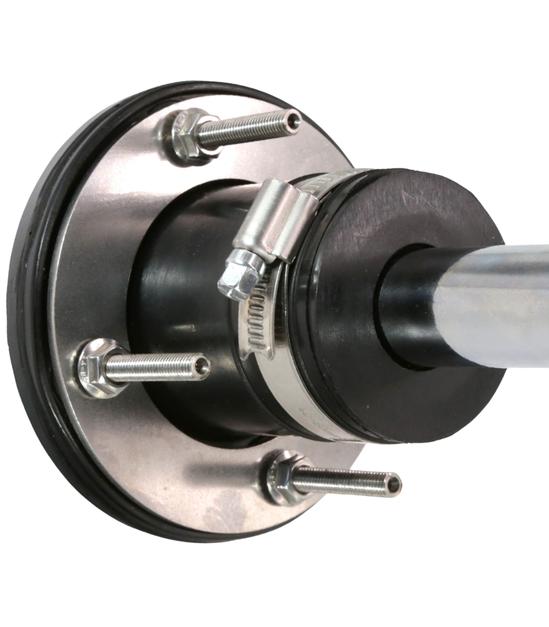
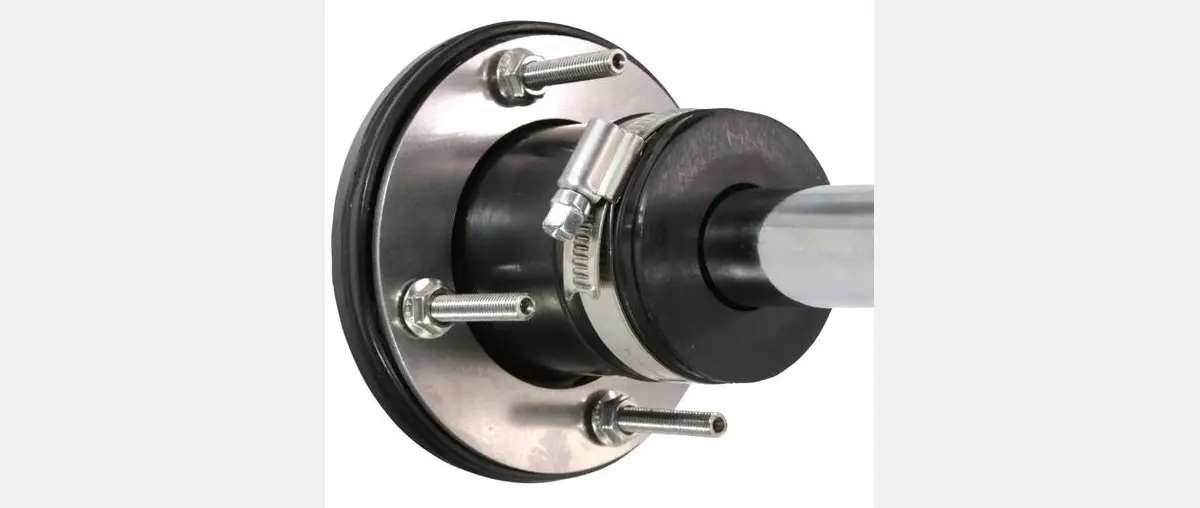
Barton Marine Equipment is showing its Bulkhead Pipe Gland Fittings in the 2026 METSTRADE supplier catalogue, describing a serviceable arrangement intended to help maintain a seal where a pipe passes through a boat's internal partition. The company identifies 316 stainless steel and nitrile rubber made to BS2751 as materials in the fitting, and says its bolted and clamped parts can be adjusted or removed with ordinary tools. These are precise features with relevance to boatbuilding and repairs, but the catalogue's use of terms such as watertight should not be interpreted as independent certification of every possible installation. On small cruising boats, a relatively simple pipe penetration can become a difficult maintenance issue if the surrounding bulkhead cannot be safely resealed.
What a bulkhead is meant to do
A bulkhead is a structural or dividing panel that may separate compartments in a vessel. Some bulkheads have important watertight functions, while others are primarily used for accommodation layouts or structural stiffness. A pipe passing through a partition creates a discontinuity that must be handled correctly. Depending on its location, water may enter a compartment through a poorly sealed opening even when the pipe itself is intact. The required standard depends on the vessel's design and the purpose of the bulkhead. A product such as Barton's gland should be specified with the original builder's arrangement in mind rather than installed on the assumption that every interior panel needs the same treatment.
Pipe runs present a practical challenge
Freshwater, waste, cooling and other onboard systems use pipes that travel between compartments. A boatbuilder wants those services to remain accessible without compromising the structure through which they pass. An improvised hole filled with general sealant may look satisfactory initially, but it can be difficult to inspect or remove later. A dedicated gland can provide a more deliberate method of supporting a pipe while limiting the path for water or vapour. The supplier's description emphasises this maintenance benefit. Nevertheless, proper specification also requires checking the pipe diameter, permitted material, expected movement and the pressure or exposure likely to occur at the penetration.
Stainless steel provides useful durability
Barton identifies 316 stainless steel for its bolted components. This grade is widely used in marine fittings because it generally offers good corrosion resistance in suitable conditions. That does not mean it is immune to crevice corrosion, particularly where oxygen is restricted or salts are trapped. A fitting should be inspected for damage, deformation and corrosion during routine maintenance. The choice of associated fasteners and nearby materials matters too. A stainless component placed against an unsuitable material can introduce other problems, including galvanic corrosion when conductive metals and an electrolyte are present. Good material selection starts with the complete installation rather than one attractive product specification.
The rubber seal is as important as the metal
The manufacturer lists nitrile rubber conforming to BS2751 as part of the gland construction. A resilient seal can accommodate the intended contact between pipe and fitting, but its performance depends on compression, chemical compatibility and temperature. Some onboard fluids, cleaning products and operating environments may be unsuitable for a particular elastomer. Owners should therefore request the current material specifications and replacement procedures rather than assume that every rubber seal will tolerate every bilge or engine-room condition. The ability to replace a worn sealing element is valuable if it can be performed without damaging the surrounding bulkhead. Serviceability is a key part of the product's stated proposition.
Bolted and clamped fittings may simplify access
Barton says the gland can be removed or adjusted using basic tools. That could help when a pipe is repaired, rerouted or replaced, especially in a cramped space where cutting out old sealant would be difficult. But a removable fitting also means its tightening procedure should be documented and followed carefully. Excessive torque may damage a pipe or seal, while insufficient compression can leave a leak path. A responsible installer will use the appropriate components and instructions for the exact model. Owners should not assume that a serviceable joint can be opened while the compartment is flooded or otherwise pressurised. Safe maintenance begins with isolating the system and understanding the surrounding conditions.
Watertightness is a system property
A gland may be capable of forming a seal under defined conditions, but the bulkhead around it must also be sound. A damaged panel, poor mounting surface or incorrectly cut opening could undermine the result. Likewise, a pipe that moves or vibrates excessively can transmit loads to the gland. The installer needs to assess whether separate supports are necessary so that the sealing component is not forced to carry the whole pipe's mechanical load. Product performance should be considered within the actual compartment arrangement. A statement that a fitting is waterproof or vapour resistant should not be substituted for a boat-specific installation and test procedure.
Small boats are particularly short of service access
A ten-metre cruiser may route pipes under bunks, behind cupboards and through narrow engine-room panels. Once interior joinery is completed, reaching those runs can be difficult. A dedicated and accessible sealing assembly can therefore make later maintenance more manageable. Yet the gland's physical dimensions and the access required for its bolts may rule out certain locations. Owners should ask for a detailed drawing before modifying the structure. A component that is technically removable but installed behind permanent furniture may offer little real service advantage. Planning access at the boatbuilding or refit stage is often more important than the catalogue description alone.
Consider movement and vibration
Boat structures move under changing loads, while engines, pumps and moving water can transmit vibration into pipe runs. A rigid pipe may behave differently from a flexible hose and may require appropriate support or expansion allowances. The gland should be installed within the manufacturer's permitted conditions. If the pipe is forced out of alignment, the seal may be stressed unevenly. A professional installer can identify where movement should be absorbed through flexible sections or independent mounts. The purpose of the gland is to maintain a suitable barrier at the partition, not to replace every pipe support. Correct alignment and restraint may influence service life more than the visible size of the fitting.
Plumbing changes should preserve the boat's design
An owner may be tempted to drill a new route through a bulkhead when adding a pump, watermaker or domestic appliance. Before doing so, the structural and watertight role of the bulkhead must be established. Some partitions should not be penetrated at all without approval from the designer or a competent marine engineer. Even where an opening is permitted, its position and size may be restricted. A high-quality gland cannot undo a structurally inappropriate hole. It is therefore essential to decide whether the pipe route itself is acceptable before choosing how to seal it. The manufacturer fitting should support the design, not justify a risky alteration.
Vapour resistance deserves separate consideration
The exhibition entry mentions water and vapour protection, which may interest owners dealing with engine spaces, sanitary installations or other compartments where unwanted gases and moisture are a concern. The exact performance of the assembly under different conditions needs to be checked. A vapour-resistant seal is not the same as a gas-tight fitting certified for every hazardous atmosphere. Owners should not assume that a generic plumbing component is suitable for fuel-gas installations or other safety-critical systems unless the relevant approvals expressly permit it. The correct engineering decision depends on the medium, pressure, temperature and standard applying to the compartment.
A refit quotation must include labour
The cost of a fitting may be modest compared with the labour required to access the bulkhead, isolate pipes, prepare the opening and restore the surrounding finish. A boatyard should also consider whether the existing pipe needs replacement or extra support. Owners requesting a quotation should ask what testing will be performed after installation and whether there is enough room for later servicing. A simple product is valuable when it reduces repair time, but that advantage must be judged against the entire job. The official catalogue does not establish installed costs, and any fixed-price claim without inspection of the boat would be speculative.
Corrosion and sealing checks belong in maintenance
A routine inspection can include looking for moisture trails, deteriorated rubber, loose fasteners and movement around the pipe. If a fitting is installed in an inaccessible or frequently wet space, the inspection interval may need to reflect that exposure. Owners should follow the manufacturer's service advice and record any replacement seals or components. Using incompatible lubricants or cleaning chemicals may harm rubber. If a leak is discovered, simply tightening bolts harder is not necessarily the correct solution; the underlying cause might be a damaged pipe or mounting surface. Proper maintenance should preserve the original design rather than rely on repeated improvised adjustments.
The distinction between a gland and a valve
A pipe gland is intended to help seal the penetration around a pipe, not to turn off water flowing inside it. Owners should continue to provide correctly specified valves and isolation points where required by the boat's systems. Similarly, a gland cannot replace the appropriate fittings at a through-hull connection. Confusing these functions could create a dangerous false sense of security. A well-designed system clearly identifies how water enters or leaves the vessel, where it can be isolated, and how pipes pass between compartments. Barton's equipment addresses one part of that broader system and should be used in the correct role.
Compatibility should be checked from drawings
Before purchase, an owner or yard should confirm permitted pipe outside diameters, bulkhead thickness, opening dimensions and the current sealing and tightening instructions. The manufacturer may offer several sizes or configurations, and the short catalogue description should not be taken as a complete specification. Material compatibility with the carried fluid is also important. If a pipe is already installed, its condition and ability to be moved may determine whether the new gland can be fitted without additional dismantling. A technical drawing and a site measurement are better evidence than a visual guess based on a product photograph.
What the official 2026 presentation confirms
Barton's METSTRADE product page describes Bulkhead Pipe Gland Fittings intended to maintain a water- and vapour-resistant seal where pipes pass through partitions. It identifies 316 stainless steel, nitrile rubber made to BS2751, and a removable clamped and bolted arrangement that can be serviced with ordinary tools. It does not establish that every existing bulkhead can be modified safely, nor that a particular fitting has been independently tested for all possible pressures or fluids. This report concerns the company's trade-show product presentation, without inventing a November launch date or an unverified certification claim.
A small fitting with potentially important consequences
Bulkhead penetrations are rarely glamorous, but they influence whether a boat remains serviceable and whether water can move between spaces in an unwanted way. Barton's approach focuses on the value of a designed, accessible seal rather than a permanent improvised patch. For owners of small cruising boats, the practical lesson is to inspect pipe routes before problems develop and consult a qualified boatyard when altering structural or watertight partitions. A serviceable gland may reduce future repair difficulties, provided it is correctly matched to the pipe and installed without compromising the bulkhead. Good marine engineering often depends on such unremarkable details being handled properly.
Original industry sources and image credits
Reporting based on Official METSTRADE 2026 manufacturer product catalogue, Barton Marine Equipment Ltd.
Lead image: Barton Bulkhead Pipe Glands Target Serviceable Watertight Seals — official manufacturer supplied product photograph. © Barton Marine Equipment Ltd. Original supplier image.