
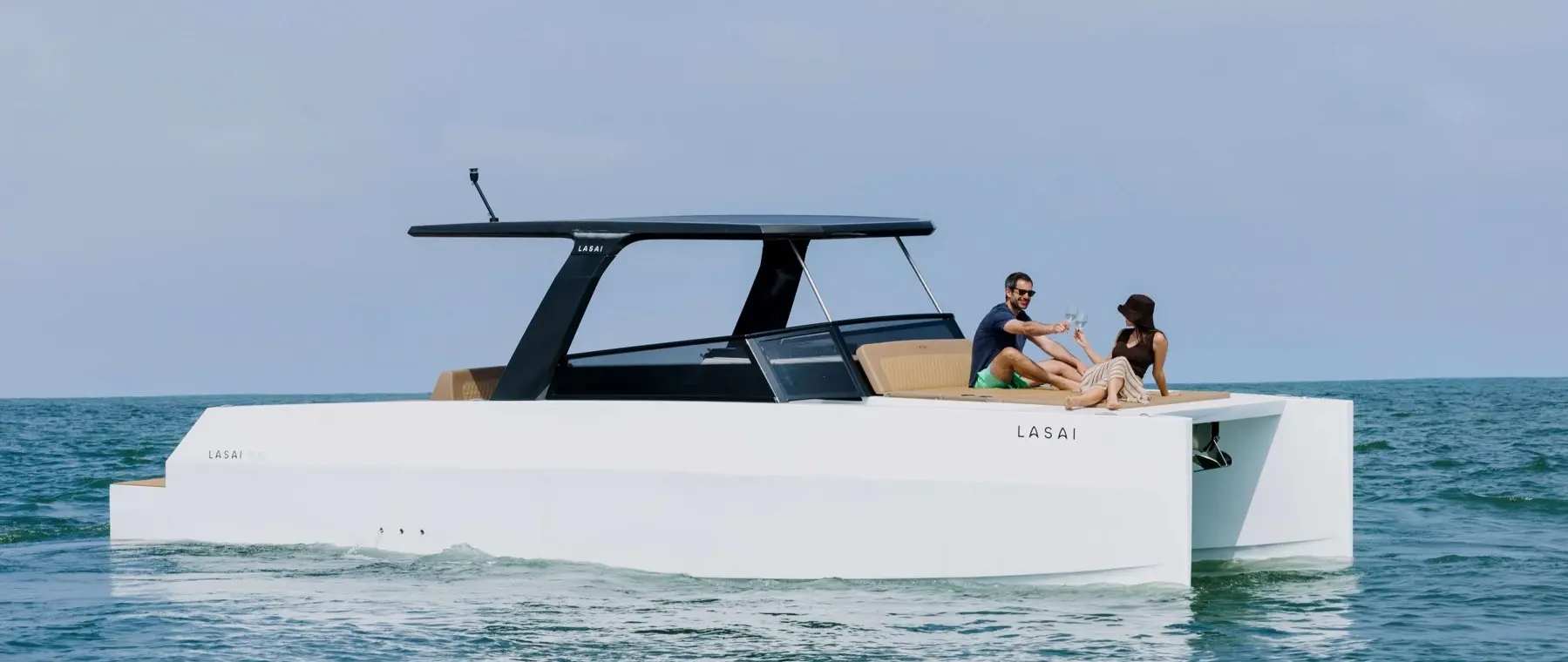
Electric propulsion among conventional exhibits
Barcelona International Boat Show’s 2026 catalogue includes the Lasai 32 KS in its sustainable-boat category at an overall length of 9.65 metres. Its presence provides a different set of purchase considerations from the many petrol and diesel dayboats displayed nearby. The exhibition is scheduled for 14–18 October at Marina Port Vell.
The most distinctive promise of electric leisure boating is the possibility of a quieter, lower-emission experience at the point of use. That can be particularly pleasant on short coastal trips, but it also requires careful consideration of battery capacity, charging infrastructure and actual energy consumption.
Range depends heavily on the journey
Electric propulsion draws attention to the relationship between speed and energy use. A boat may travel efficiently at a gentle pace yet use considerably more battery energy when pushed harder against wind or waves. The builder’s published figures should therefore be evaluated against the owner’s expected passengers, local sea state and typical cruising speed.
An advertised maximum range must not be interpreted as a safe operational radius. Owners should keep an appropriate reserve and know where reliable shore power is available. Planning must also allow for slower charging when a marina's electrical installation cannot supply the boat’s maximum rated input.
Comfort and practical simplicity
Electric drives can reduce engine noise and remove some routine combustion-engine maintenance, but they still require professional inspection of high-voltage components, batteries and cooling systems. A well-designed deck arrangement and comfortable seating remain just as important as on a conventionally powered dayboat.
Prospective buyers should check the actual space taken by battery equipment, access to electrical isolation and the procedures used if there is a fault away from the marina. Any battery warranty needs to be read closely, particularly its conditions on storage, charging and long periods of inactivity.
What a show visit can establish
The Lasai 32 KS offers Barcelona visitors a practical comparison between conventional and electric propulsion in a familiar under-ten-metre leisure-boat format. A test run at several speeds and a demonstration of charging arrangements will be more informative than an unqualified headline about zero emissions or maximum range.
The October listing confirms the model’s planned exhibition, not a guarantee that local charging is available at every potential cruising destination. Owners should match the boat to realistic routes, understand its onboard energy monitoring and seek written clarification of warranty and service support before ordering. Lasai quotes twin 50-kilowatt motors and 126 kilowatt-hours of battery capacity for its 32 KS variant, with a stated range of approximately eighty nautical miles at ten knots. That manufacturer figure should be treated as a test-condition estimate rather than an operating guarantee for every journey.