
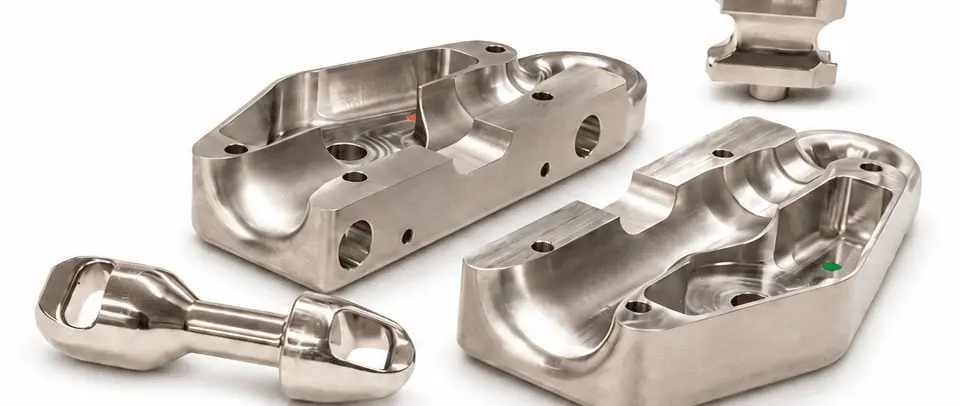
Karver announces a sailing-equipment agreement ahead of METSTRADE
French deck-equipment manufacturer Karver has announced an agreement to take over the Alphalock business and develop its magnetic-assisted sail-locking technology. The November 11 statement identifies American designer Eric Hall as the inventor associated with the mechanism and sets out plans for the intellectual property, documentation and existing commercial relationships to pass into Karver's product-development programme. The collaboration will be presented at METSTRADE in Amsterdam on November 17–19, with the companies positioning it as a step towards a broader range of sail-handling products.
For Leisure Boat Guide, the most useful angle is the possible longer-term application to smaller cruising sailboats, rather than the larger racing yachts for which advanced halyard locks are often best known. A sail lock can change the way loads pass through a rig, but it cannot be installed simply because an owner likes the idea of handling a rope differently. Correct loads, geometry, mast structure and release mechanisms all need to be examined before hardware becomes a practical option for a particular boat.
What an Alphalock actually does
A halyard lock is a mechanism intended to secure part of a sail-handling system under load. In certain arrangements, it reduces the need to maintain a high continuous tension through a long halyard by transferring the load closer to the relevant lock point. The exact system may relate to a headsail, a mainsail, a tack connection or a reefing arrangement. Different types of locks serve different functions, and owners must not assume one product can be used safely for all of them.
Alphalock's public description centres on a mechanism with one moving part and magnetic assistance for locking and releasing. Karver highlights the absence of springs and separate release lines in the published design. That is an engineering proposition, not proof that a device has no maintenance requirements. Mechanical surfaces, attachments, alignment and operating loads still need inspection, especially after sustained use in saltwater. A lock is only as reliable as the entire rigging arrangement of which it forms a part.
A partnership involving an established deck-equipment maker
Karver has developed furling equipment, load-handling hardware and other sailing components for racing and cruising markets. Its announcement says the Alphalock agreement will complement an existing family of internal and external locks, reefing hooks and furling-related products. Combining the two portfolios could help builders and professional riggers offer more integrated options, although the announcement does not provide a dated catalogue of newly approved small-boat installations.
The value for a typical owner is therefore prospective. Karver may be able to bring an existing specialised technology through a broader network of dealers and rigging professionals. That could make it easier to obtain documentation, fitting advice and support, especially for customers who have never purchased racing-grade sail-handling components. However, an agreement between companies is not equivalent to a product warranty on an individual installation, and the precise responsibilities of suppliers must be confirmed before an order.
Why reducing halyard loads is interesting to short-handed crews
Owners of smaller sailboats often face a combination of limited deck space and substantial line loads. Reefing, hoisting and lowering sails may require several operations involving halyards, sheets, clutches and winches. In some rig types, a suitable halyard lock could alter the load path and the work required from the crew. Such arrangements may also have implications for the equipment used at the masthead and for the way the sail is released in difficult conditions.
The benefits should not be described as universally available. Many ordinary cruising boats work safely and efficiently with conventional halyards and clutches, and adding specialised fittings could increase complexity rather than reduce it. Owners should begin by identifying a real operating difficulty, such as a demanding hoist, an unsuitable reefing arrangement or excessive friction. A professional rigger can then assess whether servicing the current equipment or changing the hardware would be the better response.
Magnetic assistance is not automatic sail handling
The word magnetic can make a device sound electronic or self-operating, but the company's explanation concerns assistance within a mechanical locking concept. A skipper still needs correct line handling, knowledge of load paths and a controlled release process. Magnetic assistance does not turn the lock into a remote-controlled sailing computer, nor does it guarantee the sail will come down easily if the rig is under an unsuitable load. The exact operation will depend on the product version and how it has been installed.
That distinction matters in a market where owners increasingly encounter electrical winches, automatic furling and digitally monitored systems. A simple mechanical mechanism can be attractive because it may avoid some additional cables or actuators. But simplicity at one point of the rig is meaningful only if the whole operation becomes more dependable. Buyers should ask to see the locking and releasing procedure under realistic load, including a demonstration of what the crew must do when the system does not behave as expected.
The role of founder Eric Hall
The November announcement specifically credits Eric Hall's experience in composites, rigging and sailing equipment. Hall established Hall Spars and has worked on several generations of performance-sailing hardware. Karver's press statement presents the Alphalock technology as an extension of that design background, with a preference for concentrating mechanical functions into a compact and accessible arrangement.
Those credentials are relevant background, but they do not independently certify a new product for any given boat. A rigger still needs the manufacturer's engineering data, permissible loads, compatibility information and installation instructions. Successful use of related technology on a high-performance yacht is encouraging, yet the loads and geometry of a cruising sloop can be very different. Owners should resist the temptation to use a recognised designer's reputation as a substitute for precise technical suitability.
Internal and external arrangements
Karver's release says the Alphalock concept can be developed for internal and external mast installations, as well as headsail halyards, reefing and tack points. Each location raises a different set of practical questions. An externally mounted component may be more accessible for routine inspection but also exposed to knocks, ultraviolet radiation and saltwater. An internal installation can protect some hardware from the weather while creating access difficulties if parts require servicing.
A mast is a structural system under considerable load, not an empty tube available for unrestricted modification. Drilling new holes, adding reinforcement or changing fittings can affect the safety of the rig. Before discussing a retrofit, owners should obtain the mast manufacturer's guidance and the opinion of a competent rigger familiar with the exact section. A small fitting that appears straightforward in a photograph may require substantial engineering work to install correctly.
Reefing arrangements require particular care
The prospect of using magnetic-assisted locks at reefing points will interest sailors who struggle with heavy or complicated mainsail handling. A properly engineered reefing arrangement should let the crew shorten sail predictably without exposing anyone to uncontrolled loads. Whether a lock could make that process easier depends on how the sail, boom, mast and reefing lines are configured. The system should also allow the sail to be released safely when conditions change.
Owners must consider failure modes, not only the nominal operation. What happens if a release cannot be completed while the sail is loaded? Is there a safe alternative procedure, and can the crew carry it out without climbing the mast or placing themselves near moving hardware? The details should be covered in the manufacturer's installation and operating instructions. A device intended to simplify reefing should not create a new problem when a crew is tired, a squall arrives or visibility is poor.
Integration with Antal equipment
Karver's announcement connects the Alphalock plans with a wider strategic relationship involving Italian deck-equipment specialist Antal. It says future products may be adapted to Antal mast tracks and cars, opening possibilities for more coordinated sail-handling arrangements. The company has not, however, promised that every present Antal component will accept a new magnetic lock without changes. Compatibility should be documented for exact models, dimensions and applicable loads.
The integrated-system approach is attractive to boatbuilders because one properly designed package may simplify specification, installation and maintenance. For a retrofit owner, the consequences are more complicated. An existing mast, track and sail may have been designed around components from several different suppliers. Changing one part requires reviewing the others. The owner should obtain a written compatibility statement rather than rely on an informal assertion that fittings of similar appearance are interchangeable.
Maintenance and service support after an acquisition
Karver says it intends to maintain continuity for Alphalock customers and partners during the transition, including technical support and the supply of products. This is an important commercial assurance, particularly for boats already fitted with Alphalock hardware. An owner using existing equipment should establish which company now provides replacement parts, updated instructions and warranty support, and whether previous product documentation remains valid.
Owners considering the technology for a future refit should also clarify what form of ongoing service will be available in their cruising region. A specialist component may be small but important to the operation of the yacht. If a suitable replacement cannot be obtained at short notice, a minor fault may interrupt a passage or holiday. Dealer coverage, traceable part numbers and clear maintenance intervals therefore deserve as much attention as a novel locking mechanism.
Does the acquisition change the price or product range?
The companies have described the agreement and intended integration, but the November release does not provide a complete new retail price list, a definitive small-boat product schedule or a date on which every future version will be available. The release refers to progressive integration into Karver's catalogue. Buyers should distinguish the continuation of existing Alphalock products from proposed systems carrying the future 'Powered by Alphalock' designation.
A specialist sailing workshop can help owners compare a possible upgrade with less expensive alternatives. Improvements to halyard routing, blocks, clutches or existing furling gear may solve the original problem without changing the mast. Conversely, on a new build, the additional engineering freedom may make a more integrated lock worthwhile. A credible quotation should identify not only the device but also the rigging labour, sail alterations, inspections and subsequent support.
What visitors should ask in Amsterdam
Karver plans to present the new relationship at METSTRADE 2026, giving builders, riggers and interested sailors an opportunity to ask about product development. A useful discussion begins with the load case and intended application. Visitors should request dimensional drawings, working-load information, appropriate materials, required mast fittings and the current status of any certification or trials. If a product remains in development, that status should be stated plainly.
For an owner of a small cruising yacht, a practical checklist includes the current sail plan, mast specification, existing halyards and the specific difficulty that the crew wants to solve. Ask how a lock can be inspected, cleaned, repaired and released if a line becomes jammed. Also seek examples of comparable installations and determine whether the local rigger can obtain spares. The company announcement warrants interest, but it does not relieve the owner of normal technical due diligence.
What the agreement means for leisure sailors
The verifiable news is that Karver and Alphalock have announced a business agreement to combine complementary sail-handling technologies, with a public presentation scheduled during METSTRADE. Karver aims to incorporate magnetic-assisted lock concepts into a broader catalogue, including applications relevant to cruising boats. Existing owners are being promised continuity of support while development proceeds. These are business and engineering plans, not independent proof of a finished universal retrofit kit.
The potential importance lies in better access to carefully designed load-handling options for boats whose crews want more predictable sailing routines. Whether the technology is appropriate for a particular craft will remain a question of rig design, performance evidence, installation competence and owner training. Leisure Boat Guide will follow the development without implying that every small yacht needs a halyard lock or that a new mechanism can replace the judgement required to handle sails safely.
Official editorial source: www.karver-systems.com. Official Karver and Alphalock manufacturer press photograph showing the open Alphalock sail hook, 11 November 2026.