
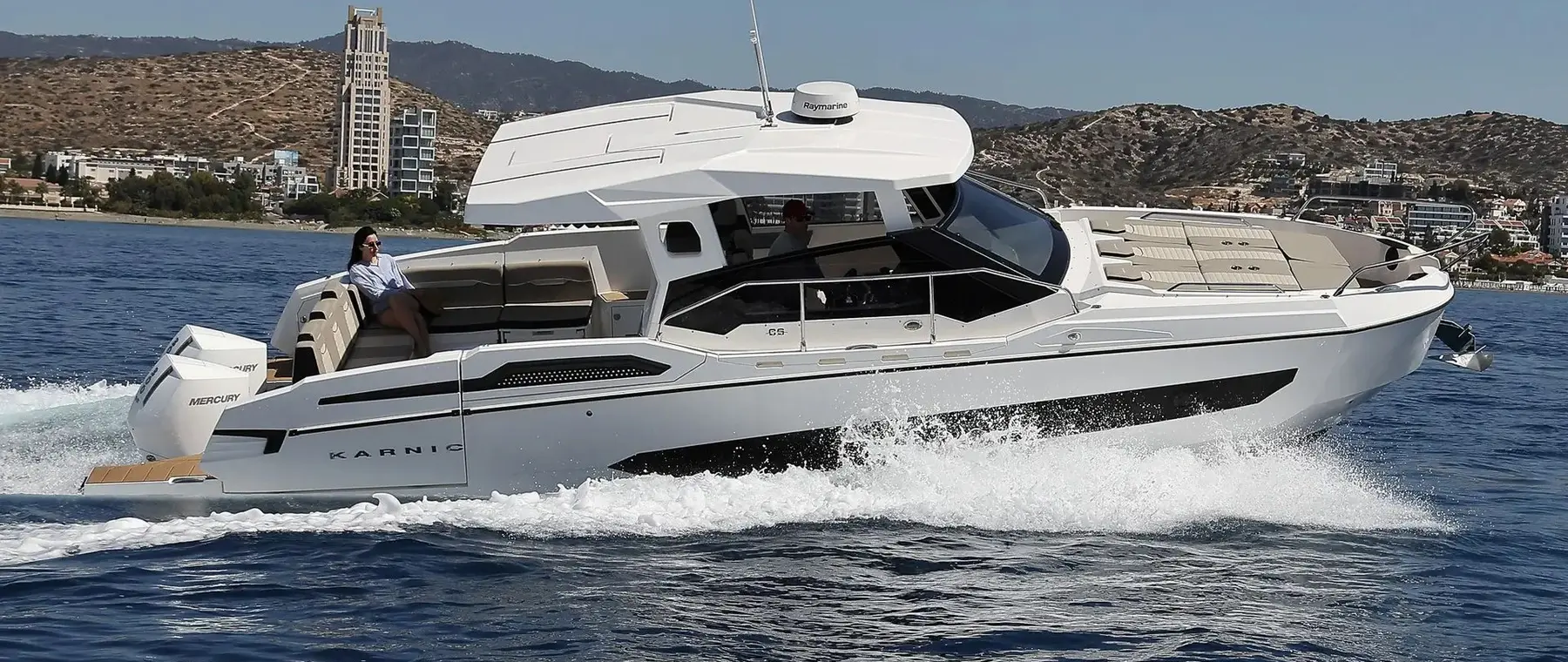
A substantial small motor cruiser with a hardtop
The Karnic CS10-HT appears in Barcelona’s October 2026 boat selection. The manufacturer quotes a length of 10.65 metres overall and a 3.30-metre beam, giving buyers a sheltered, outboard-powered cruising option while remaining within LBG’s size boundaries. Its hardtop provides a more permanent roof than a conventional open sportsboat’s removable cover.
Karnic’s design mixes a large cockpit with sleeping accommodation below. This makes it suitable for a family considering more than an afternoon afloat, while buyers should examine whether the layout works equally well during cooler or wetter trips.
Twin outboards and the upper rating
The builder offers twin-outboard configurations with a maximum combined rating of 700 horsepower. It lists a fuel capacity of 570 litres and a water tank of approximately 200 litres. These figures are part of the manufacturer’s current specification and may vary by exact build and market.
A high engine rating should not be interpreted as a requirement to choose maximum power. Smaller configurations may reduce purchase cost and weight, while all twin-engine arrangements need regular servicing. Owners should ask for performance data and consider access to authorised technicians before selecting a package.
Sleeping quarters for four adults
Karnic lists four adult berths and a two-cabin accommodation arrangement in its technical material. The large outdoor cockpit can support shared meals, while an enclosed sleeping area provides privacy and protection after a day's boating. Equipment packages may include additional comfort systems, but buyers should not assume every optional feature is fitted.
The boat’s published certification permits up to fourteen persons under specified conditions, quite different from its overnight sleeping capacity. Families should compare the expected crew size with seating, toilets, storage and movement through the cabin. The presence of two private sleeping areas can be a meaningful advantage on a short cruise.
Comparing the CS10 at Port Vell
A 10.65-metre hardtop cruiser needs to be evaluated against smaller open sportsboats and more fully enclosed pilothouse models. Buyers should test helm visibility with the roof and any weather screens fitted, as well as access to the bow during berthing. Service panels, battery locations and bilge access are essential details.
The October catalogue confirms a show entry rather than a brand-new model release. Visitors can use the event to understand the physical space and ask about engine installations, local service and delivery options. Specifications and ownership costs should be agreed for the actual hull before purchasing. The hardtop changes the ownership equation when the weather is unpredictable, but optional enclosures and ventilation arrangements deserve close attention. A roof alone does not provide the insulation and climate control of a fully enclosed pilothouse during a prolonged cold-weather passage.