
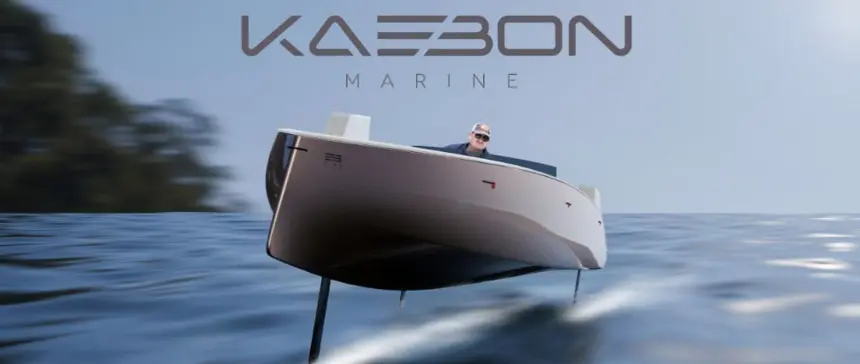
KAEBON is presenting the EB EINS fly in Interboot 2026's E-Boat Area as a lightweight electric craft built around active hydrofoiling. The boat measures 5.25m and uses carbon construction to keep displacement low before the foils begin reducing hydrodynamic drag.
Interboot's sustainability material says the concept uses three electric motors rated at 3kW continuous power each. The published figures describe a 12-knot cruising speed and an 18-knot maximum for the current configuration.
Foiling is used to cut energy demand
The EB EINS fly raises the hull above the water on foils as speed increases, reducing the wetted area that normally creates drag. KAEBON's approach is to pair that efficiency gain with very low structural weight rather than compensate with a much larger battery.
Foiling systems add their own complexity because control surfaces, sensors and underwater components need to work together continuously. Owners should therefore consider maintenance and operating conditions alongside efficiency when comparing a foiler with a conventional electric boat.
Small motors and a compact battery package
Interboot says the boat uses a 19kWh LiFePO4 battery and can be recharged from a 230-volt supply in around five hours under the stated conditions. A claimed range of about 25 nautical miles is associated with the published cruising condition.
Those numbers remain manufacturer and show figures rather than guarantees for every trip. Passenger load, water state, wind, battery temperature and time spent off the foils can all affect real-world endurance.
A technology demonstrator with practical ambitions
KAEBON has already established the ultralight EB EINS electric-boat family, while the fly version pushes the same low-mass philosophy further through active foiling. Interboot gives buyers a chance to compare that approach with more conventional displacement and planing electric boats in the same hall.
For Leisure Boat Guide, the significance is the attempt to improve range by reducing resistance rather than simply adding battery capacity. Whether that balance suits an individual owner will depend on intended waters, required payload and willingness to manage a more sophisticated underwater system.