A progression-focused idea for boat-towed watersports
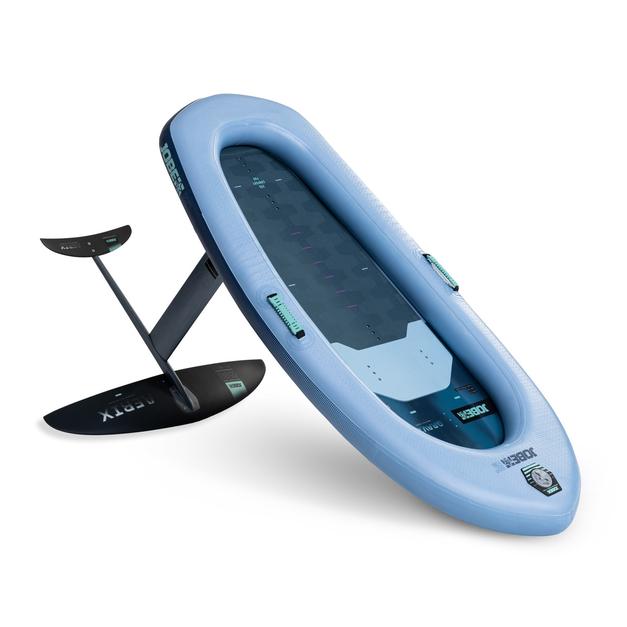
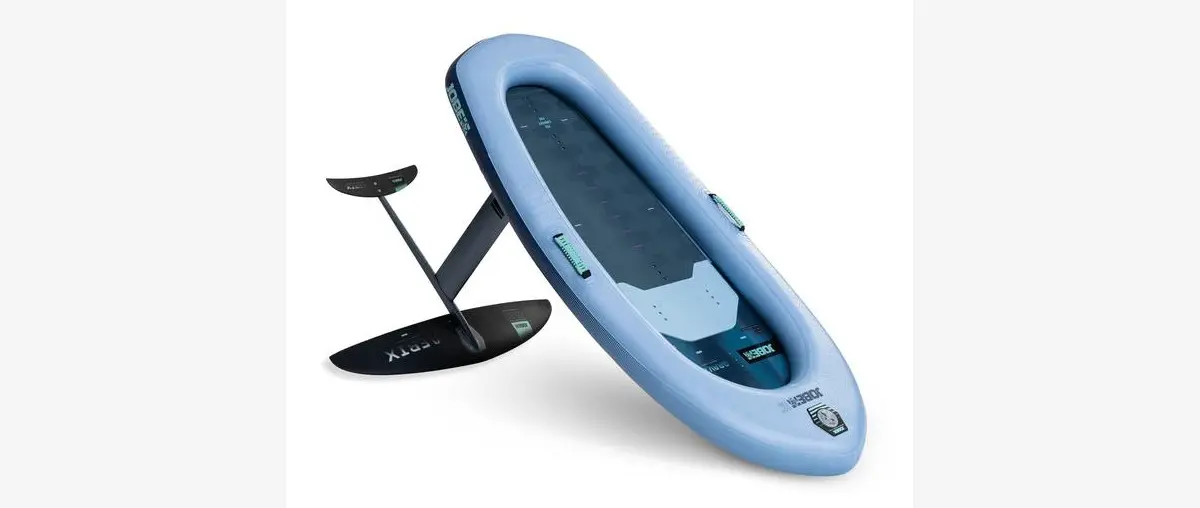
Jobe Sports is exhibiting its Gravix Wakefoil Set with Tube in the 2026 METSTRADE product catalogue, presenting an inflatable 75-litre learning tube that adds buoyancy during early wakefoiling attempts. The official product listing, originally dated 1 January 2026, describes a modular arrangement intended to help riders begin in a lying, kneeling or wakeboard-style position before progressing to more demanding foiling. The supplier says the foil can begin to lift at speeds around ten kilometres per hour, although that figure is not a guaranteed operating result for every rider, board or water condition. For owners of powerboats below twelve metres who enjoy tow sports, the concept is relevant because first attempts at wakefoiling can be difficult to coordinate. A rider must manage board balance, tow-rope tension and a foil that responds differently from a conventional wakeboard. Additional flotation may make the starting process more approachable, but it does not eliminate the hazards of towing, falling or contacting the foil.
What the manufacturer actually provides
The first-party Jobe Gravix listing identifies a set with a 75-litre inflatable learning tube and describes it as a modular progression platform. The tube is intended to give extra stability while riders develop their skills, with several starting positions available. The public summary does not provide every dimension, foil material, maximum rider weight, inflation pressure or approved tow-rope arrangement. Those details should be obtained from the correct product manual before purchase or use. The catalogue's reference to easier and safer learning is a manufacturer claim rather than independent proof that a novice cannot be injured. A foil board remains specialised sporting equipment, and its edges, mast and moving behaviour require attention. A competent instructor can help a new rider understand the equipment before attempting a tow.
Why deep-water starts can be challenging
In a deep-water start, the rider begins floating with the board and needs to maintain a stable position as the towing boat gradually increases tension on the rope. The rider must coordinate body position, board angle and movement through the water. A conventional board may feel unstable, particularly when additional foil components are attached below it. Novices can become tired through repeated attempts to lift the board onto the surface or may be pulled into an awkward position if the tow starts abruptly. The Gravix learning tube is intended to introduce more buoyancy during this stage. That could help some riders concentrate on the sequence, but it should not be interpreted as a substitute for proper instruction or a guarantee of success on the first attempt. Technique, fitness and conditions remain important.
What 75 litres of added volume may mean
The manufacturer's claim of a 75-litre learning tube provides a useful indication that the accessory is intended to add appreciable buoyancy, but volume alone does not establish how it will behave with every rider. Its distribution around the board, attachment method and inflation level all influence the experience. A rider of one weight may find the support different from someone heavier or lighter. The tube should be inflated only to the specified pressure and attached exactly as directed. Improvised inflation or insecure connections can lead to an unpredictable response. Owners should also understand the process for removing or adapting the tube as a rider progresses. The system is designed as a learning aid, and its value depends on being used in the intended stage of training.
Starting while lying down or kneeling
Jobe's catalogue describes alternatives to an immediate standing start, including lying and kneeling positions. Breaking a complex movement into stages can make learning more approachable for some users, especially if the boat accelerates gently and the rider receives clear instructions. A person should practise the correct body position and how to release the tow handle before beginning. Kneeling may feel more stable, but it also changes where the rider's weight sits on the board. The instructor should explain the transition between stages and decide when the learner is ready for greater difficulty. The official description does not set a universal timetable for progression. Some riders may develop confidence rapidly, while others need several sessions or prefer to remain at an easier level. A successful experience is one conducted safely at the rider's pace.
Lift around ten kilometres per hour
The product listing says the Gravix arrangement can begin to produce smooth lift from around ten kilometres per hour. That is a manufacturer-reported figure describing the concept, not a fixed speed every towing boat should immediately target. The actual point at which the foil generates useful lift depends on the rider, equipment, trim and water conditions. A boat operator needs to follow the product's intended towing procedure and communicate with the instructor. Rapid acceleration can produce a sudden load on the rider and lead to a fall. Excessively low or inconsistent speed can also make balance more difficult. A safe learning session requires a controlled environment and a skipper experienced in towing sports. Speed is only one part of the preparation; clear signals and adequate space matter equally.
The modular design and later stages
Jobe presents Gravix as a platform that changes with the rider's confidence rather than a device used once and discarded. The learning tube is one part of that concept. Buyers should check which components are included, how they are connected and whether the foil or board can be configured for different stages under the manufacturer's instructions. Removing or changing equipment may alter handling significantly, so the rider should not assume the same movements will produce the same response afterward. A progression plan can help introduce a more demanding configuration only when the rider has demonstrated adequate control. Modular systems can potentially reduce the need for entirely separate beginner equipment, but the cost and compatibility of additional parts should be confirmed. A photograph does not establish that every future Jobe component will fit the original set.
A foil is different from a traditional wakeboard
A wakefoil uses a hydrofoil beneath the board to generate lift as it moves through water. This can reduce contact between the main board and the surface at certain speeds, producing a distinctive riding sensation. It also introduces new balance and control demands. Small adjustments in body position may change the foil's pitch or height, and a loss of balance can result in an abrupt fall. The rider should never attempt to regain control by grabbing the foil, mast or other sharp components. Equipment should be handled carefully during launching and recovery, especially near the stern of the towing boat. The attraction of foiling is genuine, but it is important not to describe it as simply an easier version of familiar watersports. It demands training and respect for its particular hazards.
The towing boat's responsibilities
The driver of a recreational powerboat has responsibilities that extend beyond maintaining a steady speed. The boat must be suitable for towing, and the operator must understand local restrictions, recommended tow points and safe operating areas. A responsible session needs a clear lookout and, where required or appropriate, a separate observer. The driver should avoid sudden turns and keep the rider clear of other vessels, swimmers, buoys and shorelines. A learning tube does not reduce the need for this preparation. The skipper should plan the course before starting and agree on communication signals with the rider. Safety arrangements should include what to do when the rider falls or drops the handle. Boat operation and rider technique are connected parts of one activity.
Working with a qualified instructor
Beginners may benefit from a professional instructor who can assess their starting position, explain how to manage the tow handle and select an appropriate progression. This can also help the boat operator because the instructor understands what a learner needs from the tow. An unfamiliar rider may not know when to stand, release tension or stop after becoming tired. The product's modular arrangement offers several possible training stages, but deciding which is suitable should be based on the rider's abilities and the conditions. An experienced instructor can emphasise safe falling techniques and equipment handling, including avoiding contact with the foil. A family hoping to try wakefoiling on holiday should not assume that buying a beginner-oriented set removes the value of instruction.
Suitable water and weather
A calm, open area with sufficient depth and few other users is generally more manageable for a learning session than crowded, choppy water. The foil extends beneath the board and must have clearance from the seabed and submerged objects. Local regulations may restrict tow sports or impose specific requirements. The skipper must check these rather than assume that a sheltered bay is available for any activity. Wind, current and boat wakes can make an already unfamiliar task much more difficult. A learning session should be postponed when conditions are unsuitable, regardless of whether the equipment has extra flotation. The goal is to give the rider enough time to practise without distractions or the risk of contact with obstacles. A clear environment is an important part of the learning system.
Personal flotation and protective equipment
An inflatable learning tube attached to a wakefoil board is not a substitute for a suitable personal flotation device worn by the rider. The rider should use equipment appropriate to the sport, their abilities and local rules, and an instructor may recommend additional protection such as a helmet. A foil has components that can cause injury during a fall, so clothing and protective equipment should be selected with that risk in mind. A novice should also understand how to move away from the board after losing balance. The manufacturer's detailed guidance should determine what safety equipment is required or recommended for Gravix. The apparent buoyancy of the board does not justify omitting ordinary towing precautions. A responsible owner provides an organised activity rather than handing unfamiliar gear to guests without explanation.
Preparing and inspecting the set
Before towing, the operator should check the tube for damage, confirm the correct inflation and inspect how it attaches to the board. Foil components need secure assembly, with fasteners tightened to the manufacturer’s specification. A loose component can change handling or become a hazard. The tow rope and handle should also be appropriate and free of damage. An owner should not improvise a new connection or tow geometry simply to fit the set to another boat. After use, the equipment should be rinsed and stored according to the maker's guidance, particularly when exposed to salt water. The inflatable element should be checked for leaks or abrasion before the next session. Such preparation may take only a short time but can prevent equipment problems during a tow.
Transport and storage aboard a small boat
A boat under twelve metres may have limited space for a board, foil mast, wings and an inflatable training accessory. The modular concept may make some parts easier to organise, but dimensions and storage requirements should be confirmed before buying. Foil components should be protected from impact and secured so they cannot slide across a deck or strike passengers. A partially assembled foil can be awkward to move through a narrow cockpit. Owners should also consider how equipment will be launched and recovered without bringing it near a running propeller. A dedicated storage bag or protective cover may be useful if approved by the supplier. The practical ownership experience includes these everyday tasks, not just how the board performs in the water.
An introductory product with realistic limits
The Jobe Gravix Wakefoil Set with Tube is a 2026-catalogued watersports product built around a 75-litre inflatable learning accessory, several starting positions and a modular progression concept. The manufacturer reports lift at around ten kilometres per hour, but this should not be treated as an assured result or universal tow instruction. For owners of small powerboats interested in introducing guests to wakefoiling, the product is an option to examine alongside suitable instruction, boat capability and water conditions. It can help organise learning stages without eliminating the need for competent driving, personal protection and an experienced observer. The best outcome is not the quickest path to standing on a foil, but an enjoyable progression in which everyone understands the risks and has space to build confidence.
Original industry sources and image credits
Reporting based on JOBE SPORTS first-party Jobe Gravix Wakefoil Set with Tube manufacturer product description, originally dated 1 January 2026 in METSTRADE exhibitor catalogue..
Lead image: Jobe Gravix Wakefoil Set Uses an Inflatable Learning Tube for Deep-Water Starts — producer original product photograph. © JOBE SPORTS. Original supplier image.