
One audio unit for two settings
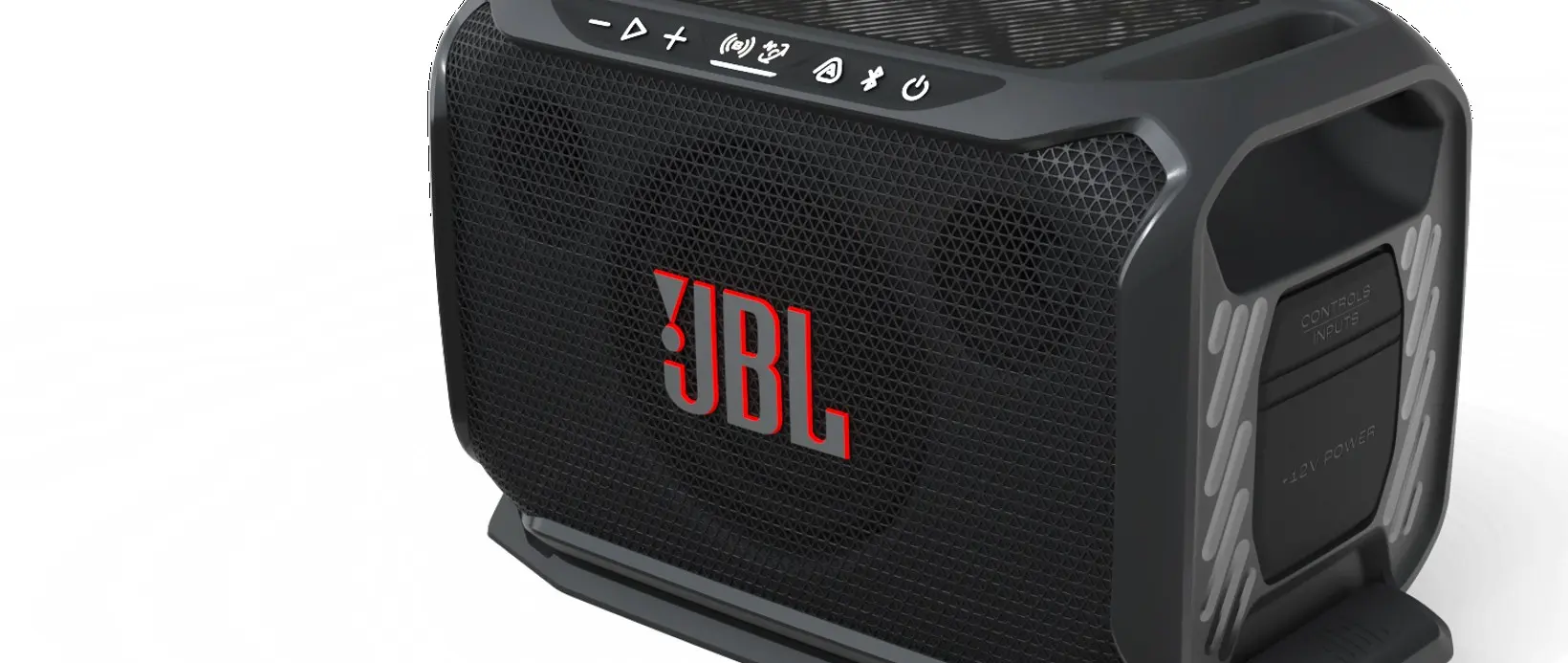
JBL has introduced the BassPro Go2, a marine-ready audio product that performs two jobs. It can be installed on a 12-volt docking base as a powered subwoofer on a boat, then released to serve as a standalone Bluetooth speaker on the dock or beach. HARMAN announced the product in October 2026, presenting it as a bridge between fixed marine audio equipment and portable listening.
For owners of smaller dayboats and weekend cruisers, storage and electrical installation space are precious. A removable speaker that adds bass while aboard and supplies full-range sound when carried ashore could replace part of a second audio setup. It does not, however, remove the need for careful installation, suitable power protection and sensible consideration for nearby boats in a crowded anchorage.
How the dual-mode arrangement works
When docked, the BassPro Go2 can reinforce the lower frequencies from an existing sound system, or act as the primary audio source in a compatible setup. JBL provides a quick-disconnect power and charging harness so the unit can be released without tools. A supplied remote bass control is intended to let the person at the helm or another seat adjust the level conveniently.
Removed from the base, the same enclosure changes to full-range portable playback with its rechargeable battery. The company quotes up to eight hours of listening time away from the boat, an estimate that will depend on listening volume and how the device is used. This is particularly useful for a family moving between a short cruise, a swim stop and a shoreside picnic.
Inside the compact enclosure
JBL describes a 140-millimetre active subwoofer, passive radiators and two 40-millimetre full-range transducers inside the compact case. The amplifier is rated by the manufacturer at 100 watts in the normal subwoofer mode, with 200 watts peak output. These are product specifications, not a prediction of the sound level that an installation will achieve in every cockpit.
A small fibreglass cockpit, an open inflatable and a cabin cruiser all behave differently acoustically. Bass can be absorbed or reinforced by seating, hull structures and installation positions, while the open air reduces some effects familiar from car interiors. Owners should treat the rated components as starting information and assess how the system sounds in their own boat.
Protection against spray and sunlight
JBL gives the BassPro Go2 an IPX4 ingress-protection rating and says the unit has UV and salt-spray protection measures, including a conformal-coated circuit board. The rating describes resistance to splashing rather than permission for immersion. A portable device exposed to occasional cockpit spray should still be secured and handled in accordance with the manufacturer's marine installation and maintenance instructions.
The integrated carrying handle and removable base are designed to make the transition from boat to shore straightforward. That convenience should not tempt owners to leave a portable speaker unsecured while underway. Sudden movements, waves and hard turns can make an otherwise compact item hazardous, particularly in small boats where seating and storage are close to the helm.
Wireless sound around the boat
Bluetooth 5.4 handles wireless playback, while Auracast Broadcast Audio can distribute sound to compatible products. HARMAN says the BassPro Go2 can serve as wireless low-frequency reinforcement while other compatible JBL speakers play full-range audio around a gathering area. This offers one possible route to a flexible deck-and-shore system without keeping every speaker permanently mounted.
The company gives an approximate outdoor Bluetooth range of 98 feet, which should be viewed as a best-case guide rather than guaranteed coverage through cabin bulkheads or crowded marina environments. Owners should check the relevant pairing modes and supported devices, because using ordinary Bluetooth, Auracast and an existing vessel audio network may involve different setup steps.
Control from an app
The JBL ONE application provides access to full-range and subwoofer modes, bass settings, stereo pairing, volume and software updates. The company notes that support for this application is newly available on a JBL marine product. Centralised configuration may make a two-mode system more intuitive, particularly when different family members move the speaker between boat and home.
A USB-C port supports selected audio-file playback and can charge compatible small devices, while a home adapter allows charging away from the boat. Owners should still be realistic about how long a portable speaker can power both music and an attached phone. A dedicated marine power outlet and appropriate wiring remain important for safe and dependable use aboard.
Where a movable system makes sense
The most natural application is a compact leisure boat where a full set of permanently fitted speakers would add cost, occupy space and remain unused once everyone goes ashore. The removable format could also appeal to tender users, anglers and kayak owners who would like a single audio product for several recreational settings. In each case, the operator must still consider weight and secure stowage.
A more elaborate vessel with several cabins and deck zones may be better served by a properly designed fixed marine audio installation. JBL is not suggesting that the BassPro Go2 independently replaces complex multi-zone systems. Its distinguishing feature is the ability to convert between a mounted bass unit and a carry-away speaker with relatively little effort. The arrangement can also simplify packing: one item can serve several parts of a short holiday while the fixed audio installation stays protected inside the boat.
The buying decision
HARMAN's release confirms the BassPro Go2's two operating modes, included mounting equipment, stated IPX4 rating, wireless options and approximate unplugged playing time. It does not establish that the unit will suit every boat's electrical arrangements or existing amplifier. Owners should verify mounting dimensions, supported inputs, wiring protection and local availability with an authorised installer.
The design is interesting because it recognises how leisure boats are actually used: a journey rarely ends when the engine stops. People swim, move to a tender, sit on the beach or continue socialising at the dock. If the installation is undertaken safely, a dual-purpose speaker offers a practical way to carry some of that onboard experience ashore without bringing an entirely separate system.