
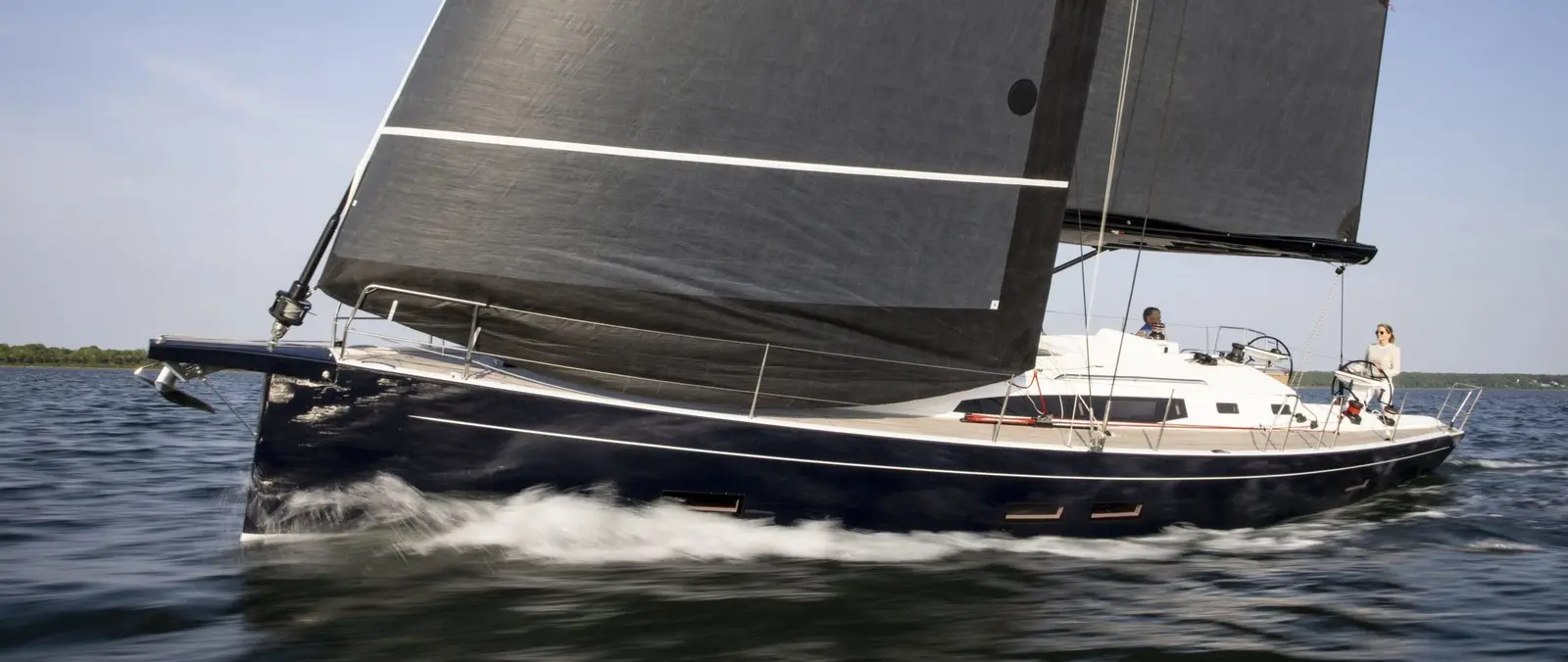
A French builder describes an unusual production challenge
J Composites, the French builder of J/Boats sailing yachts, says it has more demand than its existing workforce can comfortably support. Speaking at its Les Sables d’Olonne yard in October, president and chief executive Didier Le Moal described recruiting enough people as a central challenge after two years of constrained production.
The company employs around sixty people and continues to look for additional staff, according to the yard’s management. That is a different situation from a builder whose order book has weakened, and it illustrates how demand for specialist boats does not necessarily translate into immediate production growth.
For customers, a full order book can be reassuring but may lengthen the period between placing an order and receiving a finished yacht. Buyers should ask for realistic build and commissioning schedules instead of treating strong demand as a promise about a particular delivery date.
Sailing ability determines construction choices
Le Moal argues that J Composites approaches a boat first as a machine intended to sail well, placing hull weight, stability, rig design and structural strength ahead of extensive personalisation. The yard specialises in performance-oriented sailing craft rather than vessels built to accept almost any bespoke arrangement.
The J/45 illustrates the priority, with a keel of around 4.35 tonnes on a yacht displacing approximately ten tonnes. Management says the ballast arrangement and substantial deck equipment are deliberate investments in handling and stability, despite the costs involved.
That emphasis can appeal to owners who value speed and sailing response as part of comfortable passage-making. A lightweight, efficient design may also make longer sailing legs practical, although real performance depends on weather, loading, sail condition and the abilities of the crew.
Standardisation and materials reduce complexity
The yard restricts some options compared with builders offering a much wider list of customised layouts and finishes. Le Moal says the objective is to avoid changes that compromise the sailing characteristics or create manufacturing complexity out of proportion to the customer benefit.
Manufacture uses vacuum-infusion techniques for major structural components, with the dry reinforcement and core placed before resin is drawn into the mould. The process can improve consistency and weight control when carried out correctly, both important considerations for a performance sailboat.
J Composites also uses vinylester resin in the outer skin to support resistance to osmosis. The company has moved towards synthetic deck coverings, saying materials such as Flexiteek have improved sufficiently to replace natural teak in some specifications.
International markets support the J/Boats fleet
Le Moal identifies the United States as the yard’s largest current market and reports growing interest in several European countries and Australia. The builder also supplies active one-design racing fleets, including the popular J/70 and J/99 models.
Orders from sailing clubs and organised racing programmes can generate requirements that differ from those of an individual cruising buyer. Reliability, consistency across several boats and access to replacement parts may matter as much as the comfort offered by a private cabin layout.
The company is preparing to display at least three boats at boot Düsseldorf in January 2027. Interested buyers should confirm the final model line-up with the organiser, and consider the yard’s production limitations when discussing lead times or availability.