
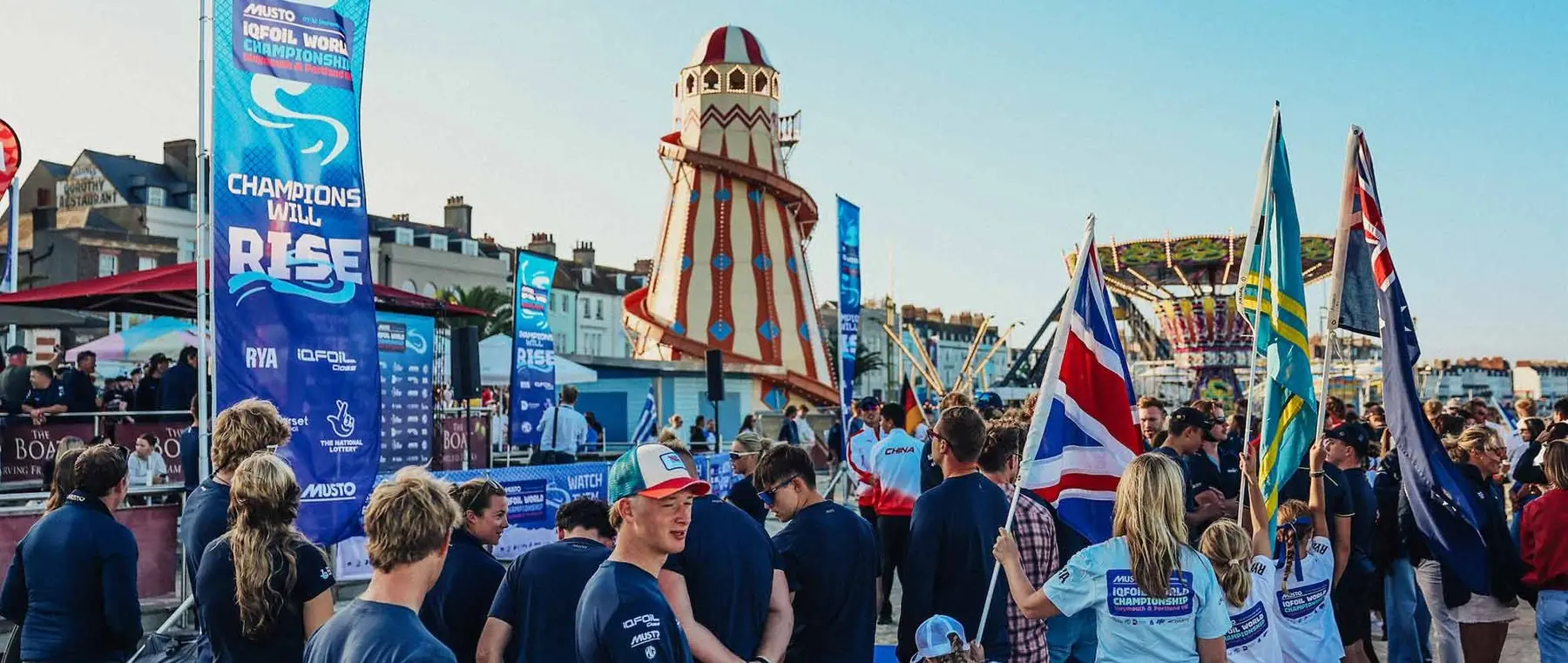
An international parade on the Esplanade
The 2026 Musto iQFOiL World Championships opened in Weymouth on 7 September with a Parade of Nations involving 179 windsurfers representing 39 countries. Athletes walked along the Esplanade before gathering at the Boat Café for the formal ceremony, marking the return of world-class Olympic windsurfing to British waters.
Children from the ELEVATE programme carried national flags at the front of the procession, with The Quarterjacks of Wimborne marching band providing a musical lead. For a sport often associated with individual athletes working against the wind and waves, the procession emphasised the large community needed to stage an international regatta.
The local connection was central
RYA chief executive Sara Sutcliffe spoke about the event as a chance to connect local families with the sport and the wider coastal environment. The ELEVATE participants were placed prominently to show that championship events can also create experiences for young people who might not otherwise attend a sailing competition.
Officials from Portland and Dorset joined representatives of the international class. The speeches recognised organisers, volunteers and other partners who made the race programme possible. Such events depend on shore facilities, safety crews, communications, accommodation and a range of jobs far beyond the elite sailors on the boards.
An Olympic venue with a long sailing legacy
Weymouth and Portland staged the Olympic sailing events in 2012, giving the area a proven infrastructure for international competition. The iQFOiL class represents a newer chapter in that legacy, using foiling windsurf boards capable of travelling rapidly above the surface. Racing for the 2026 championship continued through 12 September.
Spectators did not need to understand every technical detail to appreciate what was happening. The sight of many national teams assembled along the waterfront and then heading to a familiar racing venue created a direct connection between the town and the world championship.
What a host town gains
The opening celebration underlined the appeal of major small-craft events as public festivals as well as competitions. Businesses and local residents can see visitors arriving from different countries, while sailing clubs have an opportunity to connect with athletes and families. The size of the visiting fleet should not be confused with evidence of a specific economic impact without independent research.
The parade was a completed event rather than a future invitation, and the RYA's September account provides the confirmed attendance and programme. Its enduring significance for local boating lies in how it combined high-level competition with young volunteers and a visible community welcome. The ceremony was deliberately placed in the town rather than being confined to an athletes-only race compound. That choice gave passers-by a chance to see the countries represented and showed younger participants that the championship belonged in a community setting as well as on the water.