
Perth's first championship races deliver a close contest
The International Moth World Championship began its main racing on the Swan River in Western Australia on 6 November 2026. Defending champion Enzo Balanger of France won the second and third races of the foiling fleet, while Richard Didham of the United States won the first. The opening results left the two sailors level at the top, according to the day-one account carried by Sail-World and Yachts and Yachting. Such an early tie makes for compelling racing, but it is not the final championship order. More races, different winds and the applicable scoring rules can change positions substantially. The clear news is that two proven competitors emerged immediately from a hard-fought opening day at Mounts Bay Sailing Club.
The Fremantle Doctor arrived late
The famous afternoon breeze known locally as the Fremantle Doctor took time to settle, influencing the day's programme. When stronger, more consistent wind arrived, the foiling Moths were able to complete three reported contests. The low-rider fleet sailed two races during its own available window. That contrast is instructive because foils are sensitive to both pressure and wave conditions. A hydrofoil dinghy needs sufficient speed and balance to lift its hull clear, while a conventional Moth remains supported by the hull in the water. Both require demanding tactical judgement, but neither can simply sail any weather irrespective of fleet safety or race committee decisions. The changing breeze was central to the story, not just a backdrop.
Balanger begins his title defence with two wins
Balanger returned to the class as the reigning world champion, a position that makes every result closely watched. His two wins after the opening race suggest he was able to find consistent speed and execute manoeuvres effectively as conditions developed. Foiling Moth sailors have to coordinate helm, sail trim, body position and foil controls without a supporting crew. A single touchdown or awkward tack can lose several boat lengths. The opening-day victories confirm Balanger's competitiveness but not an inevitable second championship. A long series is judged on accumulated results and compliance with its rules. We have not inferred an equipment advantage or attributed any competitor's place to a specific design setting without direct evidence.
Didham answers with the first race victory
American Richard Didham won the opening foiling race and remained in contention through the next two, leaving him equal with Balanger on the reported early standings. The first race can test preparation in a way that training cannot: sailors must position themselves in a crowded fleet, select the right side of the course and react to unfamiliar shifts. Winning it establishes Didham as a contender, but it does not reveal how the remainder of the series will unfold. The official results should be consulted for complete race-by-race finishing details and later penalties or scoring updates. The difference between a headline lead and a fully verified result sheet matters, especially when racing remains active and the points are close.
Low-rider racing has a different early leader
The championship also welcomes a non-foiling low-rider division. Britain's Paul Hignet won both opening races reported for that group, with Australian Ben Lawrie finishing second in each. Those are separate fleet results and should not be combined with the foiler standings. The low-rider category preserves a history of innovative little boats that rely on the hull rather than hydrofoils to support their weight. Their sailors still search for shifts, adjust rig shape and make rapid tactical choices; the absence of foils does not mean the racing is simple. Hignet's double success is a genuine small-boat sporting development in its own right and deserves a place alongside the headline foiling duel.
Why the Moth is fundamentally a small boat
An International Moth is a single-handed sailing dinghy, built around the aim of extracting performance from a very light platform. It is therefore squarely within Leisure Boat Guide's readership, unlike the large racing yachts that sometimes dominate the same sporting pages. Moth development has produced striking foiling designs, but the underlying story is about what one sailor and a compact hull can achieve. There is no large accommodation space, auxiliary crew or elaborate cruising interior to absorb mistakes. Preparation, rigging, launching and self-rescue are part of the ownership equation. The class is demanding enough that experienced guidance is important before anyone attempts high-performance foil sailing.
How foiling changes the feel of a dinghy
A foil creates lift as water moves over it, raising much of the hull out of the water and reducing the drag associated with a wetted hull. That can produce dramatic speed, but the sailor has to maintain stable flight while steering and adjusting the sail. If speed drops or height becomes unsuitable, the hull may touch down suddenly. Sailors repeatedly practise take-offs and transitions between flight and contact with the water. Close racing makes the problem harder because mark roundings, disturbed wind and traffic require changes of course. A photograph of a boat above the waves is only a moment, not an indication of effortless operation. The early race leaders are navigating a difficult technical and physical task.
Low-riders keep design experimentation visible
Classic Moths remain a laboratory for small-boat ideas. The Australian Moth association describes how legal competitive examples may be built with thin plywood, while other designs make use of different construction methods. That does not guarantee a low cost of ownership everywhere, since sails, fittings, transport and membership still have a price. It does show that the class's creativity did not begin or end with carbon foils. Hull form, structure, sail plan and weight distribution are all practical design decisions. The Perth low-rider fleet gives those choices current relevance rather than presenting them as nostalgia. For amateur builders and club racers, its race results can be every bit as interesting as the faster foiling races.
A river course rewards reading the wind
The Swan River is not a uniform wind tunnel. Differences across the water, shifts, shore effects and gusts can change the best line between marks. A foiling sailor may be tempted to follow the strongest visible pressure but must still account for course geometry and the risk of a slow manoeuvre. Low-riders face their own choices about staying in a favourable lane or changing tack for the next shift. Local familiarity can be useful, but a visiting champion cannot rely on reputation when the breeze moves. This makes Perth a strong test of adaptable boat handling. Results from a single set of conditions are not evidence that one foil or hull design is the fastest in all waters.
A world event depends on more than the racers
Mounts Bay Sailing Club's event information includes notices, sailing instructions, measurement bookings, support-boat registration and results. Those arrangements are essential when scores of small craft must leave the shore, race safely and return in an organised manner. Measurement ensures boats participate under the relevant class rules; safety boats provide support when sailors or equipment get into difficulty. Spectators should follow designated viewing arrangements and stay clear of race areas. The event schedule covers a wider programme in early November, so individual race timings and notices should be checked through the club's current channels. A summary written after one day's racing cannot replace official instructions for competitors.
Why standings may change quickly
The first three foiling results provide a snapshot of pace, not a verdict on the championship. Stronger or lighter breeze, damaged equipment, changes in fleet traffic and possible scoring discards may affect subsequent totals. A sailor who begins behind can recover if later conditions favour different strengths. Conversely, a first-day leader can lose substantial ground after an error or poor start. We have therefore described Balanger and Didham as sharing the opening lead, without predicting a final podium or adding points that have not been independently confirmed. The same caution applies to low-rider results: two wins are an impressive start, but the complete series has yet to be settled.
Lessons for everyday dinghy racing
Most leisure-boat owners will never fly a Moth at championship speed, but the skills on show have broader value. Watching how leaders find clean air at the start, respond to shifts, approach a rounding mark and recover after a mistake can improve thinking in slower dinghies. Sailors can also learn from the low-rider fleet, where close tactical decisions are visible without the complication of hydrofoil flight. That does not mean copying an elite competitor's equipment or sailing beyond personal ability. It means observing principles that apply at ordinary clubs and during informal outings. Small boats make cause and effect unusually immediate, which is one reason Moth racing holds such fascination.
Where to follow the next days
Readers should use the organiser's published results and online noticeboard for the latest standings because weather or official scoring decisions can alter the order after this report. The event page identifies Mounts Bay Sailing Club in Perth as the venue and includes both foiling and low-rider categories. Coverage distributed by Down Under Sail adds a narrative account of the action, but the current official race list remains definitive for competitors. At the end of day one, the clear confirmed picture is two foiling race wins for Balanger, an opening win for Didham and a low-rider double for Hignet. That is enough for a lively beginning without pretending to know the finish.
Sources and photograph credit
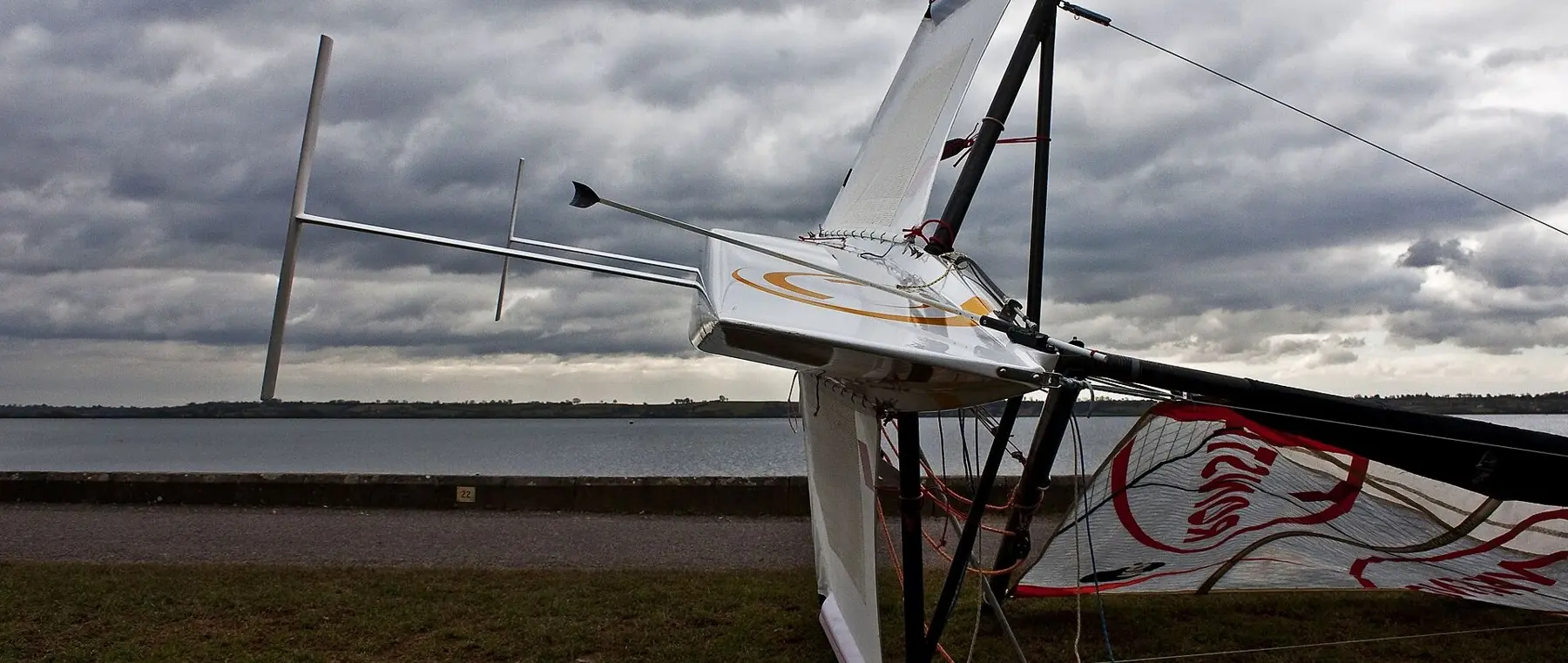
Sources: Mounts Bay Sailing Club 2026 Moth Worlds and results; Down Under Sail day-one race report; Australian Moth Association on low-riders. Photograph: Moth-dinghy.jpg by Mark Robinson, Wikimedia Commons, licensed under CC BY 2.0. An archival Moth photograph, not a picture taken at Perth in 2026; resized for web use.
