
A technology supplier signals expansion
Integrel Solutions has reported a sharp increase in its business and set out plans to work more closely with boatbuilders in 2027. In a statement dated 5 November 2026, the marine power company said turnover had doubled over the previous twelve months and its current order book was worth approximately £7 million. These are company-reported figures, not an independently audited set of accounts made available in the announcement. The company links the growth to interest in hybrid propulsion and integrated onboard power generation. For readers of Leisure Boat Guide, the important development is not a claim that small boats have all adopted this system, but that suppliers are seeking more integrated ways to generate and manage power aboard recreational craft.
The difference between power generation and propulsion
On a boat, an electrical system may run navigation instruments, lighting, refrigeration, pumps and communications even when the vessel is propelled by an entirely separate engine. Hybrid arrangements can change that relationship by adding electric propulsion and larger electrical storage. Integrel markets an E-Power generation platform and an E-Drive hybrid propulsion solution, and the company specifically says its E-Power technology has been extended into powerboat applications. Those categories are related but not identical. A product intended to deliver hotel-load electricity does not automatically replace the main propulsion engine, and an electric-drive package has its own installation and controls. Readers should distinguish the actual systems rather than using the broad label 'hybrid' for every electrical component.
A £7m order book requires careful interpretation
An order book represents business recorded by the supplier, according to its own accounting and commercial practices. It is not the same as sales delivered, cash collected or profit earned. Integrel gives the approximate figure of £7 million, but the statement does not break it down by vessel length, customer country, equipment family or expected shipment month. It would be misleading to turn the number into a count of small boats, or to assume all orders are installed already. The doubling of turnover is likewise a comparison made by the company without full financial statements in the release. Nonetheless, the size and direction of the figures explain why Integrel is discussing additional staff, facilities and manufacturing relationships.
The planned Boatbuilder Programme
Integrel intends to launch a Boatbuilder Programme during 2027. The company describes closer technical and commercial support for existing and new boatbuilding partners, with the aim of making integration of its technology easier. Such cooperation can matter because electrical generation is not a plug-in accessory when it interacts with the propulsion engine, batteries, ventilation, cooling and the boat's distribution system. Builders benefit from assessing space, wiring routes and component access early in design rather than modifying a finished boat. The programme is a future plan, not a service already available at every dealer. Details such as eligibility, pricing and specific participating manufacturers remain to be confirmed through later company information.
A new chief commercial officer
The company has appointed Nick Holland as chief commercial officer and says he has more than sixteen years' experience at Navico Group. The appointment is intended to help strengthen relationships with boatbuilders and original equipment manufacturers. A commercial executive can influence partnerships, technical support arrangements and market access, but the announcement does not establish that any named boatbuilder has committed to the new 2027 programme. Nor is it evidence of guaranteed production volumes. The useful point is that Integrel is investing in people alongside product development. Dealers and installers will be watching whether the company provides clearer integration documentation, training and reliable support as it extends its relationships.
Hayle and Hythe facility plans
Integrel says it plans to expand operations at Hayle in Cornwall and invest further in research and development facilities at Hythe near Southampton. Hayle is the company's headquarters and operational base, while the Hythe work is associated with electric motor development. The published statement describes intended investment but does not specify floor area, completion dates or a costed construction programme. Those details should not be invented. The two-site approach nevertheless indicates attention to both capacity and technical development. For the end user, the eventual measure of success will be the availability of supported systems and parts, not simply the square metres of a future facility.
Why onboard electrical demand is changing
Even relatively modest leisure boats carry more electrical devices than earlier generations: multifunction navigation displays, mobile-phone charging, fishfinders, pumps, audio equipment and cabin accessories on suitable craft. Running those systems through a poorly planned battery setup can cause low-voltage problems and uncertainty over starting reserves. Advanced onboard generation and power management may address some needs, but suitability depends on engine architecture, battery chemistry, charging capacity and voyage pattern. Integrel's technology is one approach in a wider field, not a universal recommendation. Before investing in new hardware, owners should calculate actual energy consumption and consider whether simpler maintenance, battery management or solar provision would resolve the problem at lower cost.
The under-12-metre relevance has limits
Integrel's announcement covers marine original equipment manufacturers and powerboat applications broadly. It does not specify how many installations have been completed in leisure craft below twelve metres. That matters to this publication because a technology can be important to small-boat design without being available or sensible for every compact hull. Some five-metre outboard boats have neither the engine configuration nor the onboard space required for a sophisticated hybrid system. Larger inboard-driven dayboats or compact cruising craft may offer different possibilities, subject to technical validation. We are covering a marine technology supplier whose development may affect smaller boats, not claiming an announced 4.98-metre model carries Integrel equipment.
Safety and installation before marketing labels
Electrical upgrades must be planned around cable sizing, protective devices, charging controls, battery placement, ventilation and safe access. A generator or alternator output claim by itself does not show whether a complete system is suitable for a particular vessel. The manufacturer or a qualified marine installer needs to evaluate the engine, usage pattern, compatibility and relevant standards. Adding storage capacity without reviewing how the batteries are charged can create new problems rather than resolving existing ones. It is also important to retain the ability to isolate circuits during a fault. The appeal of integrated power should therefore be judged by documented installation requirements, real service arrangements and measured performance rather than a broad sustainability slogan.
Comparing alternatives fairly
An owner considering more electrical capacity can ask three questions. What loads must run while the engine is off? How long do those loads need to operate? What reliable charging opportunities exist between trips? The answers help distinguish a modest battery-and-charger upgrade from a more elaborate generation arrangement. Equipment mass, cost, warranty terms, accessible servicing and future replacement batteries all contribute to the decision. Fuel savings may be possible in some applications, but no general percentage should be asserted without a measured test on a comparable boat. Integrel's financial announcement contains no universal payback calculation. Buyers and boatbuilders need a case-specific assessment rather than relying on claims that all hybrid arrangements behave alike.
Why boatbuilder integration matters
When an electrical system is designed into a new boat, components can be positioned for cooling, service access and sensible cable runs. The builder can also plan the distribution board, documentation and load calculations around the equipment. Retrofitting after delivery may involve additional labour and compromises, particularly in narrow engine compartments and crowded lockers. That explains the logic of a programme aimed at original equipment manufacturers. It does not eliminate the importance of independent installation checks or owners' manuals. A boatbuilder's approval is not a substitute for a clear warranty and safe operation instructions. The 2027 proposal will be judged on whether it helps builders deliver well documented, maintainable systems.
What remains unknown
Integrel has not published a schedule naming all builders that will join the proposed programme, a list of under-twelve-metre vessels fitted with E-Drive, or a complete cost and efficiency comparison for specific recreational models. Those omissions are not allegations; they are simply the boundaries of what the company statement establishes. It would also be wrong to treat a £7 million order book as net profit or to describe planned facility work as completed. The confirmed news is significant enough: company-reported turnover growth, a stated order book, a senior appointment, first E-Drive installations and an intended 2027 initiative. Future claims should be tied to identifiable boats, measured performance and published technical evidence.
The small-boat questions to watch in 2027
For Leisure Boat Guide readers, the most useful future updates will be practical. Which builders announce systems on named boats with confirmed lengths? What equipment is included? How much does it weigh, how is it maintained and what autonomy is demonstrated under repeatable conditions? Can an owner isolate faulty equipment and retain essential power? Where are trained installers and replacement parts available? Those questions convert a broad business announcement into purchasing information. Integrel's growth plans suggest that integrated power will remain a competitive area of marine equipment development, but adoption in the compact leisure sector must be reported model by model. The company's November statement provides a starting point, not the final verdict.
Sources and photograph credit
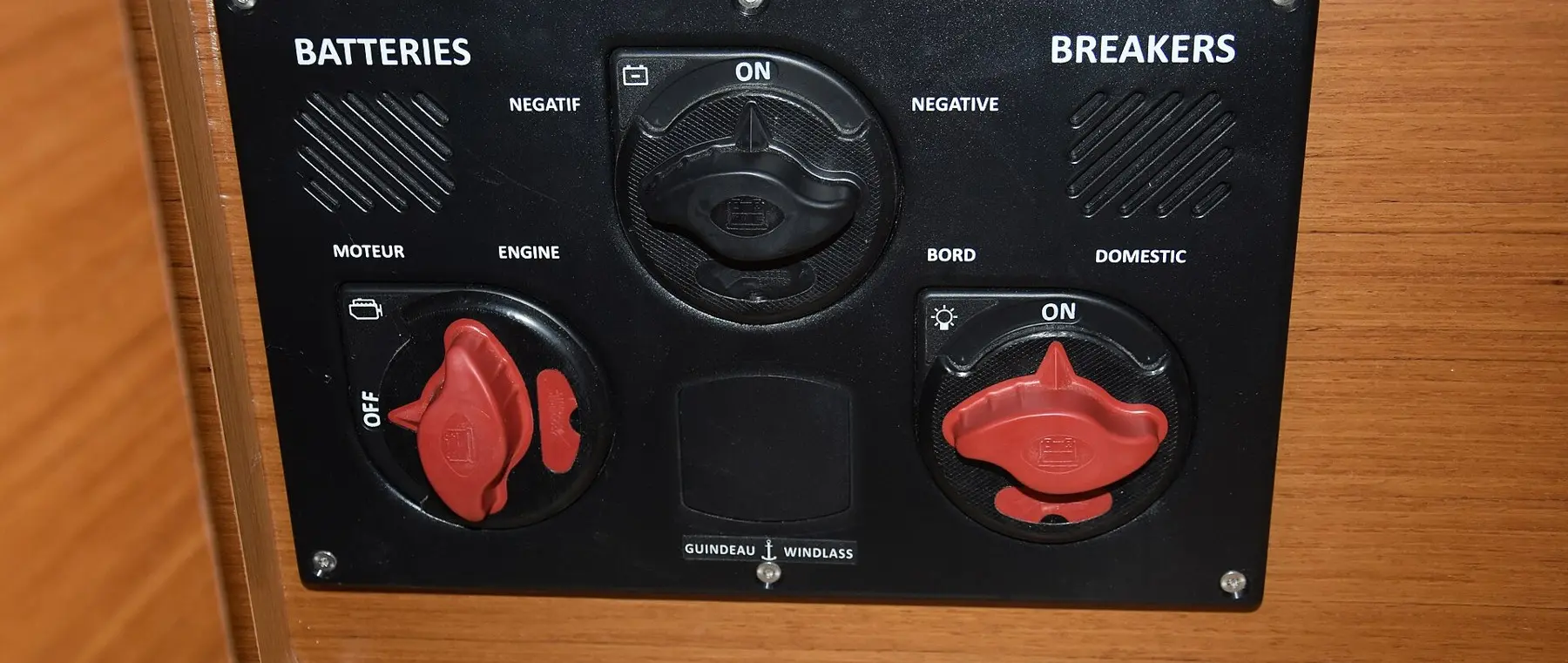
Source: Integrel Solutions, 5 November 2026 company statement; Integrel product information. Photograph: Main battery switches in a sailboat.jpg by PaterMcFly, Wikimedia Commons, CC BY 4.0. This is an archival illustration of marine battery isolation switches, not Integrel equipment, its new hybrid system or a newly announced installation. Resized for web use.
