
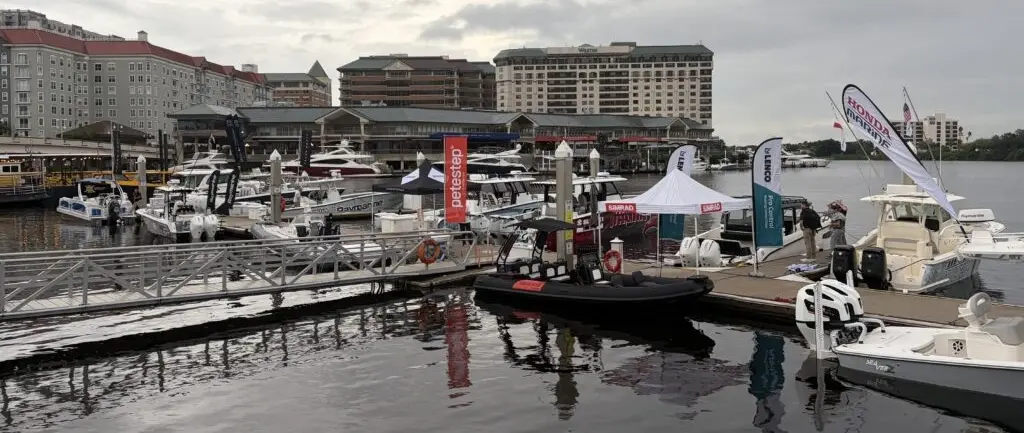
Tampa show closes with access and affordability in focus
The International BoatBuilders’ Exhibition and Conference, held in Tampa from 6 to 8 October 2026, has closed with a strong message for the recreational marine industry: technical progress matters, but boats must remain within reach of customers. A 12 October post-show report describes a busy gathering of manufacturers and suppliers despite persistent Florida rain and outlines a programme that ranged from product awards to practical discussions about the next generation of boat buyers.
At the opening industry breakfast, National Marine Manufacturers Association president and chief executive Frank Hugelmeyer spoke about a changing market and the need for the trade to stay relevant and affordable. That is a particularly important issue for the small-boat sector, where a decision to buy often competes with other family leisure expenses and where modest increases in purchase, insurance or storage costs can make ownership feel impractical.
The conference did not announce a single new rule that will immediately reduce boat prices, and the closing commentary was not a statistical sales report. Instead it offers a useful reading of industry priorities after several days in which builders, equipment makers and dealers were able to compare their approaches in person.
Innovation is useful only when it reaches the helm
Judges considered 100 entries for the 2026 IBEX Innovation Awards and selected twelve winners along with three honourable mentions. These covered a spread of practical marine systems, including electrical distribution, electronics, deck fittings, navigation lighting, air-conditioning protection and hull-related products rather than one dominant technological theme.
For owners of craft below twelve metres, the connection to daily boating is often more direct than the publicity surrounding an award suggests. Easier power distribution can simplify wiring; a well-designed VHF installation can save space at a crowded console; and an improved deck fitting might reduce the routine maintenance that keeps a family boat out of service.
The list included the Garmin Signal VHF 400, Scanstrut’s removable wireless-powered navigation light, Egis Mobile Electric’s modular power distribution device and Flow Marine Systems’ protection against condensate problems in marine HVAC installations. Leisure Boat Guide has reported separately on several of these products, so this review concentrates on the collective implications rather than presenting their awards as new announcements.
An award recognises design or innovation at a particular point in time. It should not be interpreted as an independent lifetime reliability trial or proof that a device is suitable for every vessel. Owners and installers still need to check the manufacturer’s approved configuration, electrical loads, environmental sealing, service arrangements and local regulatory requirements before deciding what to fit.
Many small-boat buyers also face a shortage of straightforward information about what the equipment on a modern helm actually does. Training material and understandable dealer demonstrations can help an inexperienced owner distinguish between automatic safety functions, advisory alarms and systems that only work when properly configured. The distinction matters because a feature intended to support situational awareness can become a distraction when it is oversold or treated as a substitute for a proper lookout.
The manufacturing side is equally important. A new electrical controller, navigation light or deck product should be designed to work in the conditions encountered by owners who cannot employ a professional crew to maintain it daily. Clear instructions, accessible replacement parts and installations that respect the space limitations of a seven- or ten-metre boat are therefore as relevant to adoption as the novelty recognised by an exhibition judging panel.
Young professionals and long-term industry skills
One of the event’s less visible developments was its Emerging Marine Leaders programme, which provided sessions on professional development and the realities of workplace relationships. The October report describes conversations about generational misunderstandings, relationship-building and finding a professional identity at the beginning of a career.
Such discussions matter to leisure boaters because the ownership experience depends on people as much as machinery. A technically advanced boat can still be frustrating if there are insufficient engineers, electronics installers, marine electricians and competent local service specialists to troubleshoot it in a reasonable time.
IBEX’s approach brings another reminder that manufacturers and distributors do not work in isolation. Boatbuilders need reliable suppliers, suppliers need feedback from working boatyards, and dealers must translate technical promises into realistic customer explanations. A small-boat purchaser may meet this entire network only through the quality of a single local dealer’s preparation and after-sales support.
What to watch after the show
The practical test now moves from exhibition floor to workshops, marinas and boats already in use. Products that looked compelling under display lighting must prove that they fit available dashboard space, can withstand exposure, connect to existing networks and can be supported several years after purchase.
Affordability is also a lifetime question rather than a showroom number. An inexpensive accessory with complicated installation or little parts support may cost more over five years than a better-supported option, while a useful safety device can still offer value even when it does not make the boat look more luxurious.
For the recreational trade, the 2026 show’s emphasis on accessibility suggests that getting new people onto the water remains a strategic concern alongside sophisticated equipment development. More approachable entry routes, honest explanations of running costs and dependable service networks may do as much for future participation as any individual innovation.
The 12 October post-show account provides a retrospective rather than news of another boat launch or an announced change in legislation. What emerges is a marine sector seeking to balance the excitement of technical progress with the ordinary, sometimes overlooked requirements of keeping leisure boating straightforward, safe and enjoyable.