
Small-boat fleets gather at Aberdeen Boat Club
The Sailing Federation of Hong Kong, China has scheduled a two-day regatta for the 29er, ILCA 4 and ILCA 6 classes at Aberdeen Boat Club's Middle Island venue on 28 and 29 November 2026. The federation's official event notice gives the opening-day registration window as 08:30–09:00, followed by a 09:00 briefing and a first warning signal planned for 10:55. Sunday's programme also lists a 09:00 briefing and 10:55 first warning signal, with prizegiving intended as soon as practicable after racing. These are scheduled times, not confirmation that every race has started or concluded. The event is directly relevant to Leisure Boat Guide because all three classes are sailed in small boats by crews who must manage their own rigging, starting tactics and performance. It is an opportunity to consider how different dinghy designs support competitive sailing and club-level development.
The 29er offers two-person high-performance racing
The 29er is a skiff designed for a helm and crew, and its appeal comes from the coordination required to keep a light, responsive boat moving in varied conditions. Crew communication matters from the moment of launch: hoists, tacks, gybes and balance all demand timely action. A race that appears to be decided by speed can quickly change when one boat handles a manoeuvre more cleanly than another. The class is widely used in youth and development sailing, although the federation's notice should be consulted for the exact eligibility of this particular regatta. On Hong Kong's waters, competitors may have to manage shifting wind, traffic in designated areas and the challenges of sailing a fast dinghy near a busy urban coastline. Safety cover and the authorised race area remain the responsibility of the event's appointed officials, and visiting crews should follow the published instructions rather than assumptions from previous events.
ILCA 4 and ILCA 6 are distinct single-handed classes
The programme also includes ILCA 4 and ILCA 6, which use the well-established ILCA dinghy platform with different sail and rig arrangements. A single-handed sailor must control steering, sail trim, tactics and boat balance without a separate crew. That makes the class a demanding training ground in which physical preparation, observation and decision-making interact closely. The different rigs allow sailing programmes to match athletes with suitable equipment and progression pathways, but sailors still need to understand the precise class rules for the event they enter. It would be incorrect to assume that every competitor is the same age or that all participants have identical experience. The club's programme and national selection policies, where applicable, are separate documents. What matters on the racecourse is fair comparison within each designated class and consistent application of the race-management instructions.
Middle Island as a race base
Aberdeen Boat Club's Middle Island facility provides the base named by the sailing federation. It is a familiar setting for dinghy activity, but visitors should not assume that the water can be treated like an isolated lake. A Hong Kong race venue involves tide, wind, boat traffic and the normal complexities of operating around an active harbour. Crews must plan their arrival at the launching area, organise equipment safely and allow time for rigging before the official briefing. A crowded dinghy park can become difficult to manage when many boats try to launch simultaneously, making careful preparation a practical advantage. Officials may communicate course details or changes through the official notice board. The event entry provides the venue, but safe navigation and any restricted areas must be checked using current local instructions. Spectators should use designated viewing spaces and avoid interfering with launches or official support boats.
Registration and published entry fees
The HKSF event page lists entry fees of HK$650 for the single-handed ILCA 4 and ILCA 6 classes and HK$800 for the double-handed 29er. It also notes that late entries, where accepted, attract an additional premium equivalent to the original entry fee. The advertised registration deadline was Friday, 13 November 2026. Those details are useful context for understanding how an organised dinghy event is run, but they should not be interpreted as confirmation that late entry is now available or that every listed class has a particular number of starters. Anyone needing a current participation ruling must refer to the organising authority and official notice board. The presence of a fee does not by itself establish any level of prize money. Club sailing often depends on volunteers, safety crews and race-management facilities, and the budget supports many ordinary tasks that spectators may never notice.
Sailing instructions control the event
The federation links to a formal Notice of Race and an official event notice board. These documents are more authoritative for operational details than an informal message or a summary on social media. Competitors should confirm the current rules, the required equipment, any approved changes, protest procedures and the times at which information is issued. The first warning signal is part of the planned schedule; weather or safety decisions may alter it. Conditions on the water can force a race committee to postpone, shorten or abandon racing even when the regatta was advertised well in advance. A report published before verified results should not declare a winner or describe a completed race sequence. Leisure Boat Guide is therefore treating the weekend as a scheduled and developing event. Results and changes should be checked against the official scoring and notice systems after the relevant session rather than guessed from the number of boats seen afloat.
Why a two-day format changes racing strategy
A short regatta can reward consistency as much as a single exceptional race. Competitors must recover from mistakes, adapt to weather changes and keep their equipment in working order across successive sessions. A two-day programme also allows conditions to vary substantially, so boats and crews may be tested in different wind strengths or sea states. However, the precise number of races, discard arrangements and scoring systems are governed by the event's official documents and should not be invented. Good preparation includes checking control lines and sails before the first start, carrying suitable clothing and ensuring nutrition and hydration between races. Sailors need a practical process for identifying damage early and obtaining repairs within class rules. For new entrants, the experience of learning an organised starting sequence and following race committee signals is as important as finishing position.
Coaching and support should reinforce independence
Coaches and support volunteers can help younger or less experienced sailors prepare, but the athlete still needs to make decisions on the boat within the applicable racing rules. A coach may help with rig setup, weather briefing or post-race analysis, while race management remains independent. The event notice should be checked for any restrictions on coach boats, communication and the areas in which support vessels may operate. On a venue with limited launching space, unnecessary support traffic can create congestion and potential hazards. A responsible programme teaches sailors how to assess their own equipment, read wind shifts and manage a safe return to shore. These are skills that remain useful long after a championship. Small-boat racing develops practical judgement under pressure and can provide a progression route into recreational cruising, coaching or more advanced competitive sailing.
The equipment burden is modest but not trivial
Dinghy racing avoids the complexity of a large motor cruiser, but it still requires disciplined maintenance. Sailors must inspect standing and running rigging, control systems, hull fittings, foils and flotation arrangements. A worn line or damaged tiller connection can end a day's competition and create additional risks when conditions deteriorate. Boats moved on road trailers also need secure support and inspection after transportation. A two-person 29er team must agree on how equipment is checked and packed; a single-handed ILCA sailor carries those responsibilities alone. For families supporting young racers, the true cost of participation includes travel, storage, maintenance and suitable protective clothing, not just the entry fee. Clubs can reduce barriers by providing training, shared equipment or coordinated logistics where arrangements permit. The appeal of the sport is strongest when newcomers can take part without being overwhelmed by the expense and complexity of the equipment.
Weather and the limits of any schedule
The published programme states when racing is intended to begin, not what conditions sailors will encounter. Local wind and tide forecasts must be reviewed close to the event, and the race committee may adjust the schedule when necessary. In a responsive skiff, changes in wind strength can alter the balance between speed and safe control very quickly. Single-handed sailors face different physical demands, but both ILCA fleets need to prepare for sustained effort and the possibility of capsize. Competitors should follow instructions on personal flotation, appropriate clothing and emergency procedures. Families should not infer that an event remains safe for a particular sailor merely because racing continues for others. Individual skill, equipment condition and the advice of coaches and officials all matter. Sensible withdrawal is part of good seamanship when conditions exceed a sailor's ability or the boat's reliable operating limits.
Hong Kong's wider dinghy pathway
The city's sailing clubs, national federation and class associations provide opportunities for sailors to develop from introductory training into organised racing. The 29er and ILCA fleets occupy different positions within that pathway, allowing participants to build teamwork or single-handed technique according to their interests and capabilities. A federation-run event can provide common procedures and a recognised setting in which sailors from different clubs meet. Its value extends beyond naming a podium. Young sailors gain experience of race management, controlled starts, equipment checks and interactions with teams outside their usual training group. Parents and volunteers also learn how a larger regatta functions. Such events help sustain the long-term health of dinghy sailing by giving participants practical milestones and a reason to keep learning. They should be reported accurately without inflating expected attendance into an official result.
What the published photographs actually depict
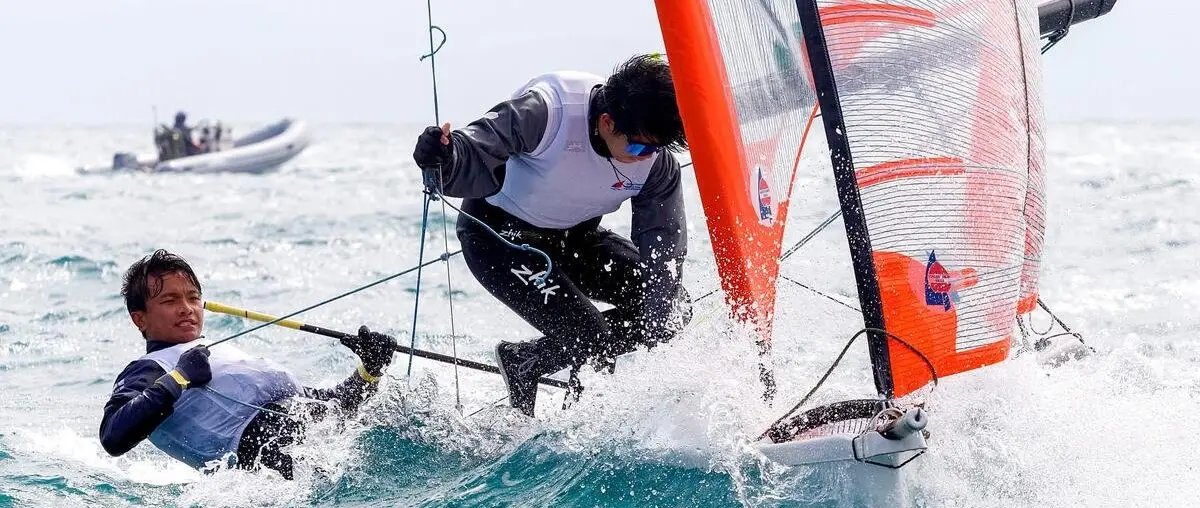
The lead image for this report comes from the International 29er Class Association's coverage of the 2026 Asian Championships in Hong Kong. It is an authentic earlier-event photograph showing the type of small, fast two-person dinghy included in the HKSF programme. It is not claimed to depict the racing taking place on 28 or 29 November, and no sailor in that image is identified as a participant or winner at the current regatta. That separation is essential to responsible event coverage. An archive image can be useful when it illustrates genuine equipment and is correctly credited, but presenting it as a fresh race photograph would mislead readers. The event's own official page provides the schedule and venue, while class-organiser archives provide context for the boats involved. Race-day photographs and outcomes require separate verification.
The confirmed weekend programme
The official federation announcement establishes the regatta dates, Aberdeen Boat Club's Middle Island base, the classes, the Saturday registration and briefing window, Sunday briefing, intended first warning signals and the published entry details. Its links to the Notice of Race and race-management notice board provide the appropriate route for changes. None of those sources currently justifies inventing final results, the complete list of entrants or precise sailing conditions. The distinction between scheduled and completed activity is especially important on the morning of the first day. If racing is delayed or the programme revised, the official notices take priority over an earlier editorial summary. Leisure Boat Guide will preserve the original advertised programme as a dated record and treat any later results as a separate confirmed update. That approach avoids turning a straightforward news announcement into unsupported claims.
The value of organised small-boat competition
A well-run dinghy regatta offers something that even an expensive recreational boat cannot replace: repeated opportunities to practise judgement, teamwork and handling in comparable equipment. The Hong Kong weekend brings together three different classes under one event structure, while placing the responsibility for safe, fair racing with organisers, officials and competitors. For an interested newcomer, watching an ILCA start or a 29er manoeuvre may be a useful introduction to the sport's technical and tactical demands. For established racers, careful preparation and attention to the official notice board will be more valuable than predictions made before the fleets sail. The confirmed schedule provides an appropriate basis for today's reporting. The eventual sporting story should be written only when the federation or another authorised scoring source publishes reliable outcomes, and until then the meaningful news is that organised racing is planned for a full weekend at Middle Island.
Primary reporting and image credit
Primary manufacturer and organiser source(s): https://sailing.org.hk/event/hksf-regatta-2026-29er-ilca-4-ilca-6/. © International 29er Class Association / official event photographer. Archive photograph from the 2026 Asian Championships, not the 28–29 November HKSF event. Image is used only for correctly attributed factual editorial coverage and never represented as open-licence stock photography.