
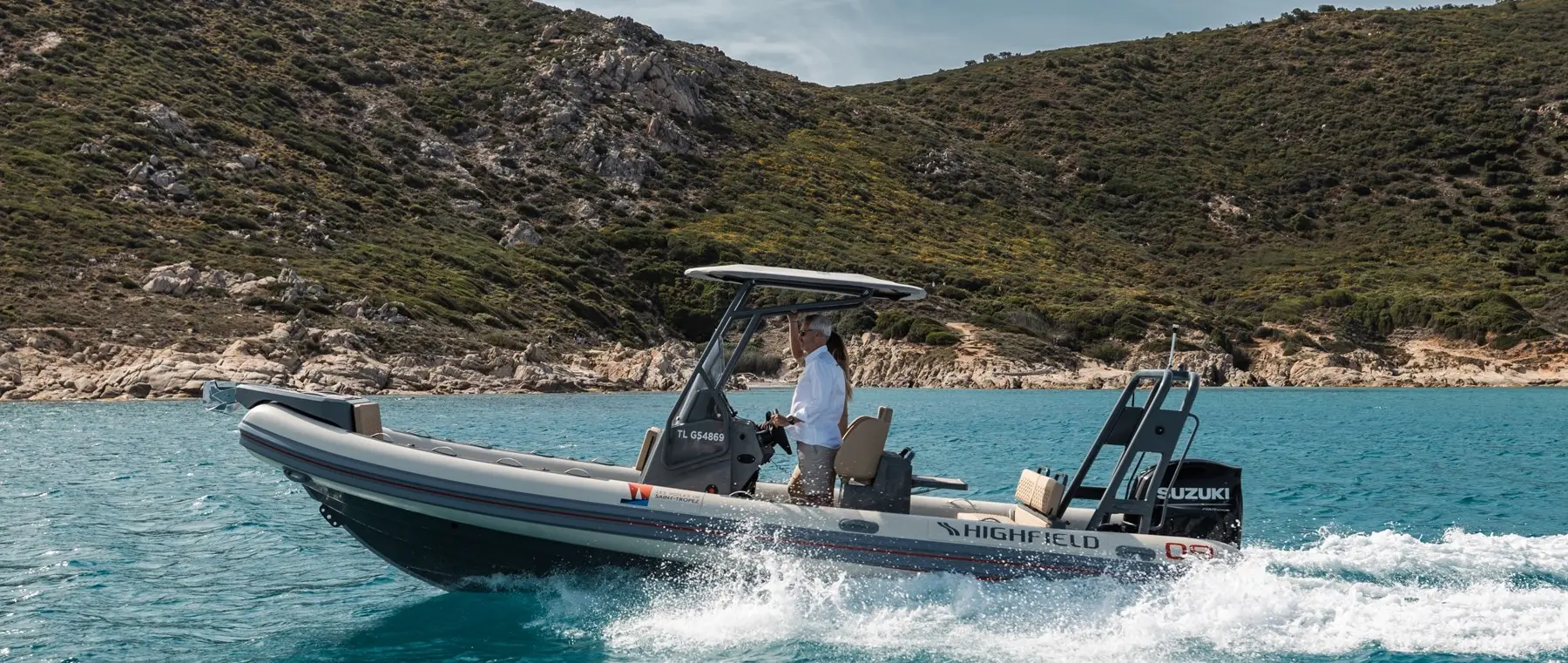
The hull is the central story
The Highfield Sport 700 is a 6.99-metre recreational RIB with a notably deep-V hull. The builder quotes 26 degrees of deadrise, aiming for a comfortable passage through coastal chop when conditions permit. That angle is an important design characteristic, but it is not a promise of an easy ride at every speed or in every sea.
An aluminium hull separates the Sport 700 from many fibreglass alternatives in the family-RIB market. Highfield uses high-tensile material with protective finishing beneath its leisure-oriented seating layout. Owners still need to follow correct galvanic protection, cleaning and maintenance practices, especially with long-term saltwater berthing.
The published beam is 2.93 metres, a generous figure for a boat under seven metres long. More width can help passengers spread out when stopped at anchor. It also means that people hoping to tow the boat must check their local road rules and any permits before choosing a storage plan.
A cockpit that switches tasks
Highfield supplies an aft seat, a sundeck and a reboarding platform with ladder among the model's standard features. Their shared purpose is to let owners move between cruising, swimming and relaxing with few alterations to the boat. That matters on an ordinary family day when activities tend to change repeatedly.
Self-draining deck construction and integrated transom supports suit a craft frequently exposed to spray and wet equipment. A supplied cooler bag adds picnic convenience without needing a full galley. The Sport 700 is clearly intended to serve as a day's base on the water rather than overnight accommodation.
The option list includes shade solutions, a T-top and a windlass. A windlass can make repeated anchoring less strenuous, especially with a small crew, but correct ground tackle and electrical installation remain essential. Every convenience should be weighed against available deck space and the way the boat is used.
Reading the specification carefully
The builder quotes a 250-horsepower maximum engine rating and a 285-litre fuel tank for the Sport 700. Those numbers put the model in a capable leisure-boating class without defining its actual distance between refuelling stops. Engine choice, loading, speed, wind and reserve allowance determine practical range.
Highfield lists a maximum of fourteen people and category C certification. The certified maximum is not necessarily the comfortable number for a family trip with bags, safety equipment and food. Skippers need to account for conditions and the amount of safe seating before taking guests aboard.
The current boat-only weight is approximately 1,024 kilograms, but an operating package adds an outboard, fuel, battery, equipment and possibly a trailer. Marina hoist capacity and towing limits must be determined from the delivered configuration, not a bare-hull figure. A careful weight estimate is part of safe ownership.
Who should consider it
The Sport 700 suits boaters who want the open-air flexibility of a RIB combined with the robustness of an aluminium hull. A permanent cabin is intentionally absent, leaving more room for people and activities. Those seeking protected overnight space should consider a different type of craft.
Before ordering, owners should inspect the bow access, boarding ladder, handholds and cockpit seats with the family who will use them. Check whether a fitted T-top affects garage clearance and whether the boat's overall beam fits a normal berth. These practical constraints can matter more than brochure performance.
Highfield's technical specification makes the Sport 700 easy to compare with similar RIBs, but a demonstration in local conditions remains the decisive test. A successful configuration should let the skipper travel, anchor, swim and return without constantly reorganising the deck.