
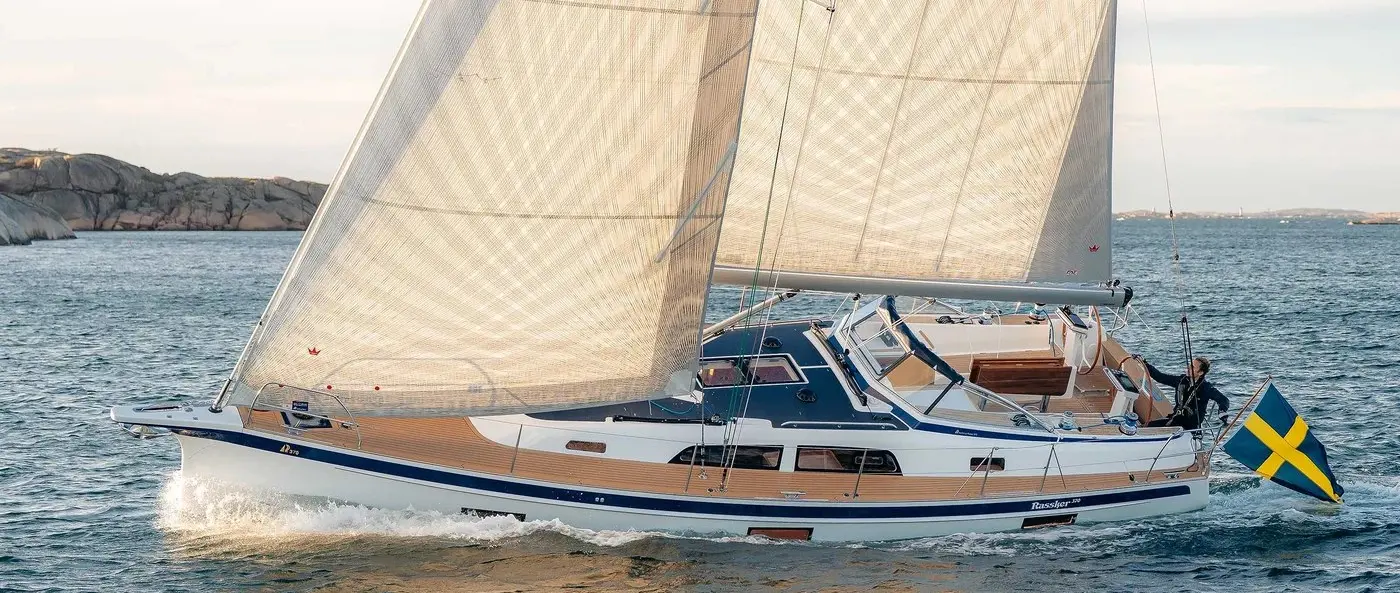
Three days of manufacturer support ahead of the Atlantic crossing
Hallberg-Rassy has confirmed free support for owners preparing to enter the Atlantic Rally for Cruisers in November 2026. The Swedish yachtbuilder says its team will be available on Gran Canaria from Wednesday 18 to Friday 20 November to inspect key onboard systems and offer advice before participating boats depart. The service is aimed specifically at Hallberg-Rassy yachts rather than the general fleet, and owners should confirm the arrangements directly with the company.
The announcement places a familiar aspect of ownership into focus: a builder's relationship with a yacht may continue years after delivery. An ocean passage gives that relationship particular value because the vessel will be operating far from normal home-port support. Hallberg-Rassy has not published a detailed checklist for each boat or promised comprehensive certification, so the offer should be understood as an additional inspection and conversation, not a substitute for professional preparation.
The ARC route from Gran Canaria to St Lucia
The Atlantic Rally for Cruisers is organised around a passage from Las Palmas de Gran Canaria to St Lucia in the Caribbean. It attracts cruising yachts and crews seeking an organised framework for an offshore voyage while retaining the fundamental responsibilities of individual skippers. Preparing in Gran Canaria allows teams to resolve equipment questions before leaving the island's repair and supply facilities behind.
Conditions at sea remain subject to weather, vessel performance and the decisions made by a qualified skipper. Even an experienced crew can encounter equipment failures, fatigue or unexpected delays on a prolonged passage. Owners who are planning to join the ARC should work from official rally information for their entry, including current dates and requirements. The builder's support window is a specific three-day opportunity and should not be mistaken for a guarantee of assistance throughout the crossing.
What an onboard inspection can contribute
Hallberg-Rassy describes the service as inspection of key systems and helpful advice, without listing a model-by-model test procedure. In general, a bluewater preparation review may prompt questions about steering, electrical systems, charging, engine operation, water supply and equipment accessibility. Those are examples of common offshore considerations, not a published statement that every component will be inspected by Hallberg-Rassy's visiting team.
A focused check can be useful because owners are often familiar with their boats in coastal use yet have less experience diagnosing failures while continuously offshore. An experienced technician may recognise signs of wear or configuration choices that deserve attention. However, a quick inspection cannot detect every hidden fault or guarantee a safe voyage. Crews should preserve records of previous service, address outstanding defects and seek specialist contractors for tasks beyond the scope of an informal review.
Steering and rigging deserve advance attention
A long ocean passage places a sustained demand on steering equipment, sails and rigging. A skipper should understand the manufacturer's maintenance recommendations for the installed equipment and the implications of any prior damage. The steering system may include hydraulic or mechanical components, while rigging arrangements differ substantially between boats. Detailed surveys and any necessary repairs must be performed by suitably qualified people rather than deferred to the last days before departure.
An offshore boat should also have a crew familiar with the practical use of the equipment already aboard. Knowing the location of spares, understanding how to access a component and rehearsing appropriate emergency procedures are distinct from having the component serviced. Hallberg-Rassy's offer could help owners identify questions for the right specialists. It does not remove the need to follow approved instructions, safety requirements and the judgment of the vessel's captain.
Electrical power and navigation reliability
Modern cruising yachts depend heavily on electrical systems for navigation, communications, lighting and everyday accommodation. Managing energy during a passage requires an understanding of charging sources, battery condition, electrical loads and the consequences if one subsystem fails. Owners should consider the specific equipment actually installed, rather than rely on generic assumptions about a model or a previous owner's arrangements.
Redundancy is useful only when equipment is maintained and the crew knows how to use it. A spare electronic device, for example, may still depend on the same charging source or data connection as the primary system. Navigation planning should therefore involve suitable backups and familiarity with their limits. A builder's inspection can raise awareness of vulnerabilities, but the voyage plan and final equipment choices remain the skipper's responsibility.
Engine and fuel arrangements before departure
Although the ARC is a sailing event, auxiliary propulsion can be important when entering harbours, negotiating restricted manoeuvring areas or responding to changing conditions. Normal pre-passage preparation includes reviewing machinery maintenance against the engine maker's guidance and checking for outstanding faults. The appropriate tasks depend on the particular engine, fuel system and installation; no universal maintenance schedule can cover every Hallberg-Rassy produced over several decades.
Owners may benefit from identifying specialist assistance early enough to obtain parts or complete repairs before the rally. A late discovery can be particularly disruptive when a boat has already committed to an entry date and crew travel. Hallberg-Rassy's presence on Gran Canaria offers an additional source of product familiarity. It should not be described as an engine manufacturer's warranty inspection unless the builder explicitly confirms that status for a particular vessel.
Crew preparation matters alongside equipment
Hardware is only one part of successful ocean cruising. Watchkeeping routines, sleep arrangements, weather interpretation, medical preparation and communications procedures all require attention. Experienced owners often use the days before departure to discuss decisions that would otherwise be harder to make while tired offshore. Conversations with technicians and other cruising crews can be valuable, but advice must still be assessed against the circumstances of the individual yacht.
Everyone aboard should understand their responsibilities and the limits of their experience. A good preparation process accounts for changing weather, the possibility of diversion and how a problem will be reported or managed. Hallberg-Rassy's announcement does not say its team will assess crew competency or approve passage plans. Owners should therefore treat the manufacturer's technical offer as one contribution to a larger framework of training, official rally requirements and responsible seamanship.
A long-running Hallberg-Rassy tradition
Hallberg-Rassy describes the 2026 support programme as the twenty-sixth consecutive year of its ARC assistance. The builder has maintained an association with offshore cruising, and its yachts have participated in organised transatlantic events for many years. It also notes that Hallberg-Rassy yachts have won categories in both the ARC and ARC+ in recent editions, indicating that some owners combine practical cruising aims with competitive participation.
A rally category result is not a blanket performance claim for every boat in a builder's range. Success depends on factors such as the entry, route, conditions, skipper and crew. The more relevant significance of the support initiative is continuity. By returning to Gran Canaria, the company offers an opportunity for owners of different generations of its boats to raise technical questions in a setting directly connected with the demands of an approaching crossing.
How owners can use the Gran Canaria window
The builder's announced visit runs from 18 to 20 November 2026, making timing important for yachts with maintenance work outstanding. Owners who expect to use the service should contact Hallberg-Rassy through its official channels to establish any scheduling or eligibility conditions. The published statement does not specify whether an appointment is compulsory, how many vessels can be seen, or whether spare parts are included, so those details should not be invented.
It is sensible to prepare a concise history of significant issues, changes made to onboard systems and any recurring symptoms before a technical discussion. This helps explain a problem without relying entirely on memory. A crew may also want to distinguish work that can be completed in harbour from tasks better handled by a specialised yard. The service is an opportunity to resolve uncertainties, not a reason to leave essential preparation until the last minute.
Manufacturer assistance is an added layer, not a clearance certificate
Hallberg-Rassy's free support offer is relevant to owners because it brings manufacturer knowledge to a location where technical questions become urgent. The announcement gives a specific place, period and purpose, all of which can be acted upon before the ARC departure. The support can complement routine servicing and a skipper's own planning, particularly when the boat includes equipment or arrangements familiar to the builder's team.
The central message for would-be Atlantic cruisers is to distinguish a helpful inspection from a formal safety approval. A boat must be prepared for its actual route, crew and equipment, and its skipper retains responsibility for deciding whether conditions permit departure. The Hallberg-Rassy visit offers one more opportunity to ask questions before heading west. Owners should confirm details with the company and follow the rally's current official information.
Source: Hallberg-Rassy.