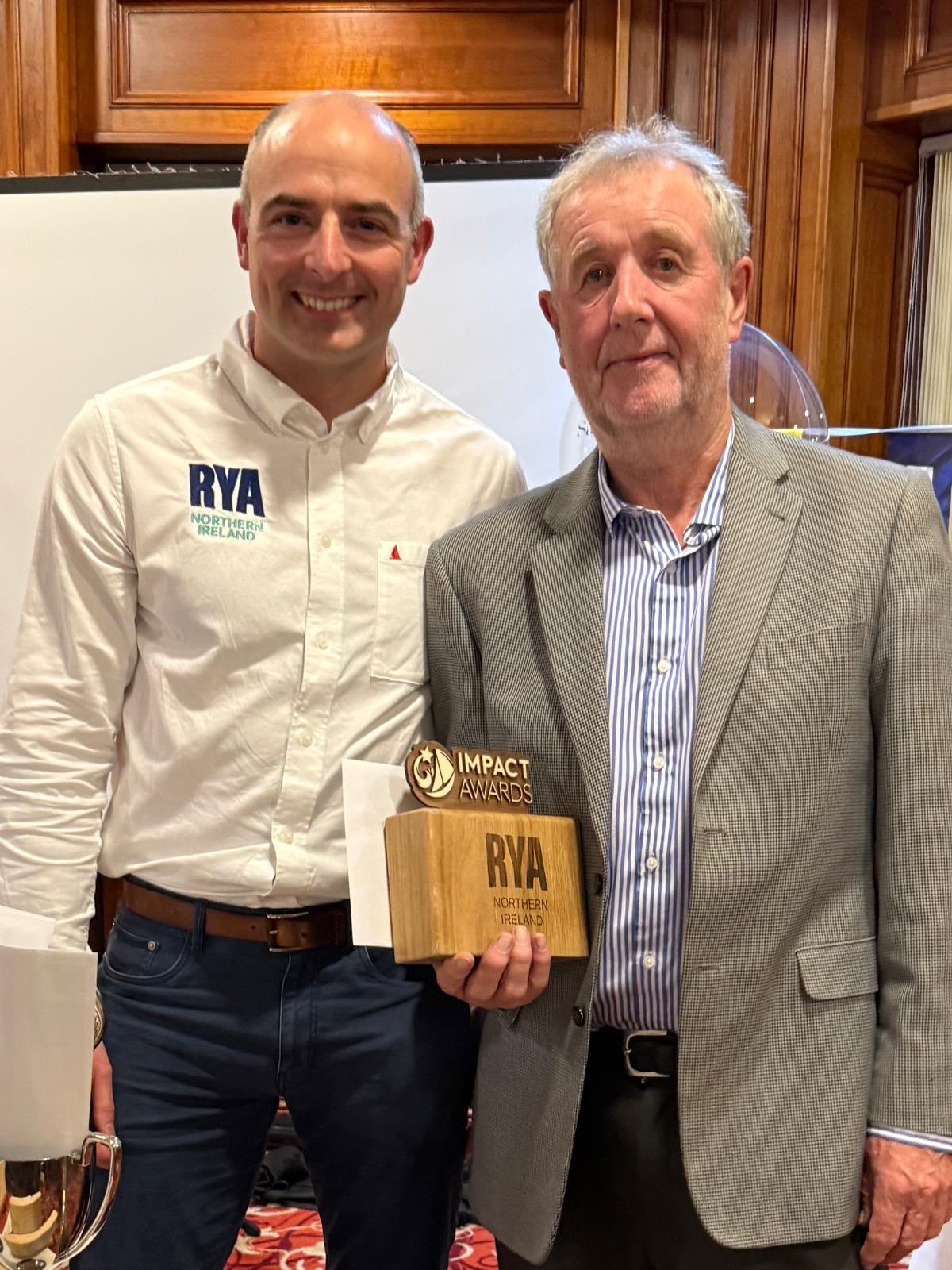
Strangford Sailing Club volunteer Gerry Reilly has received an RYA Northern Ireland Impact Award in recognition of more than fifty years of service to sailing and his contribution to introducing young people to the sport. The Royal Yachting Association announced the award on 10 November 2026, describing someone who has filled a remarkable range of club roles while continuing to help beginners learn to sail. According to the RYA, he has taught more than 200 young people through the club, St Joseph's Primary School and training programmes. The award offers an insight into the work that keeps small-boat sailing accessible in Northern Ireland. It is not the result of a single race or a commercial boat launch, but the accumulated influence of someone who has been involved with the same community for decades.
More than half a century with a sailing club
The official RYA account says Gerry has volunteered at Strangford Sailing Club and in the wider community for more than fifty years without an extended break. Such continuity is unusual enough to deserve attention, especially in an activity that depends on finding people prepared to help maintain equipment, supervise sessions and pass on their knowledge. Clubs can change as families move, boats are replaced and new generations join. A person who remains involved over many decades may preserve local knowledge about the water, the organisation and the practical demands of running events. The RYA's recognition is for this sustained contribution rather than any claim that all changes in the club's membership can be attributed to one person.
A range of responsibilities
The RYA lists Gerry's club roles as including Commodore, President, Trustee, Bosun, competitor, Senior Instructor, race officer and mentor. These are distinct kinds of responsibility. A Commodore may help lead an organisation, a bosun is associated with maintaining boats and facilities, and a race officer is involved in the running of competitive events. An instructor or mentor supports people as they learn new skills. Few people combine all these contributions across a long period. The official award report also draws attention to less visible work, including helping with repairs, maintenance and groundskeeping. That detail is important because sustaining a sailing venue requires more than organising the annual programme or showing up for races.
The impact on young sailors
The RYA credits Gerry with helping more than 200 young people learn to sail through the club, the local primary school and associated training activities. That is an attributed figure from the governing body's award story, not an independently audited count produced by this publication. Its importance is that the contribution went beyond the boundaries of established club members. School activity can introduce children who might otherwise have little direct exposure to sailing or boating. First experiences need to be safe, welcoming and appropriate to the child's ability. When handled well, they can build confidence and allow a young person to discover an interest that continues later in life. The award is a recognition of the volunteer work behind those opportunities.
St Joseph's Primary School connection
The mention of St Joseph's Primary School illustrates how a local sailing club can develop links with educational organisations. A school partnership may offer a structured introduction to watersports, but it also creates clear responsibilities around supervision, transport, safeguarding and training. An award recognising past educational activities does not establish that any particular school session is currently open for booking, nor does it mean that every pupil is expected to become a competitive sailor. The wider value can include learning to work with others, understanding safety equipment and gaining a new perspective on the local marine environment. The RYA's account relates those outcomes to Gerry's interest in helping young sailors gain confidence and a lasting affection for the sport.
Racing, instruction and club culture
The range of activities described in the award article suggests an understanding of sailing that includes both competition and recreation. Some sailors may be attracted by racing, where decisions about wind shifts, boat speed and mark-rounding can become absorbing. Others may prefer an evening sail or a short outing with family. A club capable of supporting both benefits from volunteers who do not equate participation only with winning trophies. Instruction and race management still require formal processes and suitable competence. Gerry's service does not make those safeguards less important. It highlights how practical experience can support a positive club culture when combined with the requirements of the governing body and the individual venue.
Strangford Lough as a boating setting
Strangford Lough is an important sailing location in Northern Ireland, with varied water conditions and a strong connection to local communities. The area is also environmentally sensitive, making responsible recreation essential. An award article is not a navigation guide, however. Conditions on a tidal lough are not uniform, and sailors should consult current local information, forecasts and charts before any trip. The significance of the location for this story is social: sailing takes place through a network of clubs, families and people prepared to teach and volunteer. Gerry's recognition is a reminder that this network cannot be understood simply by counting registered boats or looking at event results.
Recognising work that does not make headlines
Major sporting competitions and new boat designs tend to receive coverage because their results are easily visible. The ongoing work inside a sailing club is often less obvious. A working boat must be repaired, equipment checked, facilities kept usable and junior events prepared. The official RYA story specifically mentions that Gerry has been willing to carry out ordinary jobs as well as take on formal leadership. That is not incidental colour. A club with sufficient volunteers can organise affordable opportunities for newcomers, while one that depends on a shrinking group may struggle to sustain them. Recognising the full range of contributions can encourage a more realistic discussion of how the recreational boating community operates.
A volunteer can also be a mentor
Mentoring involves more than demonstrating the correct movement of a tiller. It may mean listening when a youngster is uncertain, helping someone recover after a mistake or explaining how to approach a racing decision without losing enjoyment. The RYA's award description makes clear that Gerry has taken an interest in developing people as well as maintaining the club itself. That kind of commitment is important for young participants whose ambitions and confidence may change over time. It can also support future volunteers who gain experience and eventually help others. The official source does not provide a formal measurement of these longer-term effects, so they should be understood as the wider significance of a contribution described by the governing body.
Where the award fits in RYA Northern Ireland
The RYA Northern Ireland Impact Awards aim to recognise contributions to clubs and participation beyond ordinary expectations. They are part of a broader attempt to celebrate people who keep recreational boating inclusive, welcoming and sustainable. Gerry's recognition follows more than five decades of club activity, but the award should not be confused with an official safety certification or a new qualification. It acknowledges service and the positive effect described in the nomination. The governing body's account identifies many aspects of that service, including roles in racing and training, without suggesting that the award creates a new club membership benefit or changes the rules under which boats may be used on the lough.
What other clubs can learn
The news raises questions that may be familiar at clubs throughout the United Kingdom and Ireland. How can experienced members pass skills to people who have not grown up around boats? Can junior programmes survive if key volunteers become unavailable? Do organisations value practical repair work as much as high-profile committee roles? Are new members supported in finding a useful way to help? There is no single answer that suits every club. The official story is about one volunteer, not a universal management model. Nevertheless, it provides an example of why long-term commitment, mentorship and a willingness to do ordinary work can matter greatly to the availability of small-boat sailing.
Safety alongside enthusiasm
A positive volunteer culture and good safety procedures are complementary rather than competing priorities. Clubs providing training or racing should ensure that instructors and officials work within the arrangements appropriate to the venue and their qualifications. Sailors require suitable buoyancy equipment, weather assessments and an understanding of the particular water in which they operate. A person with extensive experience may contribute useful judgment, but no one should be expected to manage activities without a clear operating framework. The RYA announcement recognises Gerry's responsibilities and experience; it does not replace the current safety requirements for any event, lesson or vessel. The distinction is important when presenting examples of grassroots participation.
The verified photograph and source
The accompanying lead photograph is a genuine RYA Northern Ireland image provided with its official November 2026 Impact Award announcement. It is not an AI-generated illustration, a photograph of a different event or a claim about an activity due to occur in the future. The original image rights remain with the RYA and the photographer as applicable. The story's central factual details—more than fifty years of volunteering, club leadership roles and the more-than-200 young people taught—are drawn from the governing body's account, which explicitly identifies Gerry Reilly and Strangford Sailing Club. These details are reported with their source attribution rather than presented as conclusions from a separate investigation.
Why the award matters
For someone learning to sail, the most influential person may not be a professional competitor or a boat designer. It may be the member who helps rig a dinghy, gives a clear instruction and welcomes them back after a difficult session. Gerry Reilly's Impact Award recognises more than half a century of such contributions at Strangford Sailing Club. The accumulated effect includes hundreds of young people introduced to sailing, alongside the many less visible tasks involved in keeping the organisation operating. That is significant news for the small-boat community because participation is sustained through people and relationships as well as equipment. The recognition tells a wider story about how local sailing survives and renews itself between generations.
Sources and image attribution
Primary reported announcement: https://www.rya.org.uk/news/gerry-reilly-receives-rya-northern-ireland-impact-award/.
Official photographic provenance: https://www.rya.org.uk/news/gerry-reilly-receives-rya-northern-ireland-impact-award/. Image supplied by the originating organisation, credited in the photograph title; original copyright remains with the rights holder. Official image file. The photographs are documentary or clearly labelled archival illustrations, not evidence of events that have yet to happen.