
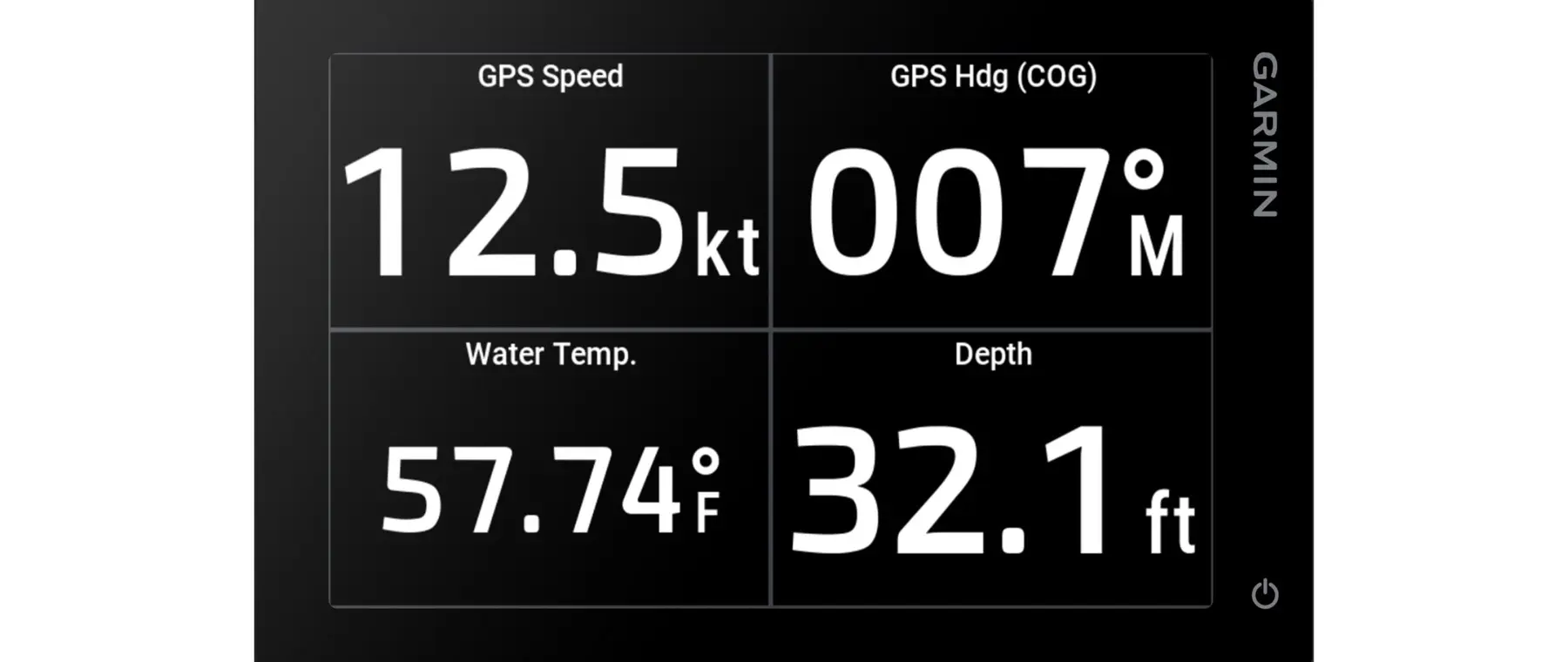
A compact display for core boat data
The GMI 40 is designed to present information such as wind, speed, depth, heading, engine and fuel data in a dedicated instrument format. Garmin says the 4.3-inch colour LCD uses an edge-to-edge glass touchscreen, giving smaller helms a modern alternative to older button-operated instrument displays.
On sub-12-metre leisure boats, dashboard space is often limited because navigation, engine monitoring, switching and communications all compete for the same area. A small dedicated display can therefore be useful where owners want essential information visible continuously while leaving a larger chartplotter free for navigation.
NMEA 2000 integration broadens its role
Garmin has built the GMI 40 around NMEA 2000 networking, allowing compatible sensors and systems to feed data into the display through a common onboard network. That can include information from wind sensors, depth transducers, engines, fuel systems and other supported equipment.
Compatibility still depends on the equipment already installed on the boat. Owners considering an upgrade should confirm which existing sensors and engine gateways will communicate correctly before replacing an older instrument or planning a new helm layout.
Touchscreen layouts can be tailored to the boat
The instrument supports customizable data pages so users can choose the information that matters most for their normal boating. A sailing installation may prioritise wind and heading, while a powered leisure boat may place engine, fuel and depth information more prominently.
That flexibility is especially useful on small craft because the same physical display can serve different operating priorities without adding more hardware. The most effective layout will depend on visibility from the helm, typical operating conditions and how much information the skipper wants available at a glance.
What it means for leisure-boat owners
The GMI 40 is an incremental electronics update rather than a new navigation system, but compact instruments can make a meaningful difference to helm organisation. Dedicated live data can reduce the need to keep changing pages on the main chartplotter during routine cruising.
Owners should still treat electronic instrumentation as an aid rather than a substitute for direct observation and sound seamanship. Installation quality, network configuration and sensor accuracy remain just as important as the display itself.
Official sources: www.garmin.com.