
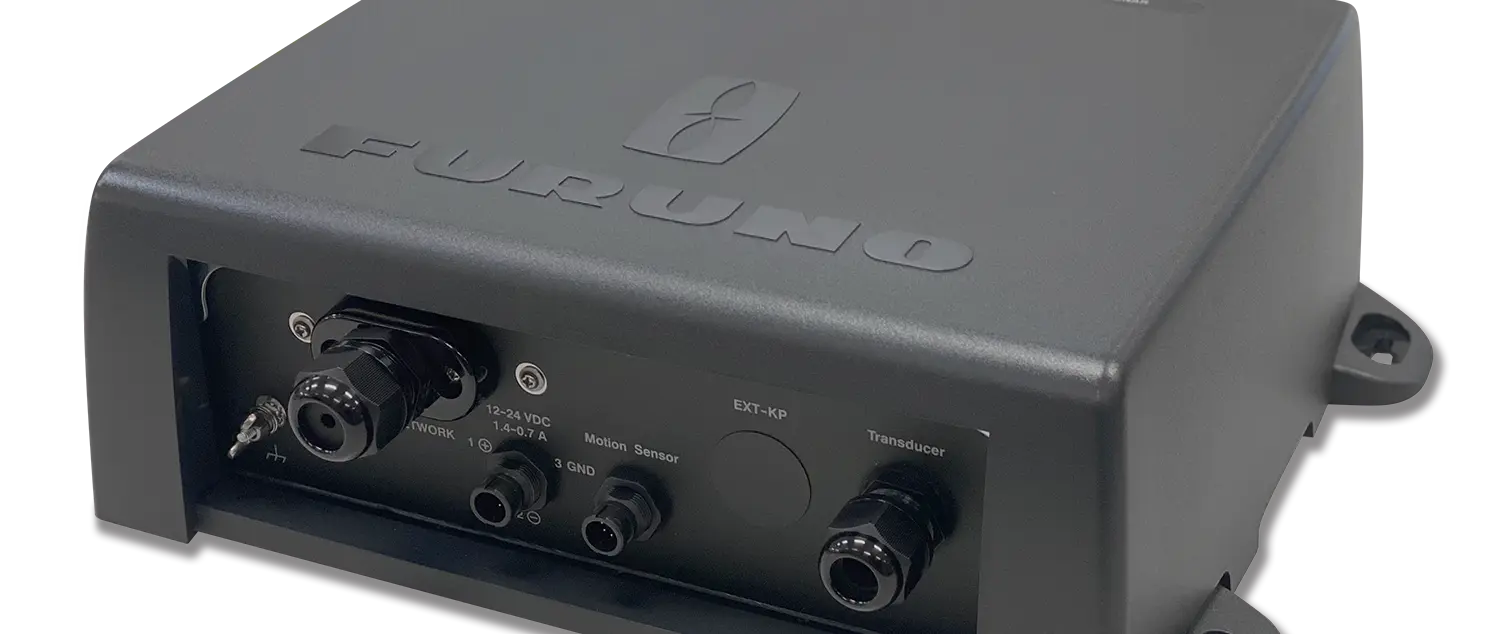
NMEA recognition for a multibeam fishfinder
The 2026 NMEA awards list names Furuno's DFF3D as the winning Fishfinder Product of Excellence. The vote comes from NMEA members and certified installers, placing the award within the professional marine-electronics community rather than a consumer popularity poll.
The DFF3D differs from a conventional single-beam sounder by covering a much wider slice of water beneath the boat. That can help anglers understand not only depth but also where fish and structure sit to port and starboard.
A 120-degree view broadens the search area
Furuno specifies a 165kHz operating frequency and a 120-degree cross-section view. The company lists detection to around 300 metres directly below the boat and approximately 200 metres of side coverage, subject to installation and water conditions.
Wide coverage can be especially useful when looking for reefs, wrecks, bait schools or changes in bottom structure. Actual performance depends heavily on the transducer, hull installation, water depth, speed and local acoustic conditions.
Three-dimensional history helps interpret the seabed
The system can build a three-dimensional sounder history on compatible NavNet displays, giving users a visual record of seabed shape and fish locations. Triple-beam and side-scan views provide additional ways to interpret the same underwater area.
Those display modes can reduce the guesswork involved in positioning a fishing boat over a target. They do not replace good seamanship, chart awareness or safe depth margins when operating near shoals and underwater hazards.
The black-box format suits integrated helm systems
The DFF3D is a network sounder rather than a standalone screen, so it is intended to become part of an existing Furuno electronics package. That can suit boats where the owner wants sonar information on the same multifunction displays already used for charts and radar.
Before an upgrade, owners should confirm display compatibility, available network ports, transducer location and through-hull or transom-mount requirements. Installation quality is particularly important because poor transducer placement can undermine the performance of an otherwise capable sonar.
Official sources: www.nmea.org; www.furunousa.com.