
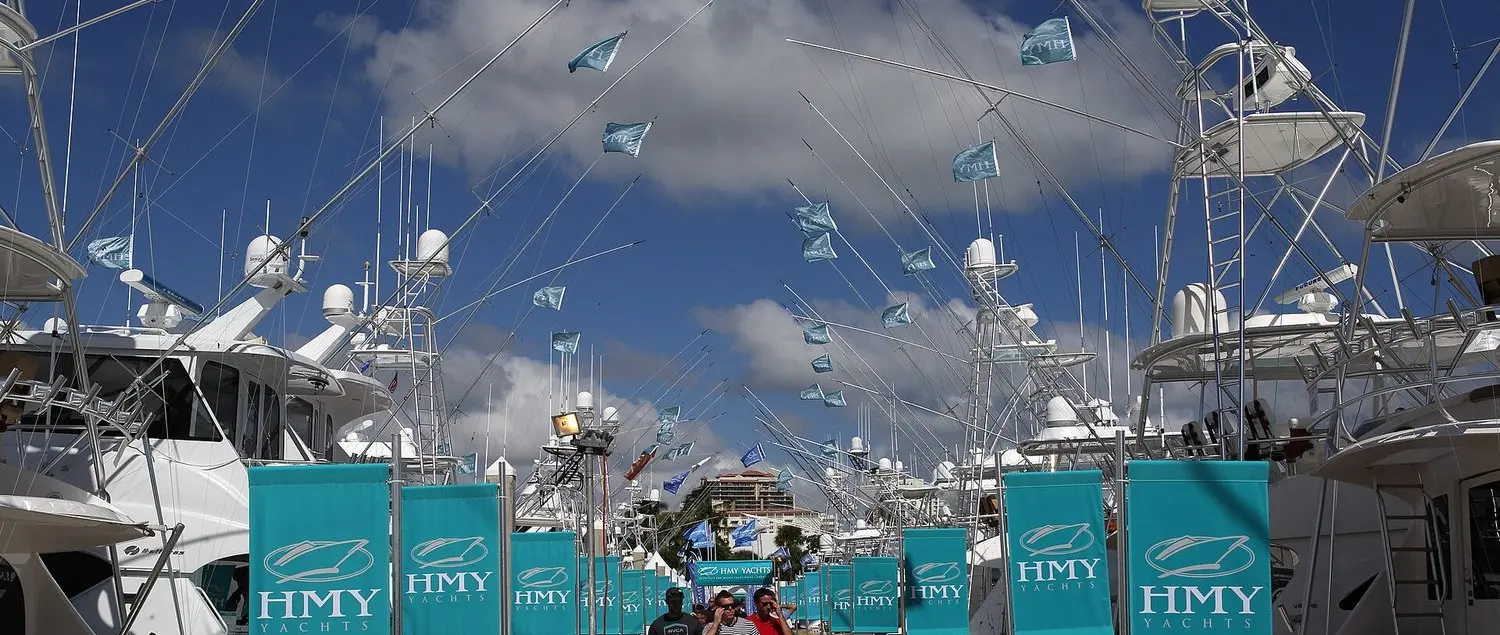
Fort Lauderdale concludes its 67th boat show
The 2026 Fort Lauderdale International Boat Show concluded after five days, running from 28 October through 1 November across six South Florida locations. The organisers report a display exceeding 1,300 vessels, more than 1,000 exhibitors from over 50 countries and upwards of 50 boat debuts. The scale makes FLIBS important to the entire recreational marine industry, although its collection includes many large yachts and professional services outside Leisure Boat Guide's core under-twelve-metre audience.
The closing report, published on 4 November, offers an opportunity to separate genuine small-boat developments from the event's more spectacular superyacht coverage. Boats at a major trade show range from lightweight tenders to offshore sports craft, and they differ substantially in practical ownership. An impressive headline vessel count is a measure of exhibition scale, not proof that all boats sold, that smaller designs dominated or that retail demand increased by a particular percentage.
The overall exhibition occupied a large waterfront
FLIBS spread across nearly ninety acres of exhibition space and multiple locations, with boats shown afloat and on land. This format allows visitors to compare different types of craft and supporting equipment, from propulsion and navigation systems to safety and docking products. For people buying smaller boats, the ability to see several competing designs in one visit can be valuable, particularly when deciding among open dayboats, cabin boats and sport-fishing models.
A boat show is still a demonstration environment. The lighting, crowd, staging and fitted options can make a hull look different from one seen in normal service. Buyers should ask whether an exhibit is a prototype, a production boat or a heavily equipped display model. An attractive show arrangement may include costly upgrades that do not come with the standard specification. Comparing accurate lists of equipment is more useful than relying on the appearance of a particular boat under exhibition conditions.
More than fifty debuts require scrutiny
Organisers report more than 50 new boat debuts at the 2026 edition. That figure includes vessels of many sizes, and some debuts were regional premieres rather than entirely new designs. A model shown in Fort Lauderdale for the first time may already have appeared elsewhere or been announced months earlier. Clear reporting should distinguish a world premiere from a US debut, a new equipment package and the first public showing of an existing series.
Leisure Boat Guide has already covered individual compact craft from the show, so the closing summary should not repeat those launch descriptions as though each were newly discovered. Instead, the larger report indicates the range of products competing for attention. Consumers can use the show as a starting point for narrowing a shortlist and then obtain current specifications directly from each builder or authorised dealer.
Under-twelve-metre designs remain important
While coverage often concentrates on the largest yachts, compact recreational vessels remain central to how many people enter boating. Small sports boats, weekend cruisers and outboard-powered fishing craft can be used by owners with very different budgets and experience levels. A larger international show gives their manufacturers an opportunity to meet suppliers, dealers and prospective customers in the same venue as luxury brands.
An owner shopping for a six-to-ten-metre boat should consider features relevant to everyday use: secure boarding, practical storage, visibility from the helm, realistic engine access and safe movement around the cockpit. A dramatic launch presentation cannot replace such checks. There is also a difference between a boat's nominal length and the overall space required for a berth or trailer, particularly when motors, platforms and other fittings are included.
Navigation and equipment support are part of the show
International marine exhibitions do more than display hulls. Electronics, propulsion, audio and safety suppliers use them to demonstrate equipment intended for new builds and refits. On smaller craft, a good installation can significantly improve usability, but there is little room for poorly located displays or excessive electrical demand. Owners should examine how a supplier's proposed system would be fitted to their boat, not simply whether it performed well on a static demonstration console.
Installation costs, software compatibility, warranty support and ongoing maintenance can change the value of an apparent bargain. A product that requires a much larger battery system or extensive console rebuilding may be unsuitable for an older small craft. The show provides a place to ask technical questions, but an installer must still assess the actual vessel and applicable requirements before recommending work.
The awards largely favoured larger boats
The event included FOX Sports Best of Show recognition, with the Azimut Grande 30M taking the over-60-foot award and the Valhalla 46 Sport Yacht selected in the under-60-foot category. Both winning boats exceed the usual length of a compact family runabout, and the over-60-foot category is entirely outside the LBG focus. It would be misleading to label the Valhalla winner a sub-twelve-metre product simply because its class is named under sixty feet.
Large-boat awards can still signal design interests across the industry, such as cockpit versatility and electronics integration, but those ideas need to be adapted to much smaller hulls. The cost, maintenance and operating conditions are different. Smaller boat buyers should evaluate specific production models in their size range rather than assume an award for a large craft tells them which compact boat to purchase.
Sales claims need to retain their source
Some exhibitors reported strong sales during the event. The organisers' closing account, for example, includes a claim that Viking Yachts sold 17 Viking 70 Convertibles on the first day. Such statements describe activity reported by an individual manufacturer; they are not a verified total for all exhibitors. More importantly, the example involves vessels far beyond twelve metres, so it cannot demonstrate that demand for trailer boats or dinghies was equally strong.
Boat-show orders can take various forms and may be subject to further specifications or contractual steps. A headline about impressive transactions does not automatically indicate completed deliveries, paid invoices or broader market growth. Owners and dealers should treat sales reports as individual business evidence while comparing them with registrations and financial releases where those data are available.
The visitor experience continues to evolve
The 2026 show introduced or expanded several experiences beyond traditional boat viewing, including helicopter access and tours, seminars and waterfront activities. This reflects an effort to attract wider audiences and make the event accessible to visitors interested in boating lifestyles as well as boat purchases. A visitor who is new to boating may learn about destinations, products and training before feeling ready to buy a vessel.
Entertainment does not eliminate the need for accurate technical advice. A first-time boat buyer may be more interested in knowing whether a craft can be stored locally or launched at a familiar ramp than in seeing a large yacht's interior. Show organisers and exhibitors can make their events more useful by providing clear information about ownership, training and support for smaller models.
The event will return in October 2027
The organisers have announced the next Fort Lauderdale International Boat Show for 27–31 October 2027 and plan to introduce RefitX on the first two days. Refit services cover a broad range of technical and maintenance work, although not every product shown will be suitable for smaller recreational boats. The confirmed dates make it possible for exhibitors and buyers to plan ahead, but the precise 2027 model list has not yet been established.
Owners contemplating a substantial refit should prepare a realistic project outline before visiting any trade show. The boat's age, structural condition, electrical system and expected use influence whether new equipment is appropriate. A specialised exhibition can help find potential suppliers, but actual work requires surveys, quotations and safe installation plans. This is especially important for compact vessels with limited space and carrying capacity.
What the closing report means for small boats
The verified news is that FLIBS 2026 ended with more than 1,300 exhibited vessels, over a thousand exhibitors and more than fifty debuts, while also announcing its October 2027 return. Those figures establish the exhibition's international reach but cannot alone describe the commercial health of every segment. For owners under twelve metres, the event is best understood as a broad marketplace for boats, equipment, technical advice and dealer relationships.
Leisure Boat Guide will continue to concentrate on relevant compact models rather than give the largest yachts undue prominence in its newsroom. An international show can introduce useful technology and highlight trends, but the final decision about a small leisure boat still rests on dimensions, capability, budget, service access and practical use. The show's closing statistics provide context; the individual craft and its suitability provide the substance.
Sources: Boating Industry's post-event report, 4 November 2026 and Fort Lauderdale International Boat Show organisers. Photograph: historical Fort Lauderdale boat-show exhibition by PiersonGrantPR, Wikimedia Commons, CC BY-SA 4.0, resized. Historical context photograph; not an image from the 2026 event.
