
Commission decision remains on hold
Florida's Fish and Wildlife Conservation Commission is still seeking public feedback on proposed cownose ray harvest regulations after Commissioners postponed a decision at their August 2026 meeting. The agency's current Saltwater Public Comments and Marine Fisheries Workshops pages say staff will prepare additional recommendations and that new workshops will be scheduled before the next proposed final-rule hearing. No fresh workshop date is stated on those pages.
That unresolved status matters to recreational fishers and boat owners. A proposed bag limit can circulate for months without becoming legally binding, particularly when Commissioners seek more evidence or input. As of the currently posted notice, the public is being invited to comment on what future regulation should look like. It would be inaccurate to describe the earlier proposal as an adopted October rule.
What was proposed in July
In a 10 July announcement, FWC outlined staff recommendations to create species-specific restrictions on cownose ray harvest. The proposals included a recreational limit of two rays per person or vessel, whichever would be less, and a commercial limit of 20 per harvester or vessel, whichever would be less. Possession limits and permitted gear and methods were also among the topics for consultation.
Those figures remain useful background to the debate, but the public pages explicitly say the Commission postponed the proposed final-rule decision in August. New recommendations may differ from the July package. Anyone submitting a comment should identify which version of an idea they are addressing rather than assume the original numbers will be the final choice.
Why the wildlife agency wants new protections
FWC says its research has identified declining cownose ray abundance in some Florida estuaries. It also points to the species' biology and behaviour as characteristics that can make it vulnerable to overfishing. These are the agency's stated reasons for considering limits that could discourage or prevent further declines while managing harvesting activity.
The wording 'some estuaries' is important because it is not a claim that all Florida waters have experienced the same trend. Sound conservation decisions depend on where sampling occurred, which timescales were compared and how accurately different gear detects a mobile species. Boaters with local observations can contribute context, but anecdotal sightings should not be presented as a substitute for stock assessment.
Cownose rays are part of coastal boating encounters
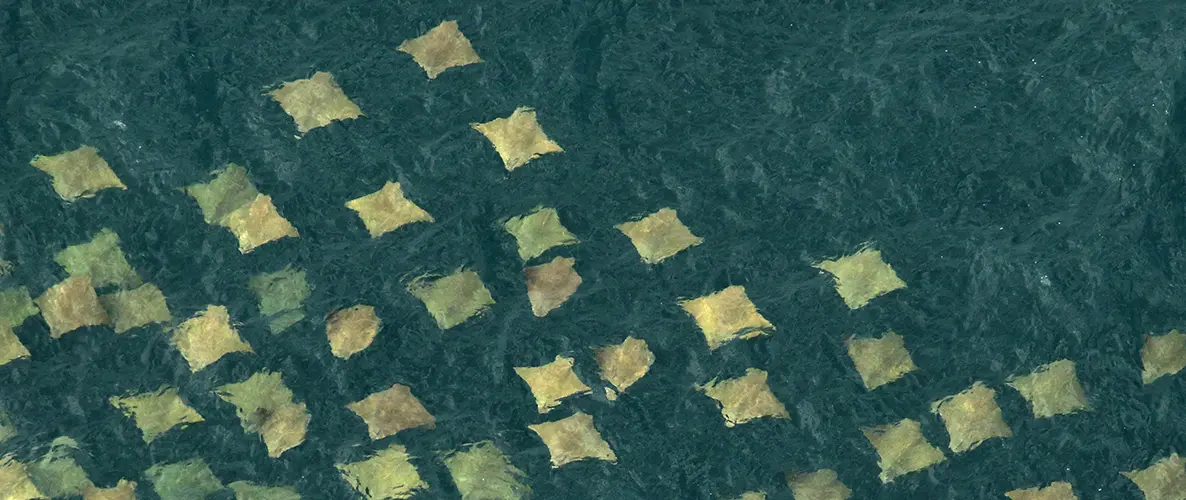
The American cownose ray, Rhinoptera bonasus, occurs in bays, estuaries, river mouths and the open ocean. FWC describes broad, pointed pectoral fins, a brown-to-olive body and the distinctive indented, cow-like snout. Large travelling schools can sometimes be visible at the surface, giving recreational boaters an encounter that is memorable even when nobody is fishing.
Because the species moves seasonally and may aggregate in substantial numbers, the sight of one large school at one location does not prove a population is increasing statewide. Equally, a day without sightings does not establish absence. A management framework needs to recognise both the ecological importance of the species and the difficulty of translating individual observations into reliable population trends.
Handling risks and responsible fishing
FWC's profile describes cownose rays as generally non-aggressive, with a defensive venomous spine near the base of the tail. A hooked or accidentally caught ray therefore requires extra care around the deck, particularly on a crowded boat where people are moving to watch or photograph it. Crew should avoid handling a ray by the tail or treating it like an ordinary finfish.
Before deciding whether to retain or release a ray, an angler should verify applicable state and federal rules and consider safe release methods. The proposal process is not permission to experiment with prohibited gear or take more fish than any other applicable law allows. If equipment or crew experience is inadequate for safe handling, seeking professional guidance is better than attempting a risky improvised release.
Recreational and commercial limits need different scrutiny
The July package used different figures for recreational and commercial harvest, reflecting different patterns of participation. For a recreational vessel, a 'per person or vessel, whichever is less' formula places an absolute limit on the whole boat. This matters for friends fishing together or a charter group with multiple passengers, because a vessel cap is not multiplied simply by adding licence holders.
Commercial fishers may have different operating cycles and data-reporting obligations, making the proposed commercial allowance a separate question. A sound public comment might ask how both limits were derived and whether the rule could be monitored consistently. Asking those questions is not evidence that one sector should receive preferential treatment; it helps ensure that conservation outcomes and enforcement are understood.
What happened at the August meeting
The official August Commission agenda included staff recommendations for proposed final cownose ray rules based on biology, research and earlier public input. It also noted that a decision could be postponed. FWC's subsequently updated comments page expressly confirms that Commissioners deferred the proposed final-rule decision, leaving the subject open for further recommendations and feedback.
This sequence explains why an older July announcement and today's rulemaking page can seem to tell different stories. The July document records what staff proposed before the hearing. The current agency page records what happened next and directs members of the public to the continuing process. For an up-to-date report, the more recent status must govern the description of the rule's legal position.
How the public can follow the next stage
FWC's Saltwater Public Comments page maintains a cownose ray section, while the Marine Fisheries Workshops page says additional meetings will be scheduled ahead of the next hearing. The 10 July announcement details the original proposals, and the species profile provides identification and natural-history context.
People who want to speak or submit written observations should revisit the official pages for actual dates and submission instructions. No unannounced hearing date should be inferred from the phrase 'next Commission meeting.' Saving the text of a comment and the date it was submitted helps participants track their input once revised staff proposals or an agenda appear.
The practical position in late October
On 25 October 2026, cownose ray harvest management in Florida is still a matter of active rulemaking, with the August proposed final-rule decision postponed. FWC's public species profile continues to describe recreational harvest as unregulated at the species-specific level, but that does not waive general fishing, marine-protected-area, gear or wildlife rules that may apply. A skipper should check the full set of relevant requirements before a trip.
For readers following conservation and boating access, the key distinction is between a recommendation, a postponed decision and a rule in force. FWC has provided routes for public participation and indicated more recommendations will follow. Until those decisions are made and communicated formally, responsible anglers should avoid spreading the July proposed limits as if they were current law.