
Florida's African pompano consultation remains active
Florida's Fish and Wildlife Conservation Commission is gathering comments on potential changes to African pompano harvesting rules. Two online workshops took place on 7 and 12 October 2026, and the commission's public-comment page still invites input on the species. Staff intend to bring proposed final rules to a Commission meeting in March 2027, according to the agency's 2 October announcement.
The consultation covers both recreational and commercial harvesting in Florida waters and adjacent federal waters. It does not mean that a new limit has already taken effect. Anglers planning late-October trips should comply with the current regulations and can use the consultation to explain how existing size, bag and gear rules work on their boats.
The questions FWC is asking fishers
FWC's current Saltwater Public Comments page invites views on size limits, bag limits and gear specifications for African pompano. These are broad categories rather than a single fully adopted replacement package. An angler may favour keeping one existing measure while reviewing another, or might ask the agency to publish more evidence before a new approach is finalised.
Useful submissions distinguish biological considerations from practical enforcement. A minimum length rule should be measurable on a moving boat, while a vessel limit must be understandable to every person aboard. Comments can also explain how often African pompano are encountered incidentally while targeting other reef fish. The consultation is a chance to raise such questions without implying that every suggested adjustment has agency support.
Current recreational rules require careful reading
FWC's published recreational table currently identifies a 24-inch fork-length minimum for African pompano, a daily limit of two per harvester and no more than two per vessel. It lists a year-round season, subject to other applicable restrictions. Hook-and-line harvest is permitted in Florida state waters; the agency's species table also lists spearing as a permitted method in relevant federal waters.
These figures are the current published guide, not the March 2027 outcome. Anglers should confirm the latest detailed regulation on the day, including any area-specific provisions and licence requirements. A vessel with several licensed fishers does not automatically gain a larger collective allowance when a separate vessel cap applies. The most restrictive relevant limit controls what can legally be kept.
Identifying African pompano accurately
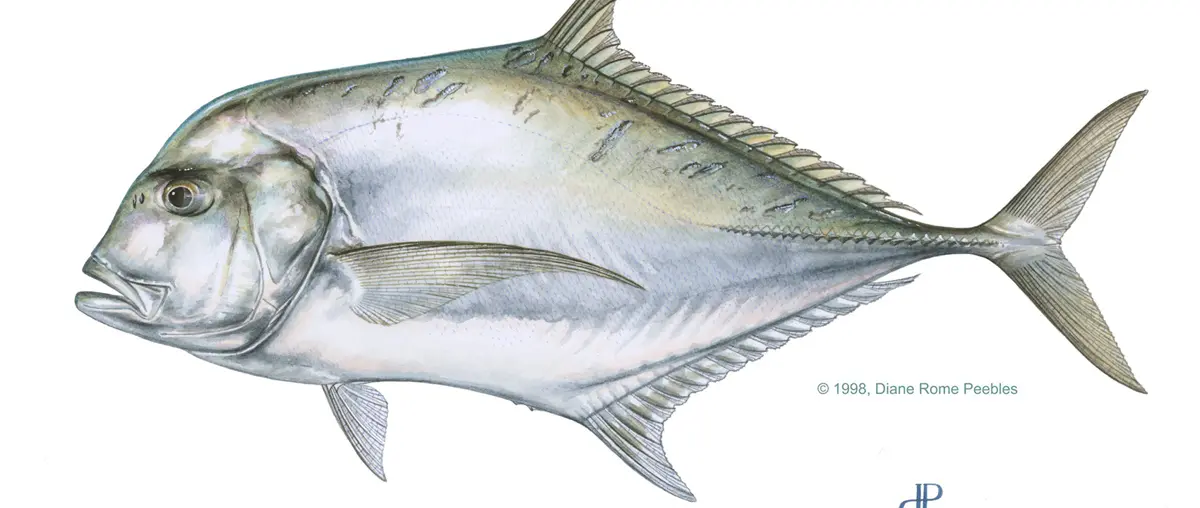
African pompano, Alectis ciliaris, are members of the jack family and differ from the smaller Florida pompano, Trachinotus carolinus. The FWC species profile describes a metallic-blue back fading toward a pale belly, a deep compressed body, a steep rounded head and scutes ahead of the tail. Younger fish often carry long trailing rays on the dorsal and anal fins, which become less prominent as they mature.
Species identification is more than a naming exercise because Florida manages related fish under different rules. An angler who mistakes a smaller pompano for an African pompano can make a size or bag-limit error, particularly when the fish is brought alongside and handled quickly. A clear side photograph, careful fin observation and use of the regulator's identification guide are preferable to relying on colour alone.
Where boat anglers encounter the species
FWC describes juvenile African pompano in open water, while adults are often associated with reefs, wrecks and ledges, sometimes in substantial depth. Those habitats attract other recreational fishing activity, so encounters are possible on trips planned for different target species. The fish's reputation as a strong fighter also encourages dedicated offshore interest.
Conditions at such grounds can complicate measuring and releasing a fish. Boat crews should have an appropriate measuring device ready, communicate who will handle the fish and minimise unnecessary time out of water. If a catch must be released, efficient handling and a plan for returning it to suitable depth can matter more than obtaining a prolonged photograph. Specific release rules should be checked for the species and area.
Why the October workshops still matter
The two FWC virtual sessions were scheduled from 6 p.m. to 8 p.m. Eastern Time on Wednesday 7 October and Monday 12 October. Those dates have now passed, but the agency says people who did not attend can watch a recording after the workshops. Its continuing comments page provides a second route to participate before staff recommendations are considered.
An angler viewing a recording should note its date and distinguish meeting discussion from a binding rule. Officials may describe alternatives, uncertainties and public suggestions without endorsing all of them. A subsequent Commission agenda may contain a narrower recommendation than the initial consultation. Anyone publishing or sharing a summary should be equally clear about that progression.
Commercial and recreational voices can differ
The public review encompasses commercial as well as recreational harvest, each with different trip patterns, compliance considerations and economic pressures. Commercial operators may have detailed experience of landing practices and gear requirements, while private boat owners can describe occasional encounters, identification challenges and limits that affect group trips. Charter captains can help explain how rules are communicated to mixed-experience customers.
Good rulemaking needs to consider conservation objectives alongside practical observability on the water. For example, an amendment that depends on a measurement hard to reproduce at sea may generate avoidable errors even among conscientious skippers. Conversely, a simple-to-enforce requirement does not automatically mean it is biologically adequate. FWC's public process offers an opportunity to test assumptions in both directions.
How to comment and check the final decision
Read the FWC's 2 October announcement for the original consultation timetable, then visit its Saltwater Public Comments page for the active African pompano section. The current pompano and permit regulations and species identification profile supply context for a specific question or proposal.
FWC says staff intend to recommend proposed final rules for Commission consideration in March 2027. A planned meeting is not a guarantee of enactment, and an approved change may have its own commencement date. Anglers should follow the formal Commission process and updated regulation pages before changing how they measure, retain or report fish. The October consultation is an opportunity to contribute to that decision.
What to do on your next offshore trip
For a trip in late October 2026, bring current species information and measure fork length correctly before keeping an African pompano. Confirm the combined effect of personal and vessel limits, verify licences and understand the gear rules on both sides of any state-federal water boundary. Keep a straightforward record of questions that arise during real fishing situations if you intend to contribute feedback later.
The most reliable editorial distinction is also the simplest: Florida is reviewing its African pompano rules, but the published consultation has not by itself replaced them. Recreational fishers have time to study the issues and submit practical evidence before the intended March 2027 Commission consideration. Until any formal decision is implemented, the existing regulations remain the starting point for legal fishing.