Danish propeller specialist Flexofold presented its range of folding propellers to marine industry visitors at METSTRADE 2026, held at RAI Amsterdam from 17 to 19 November. The company, part of the YANMAR recreational marine group, develops propulsion fittings for sailing yachts and multihulls, including two-, three- and four-blade models for saildrive and conventional shaft installations. Its products are designed to fold when the boat is moving under sail and open when the engine is driving. This is an exhibition and product-range story, rather than the launch of a newly certified propeller or an independently measured speed record. For the owner of a small sailing cruiser, the choice between a fixed and a folding propeller can involve a practical balance of sailing drag, powered manoeuvring, maintenance, installation and cost.
The principle of folding blades
A conventional fixed-blade propeller retains its normal shape whether the engine is operating or the boat is moving under sail. A folding propeller is designed to reduce its projected blade area when propulsion is not needed, which can reduce the drag created by the propeller as the boat travels through the water. Under engine power, the blades move into their working positions. The basic concept is simple, but the engineering is not. Blade geometry, material, hinge arrangements, pitch, diameter and the particular drivetrain affect how the system behaves. A folding propeller should not be regarded as a universal speed upgrade for every yacht, because actual performance depends on the vessel and the conditions in which the comparison is made.
Why drag matters on small sailboats
Sailing yachts often carry a propeller through the water for hours while the engine is off. Drag from a fixed propeller can be one contributor to the resistance opposing the hull. For a modest cruising sailboat, reducing that resistance may be desirable, particularly in light winds when available driving force is limited. But propeller drag is only one factor among sail trim, hull cleanliness, loading, wind and sea conditions. The effect of changing propeller type cannot be established from a manufacturer's general product description alone. A buyer should seek model-specific data, professional advice and, where available, credible comparison tests that describe how the measurements were made. The purpose of METSTRADE's equipment displays is to help professionals examine such products, not to certify the outcome on an individual boat.
A range rather than one new model
Flexofold's official catalogue lists two-, three- and four-blade folding propellers, supplied for both shaft-drive and saildrive arrangements. The company markets the range to sailing yachts and multihulls and offers guidance to owners seeking the correct specification. Different blade counts may be selected to balance characteristics such as power delivery, smoothness, available installation space and sailing drag. No simple rule guarantees that more blades will suit every vessel better. Engine output, gearbox reduction ratio, hull characteristics and the space between the propeller and nearby structure are all relevant. A display of the complete range at METSTRADE gives builders and distributors a chance to discuss these technical differences, although it does not mean that every displayed product was first introduced in November 2026.
Shaft drives and saildrives
A shaft-driven installation transmits power through a propeller shaft extending from the hull, while a saildrive incorporates a drive leg beneath the boat. The fittings used at the propeller end differ, and compatibility is not automatic even between installations with similar engine power. Flexofold offers products for both configurations, but owners should never rely solely on the broad labels when ordering. Hub dimensions, rotation, thread and mounting details must be checked against the engine and drive manufacturer's requirements. Incorrectly selected hardware can affect operation and may create safety or reliability problems. The firm's product selection and specialist support are therefore part of the buying process rather than optional details that can be settled after a propeller arrives.
What the owner should know about reverse power
When manoeuvring a small yacht in a confined marina, reliable astern thrust and predictable response are important. Some owners are concerned that a folding propeller may behave differently from the fixed arrangement they know. Blade deployment and the hydrodynamics of different propeller designs can affect the available thrust and the way a boat responds, particularly during low-speed changes from ahead to astern. Those characteristics vary between products and installations. A buyer should obtain appropriate manufacturer guidance and understand the practical limitations of the chosen system before replacing an existing propeller. It would be misleading to assume every folding design has the same reverse performance or that a specific percentage claim applies to all boats.
Material choice and corrosion
Marine propellers operate in a demanding environment that may include salt water, deposits, impact hazards and electrochemical corrosion. Flexofold describes material and construction options across its product range, including composite technology featured in its METSTRADE communications. Material choice can influence weight, corrosion behaviour and maintenance requirements, but it does not eliminate the need to inspect the complete propulsion installation. A composite component may behave differently from a metal one, and a metal hub or other fittings can still require appropriate corrosion protection. The actual care instructions must come from the chosen product's documentation. A claim about corrosion resistance should never be interpreted as a promise that the propeller and associated drive can be used indefinitely without maintenance.
The value of correct propeller matching
Propeller pitch and diameter are fundamental to matching the engine and hull. A propeller that places the wrong load on an engine can lead to poor performance and may prevent it from operating in the intended speed range. It can also affect acceleration, vibration and fuel use. Changing from fixed to folding blades should therefore be treated as an engineering decision rather than a cosmetic upgrade. The owner needs to know the engine model, gearbox details and current performance, as well as the actual boat type and operating conditions. Flexofold promotes a process for obtaining a specified recommendation. That does not guarantee the selected model will transform the vessel; it provides a structured way to avoid choosing a propeller based on appearance or incomplete measurements.
Where METSTRADE fits into the process
The international marine equipment show is primarily a meeting place for manufacturers, distributors, boatbuilders and technical specialists. A propeller company can use it to present the details of its range and help potential partners understand installation and support requirements. Flexofold was listed among METSTRADE's 2026 exhibitors, with its product range presented to trade visitors during the 17–19 November event. This was not a consumer sales event at which every owner could necessarily buy and install a propeller immediately. Availability, product specifications and dealer arrangements should be confirmed through the company. No claimed contract value, sales total or post-show order volume is established by the exhibitor listing.
Questions about sailing performance
Before considering a folding propeller, a sailor should identify the problem they want to solve. Is the existing fixed propeller causing noticeable drag in light wind, or is the main concern powered manoeuvring or vibration? Is the boat generally used for relaxed cruising, club racing or lengthy coastal passages? The answers may change the relative importance of different design characteristics. Some owners value the simplicity of a proven fixed-blade arrangement, while others accept more complicated mechanisms for potential sailing benefits. The correct choice depends on the real vessel and crew. An equipment exhibition can show what is available, but it cannot replace analysis of the specific installation.
Maintenance is part of ownership
Any moving propeller mechanism should be inspected according to its manufacturer's instructions. Folding blades and their pivots operate close to the seabed, floating debris and organisms that may grow on underwater surfaces. Owners should know what inspections and servicing are required, what tools or replacement components may be needed and which tasks should be referred to qualified professionals. The manufacturer's installation guide should also be followed when securing components and confirming clearances. An owner who has changed propellers should become familiar with the boat's response in safe conditions before entering demanding manoeuvres. Maintenance and handling cannot be inferred from the fact that the design was displayed at an international trade fair.
Official product imagery
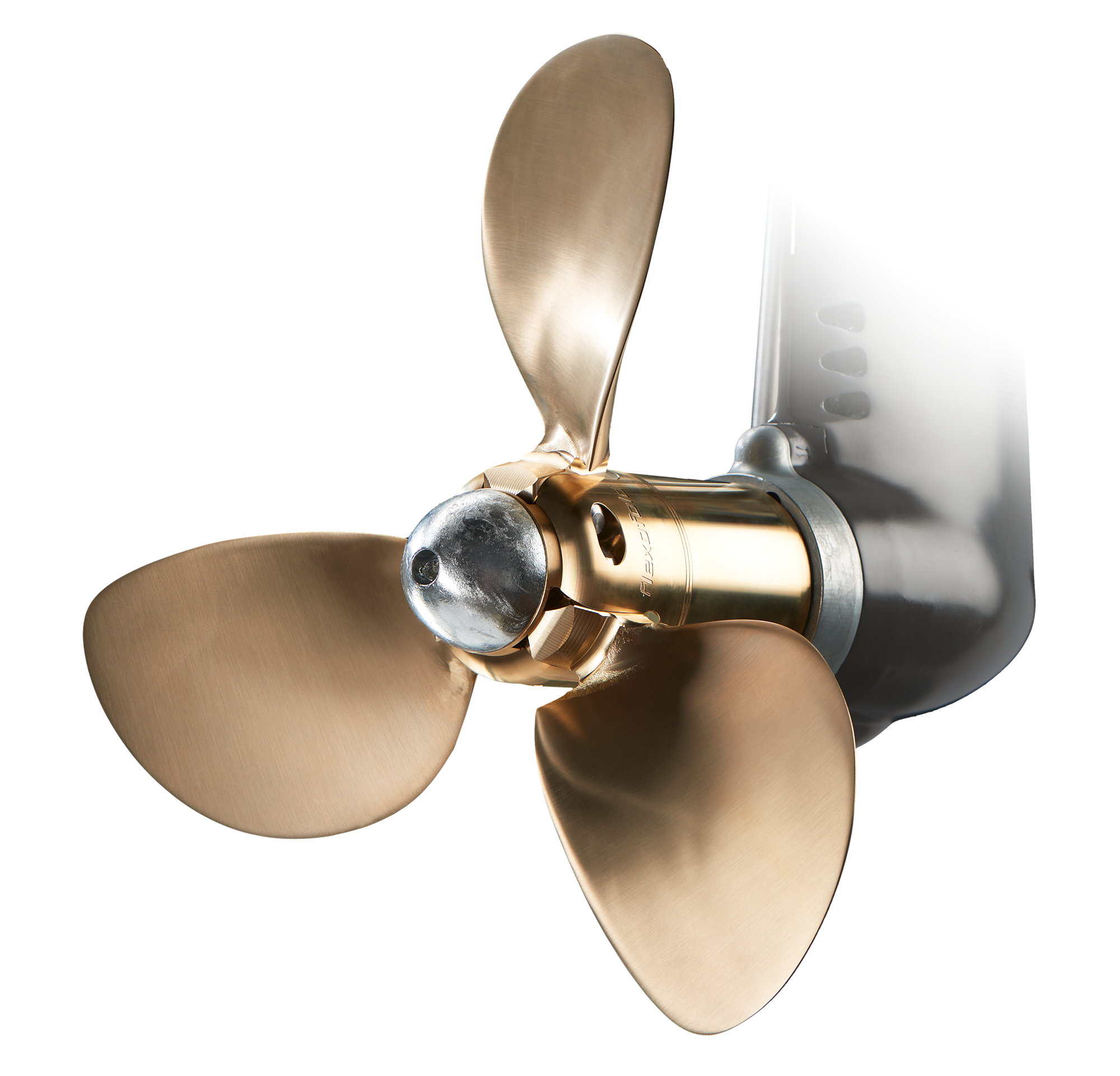
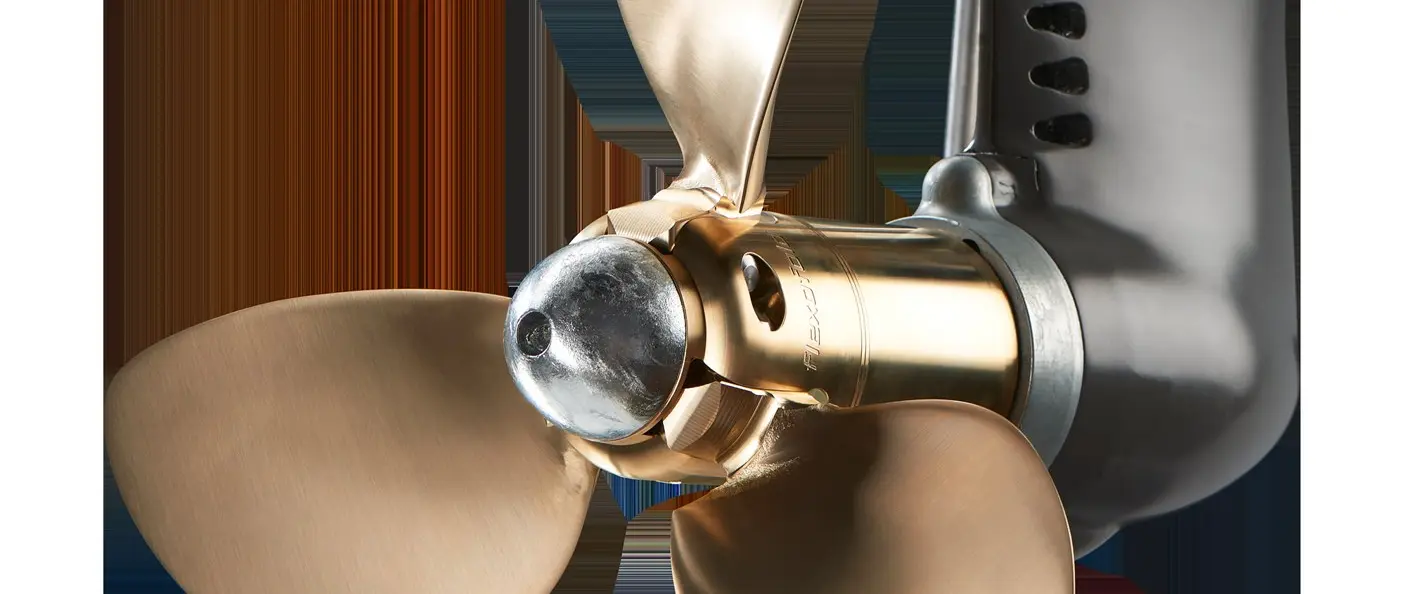
The photograph accompanying this report comes from Flexofold's own website and shows an actual folding-propeller product rather than a computer-generated boat or a press infographic. The company's official product pages and its METSTRADE exhibitor profile provide the underlying information on available blade configurations and applications. A separate November industry announcement confirms that the product range was being shown in Amsterdam. The photo is a manufacturer-supplied product illustration of existing hardware, not a picture establishing that every item in the catalogue was launched at the 2026 show. Original image copyright remains with the supplier and its photographer.
A practical equipment decision
Flexofold's METSTRADE presence highlights a familiar decision faced by the owners of modest sailing yachts: whether changes below the waterline can deliver a worthwhile benefit when compared with their cost and maintenance implications. Folding propellers offer an established alternative to fixed models, with configurations for different transmissions and vessel types. The event does not establish universal performance gains or a newly introduced certification standard. Buyers should approach a change by identifying the vessel's drivetrain, confirming a suitable specification and considering how the boat will be operated and serviced. The enduring news is the continued range of specialist sailboat propulsion equipment available to the global small-craft market and the industry's work in connecting these products with builders and owners.
Sources and image attribution
Primary reported announcement: https://www.metstrade.com/products-and-services/flexofold.
Official photographic provenance: https://www.flexofold.com/. Image supplied by the originating organisation, credited in the photograph title; original copyright remains with the rights holder. Official image file. The photographs are documentary or clearly labelled archival illustrations, not evidence of events that have yet to happen.